
Navigating the stairs is something most of us do multiple times a day without a second thought. It is an automated part of our routine, like brushing our teeth or making coffee. However, as we age or help care for aging loved ones, the staircase transforms from a simple architectural feature into a significant focal point for home safety.
The statistics surrounding falls on stairs are sobering, but they shouldn’t be a source of fear. Instead, they should serve as a motivator to look at our homes with fresh eyes. Most accidents on stairs aren’t caused by a single catastrophic event; they are the result of small, overlooked habits and environmental factors that have built up over time.
By identifying these common mistakes and implementing straightforward, practical fixes, you can significantly reduce the risk of a fall and maintain independence in the home you love. Let’s walk through the seven most common mistakes and how to correct them.
1. The "I Don’t Need the Rail" Mentality
One of the most frequent mistakes people make is viewing the handrail as optional. You might feel steady on your feet, or perhaps you’re carrying a light load: a laundry basket, a book, or a phone: and decide to skip the rail just this once.
The handrail isn’t just there to catch you if you fall; its primary purpose is to provide a constant point of stability that helps your brain gauge your position in space. Using the rail creates a "closed loop" of sensory feedback between your hand, your brain, and your feet.
The Fix:
- The Two-Point Rule: Always maintain at least two points of contact with the stairs. This usually means both feet on a step, or one hand on the rail and one foot moving.
- Double Up: Ideally, a staircase should have handrails on both sides. This allows you to use your stronger side regardless of whether you are going up or down.
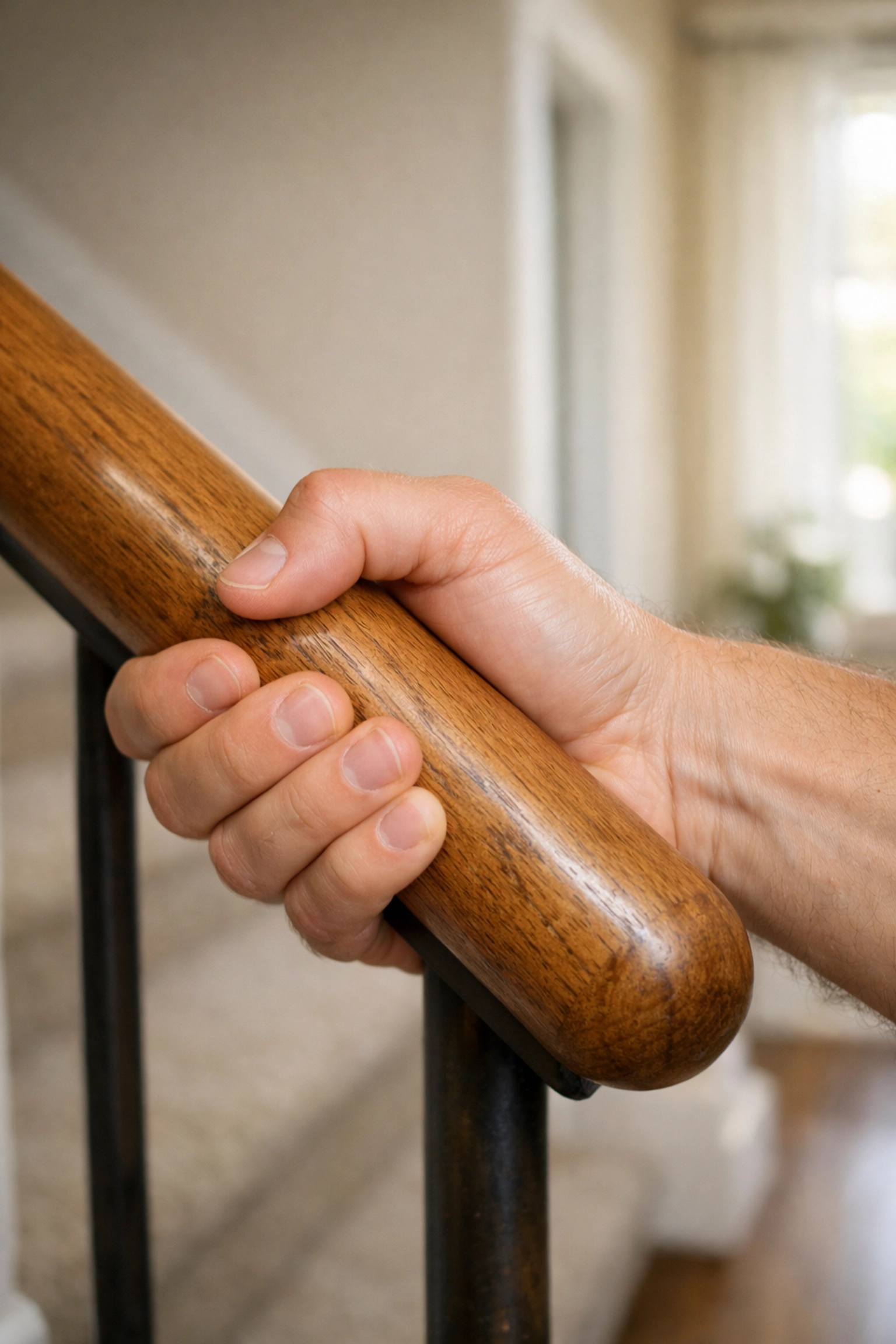
- The Power Grip: Ensure your handrail is "path-cleared." This means your hand should be able to slide along the rail without being interrupted by brackets or the wall. A round rail that your fingers can completely encircle (a "power grip") is much safer than a wide, decorative flat rail that you can only rest your palm on.
2. Underestimating the "Bottom-of-Flight Illusion"
Did you know that a significant percentage of stair falls happen at the very top or the very bottom of the staircase? A common phenomenon is the "bottom-of-flight illusion," where the person descending believes they have reached the floor, but there is actually one step remaining. This miscalculation leads to a jarring "overstep" that can easily cause a person to lose their balance.
The Fix:
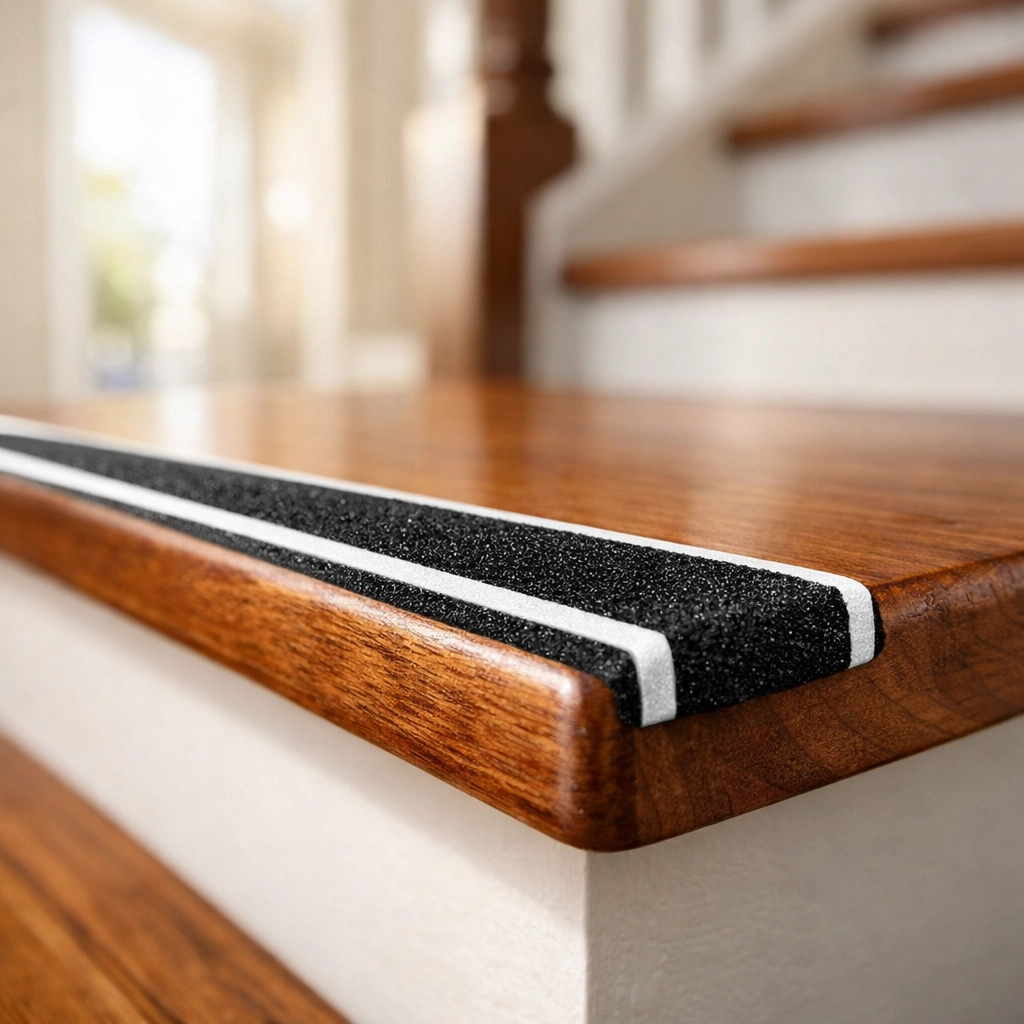
- Visual Contrast: The best way to combat this illusion is through visual cues. You can apply a strip of high-contrast, anti-slip tape to the edge (the "nosing") of the very top and very bottom steps. If your stairs are dark wood, use a bright white or yellow strip.
- Change the Texture: Sometimes, placing a different textured rug (secured firmly with non-slip backing) at the top and bottom landings can signal to your brain and feet that the transition is complete.
- The "Look Down" Habit: Make a conscious effort to look at the steps until your feet are firmly on the flat floor of the landing.
3. Treating Stairs Like a Temporary Storage Unit
We’ve all done it: we have a stack of mail, a pair of shoes, or a box that needs to go upstairs, so we set it on the bottom step to "take it up later." This creates a psychological and physical hazard. Physically, it narrows the walking path and creates a trip hazard. Psychologically, it trains us to look at the clutter rather than our footing.
The Fix:
- The Zero-Tolerance Policy: Establish a strict rule that nothing: not even a single piece of paper: is ever allowed to sit on the stairs.
- The "Landing Basket" Method: If you find yourself constantly moving items between floors, place a sturdy basket at the very top and bottom of the stairs, but completely off the walking path (on the hallway floor). Place items in the basket, and only carry them up when you have a free hand and are ready to make a dedicated trip.
4. Poor Lighting and Shadow Patterns
As we age, our eyes require significantly more light to see clearly. What feels like a "moody" or "dimly lit" stairwell can actually be a dangerous environment. Poor lighting obscures the edges of the steps and can create confusing shadow patterns that look like extra steps or gaps.
The Fix:
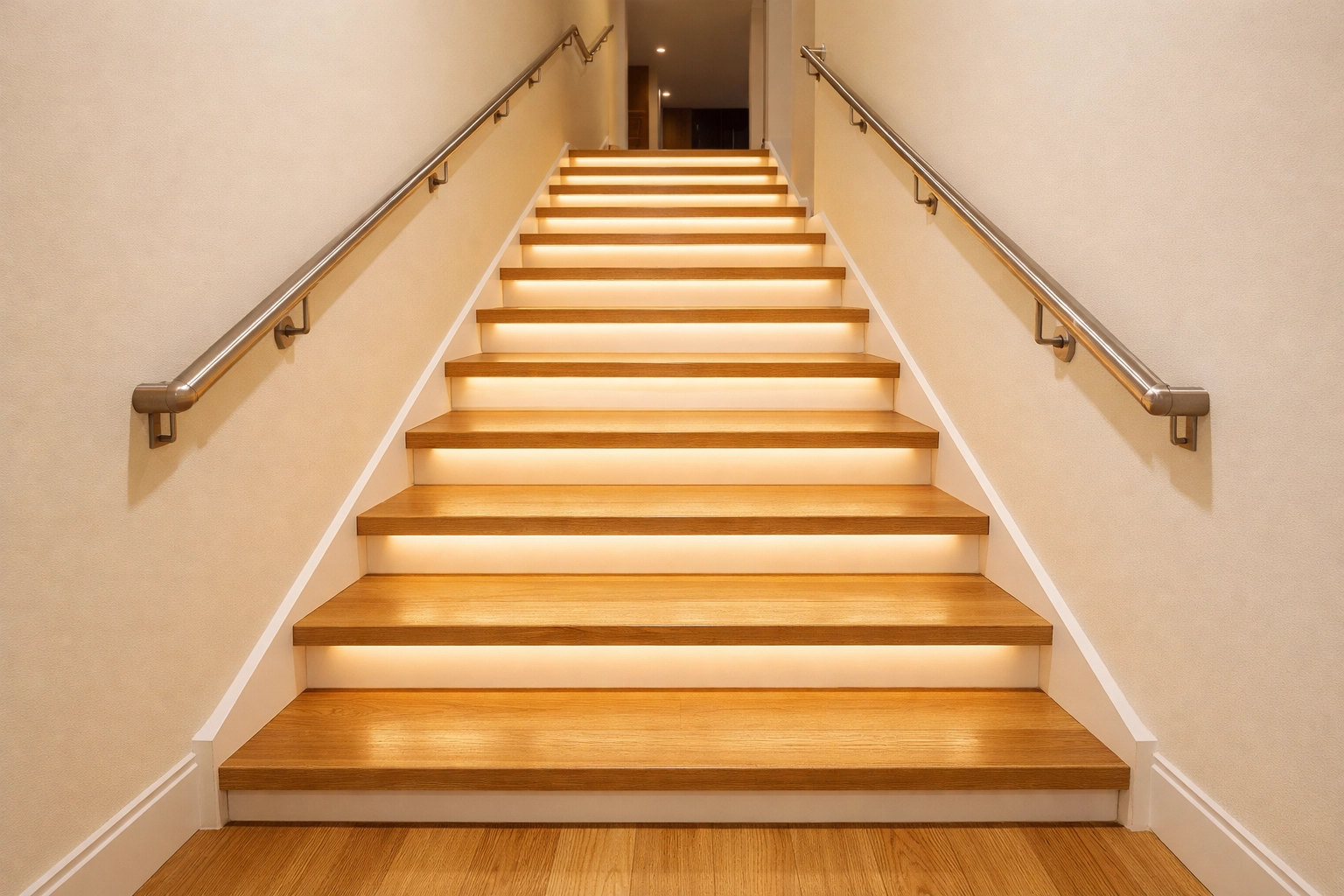
- High-Lumen LEDs: Replace old, dim bulbs with bright LED lights. Look for "cool white" or "daylight" bulbs, as these provide better contrast than "warm yellow" bulbs.
- Motion Sensors: Install motion-activated lighting. These are excellent because they ensure the path is lit before you even set foot on the first step, removing the need to fumbling for a switch in the dark.
- Light Both Ends: Ensure there are light switches at both the top and the bottom of the stairs (3-way switches). You should never have to climb the stairs to turn on the light or descend them to turn it off.
5. Navigating in "Slippery" Footwear
This is perhaps the easiest mistake to fix, yet it is one of the most common. Walking on stairs in socks, smooth-bottomed slippers, or high heels significantly increases the risk of a slide. Wood and tile stairs are particularly unforgiving when paired with socks, acting almost like an ice rink.
The Fix:
- The Indoor Shoe: Transition to a dedicated "indoor shoe" with a firm, non-slip rubber sole. This provides the grip needed to stay planted on each tread.
- Avoid "Floppy" Slippers: Slippers that don’t have a back (scuffs) can easily slide off your foot mid-step, causing a trip. Choose slippers that wrap around the heel.
- Sensory Feedback: While grip is important, you also want a shoe that isn't too thick. You want your feet to be able to "feel" the edge of the step through the sole.
6. Neglecting Stair Maintenance
Stairs endure a lot of weight and vibration over the years. Over time, wood can warp, carpet can loosen, and handrails can begin to wiggle. A handrail that "gives" an inch when you lean on it isn't providing the support you need in an emergency.
The Fix:
- The Monthly Shake Test: Once a month, give your handrails a firm shake. If there is any movement, tighten the brackets or call a handyman to secure them into the wall studs.
- Tack Down the Carpet: If you have carpeted stairs, check for "bubbles" or loose edges. Loose carpet is a major trip hazard. If the carpet is worn smooth, it may have lost its traction and should be replaced or treated with anti-slip solutions.
- Check the Nosing: Ensure the front edge of each step (the nosing) is rounded and intact. Cracked or splintered wood can catch a toe or a heel.
7. The Danger of "Multitasking" on the Move
In our fast-paced world, we often try to do two things at once. We might be checking a text message, talking to someone in another room, or carrying a heavy laundry basket with both hands while navigating the stairs. This "divided attention" is a recipe for a misstep.
The Fix:
- The "One Task" Rule: When you are on the stairs, your only job is to move from one floor to another safely. Put the phone in your pocket and finish your conversation once you reach the landing.
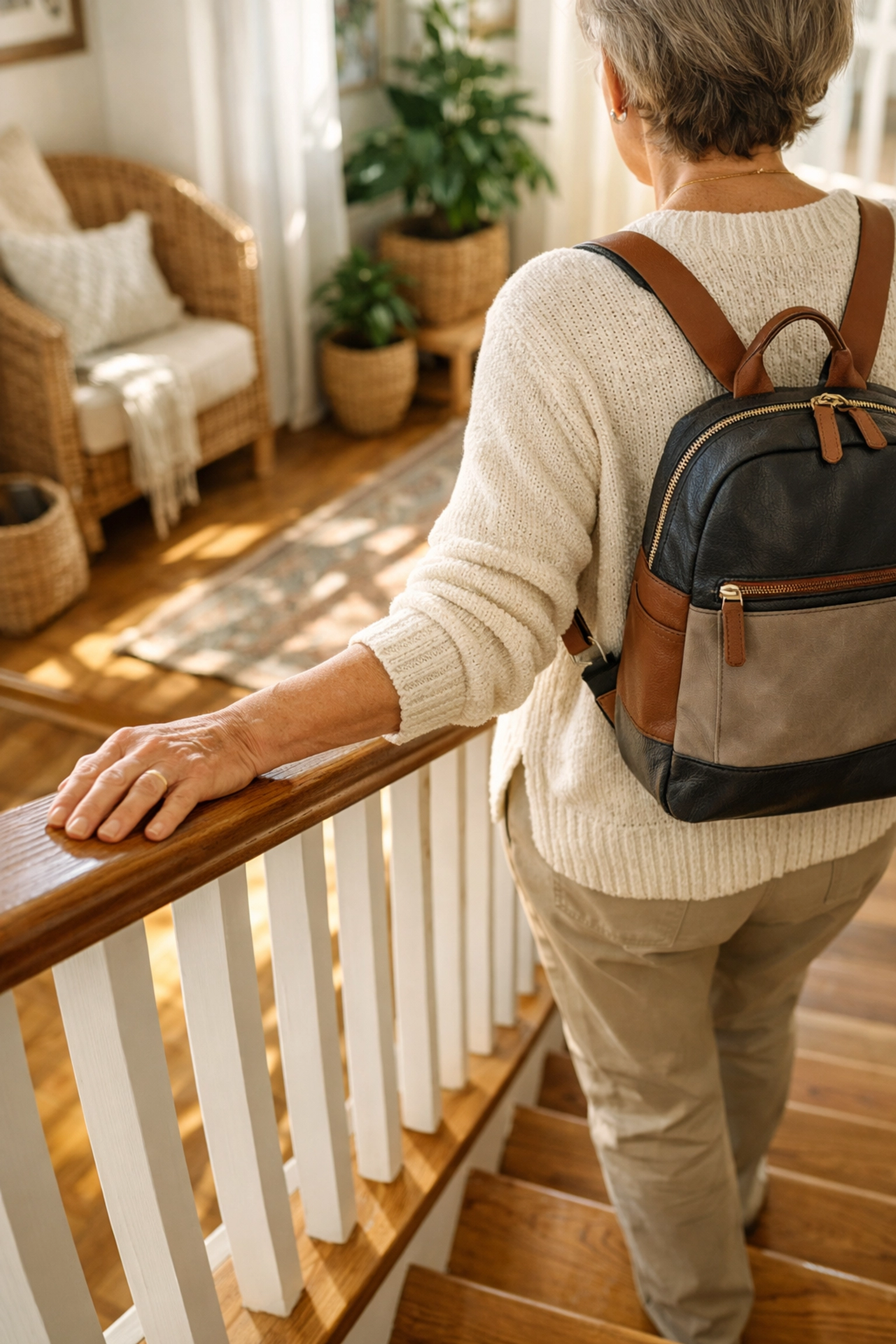
- Free One Hand: Never carry items that require both hands. If you must move items, use a backpack or carry smaller loads so that one hand is always free to grip the handrail.
- Pause and Breathe: If you feel rushed, take a five-second pause at the top of the stairs. Take a deep breath, center your balance, and then begin your descent with intention.
The Role of Vision and Physical Health
Beyond the physical environment of the stairs, our own physical state plays a massive role in stair safety.
Vision Checks:
Bifocals and trifocals can be tricky on stairs. The bottom portion of the lens, designed for reading, can blur your view of the steps when you look down. If you wear these types of glasses, talk to your optometrist about "single-vision" glasses specifically for moving around the house or navigating stairs. This ensures the steps stay in sharp focus.
Strength and Balance:
Stair climbing is a great form of exercise, but it requires functional strength in the quads, glutes, and ankles. Simple daily exercises, like standing on one leg (while holding onto a counter) or doing "sit-to-stands" from a sturdy chair, can build the muscular foundation needed to navigate stairs with confidence.
Summary Checklist for a Safe Staircase
If you’re looking to audit your home today, here is a quick checklist to guide you:
- Handrails: Are they on both sides? Are they tight? Can you wrap your hand around them?
- Lighting: Is it bright enough to see the texture of the carpet or wood? Are there shadows hiding the edges?
- Clutter: Is the path 100% clear of objects?
- Traction: Are the steps slippery? Consider adding clear anti-slip strips or rubber treads.
- Visibility: Can you clearly see where the last step ends and the floor begins?
- Personal Habits: Are you committed to using the rail every single time, even when you’re in a hurry?
Making your home "fall-safe" doesn't require a complete renovation. Often, it just requires a shift in perspective. By treating the staircase with the respect it deserves and fixing these seven common mistakes, you’re not just preventing a fall: you’re investing in your long-term ability to enjoy every inch of your home safely and confidently.

