
If you’ve lived in your home for decades, you probably move through it on autopilot. You know exactly where the creak in the floorboard is, you know how to navigate the kitchen in the dark, and you’ve climbed those stairs thousands of times. But as we get older, or as we care for parents who are aging in place, those familiar stairs can transition from a simple architectural feature into a significant source of anxiety.
Hi, I’m Brian Kerr, the founder of Fall Guys Products. Over the years, I’ve seen how much a set of stairs can impact a person's independence. It’s often the "final boss" of home safety. People tend to think that as long as they have a handrail, they’re set. Unfortunately, stair safety is a bit more nuanced than that. There are small, often invisible mistakes we make every day that turn a routine climb into a hazard.
The good news? Most of these mistakes are incredibly easy to fix. You don’t always need a massive renovation to make your home safer. Sometimes, it’s just about changing a habit or adding a bit of hardware. Let’s walk through the seven most common mistakes people make with their stairs and, more importantly, how we can fix them together.
1. Living in the Shadows: Inadequate Lighting
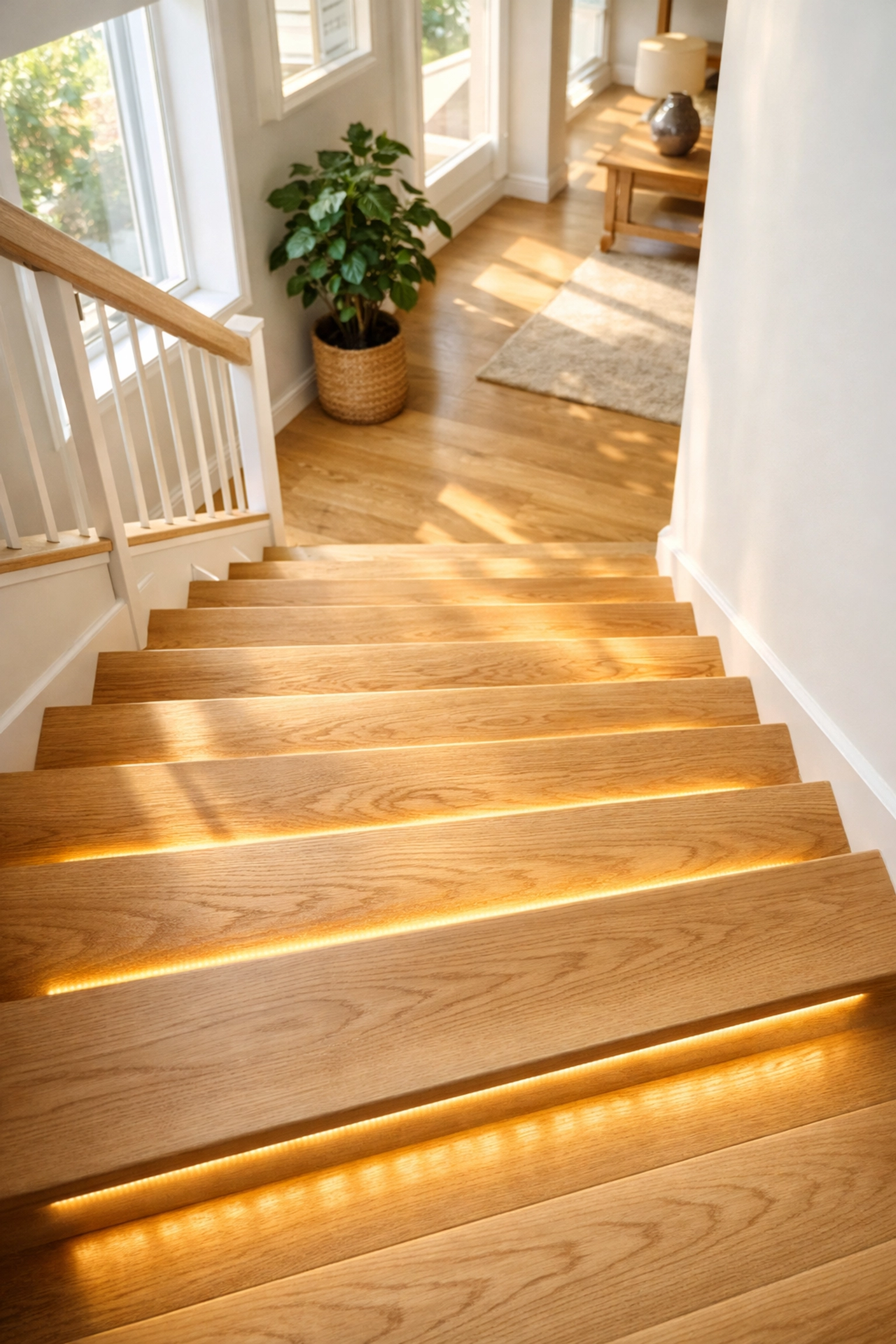
This is the number one mistake I see, and it’s often the easiest to overlook. We often rely on a single overhead light at the top or bottom of the landing. While that might light up the hallway, it usually creates long, deceptive shadows on the actual treads. When you can’t clearly see where one step ends and the next begins, your brain has to guess. And on a staircase, guessing is dangerous.
As we age, our eyes require significantly more light to see the same level of detail as they did in our younger years. Depth perception also naturally declines. If the lighting is dim, those two factors combine to make the edge of a step almost invisible.
The Fix:
First, check your bulbs. If you’re still using old, dim incandescent bulbs, swap them out for bright, "daylight" LED bulbs. They provide a much crisper view of the environment.
Next, consider the "path" of the light. You want light that hits the treads directly. Battery-operated, motion-sensing LED strips are a lifesaver here. You can stick them under the lip of each step or along the baseboard. They only turn on when they sense movement, meaning you won’t be fumbling for a light switch in the middle of the night. If you want a more permanent solution, a contractor can install integrated step lighting that ensures every inch of the staircase is visible.
2. The "Waiting to Go Up" Pile: Clutter and Obstacles
We’ve all done it. You have a book, a pair of shoes, or a stack of mail that needs to go upstairs, but you aren’t ready to go up yet. So, you set it on the bottom step "just for now."
This creates a massive tripping hazard. Beyond the physical obstruction, clutter creates a psychological distraction. Instead of focusing on your balance and foot placement, your brain is busy navigating around the objects. Furthermore, if you’re carrying something up the stairs and your foot clips a shoe you forgot was there, your hands are likely full, making it impossible to grab the handrail.
The Fix:
Adopt a strict "No Fly Zone" policy for your stairs. Nothing, absolutely nothing, should ever sit on a step or a landing.
To make this easier, place a decorative basket at the very bottom and the very top of the stairs, away from the walking path. If something needs to go up or down, put it in the basket. When you’re ready to make the trip, carry the basket. This keeps the stairs clear and keeps your path predictable.
3. The Single Handrail (Or None At All)
Most building codes require at least one handrail. But having only one rail means you only have support on one side of your body. If you have weakness in one leg or one side of your body (which is very common after a stroke or due to arthritis), you might find that you’re only supported when going up but not when coming down, or vice versa.
Furthermore, a lot of older homes have handrails that are purely decorative, they’re too thick to wrap your hand around, or they’re made of slippery finished wood that offers no real grip.
The Fix:
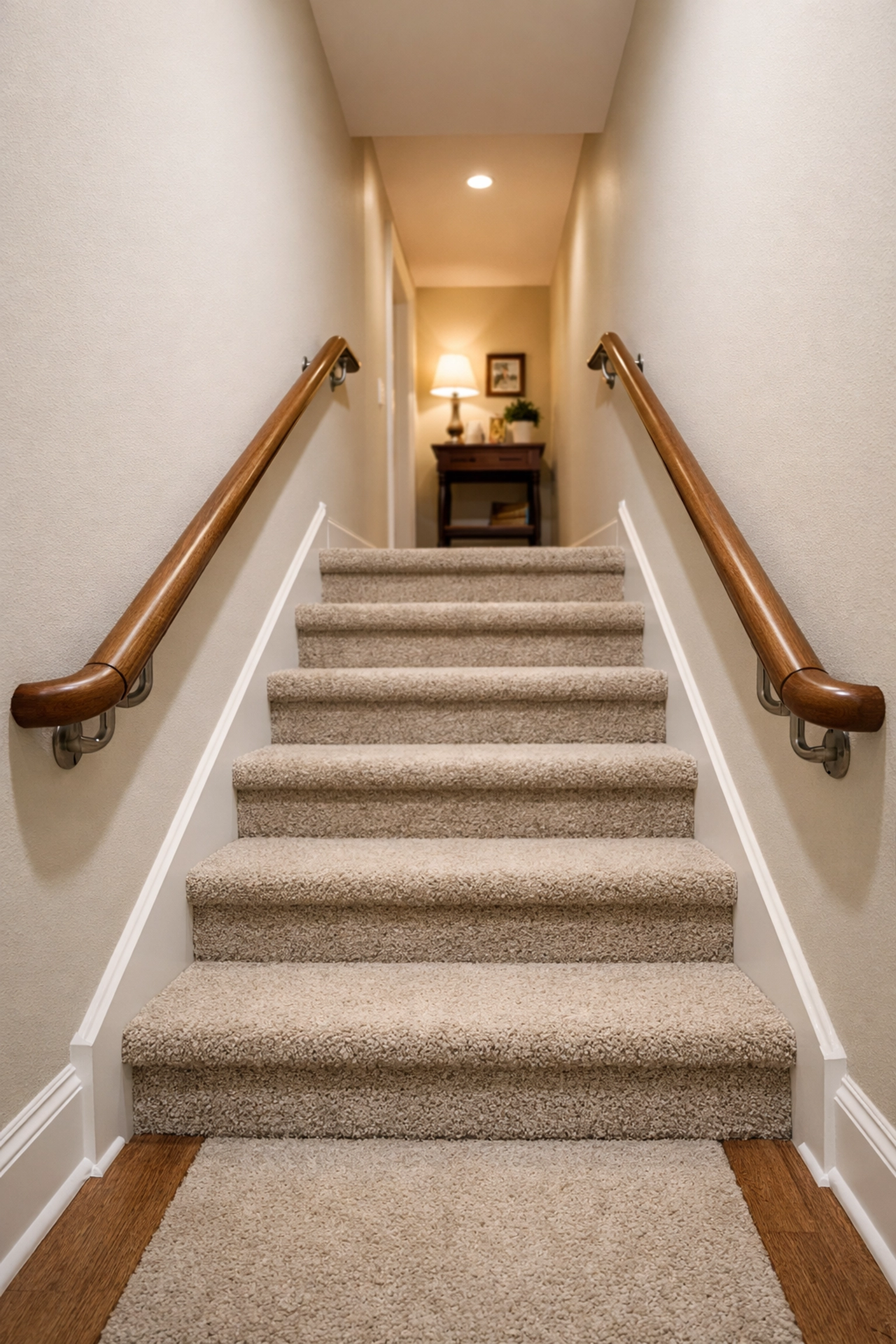
The safest configuration is a double handrail, one on each side. This allows you to maintain a three-point contact at all times (two feet and at least one hand, or two hands and one foot).
Ensure the handrail is "graspable." This means you should be able to wrap your fingers and thumb almost all the way around it. If your current rail is too wide, consider installing a secondary, smaller diameter rail. Also, check the length. A handrail should extend about 12 inches beyond the top and bottom steps. This gives you a "lead-in" and "lead-out" so you aren’t letting go while your feet are still on an incline.
4. Ignoring the "Step Consistency" Problem
This is a technical one, but it’s vital. Human movement relies heavily on muscle memory. When you start climbing a flight of stairs, your brain "maps" the height of the first two steps. It then expects every subsequent step to be exactly the same height.
In many homes, especially older ones or those with DIY additions, the "riser" (the vertical part of the step) might vary by half an inch or more. It doesn’t sound like much, but a variance of even a quarter of an inch is enough to cause a "stumble" because your foot doesn't clear the step at the height your brain expected.
The Fix:
Take a tape measure and measure the height of every single step on your staircase. If you find a variance of more than a quarter-inch, you have a structural safety issue.
While you might not want to rebuild your entire staircase, a professional carpenter can often "shim" or adjust the treads to create a uniform height. If the bottom or top step is the problem (often due to new flooring being installed over old flooring), you may need to adjust the landing to match. At the very least, knowing which step is the "off" one allows you to be extra mindful.
5. Choosing Style Over Grip: Slippery Treads
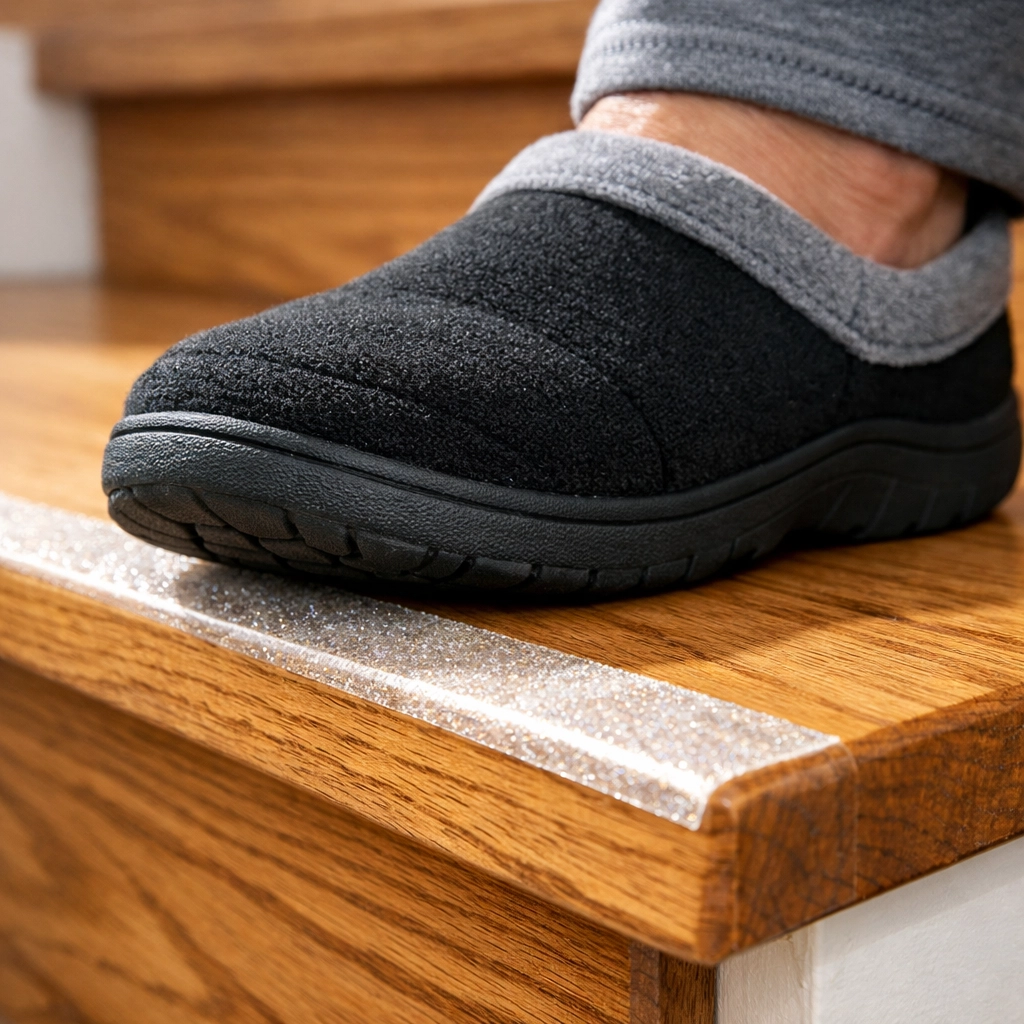
Hardwood stairs are beautiful. Polished stone is elegant. But in the world of fall prevention, "shiny" often means "slippery." This is compounded if you tend to walk around the house in socks or smooth-bottomed slippers.
Many people try to fix this by installing a carpet runner. While carpet provides more grip than bare wood, if it’s a high-pile or "shaggy" carpet, it can actually make things worse by rounding off the edge of the step (the nosing), making it harder to get a firm footing.
The Fix:
If you love your wood stairs, you don’t have to cover them up completely. Transparent anti-slip adhesive strips are nearly invisible but provide a gritty texture that grips your feet.
If you prefer carpet, go with a "low-pile" industrial-style carpet that is tightly woven. It should be wrapped tightly over the edge of each step and secured firmly. For the ultimate safety, look into rubberized stair treads. They might not be as "magazine-ready" as marble, but they offer the best traction available.
6. Carrying Too Much at Once
We often treat our stairs like a freight elevator. We try to carry a heavy laundry basket, a vacuum cleaner, or a tray of food up or down in one go.
When you carry a bulky item in front of you, two dangerous things happen:
- You lose your line of sight. You can't see where your feet are landing.
- You lose your "anchor." Both hands are occupied, meaning you can't grab the handrail if you lose your balance.
The Fix:
The rule is simple: Always keep one hand free for the rail.
If you have laundry, use a smaller basket that you can tuck under one arm, or better yet, drop the laundry down the stairs in a soft bag first, then walk down safely to retrieve it. If you need to move multiple items, make two trips. It’s better to spend an extra minute moving things than to spend six weeks in a cast. If mobility is a significant concern, consider a "stair lift" or a "dumbwaiter" system to move items between floors.
7. Neglecting the "Transition Zones"
Falls often don't happen in the middle of the staircase; they happen at the very top or the very bottom. This is where we transition from "stair mode" to "walking mode."
Mistakes here include loose throw rugs at the base of the stairs, floor transitions (like going from carpet to tile) that create a small lip, or furniture placed too close to the landing that forces you to make a sharp turn as soon as you step off the last riser.
The Fix:
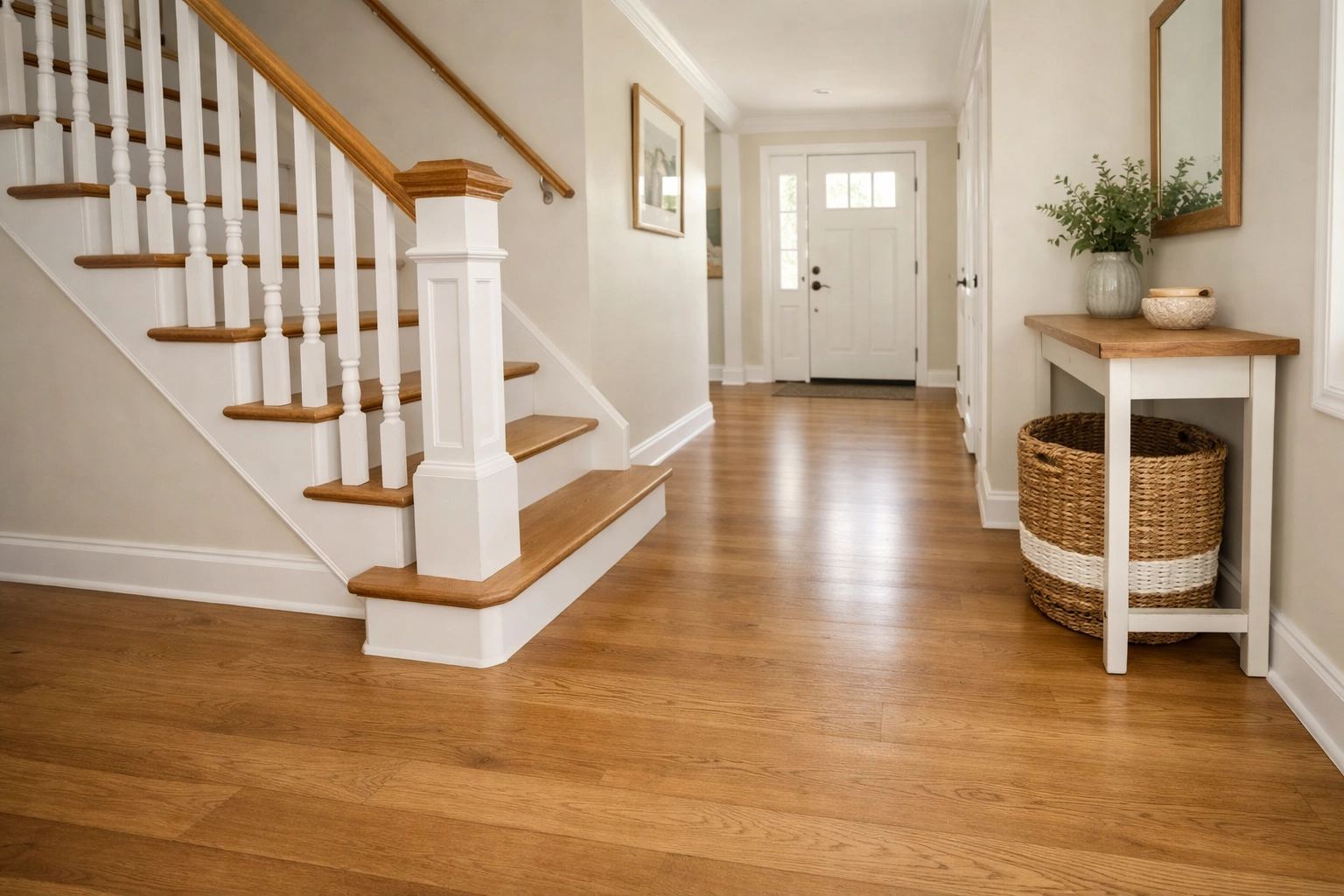
Clear the landings. There should be a wide, unobstructed space at both the top and bottom of the stairs. Remove any throw rugs or mats near the stairs, they are the leading cause of "slip and trips" in the home.
Ensure the flooring at the landing is non-slip and well-lit. If there is a slight transition or "lip" where the stairs meet the floor, use a high-contrast tape (like a thin strip of yellow or white) to mark the change in elevation. This gives your brain a visual cue to lift your feet a little higher.
Final Thoughts: A Reassuring Step Forward
I know that thinking about stair safety can feel overwhelming. It might even feel like your home is becoming a "hospital" rather than a sanctuary. But I like to look at it differently. These adjustments aren't about admitting weakness; they are about empowering yourself to stay in the home you love for as long as possible.
Stairs don't have to be the enemy. By fixing these seven common mistakes, improving the light, clearing the clutter, doubling up on rails, and ensuring a firm grip, you can take the "fear factor" out of your daily routine.
Take a walk through your home today with a fresh set of eyes. Look at your stairs not as a familiar path, but as a system. Is the light bright enough? Are your hands supported? Can you see every edge clearly? If the answer is "no" to any of those, you know exactly where to start.
Stay safe, stay active, and remember that a few small changes today can make a world of difference for your independence tomorrow.

