
Stairs are often the most daunting part of a home as we age. Whether it’s a grand staircase in the entryway or a few small steps leading down into a sunken living room, these transitions require balance, strength, and clear vision. At Fall Guys Products, we spend a lot of time looking at home environments through the lens of safety and accessibility.
Brian Kerr here. I’ve seen many well-intentioned homeowners and caregivers make small mistakes that inadvertently increase the risk of a fall. The good news is that most stair-related hazards aren't permanent architectural flaws: they are simply oversights in maintenance or setup.
By identifying these seven common mistakes, you can transform your staircase from a source of anxiety into a safe, navigable part of your home.
1. The "Single Rail" Oversight
Many older homes were built with a handrail on only one side of the staircase. While this might meet minimum building codes from decades ago, it creates a significant safety gap.
The mistake here isn't just having one rail; it’s the assumption that one is enough. As we age, our lateral balance (side-to-side stability) can fluctuate. If you are ascending the stairs and your "strong" side is away from the wall, you may find yourself over-relying on a rail that isn't there, or reaching across your body in a way that pulls you off balance.
The Fix:
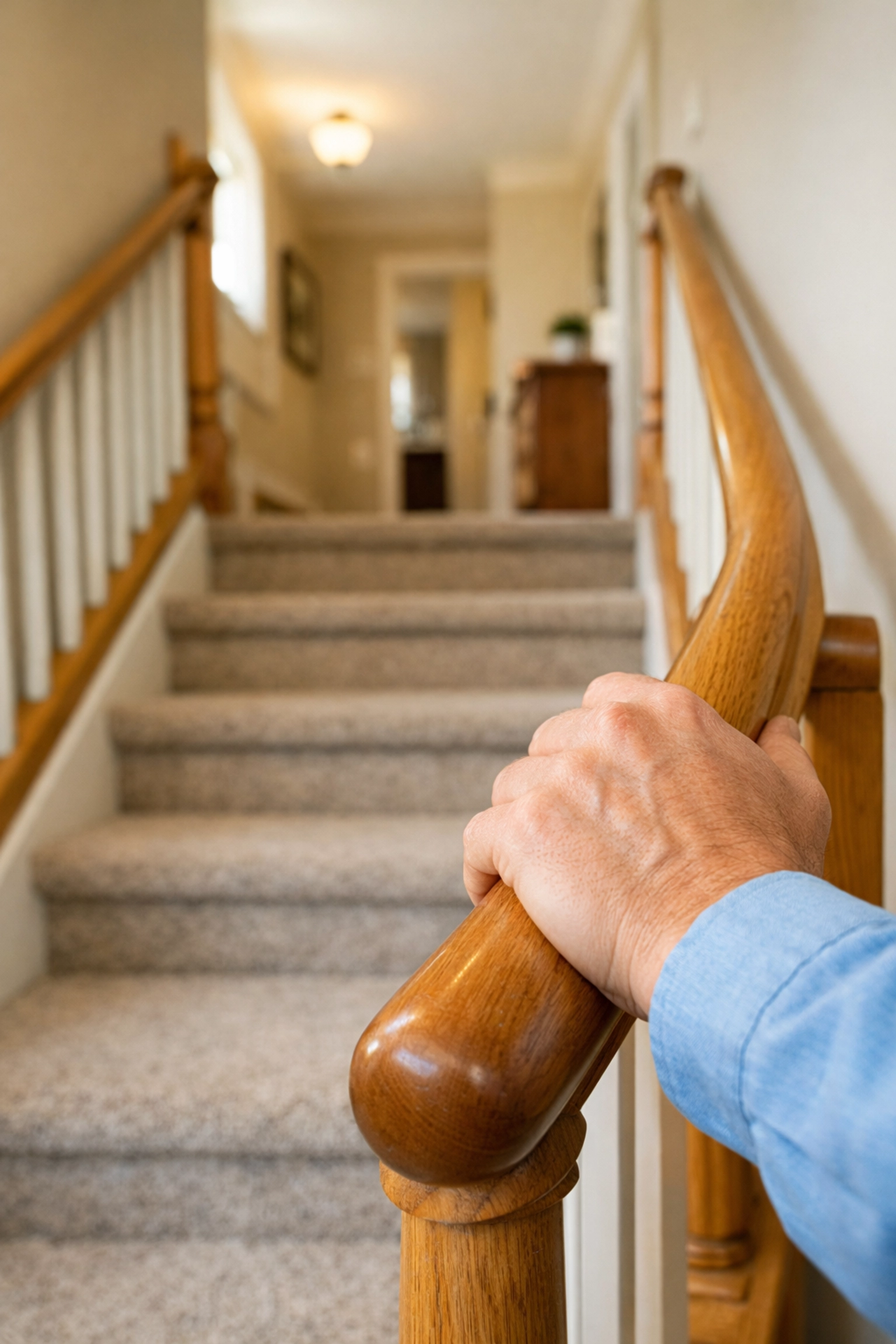
Install a second handrail so that there is a continuous grip available for both hands, regardless of whether you are going up or down. These should be mounted at a height that allows your elbows to be slightly bent: typically between 34 and 38 inches above the stair nosing.
Beyond just having two rails, check the "graspability." A handrail shouldn't just be a decorative piece of wood. It needs to be something your hand can fully wrap around. If the rail is too wide or too flat, it won’t provide the leverage needed to break a fall if you slip.
2. Neglecting the "Visual Cliff" Effect
As we age, our depth perception and contrast sensitivity often decline. This creates a phenomenon sometimes called the "visual cliff." When a staircase is covered in a uniform material: like a solid beige carpet or dark hardwood: the edges of the individual steps can blend together.
When you can’t clearly see where one tread ends and the next begins, your brain has to guess where to place your foot. This leads to "over-stepping" or "under-stepping," both of which are primary causes of stair falls.
The Fix:
Create visual contrast. You can do this by applying a high-contrast strip of tape or paint to the "nosing" (the very edge) of each step. If you have dark wood stairs, a light-colored non-slip strip can work wonders. If you have light carpet, a slightly darker edge can help define the boundaries.
This is especially critical for the top and bottom steps. These are the transition points where most accidents occur because the body is switching from a flat-surface gait to a climbing/descending gait. Marking the top and bottom steps with a distinct color or texture signals to the brain that a transition is happening.
3. Relying on "Mood Lighting"
We all love a cozy, dimly lit home in the evening, but the staircase is the one place where "ambiance" should never take priority over "lumens." Many stairways rely on a single overhead light at the top of the landing, which casts long shadows over the lower steps. These shadows can hide clutter or make a step look deeper or shallower than it actually is.
The Fix:
Aim for uniform, shadow-free lighting. Ideally, you want light sources that illuminate the entire path.
- Motion Sensors: Install motion-activated LED lights that turn on the moment you approach the stairs. This eliminates the need to fumble for a switch in the dark.
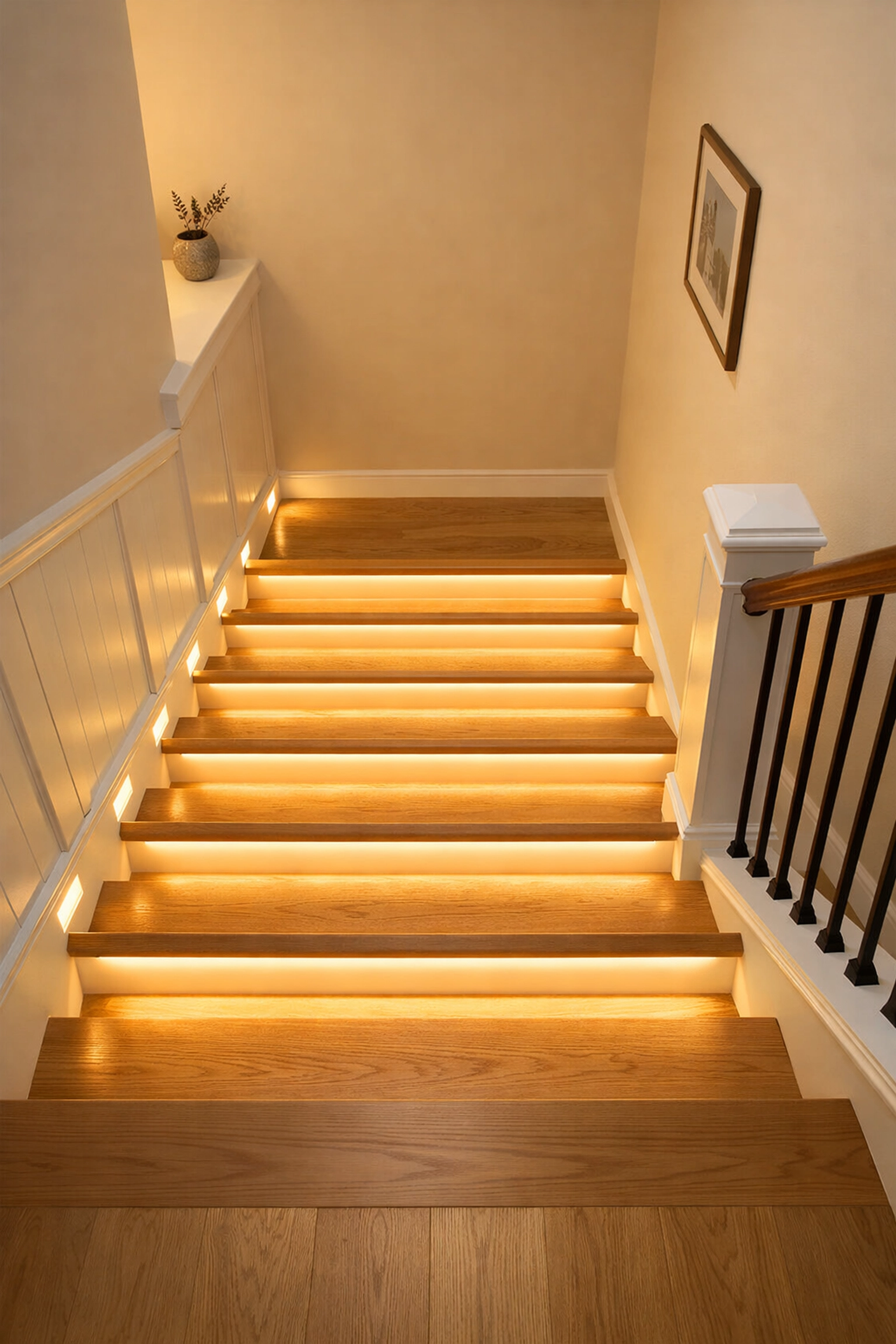
- Step Lighting: Low-level LED strips tucked under the lip of the handrail or along the baseboards can illuminate the treads directly without creating glare.
- Dual Switches: Ensure there are light switches at both the top and the bottom of the stairs. It sounds basic, but many older homes lack this, forcing people to navigate the stairs in the dark to reach a switch.
4. Using the Stairs as a Temporary "Waiting Room"
We’ve all done it: we have a pile of mail, a pair of shoes, or a basket of laundry that needs to go upstairs, so we set it on the bottom step "just for a minute."
In the world of occupational therapy, this is known as a major trip hazard. Stairs should be treated as a high-traffic highway, not a storage unit. Even if you think you’ll remember the item is there, a moment of distraction: a phone ringing or a doorbell: can cause you to forget, leading to a trip.
The Fix:
Implement a "Zero Objects" policy. Nothing: absolutely nothing: should ever be placed on the treads or the landings. If you need to move items between floors, use a "stair basket" that sits safely on a table near the stairs, not on them. Only carry items if you can do so while keeping at least one hand firmly on the handrail. If an item requires two hands to carry, it shouldn't be carried by someone navigating stairs alone.
5. The "Socks-Only" Hazard
Hardwood and laminate stairs are beautiful, but they are also incredibly slick. Walking on these surfaces in standard socks is essentially like walking on ice. Even "non-slip" socks can lose their grip over time or bunch up under the foot, creating an unstable base.
The Fix:
The safest way to navigate stairs is with footwear that has a firm, rubberized sole and a closed heel. Avoid loose slippers or "flip-flops," which can easily catch on the edge of a step.
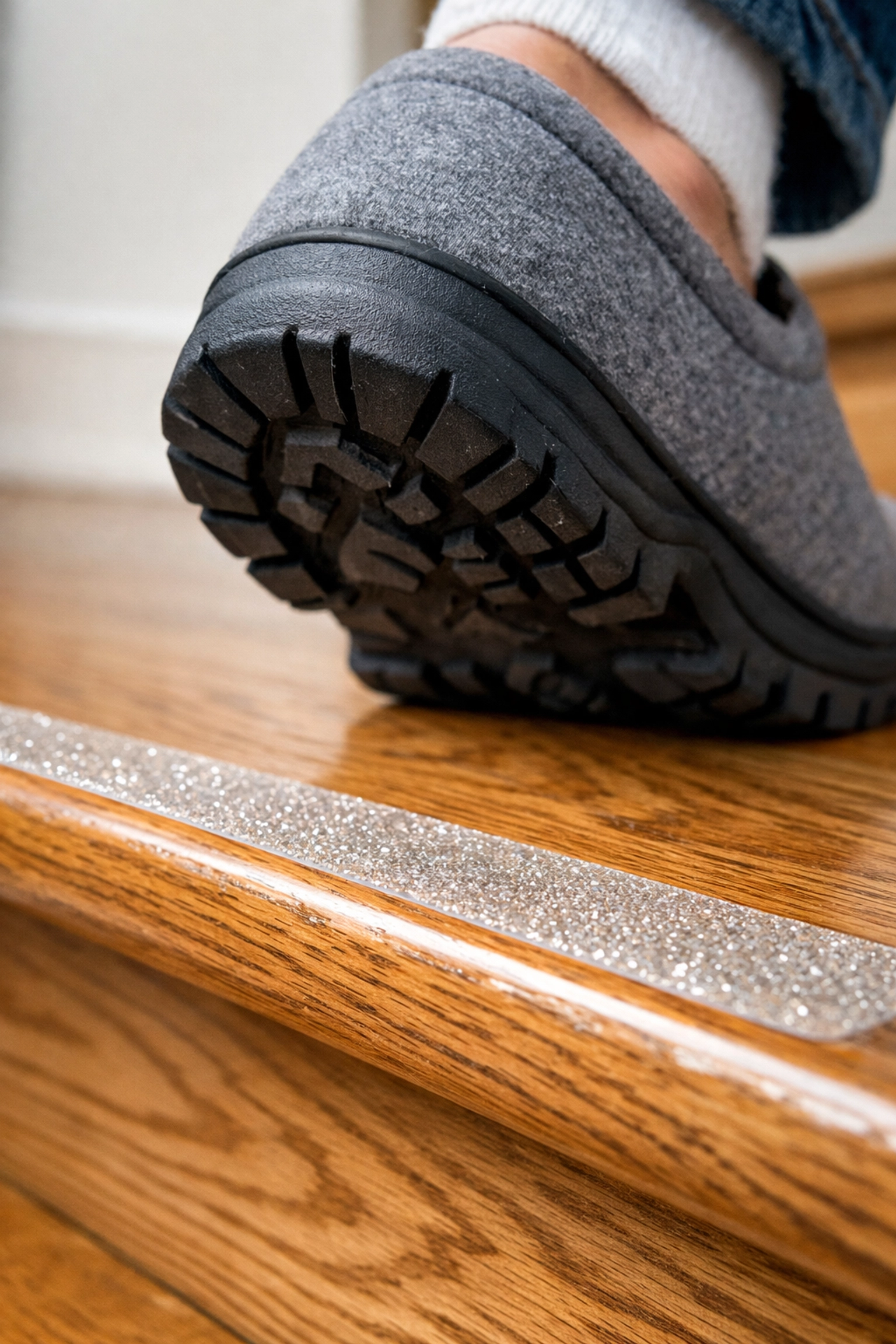
If you prefer to be barefoot or in socks inside, you must address the stair surface itself. Applying clear, adhesive anti-slip treads is an excellent way to add "grit" to the stairs without hiding the beauty of the wood. These treads provide the friction necessary to prevent the foot from sliding forward as it lands.
6. Ignoring "Ghost" Creaks and Loose Boards
We often get used to the "personality" of our homes: the way the third step creaks or the way the handrail wiggles just a little bit at the top. However, these are often early warning signs of structural fatigue.
A loose tread (the horizontal part you step on) can shift slightly under your weight, causing a momentary loss of balance. A loose handrail bracket is even more dangerous; if you actually need to lean on it to recover your balance, a loose bracket might give way entirely.
The Fix:
Conduct a monthly "Stair Audit." Walk the stairs slowly and intentionally.
- Check the Treads: Does any board shift or tilt? If so, it needs to be secured with wood screws (not nails, which can pull out over time).
- Check the Brackets: Grab the handrail and give it a firm shake. It should feel like it is part of the wall. If there is any play, tighten the screws or move the bracket to a solid wall stud.
- Check the Carpet: If your stairs are carpeted, check for "rounding." Over time, carpet can pull away from the "crotch" of the step (where the tread meets the riser), creating a slippery, sloped surface. If the carpet is loose or bunched, it needs to be re-stretched or replaced.
7. The Rushing Mentality
The final mistake isn't about the stairs themselves, but about how we use them. We often treat stairs as a hurdle to get over as quickly as possible. We rush to answer the phone or head downstairs in a hurry to start the coffee.
Rushing leads to "shuffling," where the feet don't lift high enough to clear the edge of the next step. It also leads to skipped handrails.
The Fix:
Practice "Mindful Climbing." This sounds simple, but it’s a habit that saves lives.
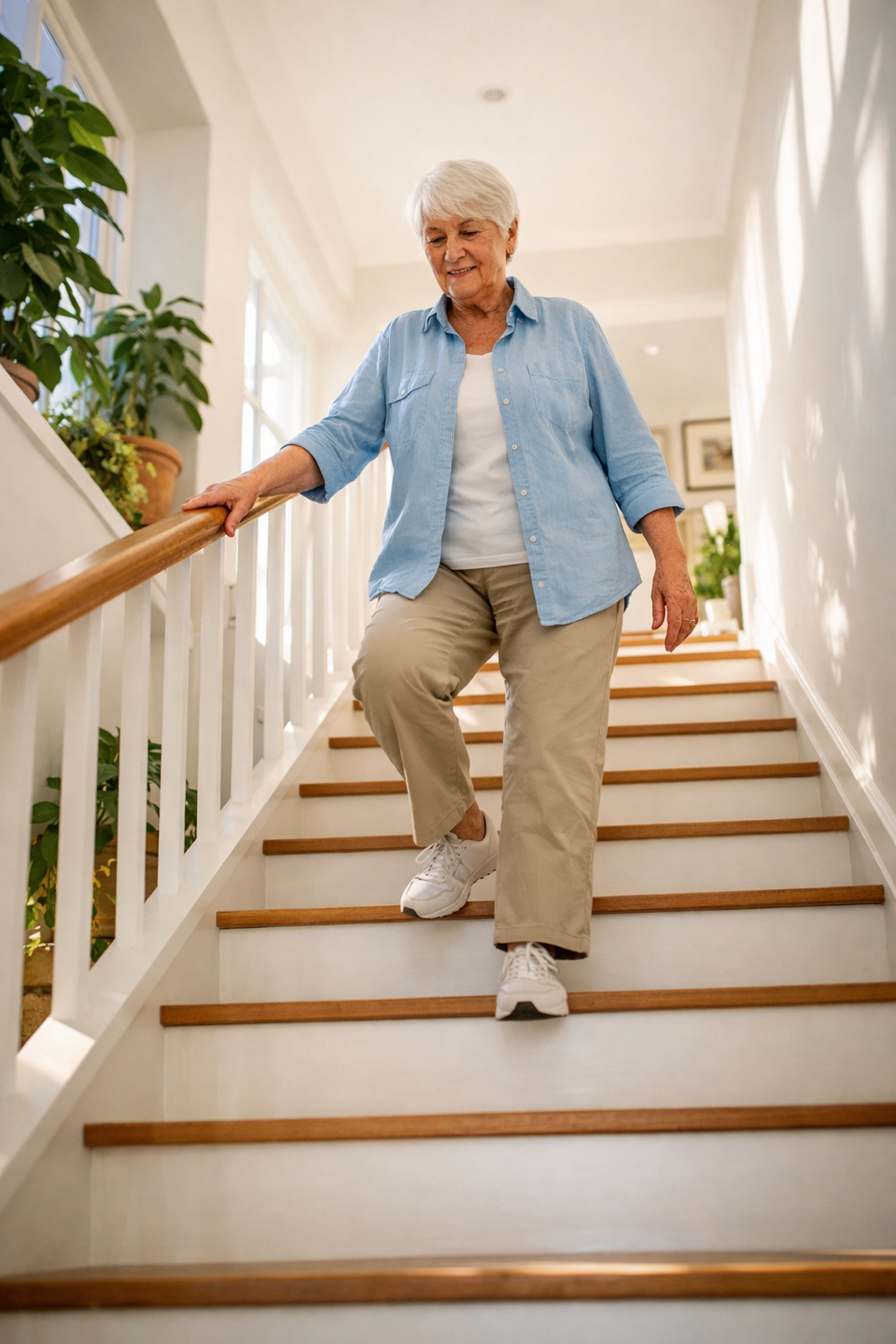
- The Three-Point Rule: At any given time, try to have three points of contact (two feet and one hand, or two hands and one foot).
- Pause at the Top: Before you start your descent, stop. Take a breath. Ensure your vision is clear and you aren't feeling dizzy.
- One Step at a Time: It is safer to bring both feet onto a single step before moving to the next one, rather than using an alternating gait (one foot per step). This is called "step-to" climbing, and it significantly increases your stability.
The Role of Physical Assessment
While fixing the environment is vital, we also have to look at the person using the stairs. Often, a fear of stairs leads people to avoid them entirely. While this might seem safe, it actually leads to muscle atrophy in the legs and a further decline in balance.
If you find that stairs are becoming increasingly difficult, it may be time for a mobility assessment. A physical therapist can help identify if the issue is leg strength, inner-ear balance, or perhaps a vision issue like cataracts or bifocal interference. (Note: Many people don't realize that looking through the bottom portion of bifocals while walking down stairs can blur the steps, making them appear further away than they are).
Creating a Reassuring Environment
At Fall Guys Products, our goal isn't to make you afraid of your home. It’s to give you the tools and knowledge to feel confident in it. Stairs don't have to be a "no-go" zone. With the right lighting, solid handrails, and a clutter-free path, you can maintain your independence and move through your home with peace of mind.
Take ten minutes today to walk your stairs. Check the rail, look at the lighting, and clear away any "stair piles." Those small changes are the first steps toward a much safer home.

