
Stairs are often the most daunting part of a home for those concerned about mobility. We use them dozens of times a day, usually without thinking twice. However, for many seniors and those with balance concerns, the staircase represents the single most significant fall risk in the entire house.
At Fall Guys Products, we believe that staying safe at home shouldn’t feel like a chore or a source of anxiety. It’s about understanding the environment and making small, thoughtful adjustments. Often, the things that make stairs dangerous aren't the stairs themselves, but common mistakes in how we maintain, light, or navigate them.
By identifying these seven common mistakes, you can transform a high-risk area into a secure path, ensuring independence and peace of mind for everyone in the household.
1. Choosing Aesthetics Over Traction
We all love the look of polished hardwood or elegant tile. In home design, high-gloss finishes are often seen as a mark of quality. Unfortunately, when it comes to stair safety, a beautiful, slick surface is a recipe for a slip. Most falls on stairs occur because the foot loses its "grip" on the tread, rather than the person simply tripping over an object.
The mistake here is assuming that because the stairs were built to code, they are inherently safe to walk on in socks or smooth-soled slippers. Polished wood, laminate, and tile provide almost zero friction, especially if there is any moisture or dust present.
How to Fix It:
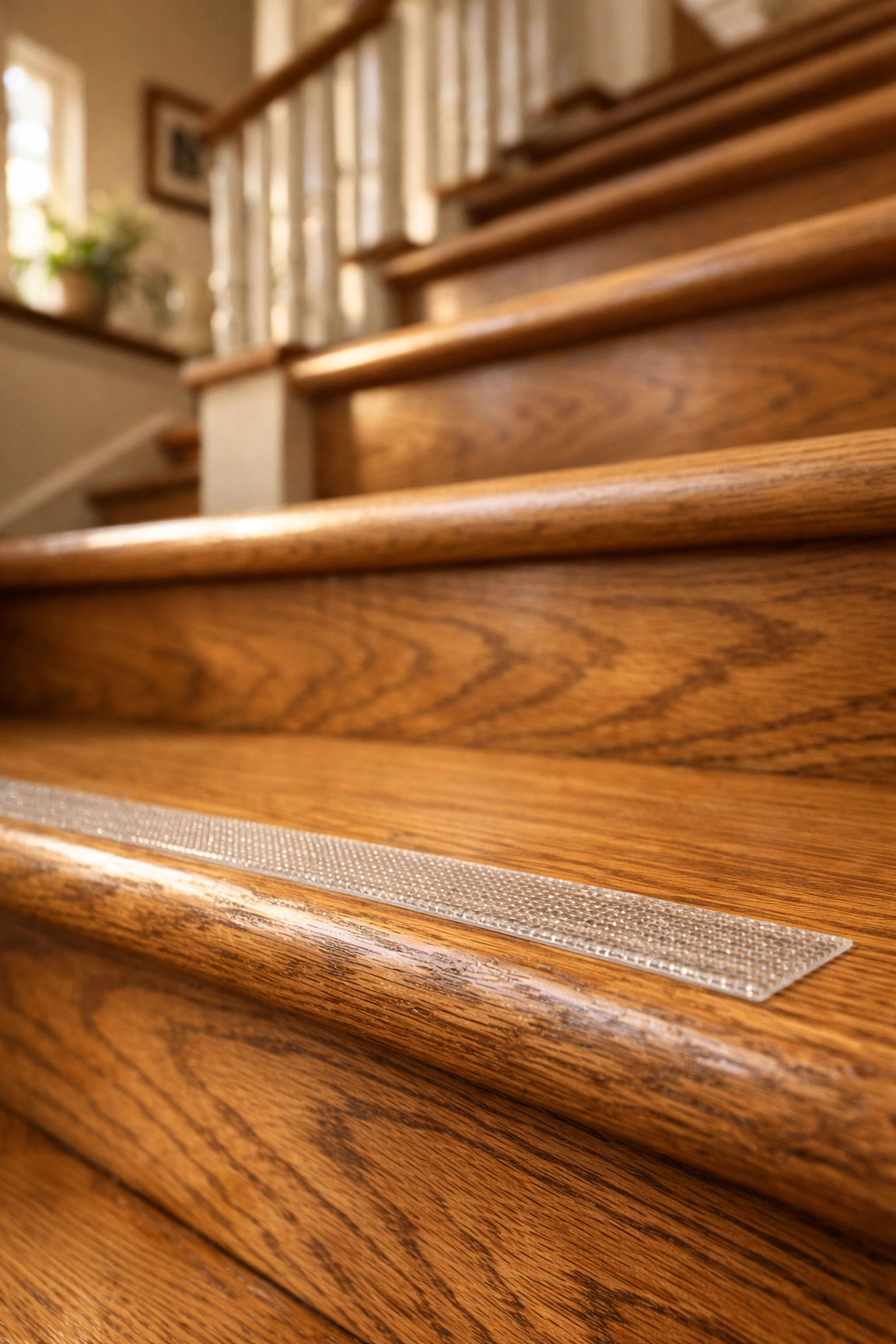
You don’t have to carpet your beautiful stairs to make them safe. Anti-slip transparent adhesive strips are a fantastic way to add "grit" to the edge of each step without hiding the wood grain. If you prefer a more tactile feel, rubberized treads or low-pile carpet runners can provide the necessary friction. The goal is to ensure that when your foot lands, it stays exactly where you put it.
2. Settling for "Good Enough" Lighting
Many older homes have a single light fixture at the top or bottom of the stairs. This creates shadows that can mask the edge of the steps, making it difficult to judge exactly where to place your foot. As we age, our eyes require more light to process depth and contrast. Dimly lit stairwells are one of the leading causes of "overshooting" a step or missing the landing entirely.
Another common lighting mistake is having a switch only at one end of the stairs. If you’re at the bottom and the light is off at the top, you might be tempted to "just make the climb" in the dark rather than walking back to find a switch.
How to Fix It:
Install high-lumen LED lighting that illuminates the entire length of the staircase. Ideally, you want light coming from above that doesn't create a glare. Motion-sensor lights are an excellent hands-free solution; they turn on the moment you approach the stairs, ensuring you never have to navigate in the dark. If a full electrical upgrade isn't in the cards, battery-powered LED puck lights can be adhered along the baseboards to create a "runway" effect.
3. Ignoring the "Bottom Step Illusion"
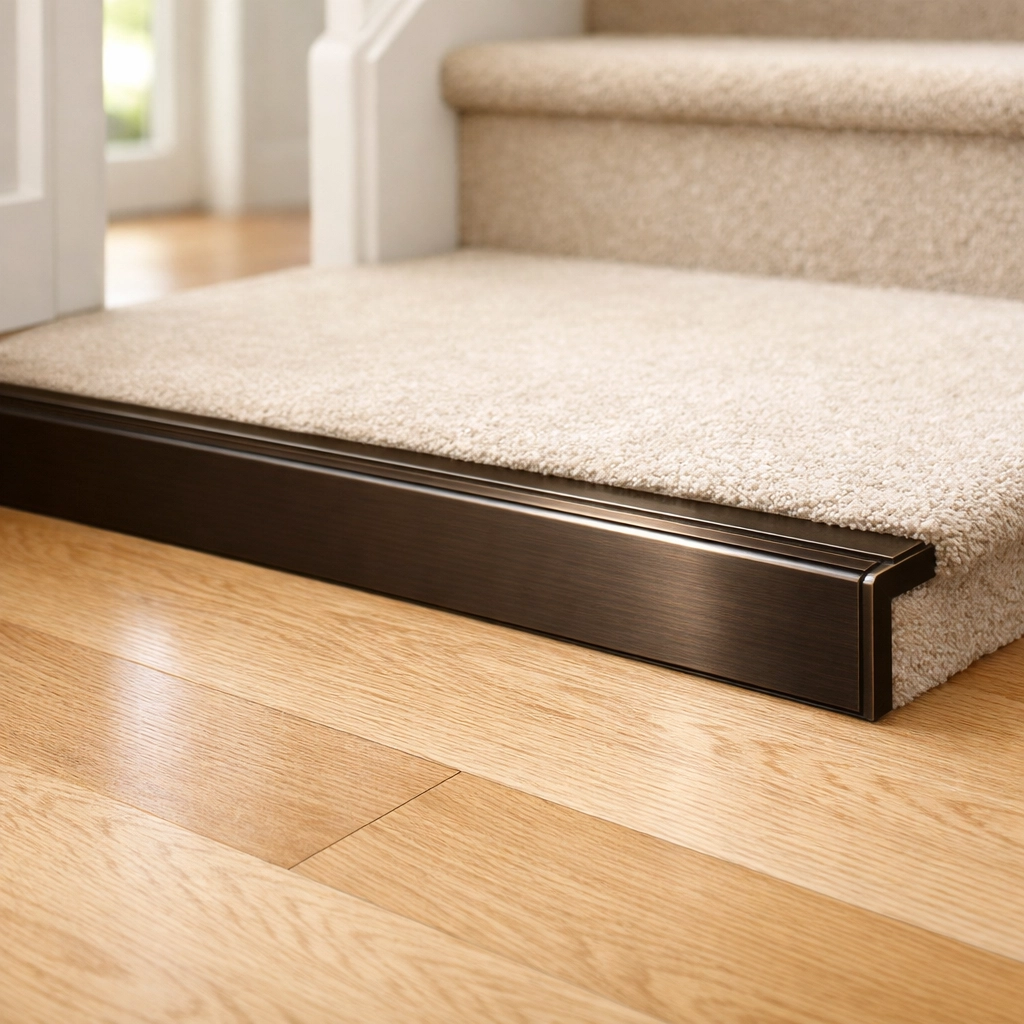
There is a very specific architectural phenomenon often found in homes where the flooring of the hallway or landing perfectly matches the material of the stairs. When you are descending, the last step can visually blend into the floor below. This is known as the "bottom step illusion."
Because the colors and patterns match, your brain perceives the floor as being one step higher than it actually is. You expect to find solid ground, but your foot continues to fall for another several inches. This leads to a jarring impact that can easily cause a person to lose their balance and fall backward or sideways.
How to Fix It:
Create visual contrast. You can do this by using a different color of anti-slip tape on the very last step or by painting the "nosing" (the edge) of the bottom step a contrasting color. The goal is to send a clear signal to your brain that says, "This is the end of the stairs." Even a small strip of high-visibility tape can break the illusion and prevent a dangerous misstep.
4. Relying on Decorative or Loose Handrails
Not all handrails are created equal. In many homes, handrails are treated as architectural accents rather than safety devices. They might be too thick to wrap your hand around, or they may be carved into decorative shapes that are impossible to grip firmly if you start to slip.
Even more dangerous are handrails that have become loose over time. If a handrail "wiggles" when you put weight on it, it won't be able to support you during a fall. A handrail should be able to withstand the full weight of an adult pulling on it suddenly.
How to Fix It:
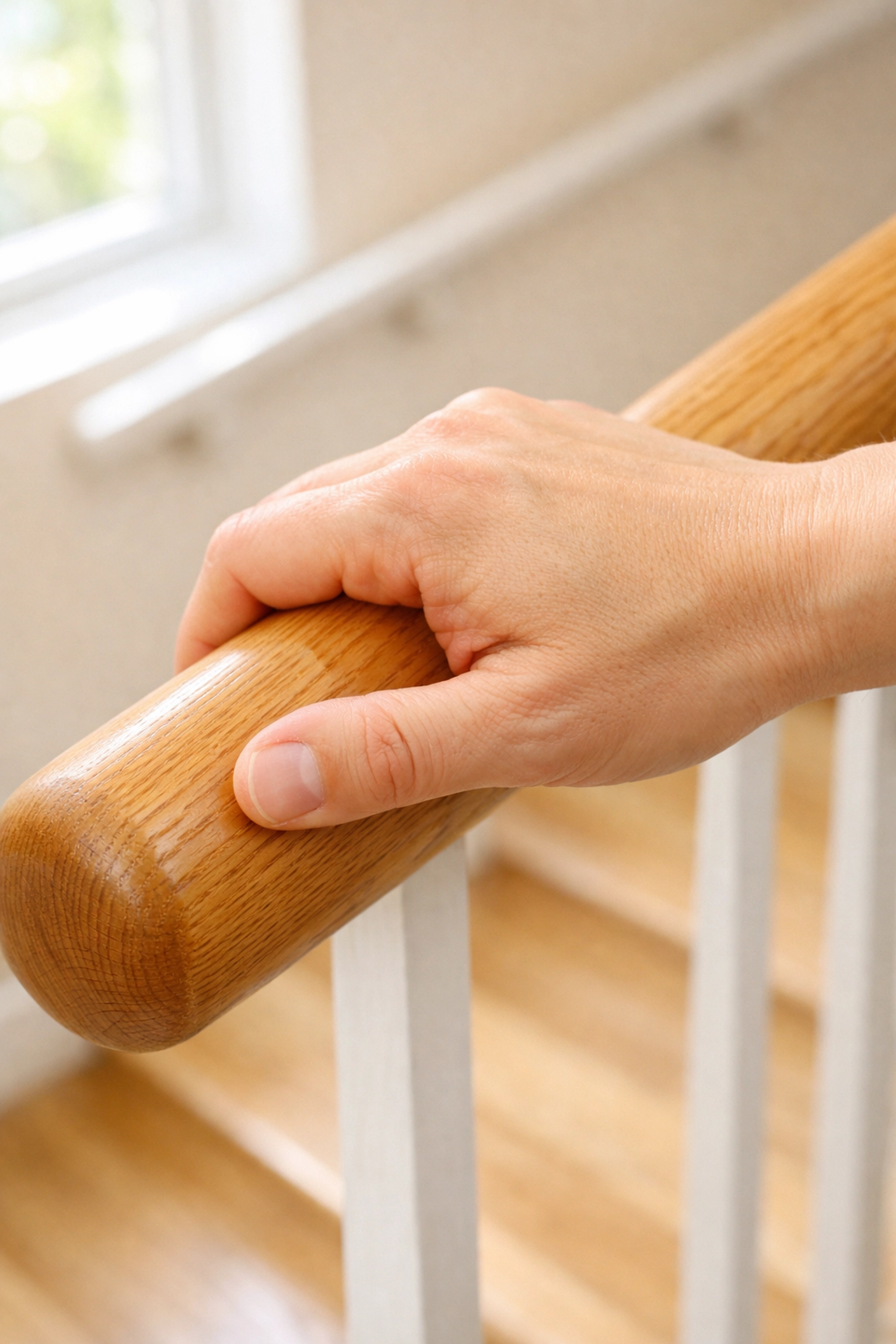
Ensure your handrail is "circular" or "mop-handle" shaped, with a diameter of about 1.5 to 2 inches. This allows for a "power grip," where the thumb and fingers can overlap. If your stairs only have a rail on one side, consider installing a second rail on the opposite wall. Having two points of contact provides significantly more stability. Finally, check the brackets. Ensure they are screwed directly into the wall studs, not just the drywall.
5. Using Stairs as a Temporary Storage Shelf
We’ve all done it: we find something that needs to go upstairs, so we set it on the bottom step to take up "on the next trip." This habit is one of the most common causes of tripping. When we walk up or down stairs, we rely heavily on muscle memory and a clear path. We aren't always looking directly at our feet for every single step.
Items like shoes, books, or laundry baskets left on the stairs narrow the walking path and create a snag hazard. Even a small item like a stray sock can cause a foot to slide.
How to Fix It:
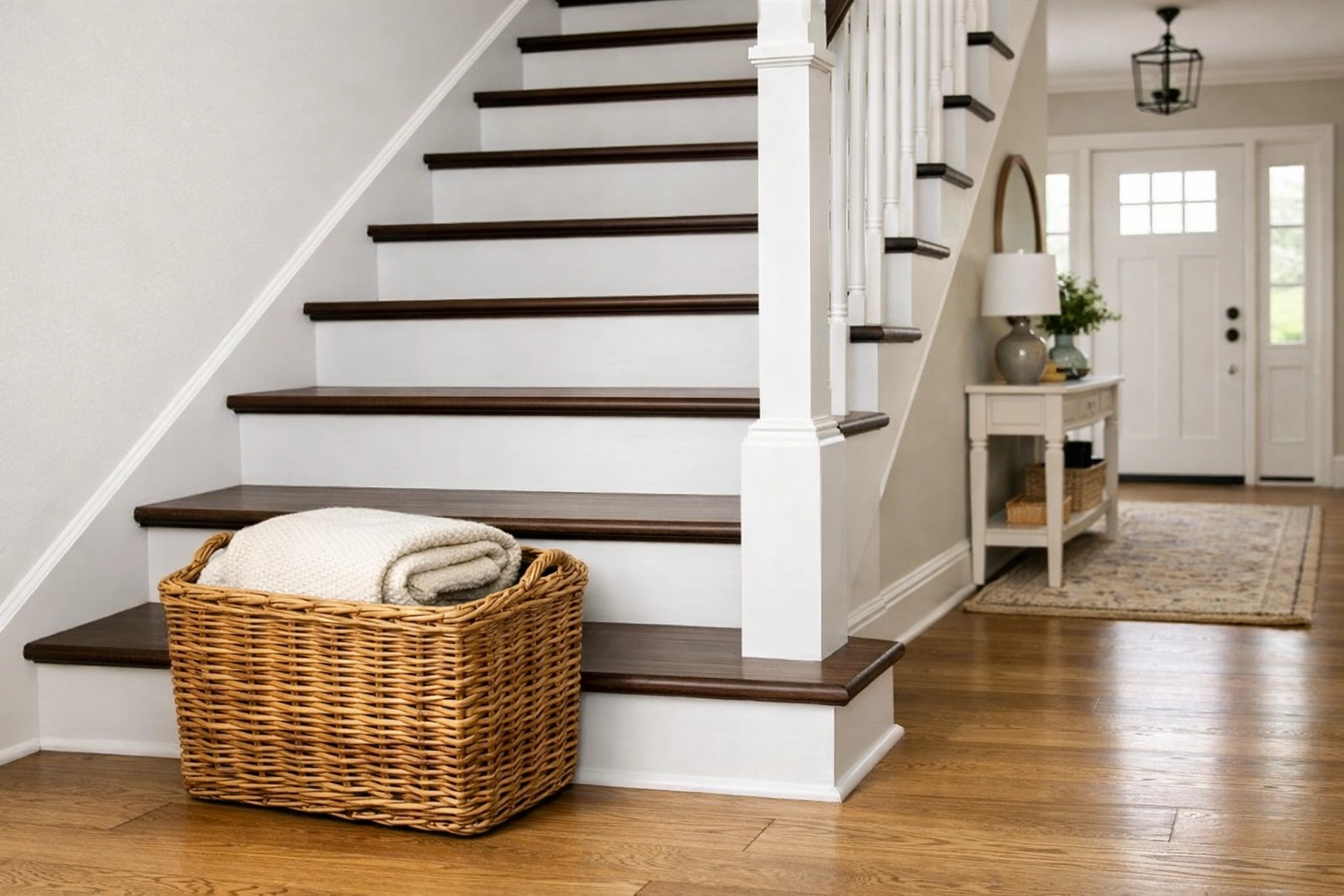
Establish a "zero-tolerance" policy for items on the stairs. If something needs to go up or down, put it in a dedicated "stair basket" located safely on the floor at the landing: never on the steps themselves. Better yet, make it a habit to carry items in a shoulder bag so your hands remain free to use the handrails.
6. Overlooking Inconsistent Step Heights
In a perfect world, every step on a staircase would be exactly the same height (the "rise") and the same depth (the "run"). However, in many homes: especially older ones or those with DIY additions: steps can vary by as much as half an inch.
The human brain is remarkably good at calculating the rhythm of a staircase within the first two steps. Once that rhythm is set, we stop consciously measuring the distance for every subsequent step. If the fourth step is slightly taller than the third, your toe is likely to catch the edge, resulting in a forward trip.
How to Fix It:
While you may not be able to rebuild your entire staircase, you can identify "problem steps" with a simple tape measure. If you find a step that is significantly different from the others, it needs to be highlighted. Use high-contrast tape on the edge of that specific step to alert your subconscious to the change in rhythm. If the discrepancy is large (more than 3/8 of an inch), it may be worth consulting a carpenter to shim or adjust the tread.
7. Rushing and Carrying Too Much
Safety isn't just about the environment; it’s also about behavior. The most dangerous way to use a staircase is in a hurry, with both hands full. Whether it’s carrying a heavy laundry basket or a tray of food, if your hands are occupied, you have no way to steady yourself if you trip.
Furthermore, rushing often leads to "planting" only the front half of the foot on the step. This reduces your base of support and increases the likelihood of your heel sliding off the edge when descending.
How to Fix It:
The "One Hand Rule" is a lifesaver: never use the stairs unless at least one hand is free to grip the rail. If you have a lot to carry, make two trips or use a small backpack. When walking, make a conscious effort to place your entire foot on each tread. Take your time. The five seconds you save by rushing aren't worth the risk of a fall that could result in weeks of recovery.
The Importance of Footwear on Stairs
While not strictly a "mistake" with the stairs themselves, what you wear on your feet is a critical component of stair safety. Many people feel comfortable walking around the house in socks. However, on wood or tile stairs, socks act like little skis.
Loose-fitting slippers with no backs are equally dangerous, as they can easily slip off or catch on the edge of a step.
The Fix:
Always wear shoes or slippers with non-slip rubber soles and a "full back" that secures the heel. If you prefer to be in socks, invest in specialized "grip socks" that have rubberized patterns on the bottom. This small change in wardrobe can provide the traction necessary to stay upright even on smoother surfaces.
A Simple Stair Safety Audit
To get started on making your home safer, take a walk to your stairs right now and ask yourself these five questions:
- Can I see the edge of every single step clearly? (If not, add light.)
- Does the handrail feel rock-solid when I pull on it? (If not, tighten the brackets.)
- Are there any items currently sitting on the steps? (If so, move them.)
- Is the last step easy to distinguish from the floor? (If not, add contrast.)
- Do my feet feel "slippery" when I walk on the treads? (If so, add traction.)
Conclusion
Stair safety doesn't have to involve expensive renovations or unsightly modifications. Most of the risks associated with stairs come down to visibility, traction, and habit. By fixing these seven common mistakes, you are taking a proactive step toward a safer, more confident life at home.
Remember, the goal of fall prevention isn't to limit your movement; it's to ensure you can move through your home with total peace of mind. Taking the time to adjust your lighting, secure your handrails, and clear the path will pay dividends in safety for years to come.

