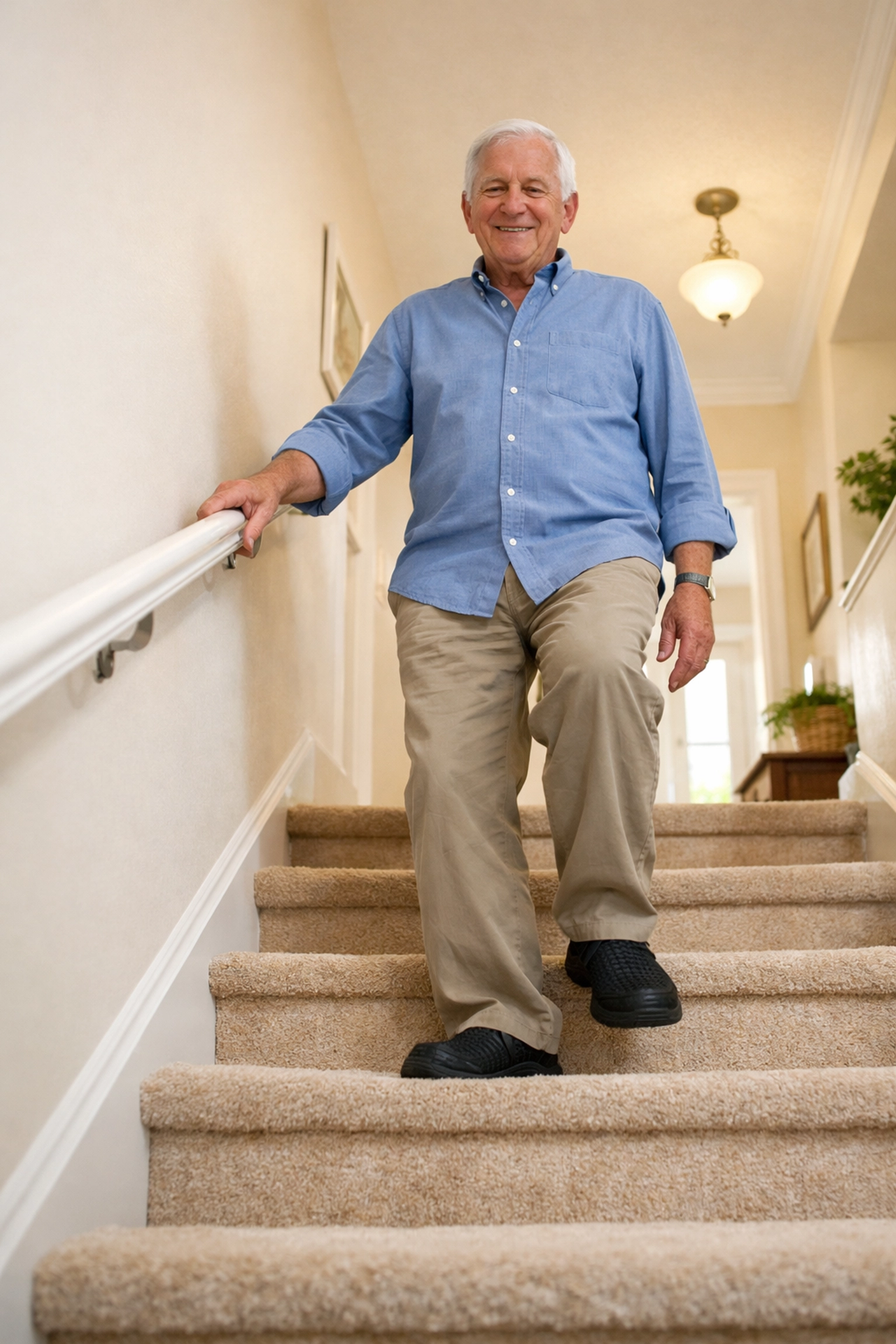
Hi there, I’m Brian Kerr, the founder of Fall Guys Products. When we talk about home safety, there is one area that consistently comes up as the biggest concern for seniors, caregivers, and families: the stairs.
Staircases are a functional necessity in many of our homes, but they are also the site of a significant number of household accidents. The thing is, most of these accidents don't happen because of a sudden, unavoidable "freak occurrence." They happen because of small, overlooked mistakes in how the stairs are designed, maintained, or used.
In my years of working in the mobility and safety field, I’ve seen that making a home "fall-safe" isn’t about a single big renovation; it’s about identifying the subtle risks and correcting them before they lead to a slip. Let’s walk through seven of the most common mistakes people make with stair safety and, more importantly, how you can fix them today.
1. Using Incorrect Riser and Tread Dimensions
Most of us never think about the measurements of our steps until we find ourselves stumbling. The "rhythm" of walking up or down a flight of stairs is determined by two things: the tread (the flat part you step on) and the riser (the vertical part between steps).
The Mistake:
Many older homes have "winding" stairs or stairs built before modern building codes were standardized. This often results in treads that are too narrow for a full foot to land on or risers that vary in height. Even a quarter-inch difference between one step and the next can trip the brain's internal "auto-pilot," causing a person to catch their toe or miss a step entirely.
The Fix:
If you are building or renovating, stick to the gold standard: treads should be between 10 and 12 inches deep, and risers should be between 6 and 7 inches high. If you already have narrow treads, you can help mitigate the risk by ensuring the "nosing" (the edge of the step) is clearly marked. For risers of varying heights, the best fix is a professional assessment to see if the staircase can be leveled or if a secondary mobility aid is needed to bypass the stairs entirely.
2. Creating an Overly Steep Slope
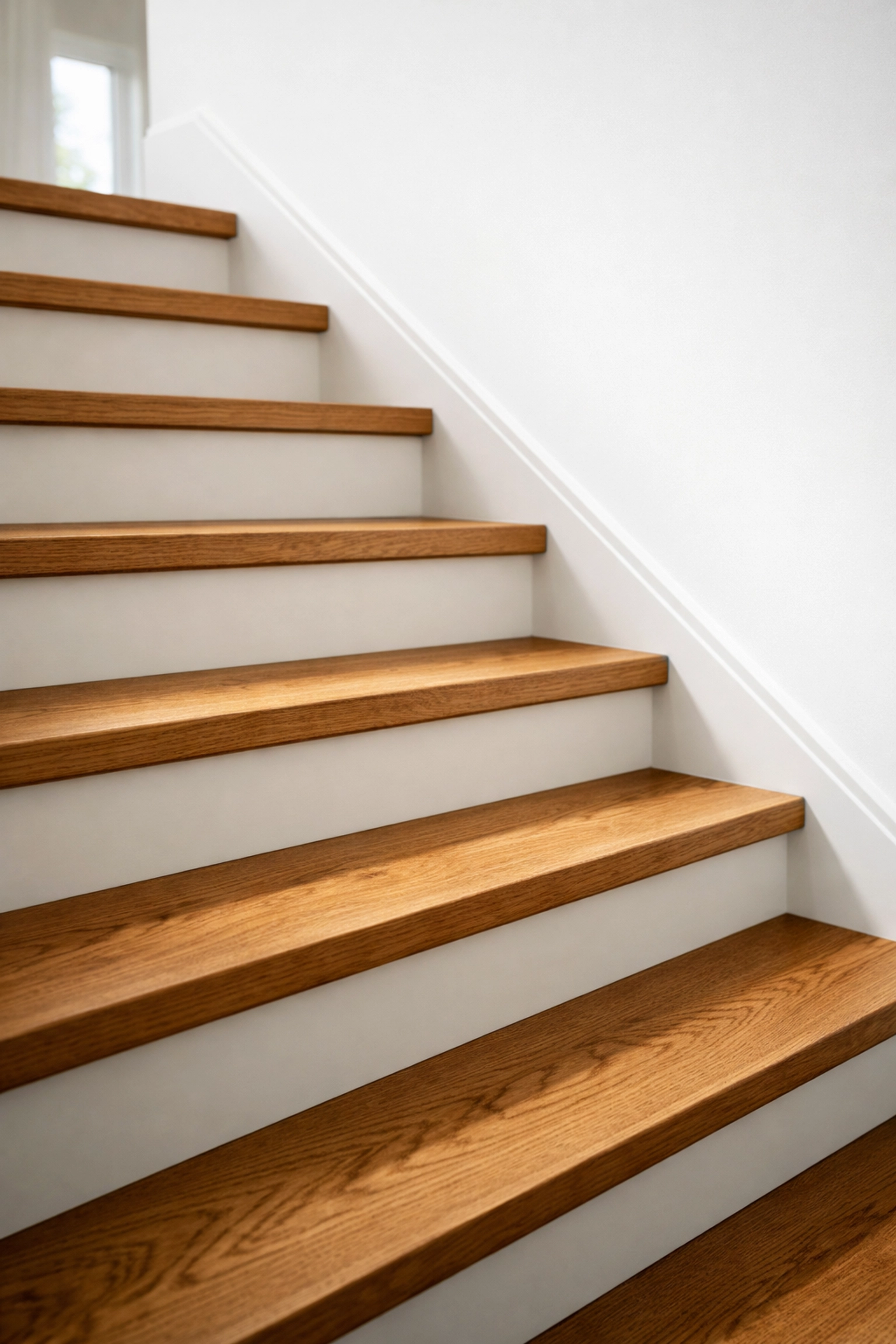
We’ve all seen them: those stairs that feel more like a ladder than a staircase. While steep stairs might save space in a small floor plan, they are a major hazard as we age.
The Mistake:
A steep staircase requires more physical exertion and better balance to navigate. As our center of gravity shifts or our muscle strength changes, descending a steep slope becomes significantly more dangerous because the momentum of gravity is harder to check with each step.
The Fix:
The ideal angle for a residential staircase is between 30 and 37 degrees. If your stairs are steeper than 37 degrees, you should consider them a high-risk zone. The fix isn't always to rebuild the whole house. Instead, focus on "pacing." Adding a landing halfway up a long, steep flight of stairs provides a place to rest and regain balance. If a landing isn't possible, ensure that the handrails are exceptionally robust to compensate for the steep grade.
3. Installing Inadequate or Missing Lighting
This is perhaps the most common mistake, and fortunately, it’s also the easiest to fix. Vision often changes as we get older; we need more light to see clearly, and our eyes take longer to adjust to transitions between light and dark.
The Mistake:
Many staircases have a single overhead light at the top or the bottom, leaving the middle of the flight in shadow. Others use low-wattage bulbs that don't provide enough contrast to see where one step ends and the next begins.
The Fix:
Visibility is everything. You should be able to see the entire flight of stairs from both the top and the bottom before you take your first step.
- Dual-End Switches: Ensure there are light switches at both the top and bottom of the stairs.
- LED Strip Lighting: Installing battery-operated or hardwired LED strips under the nosing of each step can provide a clear path without creating glare.
- Motion Sensors: Motion-activated lights are fantastic for nighttime trips to the kitchen or bathroom, ensuring you never have to fumble for a switch in the dark.
4. Neglecting Handrail Safety and Placement
A handrail shouldn't just be a decorative element; it is a critical safety tool. If you find yourself "surfing" the wall with your hand instead of gripping a rail, you have a safety gap.
The Mistake:
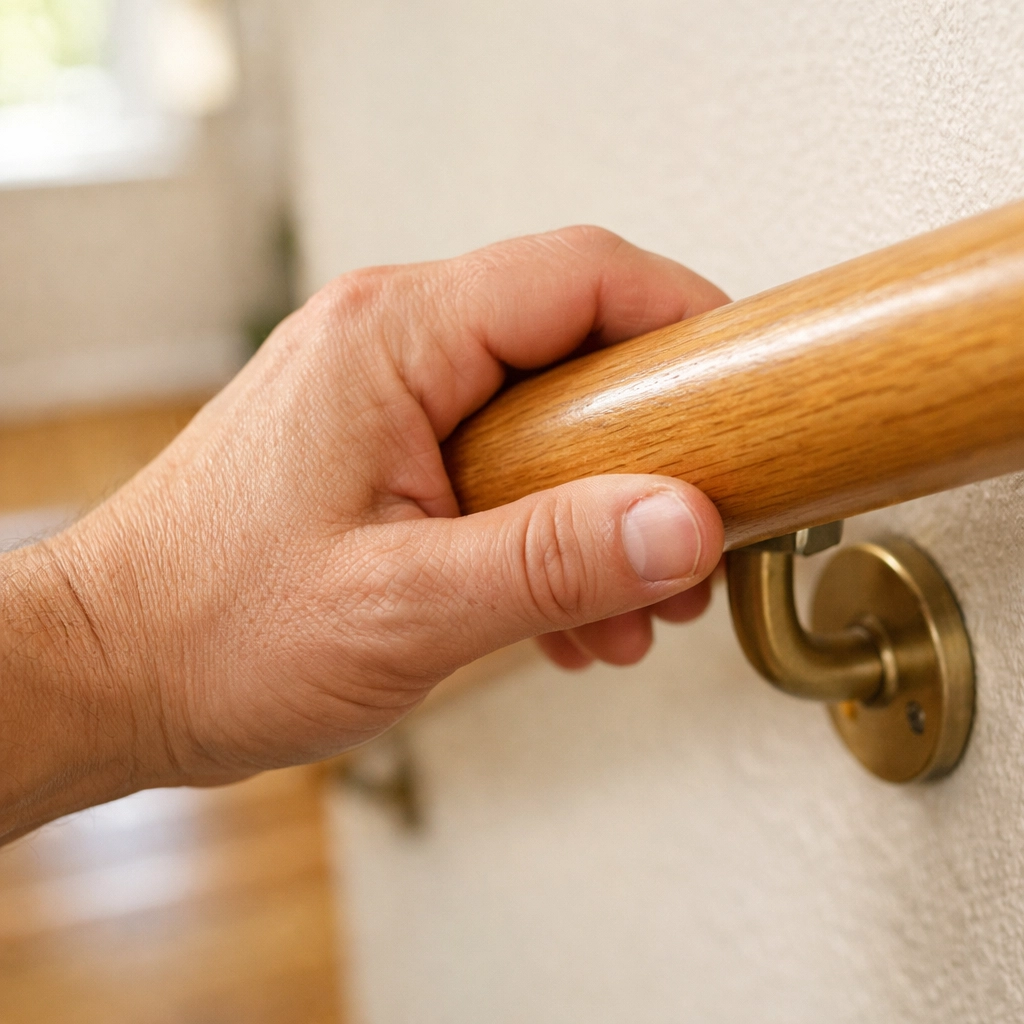
The two biggest handrail mistakes are rails that are only on one side of the stairs and rails that end too early. Many handrails stop exactly at the last step, but that is actually the point where you need the most stability as you transition to a flat floor.
The Fix:
- Double Up: Ideally, there should be a handrail on both sides of the stairs. This allows you to use your strongest side regardless of whether you are going up or down.
- The Extension: Ensure the handrail extends at least 12 inches beyond the top and bottom steps. This "lead-in" and "lead-out" allows you to find your balance before you start climbing and maintain it after you finish.
- The Grip Test: The rail should be "circumferential": meaning you can wrap your hand all the way around it. Decorative 2×4 boards or wide flat rails might look modern, but they are difficult to grip firmly in the event of a slip.
5. Using Slippery or Low-Quality Materials
The surface of your stairs dictates the amount of friction available to your feet. In the world of fall prevention, friction is your best friend.
The Mistake:
Polished hardwood, smooth tile, and glossy paint are beautiful but can be like walking on ice, especially if you’re wearing socks or smooth-soled slippers. Even worse are loose carpet runners that are held down by flimsy tacks or staples; if the carpet shifts under your weight, a fall is almost inevitable.
The Fix:
- Non-Slip Treads: If you have wooden stairs, consider adding transparent anti-slip adhesive strips. They provide grip without hiding the beauty of the wood.
- Low-Pile Carpet: If you prefer carpet, choose a tight, low-pile option. Shag or thick padding can actually hide the edge of the step and make your footing feel "mushy."
- Contrast Strips: Apply a strip of tape or paint in a contrasting color to the edge of each step. This helps the brain distinguish depth, which is vital for people with declining depth perception or bifocal lenses.
6. Leaving Objects and Debris on the Stairs
We’ve all done it: "I’ll just leave these books on the bottom step and take them up next time I go." This is a habit we have to break.
The Mistake:
Using the stairs as a temporary storage zone creates a "slalom course" that requires unnecessary stepping and balancing maneuvers. Even a small piece of mail or a pair of shoes can catch a heel or cause a slide.
The Fix:
The stairs must be a "Zero-Object Zone."
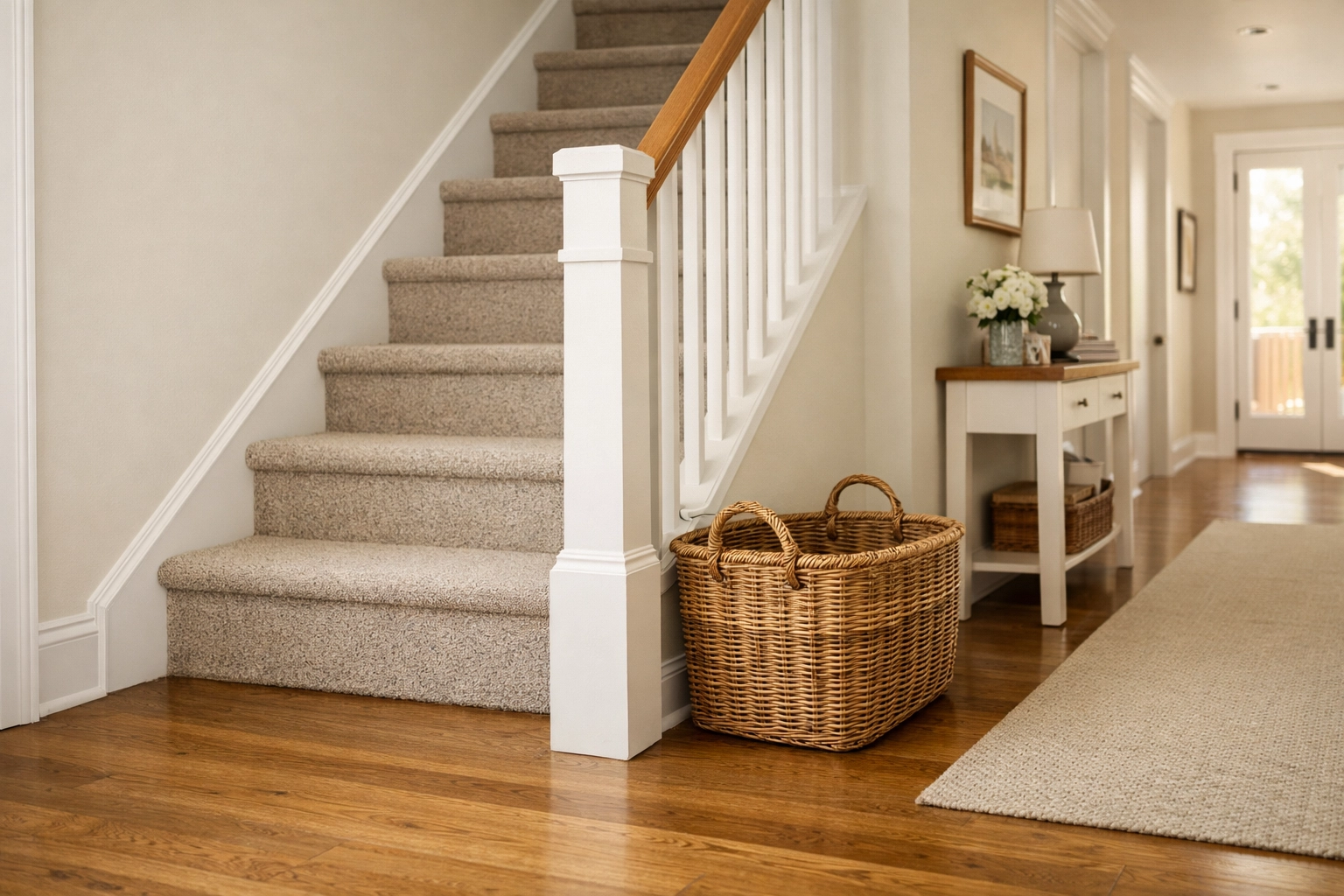
- The "Basket" Rule: If you have items that need to go up or down, keep a basket at the top and bottom of the stairs: away from the walking path. Only carry the basket when you have a free hand to hold the rail, and never leave the basket on the steps themselves.
- Clear the Outdoors: For outdoor stairs, debris like wet leaves, ice, or even overgrown bushes can be just as dangerous as indoor clutter. Regular sweeping and pruning are essential parts of stair safety.
7. Ignoring Maintenance and Building Codes
Staircases are structural elements that undergo a lot of stress over the years. Like any other part of the home, they require maintenance.
The Mistake:
Ignoring a "squeaky" board or a slightly wobbly handrail is a recipe for disaster. These are early warning signs that the structural integrity of the staircase is changing. Furthermore, many people ignore local building codes during DIY renovations, which can lead to stairs that are fundamentally unsafe.
The Fix:
Conduct a "Stair Audit" once every few months.
- Walk the stairs and listen for creaks or loose boards.
- Firmly shake the handrails to ensure they haven't loosened from the wall studs.
- Check that the lighting is still bright and the bulbs are functioning.
If you find a problem, don't wait. A loose handrail can be tightened in ten minutes, but a fall can change a life in a second. If you’re unsure, consulting a professional contractor or an occupational therapist for a home assessment is a wise investment in your independence.
A Note on Personal Habits
Beyond the physical environment, how we use the stairs matters just as much. One of the biggest human errors is rushing. We hear the phone ring or someone at the door, and we move faster than our balance allows.
Another factor is footwear. Walking on stairs in socks is one of the leading causes of domestic falls. Whenever possible, wear shoes with non-slip soles or "grip socks" that provide traction. If you wear bifocals, be extra cautious; the lower portion of your lens can distort the view of the steps below you. Tucking your chin to look through the top part of your glasses can help you see the stairs more accurately.
Moving Forward with Confidence
Stair safety doesn't have to be overwhelming. You don't need to rebuild your home tomorrow. Start with the "low-hanging fruit": clear the clutter, upgrade your light bulbs, and check your handrails.
By addressing these seven common mistakes, you aren't just making your stairs safer: you're preserving your ability to move freely and confidently in your own home. At Fall Guys Products, we believe that staying safe is the key to staying independent. Take it one step at a time, and don't be afraid to ask for help making these adjustments. Your safety is worth the effort.