
For many of us, the stairs in our homes are something we navigate dozens of times a day without a second thought. They are a functional necessity, a way to get from the kitchen to the bedroom or down to the laundry room. However, as we age or as we care for others, those same familiar steps can start to feel a bit more daunting.
Statistically, staircases are one of the most common locations for falls within the home. The good news is that most stair-related accidents aren't "just part of getting older." They are often the result of specific environmental factors that can be identified and corrected. By looking at your staircase through the lens of safety and ergonomics, you can transform a potential hazard into a secure part of your home.
Here are seven common mistakes people make with stair safety and, more importantly, the practical ways you can fix them.
1. The Rhythm Breaker: Inconsistent Riser Heights
Most people don’t realize that walking up or down stairs is a highly rhythmic, subconscious activity. Your brain and body quickly "map" the height of the first two steps, and then your muscles rely on that rhythm for the rest of the flight. This is why even a tiny variation in the height of a step: known as the "riser": can lead to a trip.
If one step is just 5 to 10 millimeters higher or lower than the others, your foot may not clear the edge of the tread, or you might "over-step," losing your balance. These inconsistencies often happen during home renovations when new flooring is laid over old stairs without adjusting the overall rise, or in older homes where the house has settled unevenly.
How to Fix It:
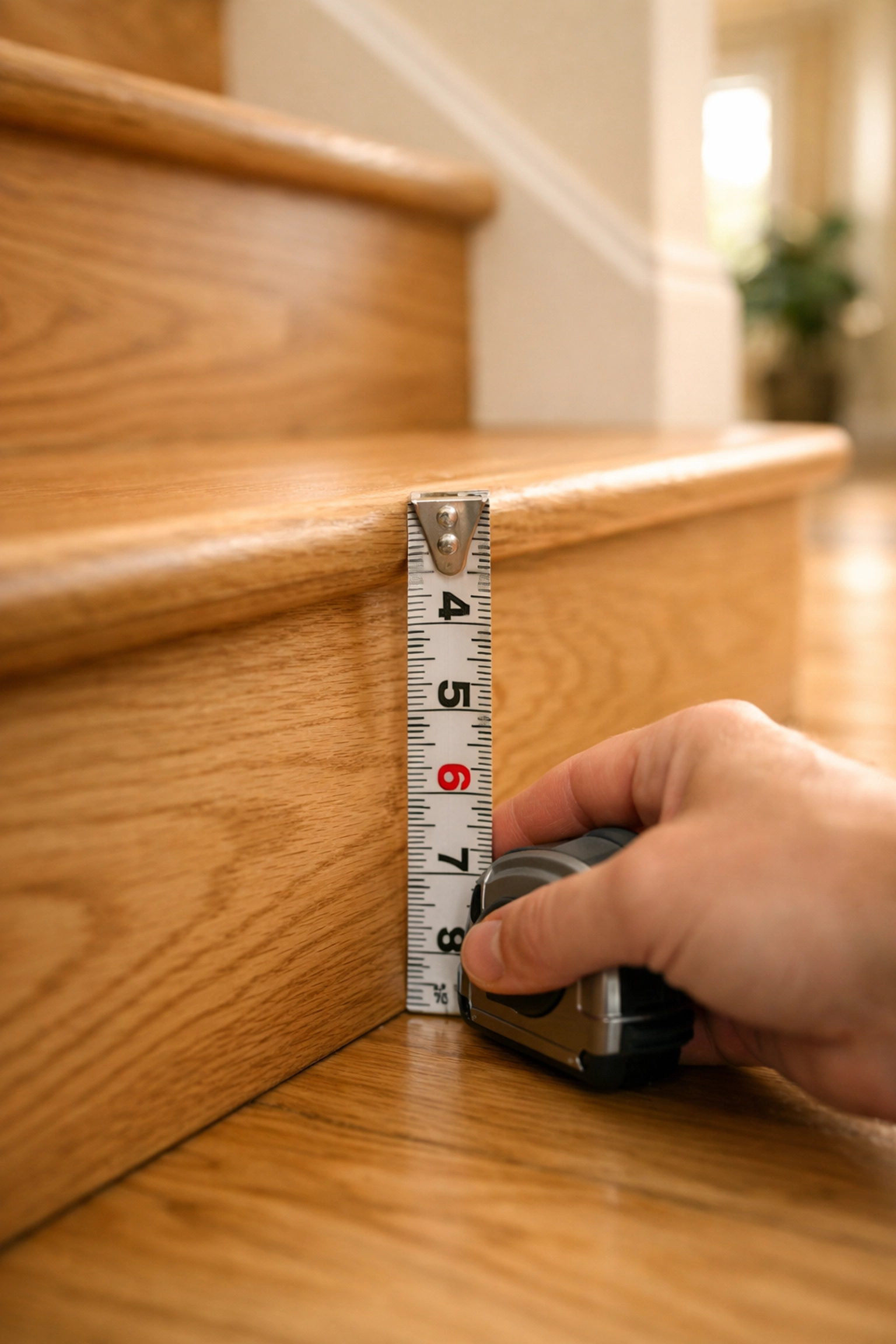
The best way to address this is to measure every single step in the flight. Use a tape measure to check the vertical distance from one tread to the next. If you find a significant discrepancy, it may be time to consult a professional carpenter. In the short term, you can use visual cues like high-contrast grip tape on the edges of the inconsistent steps to alert the brain that a change is coming, though a structural fix is the safest long-term solution.
2. The Narrow Margin: Shallow Treads
The "tread" is the horizontal part of the step where you place your foot. In many older homes, or in tight spaces like basement stairs, these treads are often too shallow. When a tread is less than 230 mm (about 9 inches), it doesn’t provide enough surface area for the average foot to land securely.
Shallow treads are particularly dangerous when going downstairs. If your heel cannot firmly plant on the step, you are forced to turn your feet sideways or walk on the balls of your feet, both of which significantly reduce your stability.
How to Fix It:
If you are remodeling, aim for a tread depth of 250 mm to 280 mm. If a full rebuild isn't an option, ensure that the "nosing" (the part of the step that overhangs the one below) isn't creating a trip hazard. Sometimes, adding a landing to break up a long, steep flight can help, but the most effective fix for shallow treads is usually a structural adjustment to increase the "run" of the staircase.
3. The Handrail Gap: Inadequate or Missing Support
A handrail shouldn't just be a decorative element; it is a life-saving tool. A common mistake is having a handrail on only one side of the stairs. As balance or strength changes, having a dual-support system becomes essential. Another frequent error is a handrail that stops a few inches short of the top or bottom step.
When you reach for a rail and it isn’t there, or it ends before you’ve reached level ground, your center of gravity shifts unexpectedly. This "dead zone" at the transition points is where many falls occur.
How to Fix It:
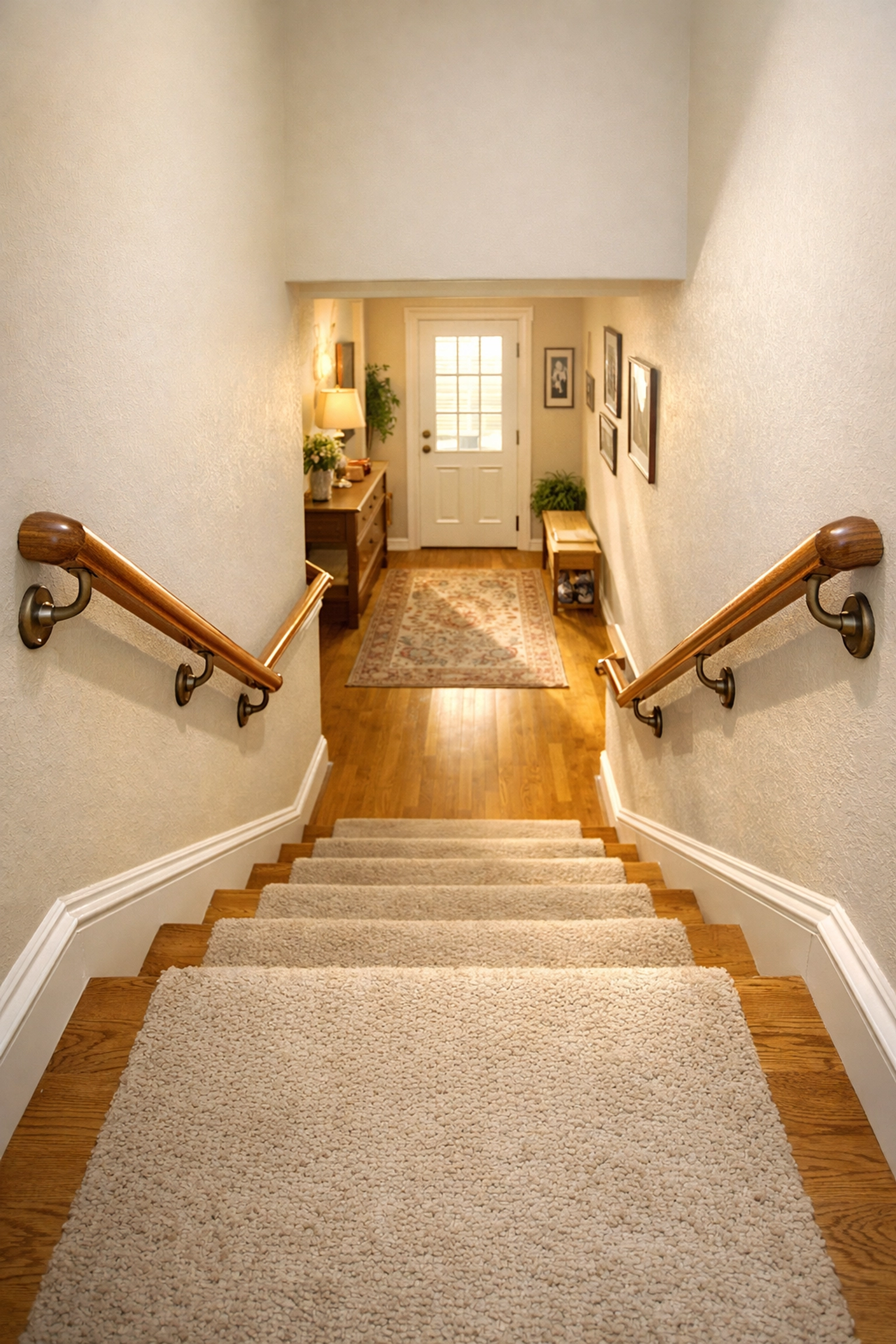
Ideally, every staircase should have sturdy handrails on both sides. The rail should be at a consistent height (usually between 34 and 38 inches) and should extend at least 300 mm (12 inches) beyond the top and bottom risers. This allows you to maintain a firm grip until your feet are safely on a flat surface. Ensure the rail is "graspable": meaning you can wrap your fingers all the way around it: rather than a wide, flat decorative board that you can only rest your palm on.
4. The Shadow Effect: Inadequate Lighting
We often underestimate how much our vision contributes to our balance. As we age, our eyes require more light to see clearly, and our depth perception can diminish. Poor lighting on a staircase creates shadows that can camouflage the edge of a step, making a flat landing look like another drop, or vice versa.
A single, dim overhead bulb at the top of the stairs is rarely enough. It often casts the lower half of the flight into darkness or creates a glare that can be disorienting.
How to Fix It:
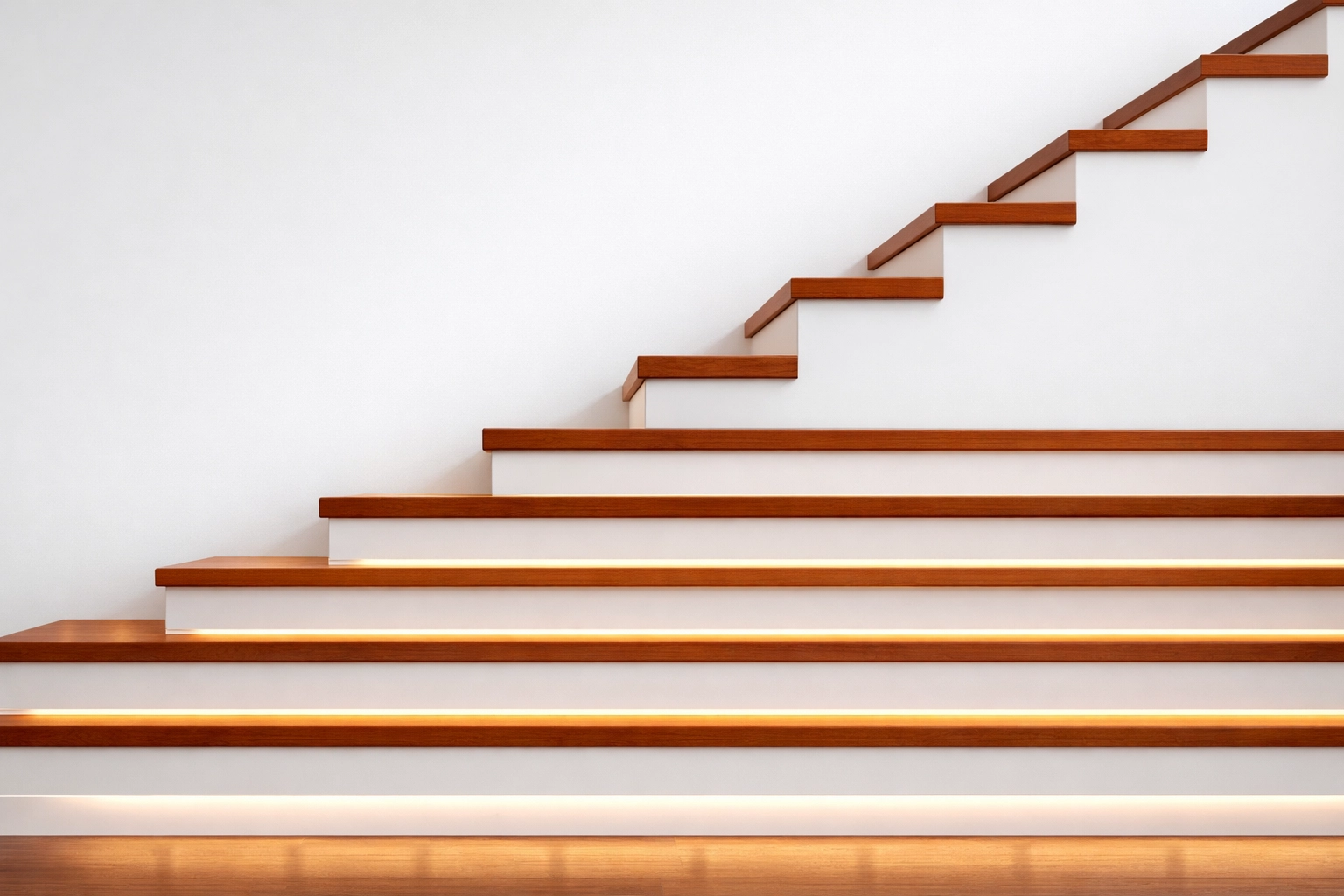
Lighting should be bright, uniform, and shadow-free. Consider installing LED strip lighting under the lip of each tread or mounting motion-activated lights along the baseboards. This ensures that the edge of every step is clearly defined. Also, ensure there are light switches at both the top and the bottom of the stairs so you never have to navigate the flight in the dark to reach a switch.
5. The "Socks-on-Wood" Trap: Slippery Surfaces
Polished hardwood, sleek stone, or glossy tile stairs can look beautiful, but they are incredibly slippery, especially if you are wearing socks or smooth-soled slippers. Even carpet can be a hazard if it is plush and rounded at the edges, which can make the "edge" of the step feel unstable underfoot.
The goal for any stair surface is "coefficient of friction", basically, you want enough grip that your foot stays exactly where you put it.
How to Fix It:
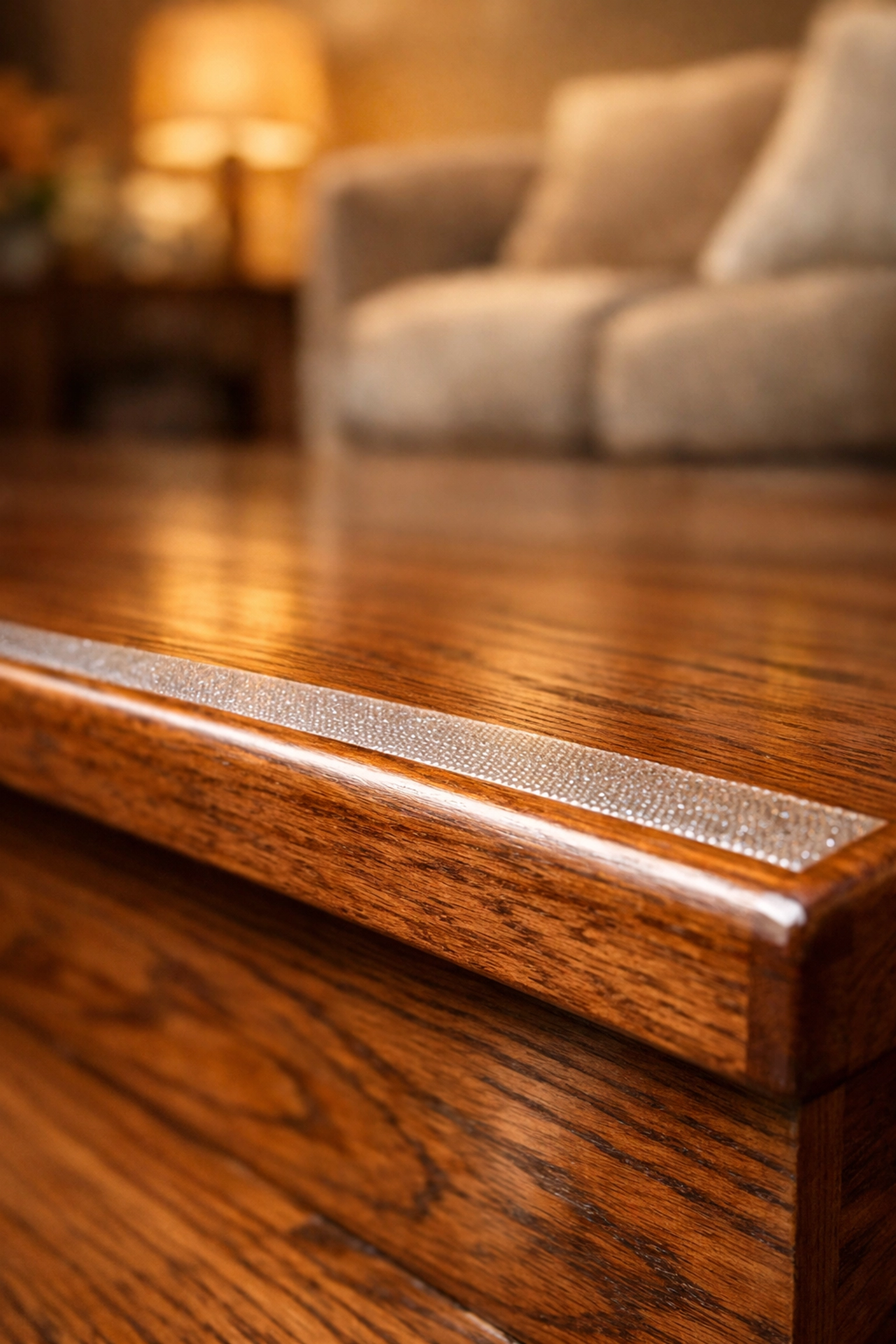
For wooden or tile stairs, apply transparent anti-slip adhesive strips or high-friction coatings. These provide grip without hiding the beauty of the material. If your stairs are carpeted, ensure the carpet is a "tight-pile" variety and is securely tacked down. Avoid thick padding under stair carpets, as it can round the edges of the steps and create a rolling sensation under the foot.
6. The Steep Climb: Overly Aggressive Angles
Stairs built at an angle greater than 42 degrees are significantly more difficult to navigate. Steep stairs require more muscle power to ascend and put more strain on the joints during descent. They also offer a smaller margin for error; if you lose your balance on a steep flight, the momentum is much harder to catch.
While you might not be able to easily change the angle of your existing stairs, recognizing that a staircase is steep allows you to adjust your behavior and implement better support.
How to Fix It:
The optimal angle for a residential staircase is around 37 degrees. If your stairs are steeper than this, it is vital to have high-quality, dual handrails. You might also consider slowing down your pace and using the "step-to" pattern (placing both feet on one step before moving to the next) rather than the "step-through" pattern. This reduces the physical exertion required and keeps your center of gravity more stable.
7. The Visual Blur: Lack of Contrast and Clutter
If your stairs, the walls next to them, and the floor at the bottom are all the same color: say, all white or all light oak: it becomes very difficult for the eyes to distinguish where one step ends and the next begins. This lack of visual contrast is a major contributor to "missed steps."
Furthermore, many people use the bottom or top few steps as a temporary "holding area" for items that need to go up or down later. A pair of shoes, a stack of books, or a laundry basket on the stairs is a recipe for a disaster.
How to Fix It:
Create visual contrast. You can do this by painting the "risers" a different color than the "treads," or by applying a high-contrast strip of tape along the leading edge of each step. This acts as a visual "stop sign" for your brain, clearly marking the boundary of each level. As for clutter, enforce a "zero-item" rule for the staircase. If it’s not part of the stairs, it doesn’t belong on the stairs: not even for a minute.
The Role of Professional Assessment
While many of these fixes are things you can do yourself, stair safety is a complex field. Sometimes, what looks like a simple fix might require a more technical approach. This is where a professional assessment comes in. Physical therapists or home accessibility experts can walk through your home and identify hazards that the untrained eye might miss.
They can look at things like your "functional reach," your specific gait patterns, and how your vision interacts with your environment. This holistic view ensures that the modifications you make are the ones that will actually benefit your specific needs.
Final Thoughts on Stair Safety
Taking the stairs shouldn't be a source of anxiety. By addressing these seven common mistakes: consistent risers, deep treads, proper rails, bright light, grippy surfaces, manageable angles, and clear visual paths: you can significantly lower the risk of falls in your home.
Safety is often found in the details. A centimeter of difference in a step or a single shadow in a corner can change everything. By taking a proactive, reassuring approach to these modifications, you aren't just "fixing stairs"; you are preserving your independence and ensuring that your home remains the safe haven it is meant to be.
Remember, the goal is to move through your home with confidence. A few small changes today can make a world of difference for years to come. Stay safe, take your time, and don't hesitate to make the adjustments necessary to feel secure in your own space.

