Hi there, I’m Brian. Most people don’t think twice about their stairs until they have a "close call." We use them dozens of times a day, often on autopilot, carrying laundry or checking our phones. But as we get older, or as we care for parents who are aging in place, those simple steps can start to feel a bit more like a mountain.
At Fall Guys Products, we spend a lot of time looking at home environments through a safety lens. It’s not about being afraid of your home; it’s about making sure your home is working for you, not against you. Most stair-related accidents aren't actually caused by a lack of balance: they are caused by small, fixable environmental mistakes that trip up even the most sure-footed people.
Here are the seven most common mistakes I see in homes today, and more importantly, the straightforward ways you can fix them to keep your home a safe haven.
1. Choosing Style Over Traction
We all love the look of polished hardwood or sleek, glossy tile. They make a home look elegant and clean. However, from a safety perspective, a polished wooden staircase is essentially a slide waiting to happen, especially if you’re wearing socks or smooth-bottomed slippers.
The mistake here is assuming that because a surface is "standard," it is safe. Most falls on stairs happen because of a slip, not a trip. When your foot doesn't have enough friction to "grab" the surface, your center of gravity shifts instantly, and it’s very hard to recover.
How to fix it:
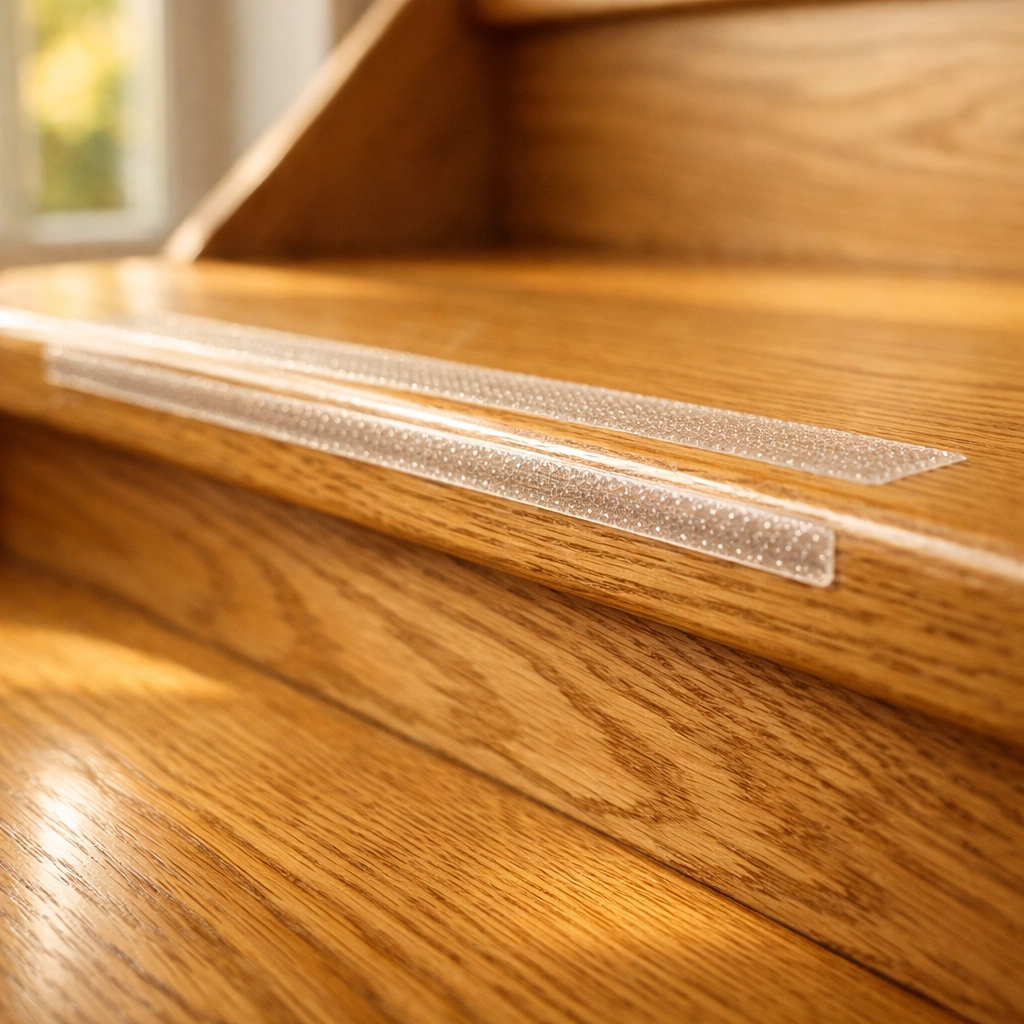
You don’t have to carpet over your beautiful wood to be safe. Applying anti-slip materials is a game-changer. Rubber stair treads provide excellent grip and can be found in transparent versions if you want to keep the wood grain visible. Anti-slip tape strips are another low-profile option. If you prefer a more permanent solution, there are skid-resistant floor treatments: special coatings that add texture to the paint or sealer without making it look industrial.
2. Relying on "Mood Lighting"
In many older homes, the stairwell is lit by a single, dim bulb at the top or a decorative sconce that looks nice but casts long, confusing shadows. Poor lighting is one of the leading contributors to falls, particularly at the top and bottom steps where our depth perception needs to be most accurate.
If you have to squint to see where the edge of the tread ends and the riser begins, the lighting isn't doing its job. Shadows can make a step look deeper or shallower than it actually is, leading to a misstep.
How to fix it:
Switch to bright LED bulbs. They offer a "cooler" or "daylight" spectrum that makes edges much more defined. Ideally, you want light that illuminates the entire flight uniformly. Motion-activated lighting is also a fantastic modern fix; these small, battery-operated lights can be stuck along the baseboard of the stairs, lighting up each step as you approach it. This is especially helpful for those middle-of-the-night trips to the kitchen or bathroom when you might be a bit groggy.
3. Ignoring Inconsistent Step Dimensions
This is a subtle one that most people don’t notice until they trip. In a perfect world, every step on a staircase would be exactly the same height (the riser) and the same depth (the tread). However, as houses settle or after DIY renovations, these measurements can shift.
Our brains are incredible at pattern recognition. After the first two steps, your brain "programs" how high to lift your foot for the rest of the flight. If the fifth step is even half an inch higher than the others, your toe is likely to catch it. This is often why people find themselves "tripping over nothing."
How to fix it:
Take a tape measure and check your stairs. A standard riser is usually between 6 and 7 inches (15–18 cm). If you find a step that is significantly off, it might be time to consult a carpenter. A common problem area is the top step; if it’s wider or narrower because of how it meets the landing, adding a "nosing" (the rounded edge that sticks out) can help bring it into alignment with the rest of the staircase.
4. Treating Handrails as Decorations
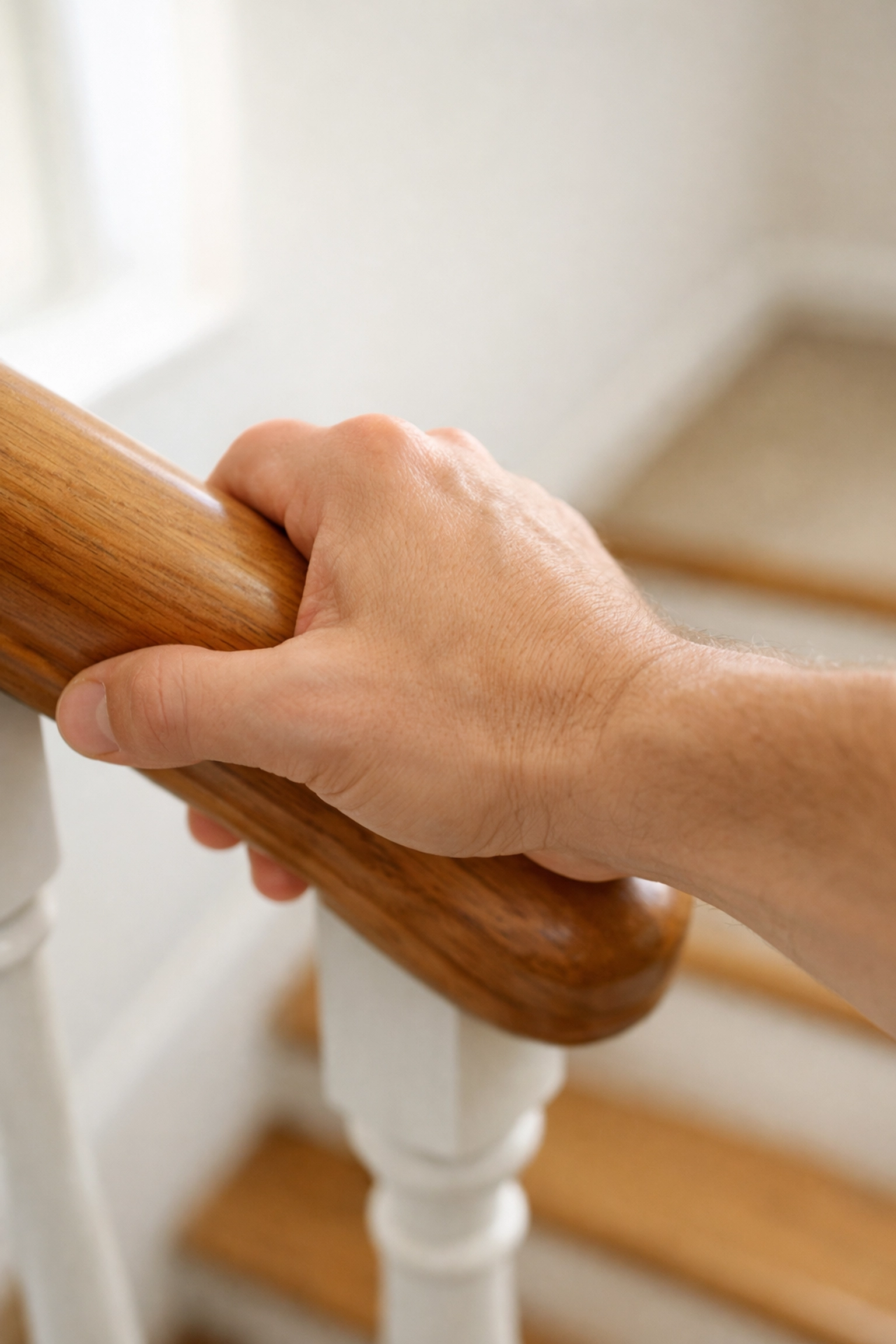
I see this all the time: a handrail that looks like a piece of art but is impossible to actually hold onto. If you can’t wrap your hand completely around the rail to get a "power grip," it’s not a safety feature: it’s a wall ornament.
Square or overly thick railings might look modern, but they don't allow your fingers to lock underneath. If you lose your balance, you need to be able to squeeze that rail with your whole hand to stabilize yourself. Furthermore, many stairs only have a rail on one side, which leaves you unprotected half the time.
How to fix it:
The best handrails are rounded and have a diameter that allows for a full grip. They should run the entire length of the staircase without interruption and be mounted about 30 to 36 inches from the floor. If you only have one rail, consider installing a second one on the opposite wall. Having "dual-point contact" (a hand on each side) significantly increases stability and reduces the load on your knees.
5. The "Bottom-of-Flight" Illusion
Have you ever thought you were at the floor, stepped out, and realized there was actually one more step? This is the "bottom-of-flight" illusion. It usually happens because the color and material of the bottom step are identical to the landing or the hallway floor. Without a visual "break," the two surfaces blend together in our peripheral vision.
Most stair accidents happen at the very top or the very bottom. When we think we've reached the end, we often let go of the handrail and shift our weight forward: making a misjudged last step particularly dangerous.
How to fix it:
Create visual contrast. You can use a strip of colored anti-slip tape on the edge of the very last step to signal to your brain that the "transition" is coming. Alternatively, using a different colored rug (secured firmly) or a different wood stain on the landing can help the bottom step stand out. The goal is to make it obvious where the stairs end and the flat ground begins.
6. Using the Stairs as a Temporary Shelf
We’ve all done it. "I’ll just leave these shoes here and take them up next time I go." Or, "These books need to go to the basement; I’ll set them on the top step so I don't forget."
Stairs are not storage units. Even a small object like a stray shoe or a charging cable can lead to a catastrophic fall. Clutter narrows the "safe path" of the staircase and forces you to adjust your stride, which throws off your balance.
How to fix it:
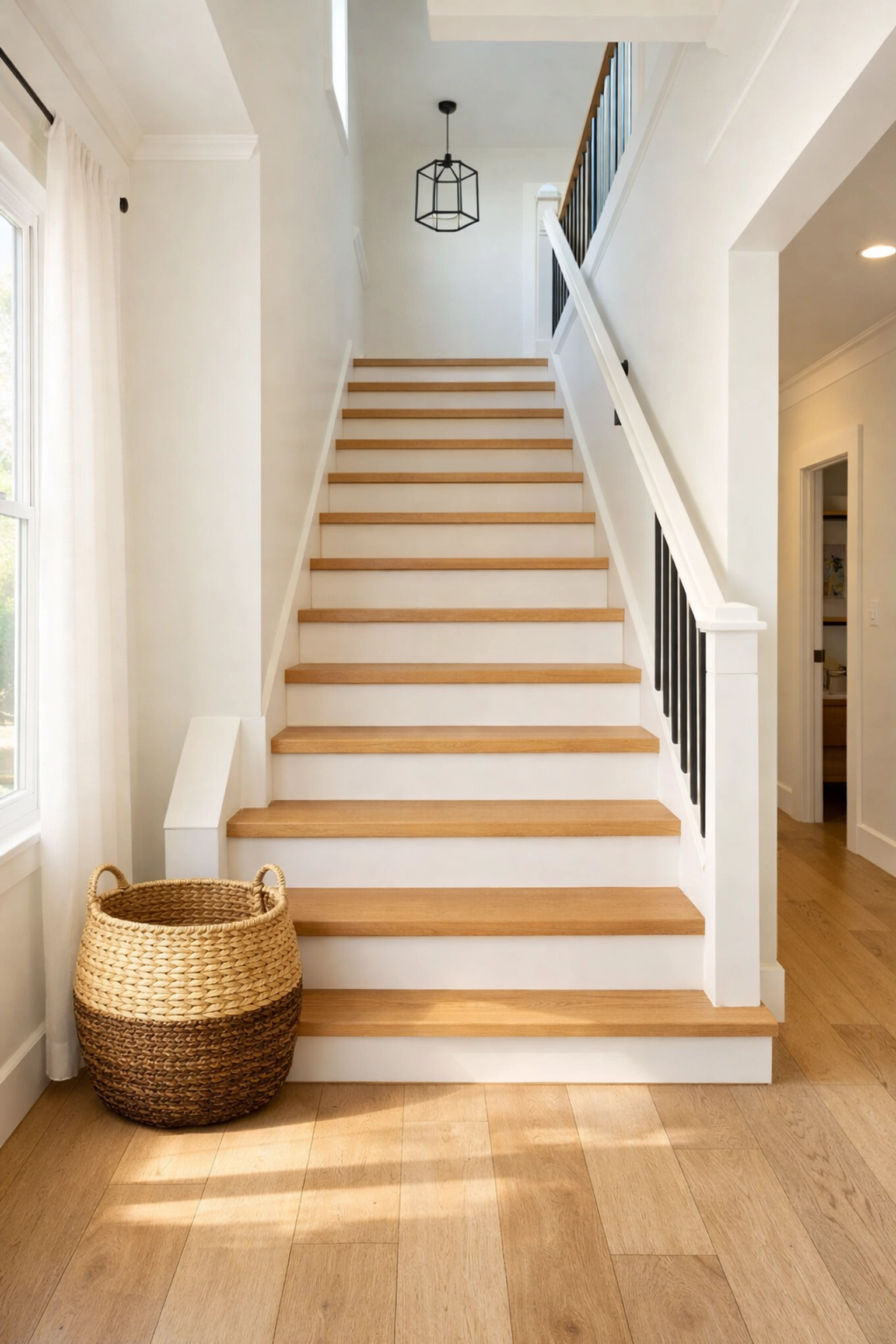
Adopt a "clear stairs" policy. If something needs to go up or down, put it in a basket at the top or bottom of the stairs: but never on the stairs themselves. Make it a habit to scan the flight before you start your ascent or descent. It takes five seconds to move an object, but a fall can take months of recovery.
7. The Habit of Rushing
This is perhaps the hardest mistake to fix because it’s a behavior, not a physical object. We live in a fast-paced world. We rush to answer the door, rush to catch a ringing phone, or rush because we’re late for an appointment.
When we rush, we tend to skip the handrail and take "shallow" steps, placing only the front half of our foot on the tread. This reduces our base of support and makes it much easier to slip backward or trip forward.
How to fix it:
Practice the "three points of contact" rule. At any given moment, you should have at least one hand on the rail and both feet on the steps, or two hands on the rails and one foot moving. Take it one step at a time. It also helps to put the phone away. Distracted walking is just as dangerous as distracted driving, especially on a vertical incline. If the phone rings while you're on the stairs, let it go to voicemail. Your safety is worth more than a quick conversation.
A Note on Footwear
While not strictly a "stair mistake," what you wear on your feet matters immensely. Walking down stairs in loose-fitting slippers, floppy flip-flops, or just socks is a high-risk activity. Socks offer zero traction on wood, and loose slippers can easily catch on the edge of a tread.
Ideally, you should wear sturdy, well-fitting shoes with rubber soles, even inside the house. If you prefer to be shoeless, look for "gripper socks" that have rubberized patterns on the bottom. These provide that necessary friction to prevent the "slide" effect we talked about earlier.
Why a Mobility Assessment Matters
Sometimes, despite our best efforts, we might miss things. Our eyes get used to our environment, and we stop seeing the hazards. This is where a professional perspective can be invaluable. Occupational therapists or physical therapists often perform mobility assessments to look at exactly how a person interacts with their home.
They might notice that you lean heavily to one side because of a hip issue, making a second handrail not just a "good idea" but a necessity. They can help you identify the "hot spots" in your home where falls are most likely to occur. Understanding your own physical strengths and limitations allows you to tailor your stair safety plan to your specific needs.
Final Thoughts
Stairs don’t have to be a source of anxiety. By taking a proactive approach and addressing these seven common mistakes, you can significantly reduce the risk of accidents. Most of these fixes: like adding a better bulb, clearing away clutter, or putting down some traction tape: are inexpensive and can be done in a single afternoon.
At Fall Guys Products, we believe that safety is about empowerment. It’s about making the small changes today so that you can move through your home with confidence and independence for years to come. Take a look at your stairs today. Which of these mistakes can you fix right now?
Stay safe, stay confident, and keep moving.