
Staircases are often the architectural centerpiece of a home, but they are also one of the most common sites for household accidents. As we age, or as we care for others who may have mobility challenges, the way we interact with stairs needs to evolve. What worked for us in our thirties might not be the safest approach in our sixties or seventies.
At Fall Guys Products, we spend a lot of time thinking about how to keep people moving safely in their own homes. We’ve found that most stair-related falls aren't just "bad luck." They are usually the result of small, compounding factors that create a "perfect storm" for a slip or trip. The good news is that most of these factors are fixable.
Here are the seven most common mistakes people make with stair safety and, more importantly, how you can fix them today.
1. Living with Inconsistent Stair Dimensions
One of the most dangerous things about a staircase isn't necessarily how steep it is, but how unpredictable it is. Our brains are incredibly good at "mapping" a staircase after the first two steps. This is called muscle memory or proprioception. Once you take those first two steps, your brain assumes every following step will be the exact same height (the riser) and the exact same depth (the tread).
The Mistake: Many older homes have "settled," or were built before strict modern codes. This results in steps that vary by as little as half an inch. That tiny difference is enough to catch a toe or cause a heel to slip off the edge because your brain didn't expect the floor to be there yet.
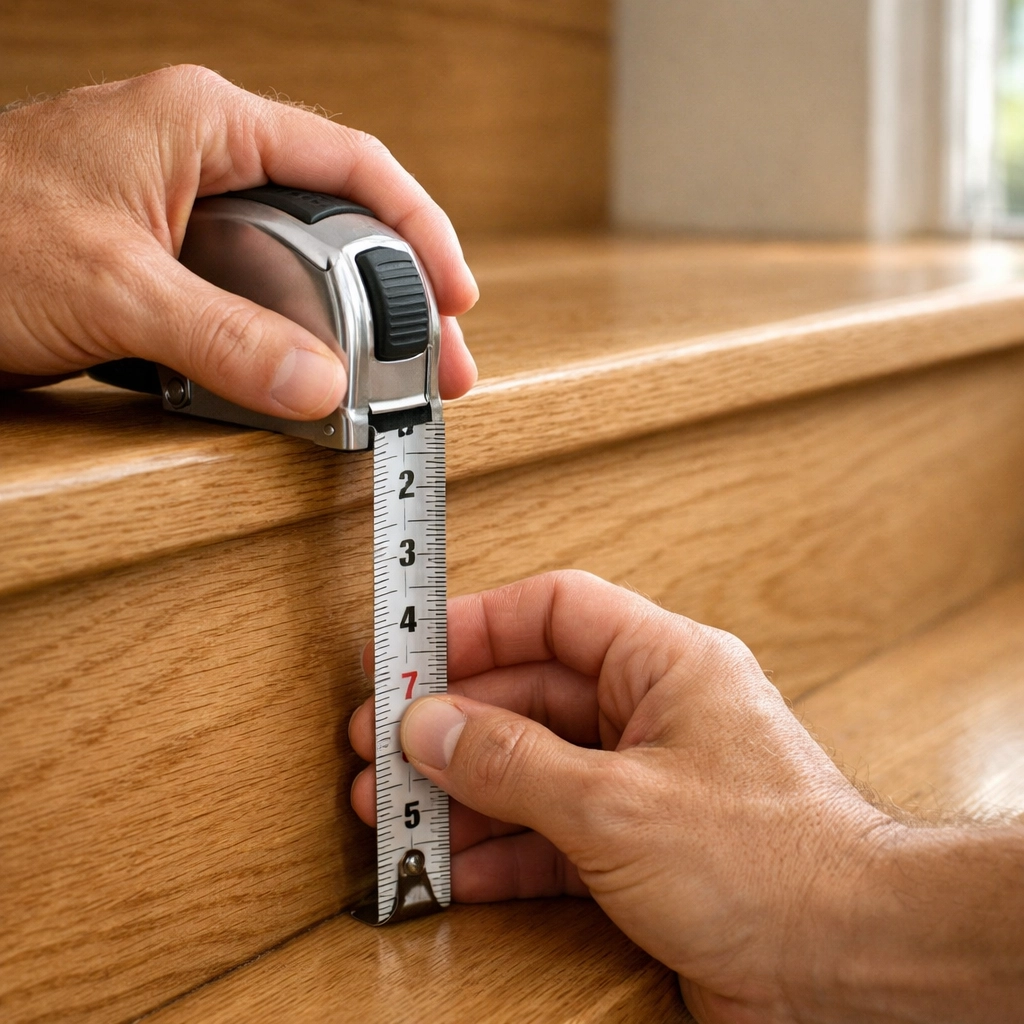
The Fix: Take a tape measure to your stairs. Measure the height of every single riser. If you find a discrepancy of more than a quarter-inch between steps, you have a "trip step."
Fixing this doesn't always require a full remodel. Sometimes, adding a thin layer of plywood to a low tread or using a transition strip can level things out. If the variation is significant, it may be time to consult a carpenter to sister the joints or shim the treads to ensure a uniform "rhythm" as you climb.
2. The Single Handrail Minimum
Standard building codes often only require one handrail on a staircase. While this might pass a legal inspection, it often fails the safety test for seniors or those with balance issues.
The Mistake: Relying on a single handrail. If you have weakness on one side of your body (common after a stroke or due to arthritis), and the only handrail is on your "weak" side, you are essentially navigating the stairs without support. Furthermore, having only one rail forces you to use the same arm for both going up and coming down, which can lead to fatigue or imbalance.
The Fix: Install a second handrail. Having a rail on both sides: known as "bilateral support": allows you to use your strongest side regardless of whether you are ascending or descending. It also allows you to "sandwich" yourself between two points of stability, which significantly lowers the center of gravity and increases your sense of security.
Ensure the rails are "graspable." A graspable handrail is one that your fingers and thumb can actually wrap around. A decorative 2×4 board might look modern, but if you can't get your hand around it, you can't maintain a firm grip if you stumble.
3. Ignoring the "Transition Zones"
We often focus so much on the stairs themselves that we forget about the two most dangerous parts: the top and the bottom.
The Mistake: Many falls happen right at the landing because the handrail ends too soon. If the rail stops exactly at the last step, you are left without support as you make the transition from the incline to the flat floor. This is also the area where people tend to leave "clutter": shoes, mail, or bags: thinking they’ll take them up on the next trip.
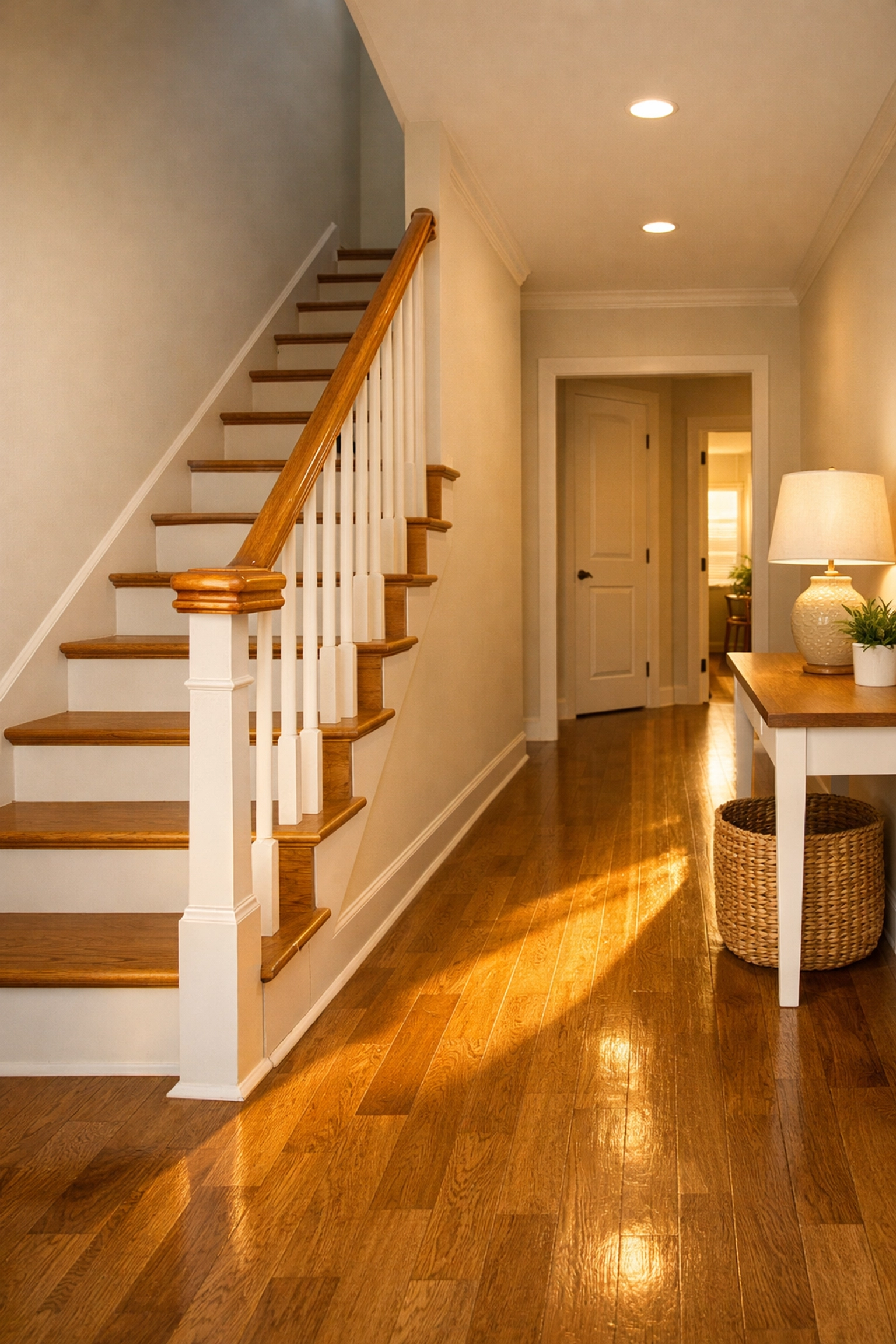
The Fix: Extend your handrails. Ideally, a handrail should extend about 12 inches beyond the top and bottom step. This allows you to maintain a grip until your feet are firmly planted on level ground.
Additionally, create a "zero-clutter zone" at the landings. If you must keep items near the stairs to be moved later, place a small "stair basket" or a side table at least three feet away from the first step. This ensures your path is always clear for your feet and any mobility aids you might be using.
4. Underestimating the Power of Lighting
As we age, our eyes require significantly more light to see the same level of detail. Shadows on a staircase can be deceptive; they can make a step look deeper than it is or hide the edge of a tread entirely.
The Mistake: Using a single, dim overhead bulb or relying on the light from a hallway that doesn't quite reach the middle of the flight. Another common mistake is having a light switch only at the bottom or only at the top, forcing you to navigate the stairs in the dark to turn the light on or off.
The Fix: Install "dual-switch" lighting so you can control the lights from both ends. For even better safety, consider motion-activated LED strip lighting. These can be placed under the lip of each tread or along the baseboard. They provide a clear, shadow-free "runway" that highlights the exact edge of every step.
Avoid "glare" by using frosted bulbs or shielded fixtures. You want the light to illuminate the path, not shine directly into your eyes and temporarily blind you.
5. Choosing Aesthetics Over Traction
Hardwood, polished stone, and tile stairs are beautiful, but they are essentially "slip-and-slides" for anyone wearing socks or smooth-soled slippers.
The Mistake: Leaving stairs as bare, polished surfaces. Even some carpets can be problematic if they are "high-pile" or shag, which can hide the edge of the step and make your footing feel "mushy" and unstable.
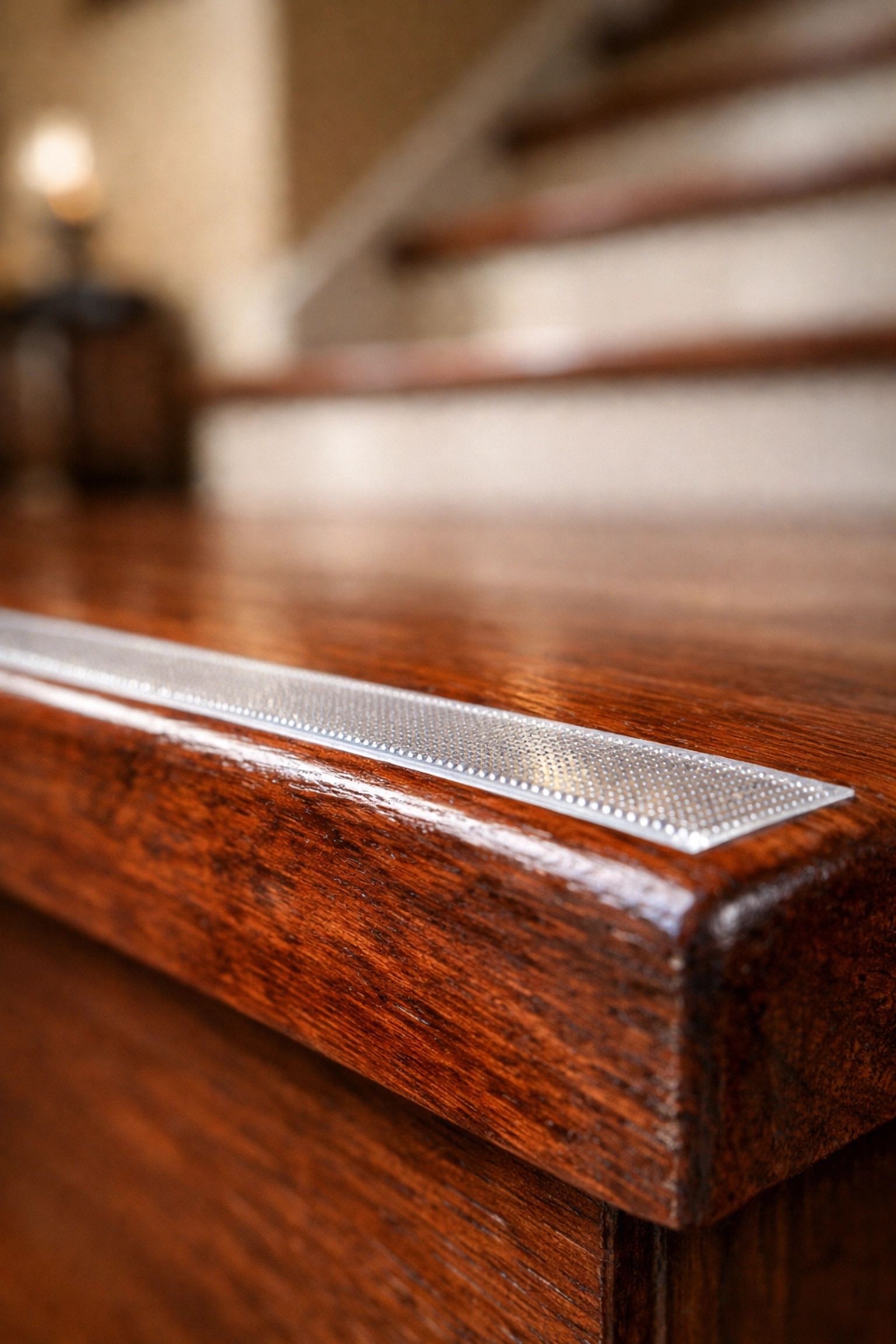
The Fix: Increase the friction. If you have wooden stairs, you don't necessarily have to cover them in carpet. Clear, adhesive anti-slip strips are nearly invisible but provide a gritty texture that grips your footwear.
If you prefer carpet, choose a low-pile, industrial-grade "tight" weave. It should be firmly tacked down with no "give" when you step on it. A contrasting color strip at the edge of each step (known as a "nosing") can also help those with visual impairments clearly distinguish where one step ends and the next begins.
6. The "One-Hand" Carrying Habit
We’ve all done it: carrying a laundry basket, a tray of coffee, or a grandchild while moving between floors.
The Mistake: Using one or both hands to carry an object, thereby abandoning the handrail. This is one of the leading causes of catastrophic falls because if you lose your balance, your hands are full, and you have no way to "save" yourself.
The Fix: Adopt the "One Hand Free" rule. If you can't carry it with one hand while keeping the other firmly on the rail, don't carry it.
For larger items like laundry, consider alternative solutions. Some people use a "laundry chute" or simply drop the bag down the stairs (safely!) before they descend. Others find that wearing a small backpack is a great way to transport items between floors while keeping both hands free to use the handrails on both sides.
7. Neglecting Your "Equipment" (Your Feet)
Sometimes the "mistake" isn't with the house at all: it's with what you're wearing.
The Mistake: Walking on stairs in stocking feet, loose slippers, or high heels. Socks on wood are a recipe for a fall. Loose slippers can slide off your heel, causing you to trip over your own footwear.
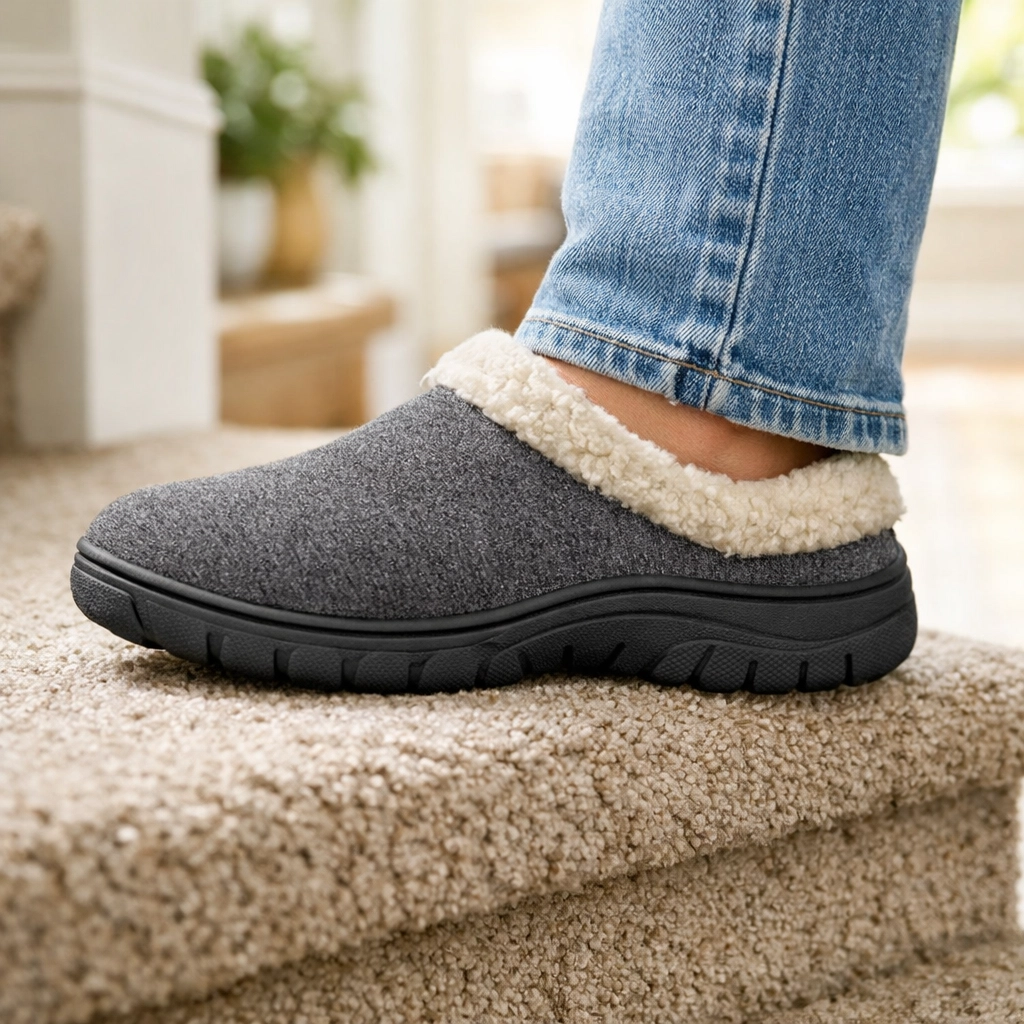
The Fix: Treat your footwear as safety equipment. Inside the house, wear "house shoes" with rubber, non-slip soles and a closed heel. If you prefer socks, ensure they have high-quality rubber "grippers" on the bottom.
From a physical therapy perspective, it’s also important to check your own "equipment": your legs. Simple exercises like calf raises or "sit-to-stands" can strengthen the muscles you need to lift your feet properly over the steps. If you find yourself "scuffing" your feet as you walk, you may be more likely to catch a toe on a stair riser.
Creating a Culture of Safety
Stair safety isn't just about the physical modifications you make to your home; it’s about a shift in mindset. It’s about slowing down and respecting the transition between floors.
Many people feel that adding extra handrails or bright LED strips makes their home look like a "facility." We encourage you to reframe that. These modifications are tools for independence. A safe staircase means you can continue to enjoy every level of your home for years to come without fear.
If you aren't sure where to start, consider a professional home safety assessment. A physical therapist or a certified aging-in-place specialist can walk through your home with you and identify specific risks you might have overlooked.
Remember, the goal isn't just to prevent a fall; it's to provide the confidence and peace of mind that allows you to move freely and safely through your day. Take a look at your stairs today: which one of these seven fixes can you check off the list?

