
Stairs are a fundamental part of most homes, but they are also one of the most frequent sites for accidents, especially as we age or face mobility challenges. At Fall Guys Products, we talk to families every day who are looking for ways to make their homes safer without turning them into clinical-looking environments.
The truth is, many stair-related falls don't happen because of a lack of strength or balance alone. Often, they happen because of small, overlooked design flaws or habits that we’ve lived with for years. We get used to the "quirks" of our homes, the creaky board, the dim light, or the slightly taller top step, until one day, those quirks become a hazard.
Hi, I’m Brian Kerr, and I’ve spent years looking at how environments impact our safety. Improving stair safety isn't just about installing expensive lifts; it's about identifying these common mistakes and applying simple, effective fixes. Let’s walk through the seven most common mistakes people make with their stairs and how you can fix them today.
1. Ignoring Inconsistent Step Height and Depth
Have you ever walked up a flight of stairs and felt yourself stumble slightly even though you were looking right at your feet? It might not be your coordination. It might be the "rhythm" of your staircase.
Our brains are incredibly efficient at mapping out repetitive tasks. When we start climbing a set of stairs, our brain calculates the height (rise) and depth (run) of the first two steps and then puts our legs on "autopilot" for the rest of the flight. If one step is even a fraction of an inch taller or shallower than the others, that rhythm is broken. This is a major cause of trips and falls, particularly in older homes where settling or poor construction has led to uneven steps.
The Fix: Check for Uniformity
Take a tape measure and check the height of every step. If you find a significant discrepancy: often found at the very top or bottom: you have a few options. If a full renovation isn't in the cards, you can use stair nosing to extend the depth of a shallow step or add a contrasting strip of tape to the edge of the "odd" step to alert your brain that the rhythm is changing. The goal is to make every step as uniform as possible so your autopilot doesn't fail you.
2. Falling for the "Bottom-Step Illusion"
The most dangerous step on any staircase is often the last one. Why? Because of a visual phenomenon known as the bottom-step illusion. When the flooring of the hallway or landing matches the material of the stairs exactly, the last step can blend into the floor. People often think they’ve reached the flat ground when they actually have one more step to go, leading to a jarring "missed step" that can cause a fall or a twisted ankle.
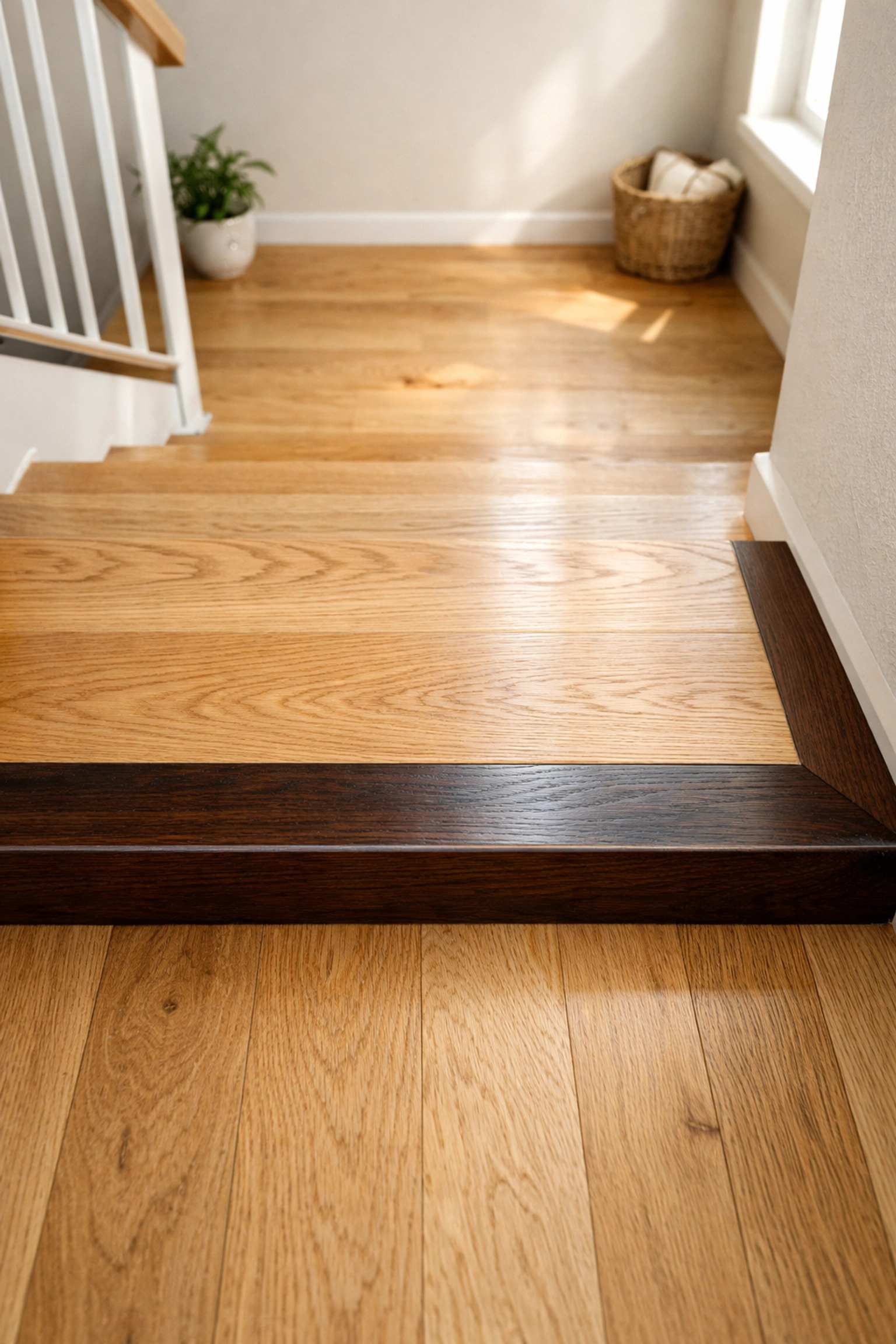
The Fix: Create Visual Contrast
The simplest way to fix this is to make the last step look different from the landing. You can do this by:
- Adding a high-contrast non-slip strip to the edge of the bottom step.
- Using a different color of paint or stain for the final tread.
- Placing a thin, non-slip rug on the landing that clearly marks where the floor begins, though you must ensure the rug itself is secured and doesn't become a trip hazard.
By breaking the visual camouflage, you give your eyes the signal they need to tell your legs there is still one more descent to make.
3. Prioritizing Style Over Grip (The Handrail Trap)
Many modern handrails are beautiful pieces of carpentry. They might be wide, flat, rectangular, or ornately carved. However, a handrail’s primary job isn't to look good: it’s to be "graspable."
If you find yourself resting your palm on top of the rail rather than wrapping your fingers around it, your handrail is failing you. In the event of a slip, you need to be able to close your hand completely around the rail to arrest your fall. A wide, flat rail makes this nearly impossible for someone with smaller hands or arthritis.
The Fix: Install a "Power Grip" Rail
The gold standard for safety is a rounded handrail with a diameter between 1.25 and 2 inches. This allows for a "power grip," where the thumb and fingers can meet. If you currently have a decorative but ungraspable rail, you don’t necessarily have to tear it out. You can often mount a secondary, functional "piggyback" rail to the existing structure or the opposite wall.
Additionally, ensure the rail extends slightly beyond the top and bottom steps. This gives you a steady handhold before you even start your ascent or descent.
4. Overlooking Slippery Surfaces
Hardwood, tile, and polished stone stairs are beautiful, but they can be as slippery as ice, especially if you’re wearing socks or smooth-soled slippers. Even carpeted stairs can become hazardous if the carpet is worn down and "rounded" at the edges, creating a slide-like effect.
The Fix: Increase Traction
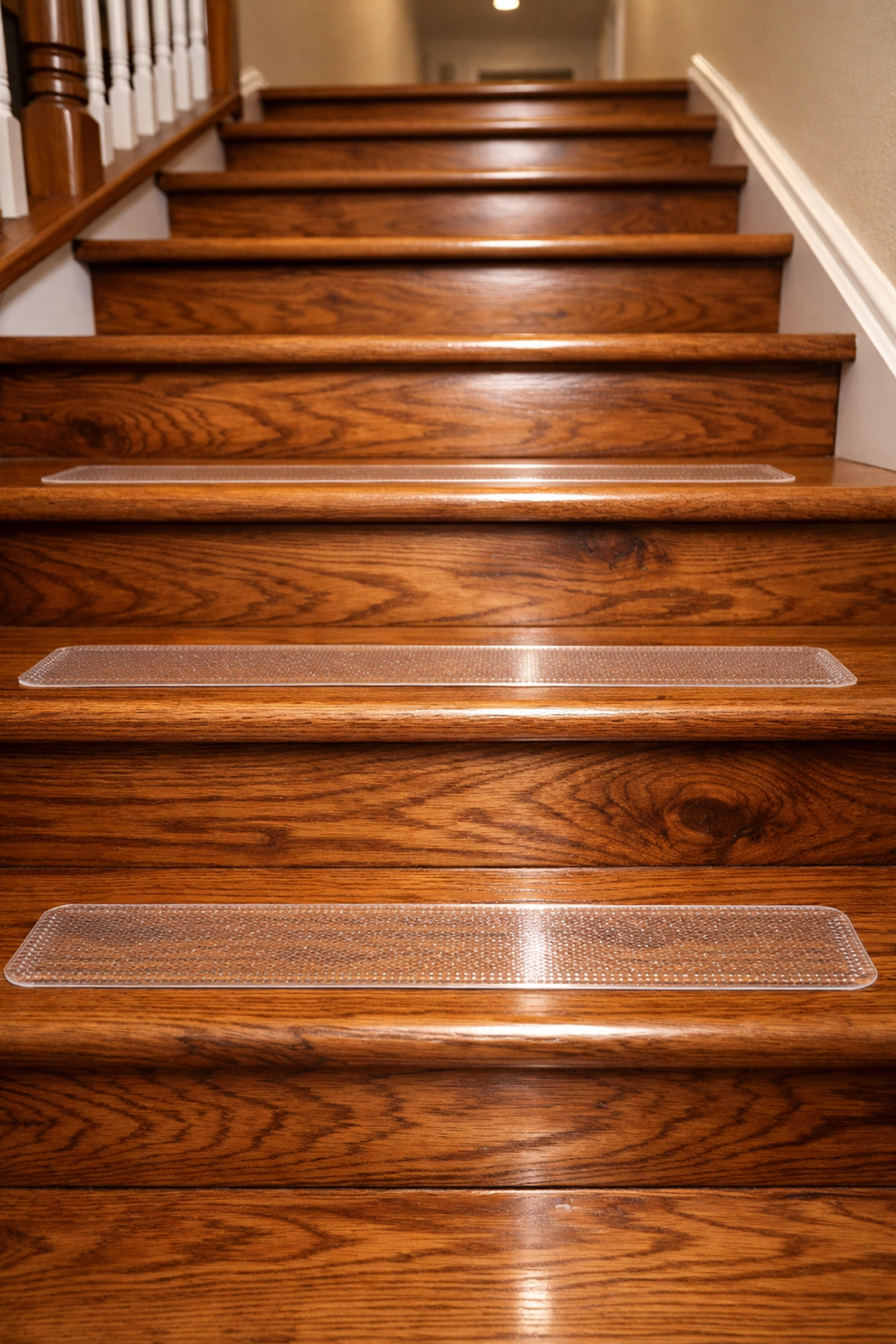
You don't have to cover your beautiful wood stairs with ugly rubber mats to be safe. There are several discreet options:
- Clear Anti-Slip Adhesive Treads: These are almost invisible but provide a gritty texture that grips the bottom of your feet or shoes.
- Stair Runners: A carpet runner down the center of the stairs provides excellent traction. Just ensure it is professionally installed and tightly tacked down.
- Anti-Slip Coatings: There are transparent paints and finishes available that contain micro-aggregates to create a non-slip surface without changing the look of the wood.
5. Living with "Deferred Maintenance"
We all have that one step that creaks or the handrail that wiggles just a little bit. In the busy flow of daily life, we tell ourselves we’ll get to it eventually. However, on a staircase, structural integrity is non-negotiable. A loose tread can shift under your weight, and a wobbly handrail won't support you if you actually need to lean into it during a stumble.
The Fix: The Monthly "Shake Test"
Once a month, do a quick inspection. Walk up and down the stairs slowly, feeling for any movement in the treads. Stand at the middle of the staircase and give the handrail a firm shake. If it moves, it needs attention.
Tightening a few screws or adding a bit of wood glue can prevent a major accident. If the wood is rotting or the metal is rusting (on outdoor stairs), replace those components immediately. Safety is found in the details.
6. Navigating in the Shadows
Lighting is perhaps the most underrated element of stair safety. If you can’t see where one step ends and the next begins, your risk of falling skyrockets. Many staircases have a single light at the top or bottom, which casts long shadows across the middle steps. This "shadowing" can hide the very edges you need to see.
The Fix: Layered Lighting
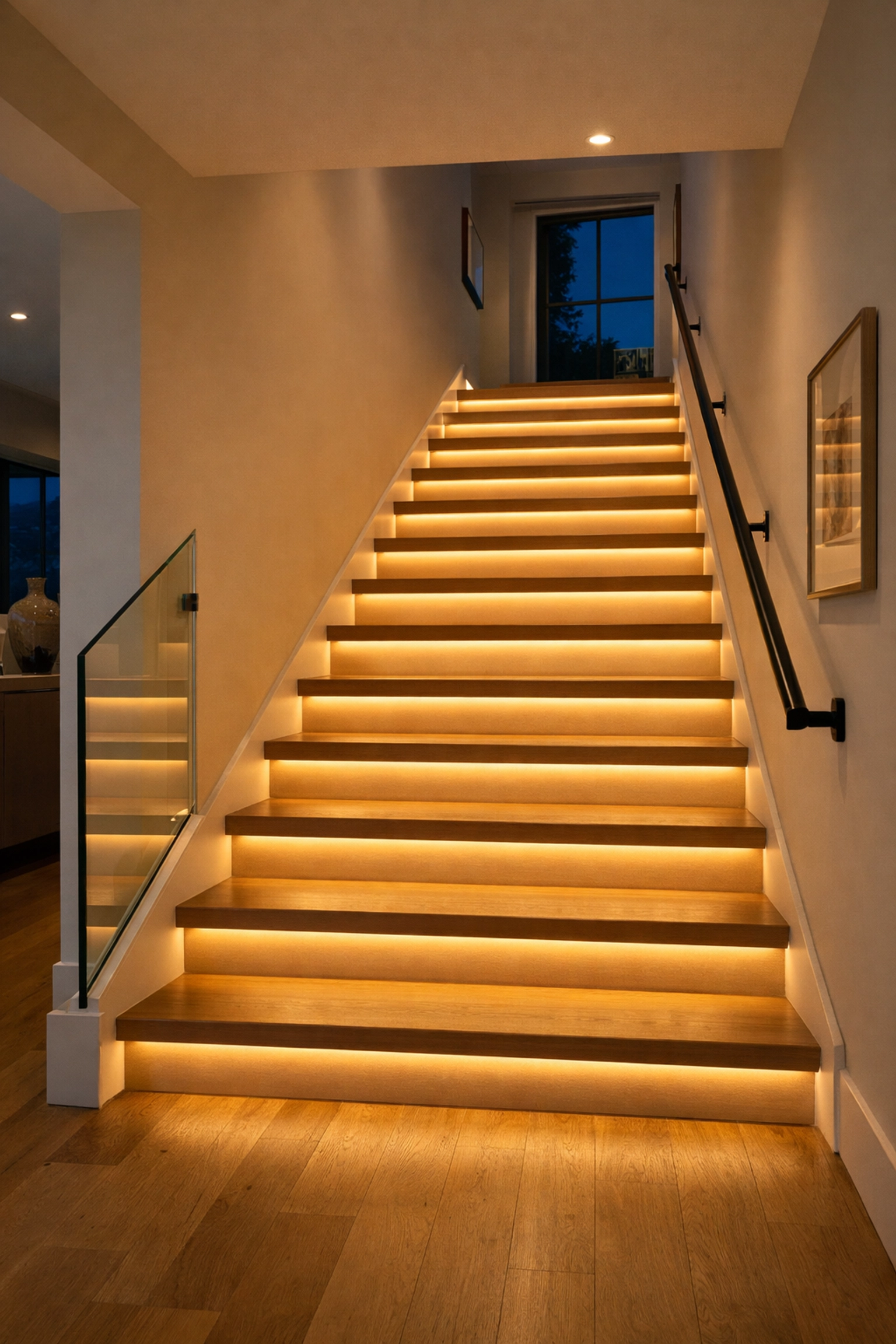
You want even light across the entire flight. Consider these upgrades:
- Motion-Sensing LED Strips: These can be installed under the lip of each step or along the baseboards. They light up automatically as you approach, which is perfect for late-night trips to the kitchen or bathroom.
- Double Switches: Ensure there is a light switch at both the top and the bottom of the stairs. You should never have to climb the stairs in the dark to turn on the light.
- Plug-in Nightlights: If you can't rewire the house, use high-quality, motion-sensing nightlights in nearby outlets to fill in the dark spots.
7. The Habit of Rushing and Carrying Too Much
Sometimes, the "mistake" isn't with the house: it's with us. We’ve all done it: carrying a heavy laundry basket with both hands, obscuring our view of our feet, or rushing to answer the door while wearing only socks.
When you carry items with both hands, you lose your ability to use the handrail. When you rush, your center of gravity shifts forward, making it much easier to lose your balance.
The Fix: The "One Hand Free" Rule
Make it a house rule: never carry anything that requires both hands while on the stairs. If you have laundry or groceries, break them into smaller loads or use a "stair basket": a basket designed to sit on a step that you can move up or down one step at a time, keeping one hand firmly on the rail at all times.
Also, be mindful of your footwear. Walking on stairs in stocking feet is significantly more dangerous than walking barefoot or in shoes with rubber soles. If you prefer a "shoes-off" home, invest in a pair of high-traction indoor slippers.
Building a Culture of Safety
At the end of the day, making your stairs safer isn't about fear; it's about freedom. It’s about knowing that you can move through your home with confidence and independence. Most of these fixes: adding a bit of contrast to the bottom step, tightening a loose rail, or adding a motion-sensing light: can be done in a single afternoon.
Take a look at your stairs today through a fresh pair of eyes. Do you see any of these seven mistakes? If so, don't worry. Now you know exactly how to fix them. Stay safe, take your time, and remember that your home should be your sanctuary.
By addressing these common pitfalls, you aren't just preventing a fall; you're ensuring that every floor of your home remains accessible and welcoming for years to come. If you're ever unsure about a repair or an installation, don't hesitate to consult with a professional who specializes in home accessibility. Your safety is worth the extra set of eyes.

