
Stairs are often the most intimidating part of a home as we get older. We tend to think of them as a necessary evil: a mountain to climb multiple times a day. But here is the thing: stairs themselves aren’t the enemy. The real danger lies in the small, often overlooked mistakes we make in how we maintain them and how we use them.
I’m Brian Kerr, and at Fall Guys Products, we spend a lot of time thinking about how to keep people moving safely. When it comes to fall prevention, the staircase is the "high-stakes" zone. A slip in the hallway might result in a bruise, but a slip on the stairs carries much more momentum.
The good news is that most stair-related falls are preventable. By identifying common errors in design, maintenance, and habit, we can turn a hazardous climb into a secure transition between floors. Let’s walk through the seven most common mistakes people make with their stairs and, more importantly, how to fix them.
1. The Trap of Inconsistent Step Dimensions
The human brain is a master of patterns. When you start climbing a flight of stairs, your brain "maps" the height and depth of the first two steps. After that, your body goes into a rhythmic autopilot. You stop consciously measuring how high to lift your foot; your muscles simply repeat the movement.
The mistake occurs when one step is even slightly different from the others. This is common in older homes or DIY renovations. If the fourth step is a quarter-inch higher than the third, or if the top landing is an inch deeper than the treads, your foot will likely catch the edge. This is known as a "trip hazard" that your brain literally cannot see coming.
The Fix:
You should aim for uniformity across the entire staircase. If you suspect your stairs are uneven, take a tape measure to them. Check the "rise" (the vertical height) and the "run" (the horizontal depth) of every single step. If you find discrepancies, it may be time for a professional carpenter to shim the treads or adjust the nosing. At the very least, if one step is notably different and cannot be easily rebuilt, you must mark it with high-contrast anti-slip tape to force your brain out of autopilot and back into conscious awareness.
2. Relying on Insufficient Lighting
Most of us have a "utility" mindset when it comes to stair lighting. We have one bulb at the top or one at the bottom, and we think that’s enough. However, shadows are a major contributor to falls. If a light source is only at the top of the stairs, your body casts a shadow over the very steps you are trying to navigate as you descend.
Furthermore, as we age, our eyes require significantly more light to see the same level of detail. Glare from a poorly placed, exposed bulb can also be just as dangerous as a dark corner, as it can momentarily "blind" you or obscure the edge of a tread.
The Fix:
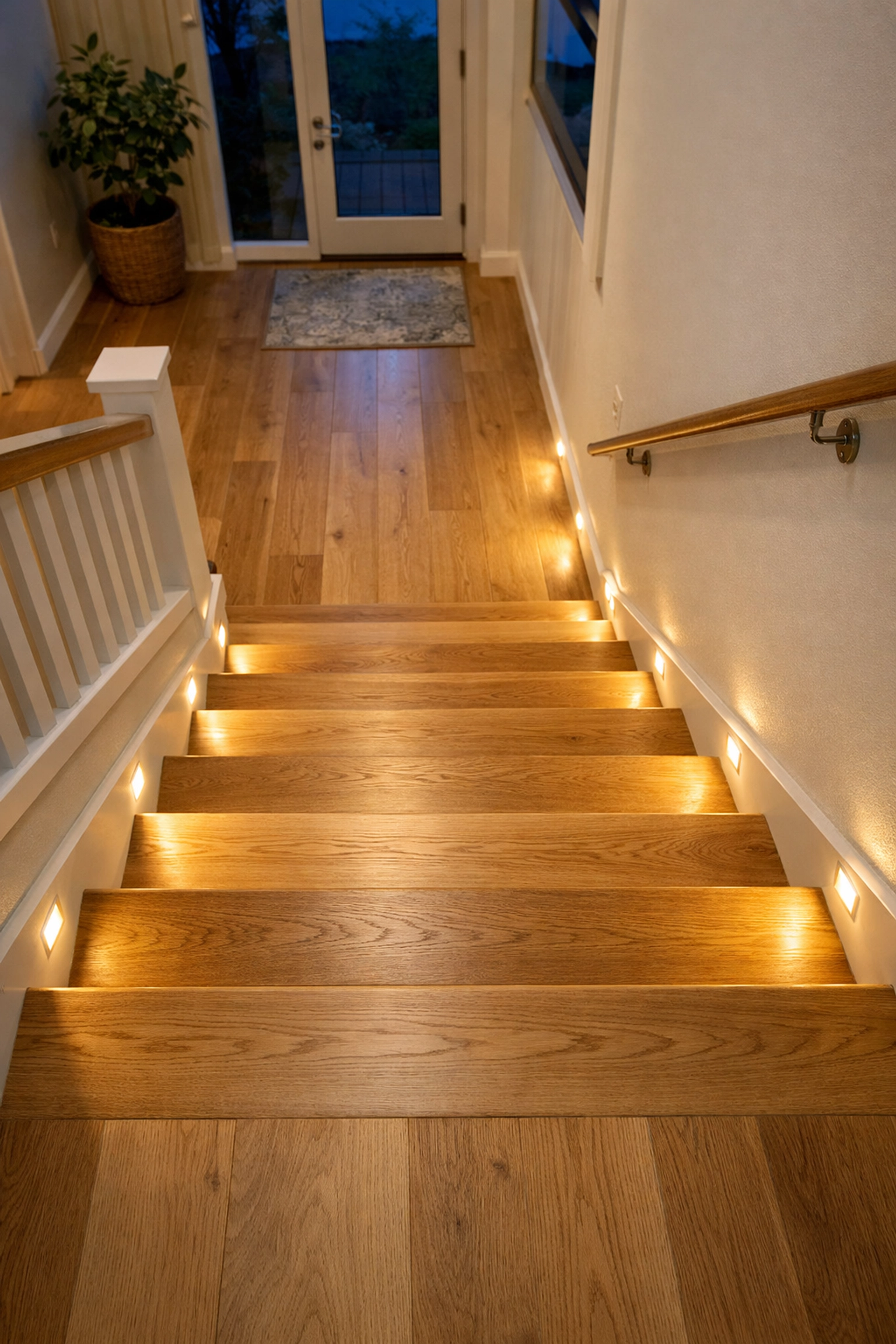
Lighting should be redundant and well-distributed.
- Dual Switches: Ensure there are light switches at both the top and the bottom of the flight. Never "brave" a dark staircase because the switch is at the other end.
- Motion Sensors: Battery-operated LED motion lights are a game-changer. They can be mounted along the baseboards to illuminate the treads directly without creating glare at eye level.
- Diffused Light: Use frosted bulbs or shades to prevent harsh glares that can bounce off polished wood surfaces.
3. Treating Stairs Like Storage Units
We’ve all done it. You have a pair of shoes, a book, or a stack of mail that needs to go upstairs, so you set it on the bottom step to take up "on the next trip." This habit is one of the most dangerous things you can do in a home.
Stairs are a high-traffic transit zone. Anything left on a step: even if it’s tucked to the side: narrows the usable path and creates a snagging hazard for hemlines, oxygen tubing, or walkers. If you lose your balance and try to adjust your footing, that "temporary" stack of mail becomes a sliding hazard under your foot.
The Fix:
Adopt a "Zero Tolerance" policy for stair clutter.
- Stair Baskets: If you must collect items to go up, use a dedicated basket kept near the stairs, but never on the stairs.
- Clear the Path: Make it a nightly ritual to ensure the entire flight is clear.
- Think Wide: Remember that you need enough room for your feet and any mobility aids you might be using. Keeping the center clear isn't enough; the edges must be clear too.
4. Overlooking the "Bottom-of-Flight Illusion"
There is a specific phenomenon where the last step of a staircase blends into the floor of the landing. This is especially common if the stairs and the floor are made of the same material, such as identical hardwood or the same color of carpet.
When your depth perception isn't 100%, or when the lighting is dim, your brain might register the floor as being one step earlier than it actually is. People often "overstep" the last stair, thinking they’ve reached the flat ground, leading to a jarring impact that can cause a fall or a joint injury.
The Fix:
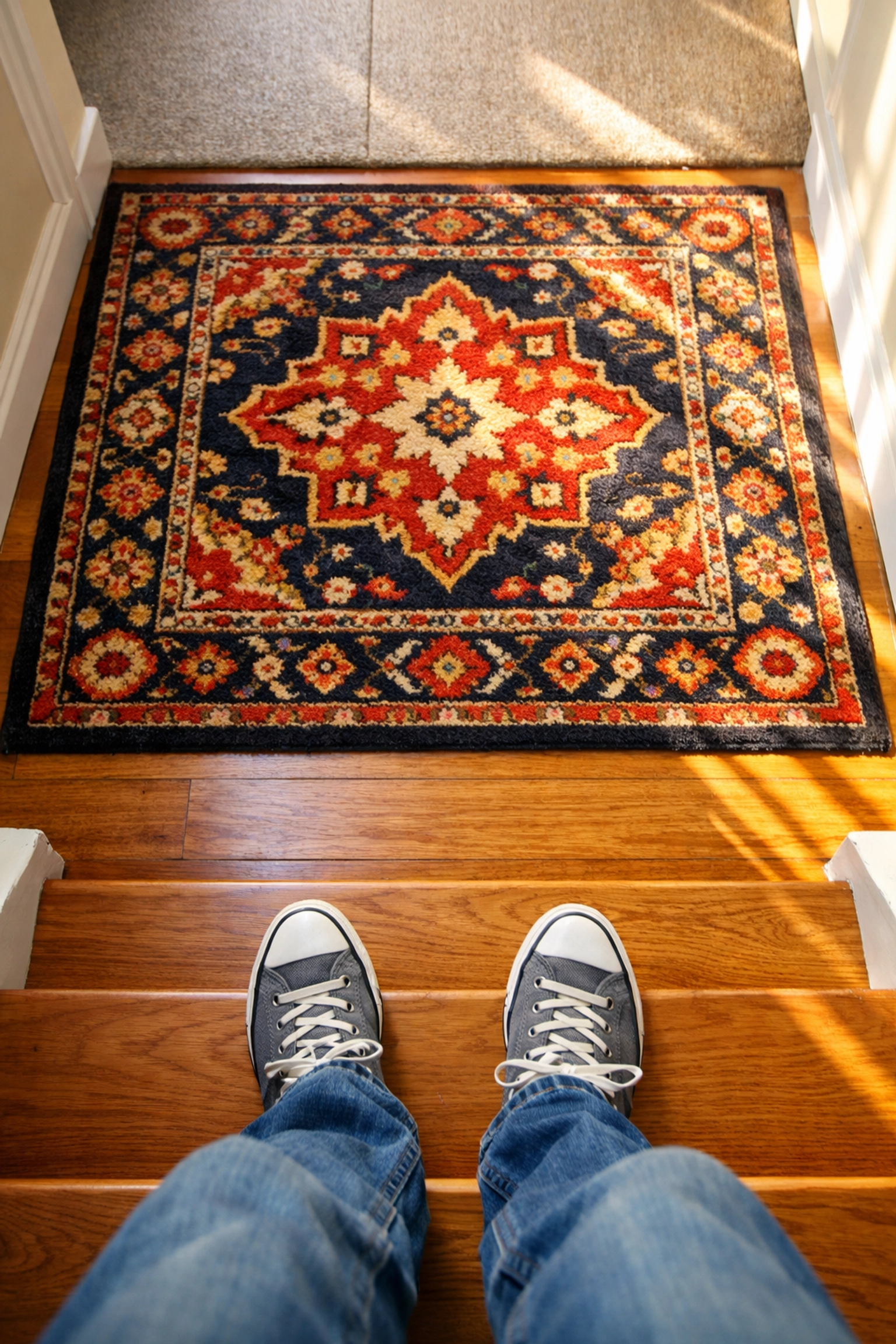
Create visual contrast. You need to "break" the illusion so your eyes can clearly distinguish between the last tread and the floor.
- Contrast Strips: Apply a strip of colored tape or a different textured material to the edge of the final step.
- Area Rugs: Place a rug on the landing that is a significantly different color than the stairs. This provides a clear visual target for where the "journey" ends.
5. Using Decorative or "Open" Handrails
Handrails are not just a suggestion; they are a vital piece of safety equipment. However, many homes have handrails that were chosen for style rather than function.
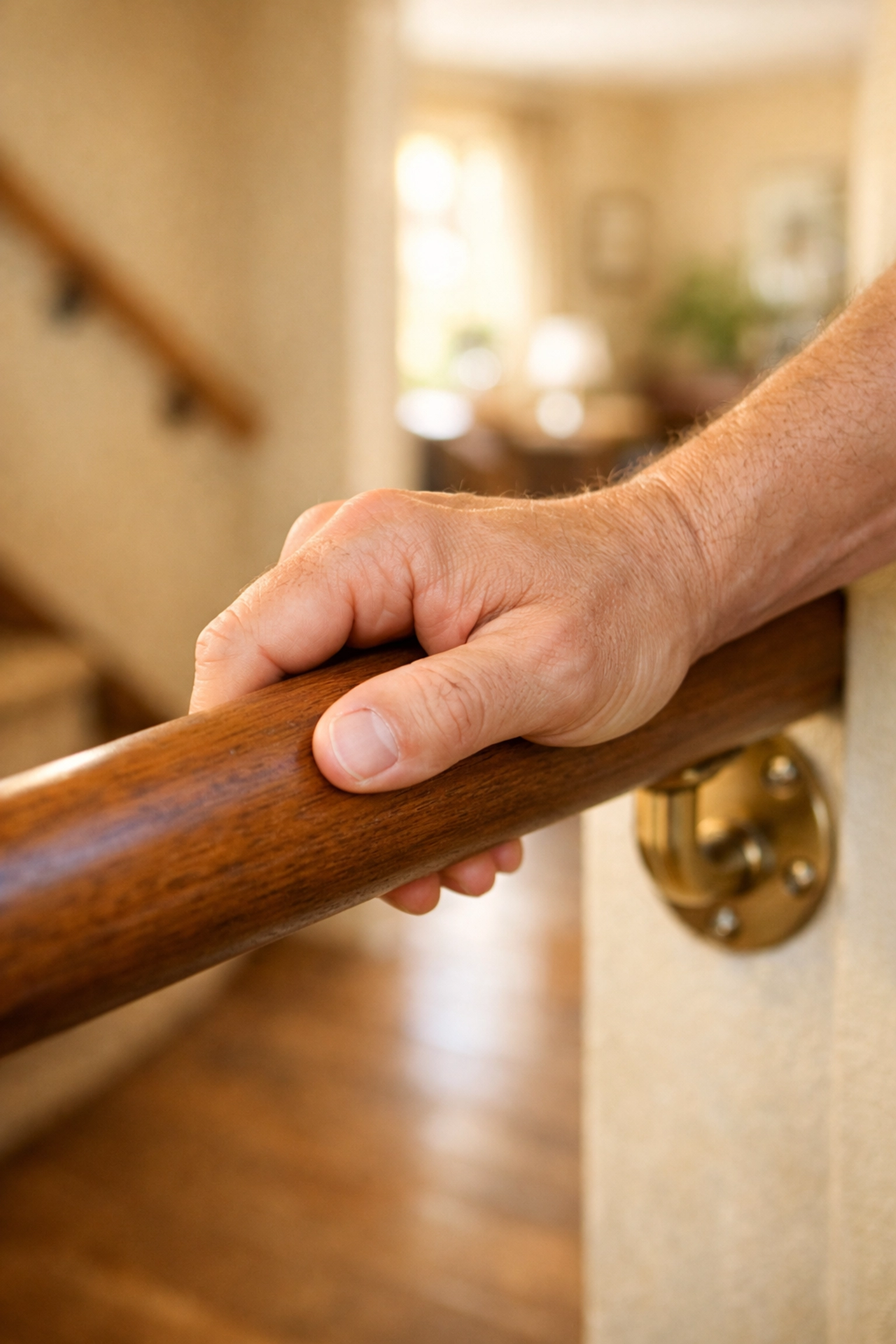
A common mistake is having a handrail that is too thick or "boxy" to actually grip. If you begin to fall, you need to be able to wrap your hand completely around the rail (a "power grip"). If the rail is a wide, flat piece of decorative crown molding, you can only use a "pinch grip," which is not strong enough to support your body weight during a slip. Another mistake is "open" stairs where the handrail doesn't extend past the top or bottom step, leaving you unsupported during the most critical transitions.
The Fix:
- The Circular Grip: Ideally, a handrail should be round or oval, with a diameter of about 1.5 to 2 inches. This allows for the most secure hold.
- Continuity: The rail should be continuous from the very top to the very bottom.
- Extension: A truly safe handrail extends about 12 inches beyond the top and bottom steps. This allows you to get your balance on flat ground before you let go of the support.
- Double Up: If possible, install handrails on both sides of the stairs. This is incredibly helpful for those with one-sided weakness or those who find they need to pull themselves up as much as they push.
6. Ignoring the "Slip Factor" of Flooring
Polished hardwood stairs are beautiful, but they are essentially vertical ice rinks, especially if you are wearing socks or smooth-soled slippers. Even carpet can be deceptive; if the carpet is plush or has a thick pad, it can round off the "nose" of the step, making the footing feel unstable and decreasing the surface area your foot actually touches.
The Fix:
Increase the friction.
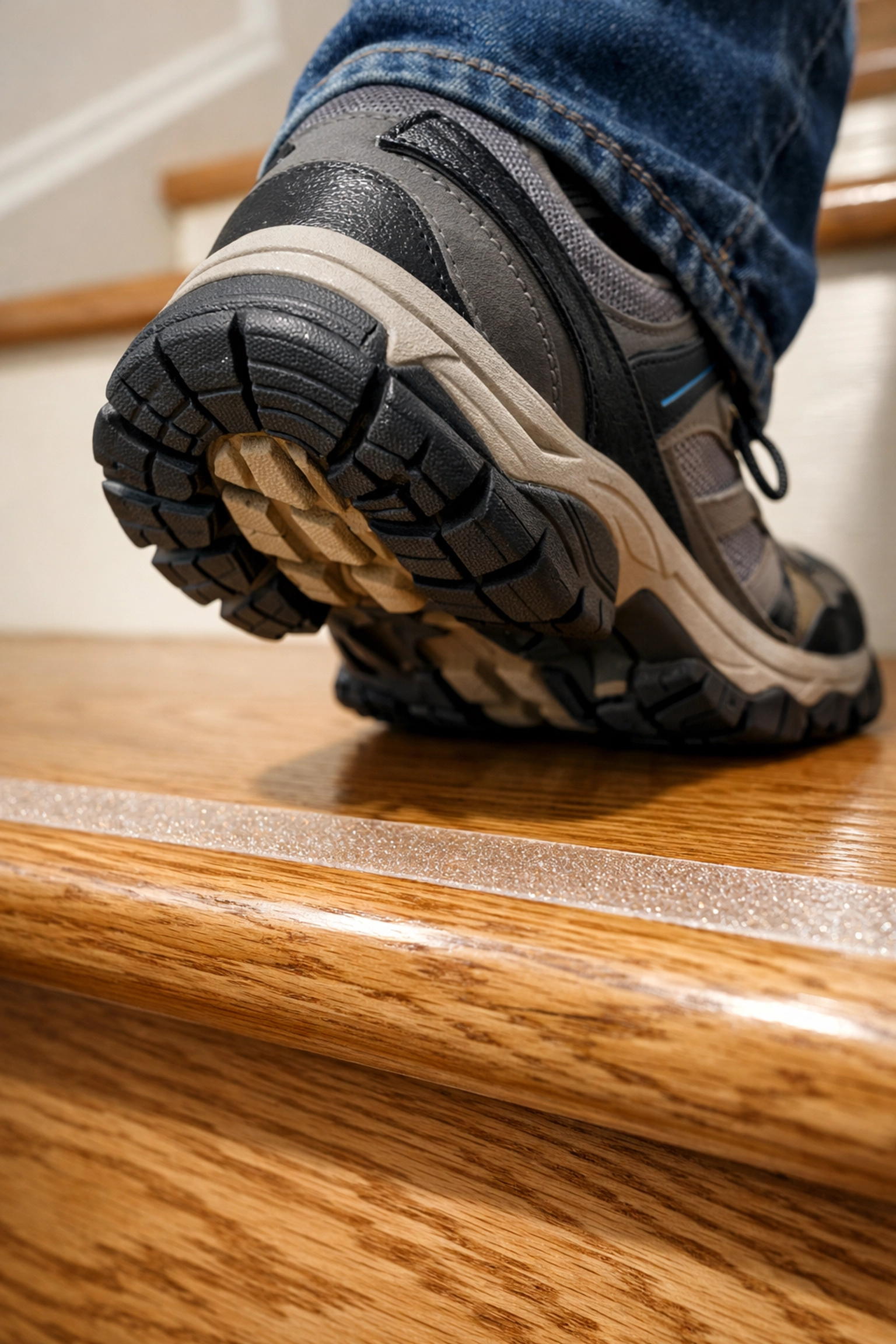
- Non-Slip Treads: You can find clear, adhesive anti-slip strips that provide grip without hiding the beauty of wood.
- Low-Pile Carpet: If you prefer carpet, choose a tight, low-pile weave. Ensure it is stretched tightly and stapled securely at the "crotch" of the step so it doesn't shift underfoot.
- Footwear Habits: This is a behavioral fix. Avoid walking on stairs in stocking feet. Bare feet are actually safer than socks because the skin provides natural traction, but supportive, rubber-soled shoes are always the gold standard.
7. Postponing Maintenance on "Squeaks and Creaks"
We often treat a loose step or a wobbling banister as a minor annoyance: something to fix "eventually." But in the world of fall prevention, a loose tread is a structural failure. If a board shifts even half an inch when you put your weight on it, it changes your center of gravity.
Similarly, carpet that has become loose or "bunched" at the edge of a step is a massive tripping hazard. These small issues escalate quickly when you are tired or carrying something.
The Fix:
Perform a monthly "Stair Audit."
- The Shake Test: Grab your handrails and give them a firm shake. They shouldn't budge. If they do, tighten the brackets or add more support.
- The Weight Test: Step firmly on every part of every tread. Listen for creaks and feel for any "give."
- Secure the Treads: Use screws rather than nails to secure loose boards. Nails can pull out over time, but screws provide a lasting grip.
- Trim the Fray: If you have carpet, check for any loose threads or frayed edges that could catch a toe or a heel.
Final Thoughts on Stair Safety
Taking care of your stairs isn't about admitting weakness; it’s about maintaining your independence. When the stairs are well-lit, clear of clutter, and structurally sound, they stop being a source of anxiety and become just another part of your home.
Remember, safety is often found in the details. It’s that extra inch of handrail, the motion-sensor light in the hallway, and the habit of never carrying too much at once. If you feel that your stairs are becoming too difficult to navigate even with these fixes, it may be time to consult with a physical therapist to work on balance and strength, or to look into more significant home modifications.
Stay safe, stay observant, and take it one step at a time.

