
Stairs are often the most intimidating part of a home as we get older. I hear it all the time from families: the staircase becomes a "no-go zone" or a source of constant worry. It makes sense; the stakes are higher on a set of stairs than they are on a flat hallway. But here’s the thing: most stair-related accidents aren't caused by a lack of ability. They are caused by small, often overlooked environmental factors that we’ve just grown used to over the years.
At Fall Guys Products, we believe that your home should remain your sanctuary. You shouldn't have to feel like a mountaineer just to get to your bedroom. By identifying a few common mistakes and implementing some straightforward fixes, you can significantly reduce the risk of a slip or trip.
Here are the seven most common mistakes people make with stair safety and, more importantly, how you can fix them today.
1. Relying on a Single Handrail (or None at All)
The most common mistake is thinking one handrail is enough. Most building codes only require one, but for anyone focusing on fall prevention, a single rail is only doing half the job.
When you only have one rail, you’re forced to rely heavily on one side of your body. If that side is weaker, or if you lose your balance toward the open side, there’s nothing to catch you. Furthermore, many handrails stop exactly where the stairs stop. This is a problem because the transition from the last step to the flat floor is where many balance shifts occur.
The Fix:
Install handrails on both sides of the staircase. This allows for a "dual-point" grip, which stabilizes the core and keeps your weight centered. Ensure that the rails extend at least 12 inches beyond the top and bottom steps. This "lead-in" and "lead-out" gives you a steady hand before you even take your first step and keeps you supported until you are safely on level ground. Finally, check the "grip-ability." A rail should be round or oval so your hand can wrap entirely around it: this is called a "power grip." If it’s too wide or decorative, it’s much harder to hold onto during a slip.
2. Underestimating the Power of "Shadow Zones"
We all know that dark stairs are dangerous, but "shadow zones" are even more deceptive. This happens when you have a single overhead light that casts long shadows across the treads. These shadows can hide the edge of a step, making a flat surface look like a drop-off, or vice versa.
As our vision changes with age, our depth perception and ability to see contrast often decrease. If the stairs and the shadows are both dark, your brain has to guess where to put your foot. That’s a recipe for a misstep.
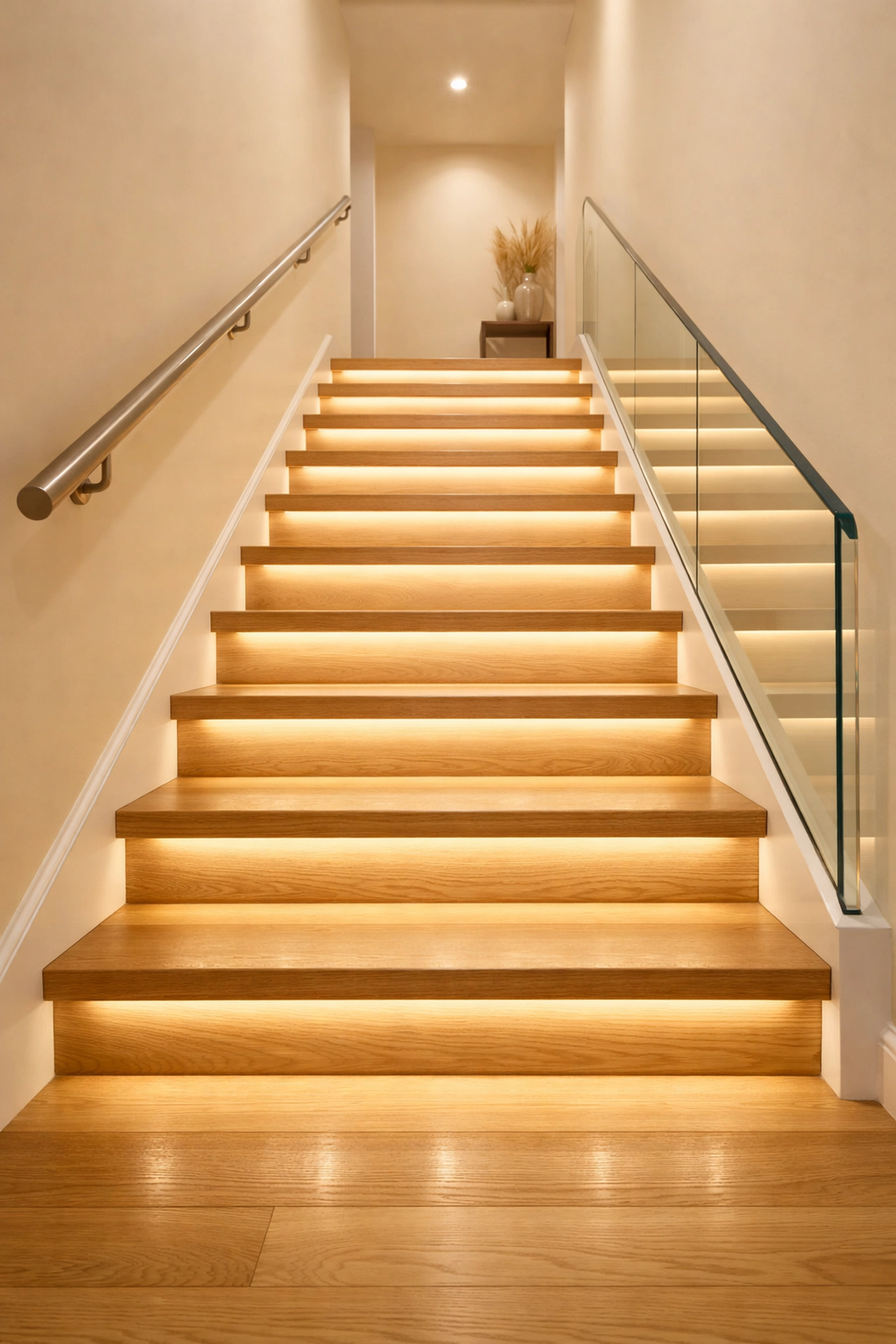
The Fix:
The goal is "uniform illumination." You want light to hit every inch of the stair tread. Consider installing LED motion-sensor strips along the baseboards or underneath the lip of each step. These are inexpensive and can be battery-operated or plugged in. They light up as you approach, ensuring you see the exact edge of every step. Also, ensure there are light switches at both the top and the bottom of the stairs so you never have to navigate them in the dark to reach a switch.
3. Prioritizing Aesthetics Over Traction
Hardwood stairs are beautiful. Polished stone is elegant. However, these smooth surfaces offer almost zero friction, especially if you are wearing socks or smooth-soled slippers. Even "anti-slip" waxes can wear down over time, leaving the wood as slick as an ice rink.
Another common issue is loose carpeting. A "runner" that isn't perfectly tensioned can bunch up underfoot, creating a moving target that can easily cause a trip.
The Fix:
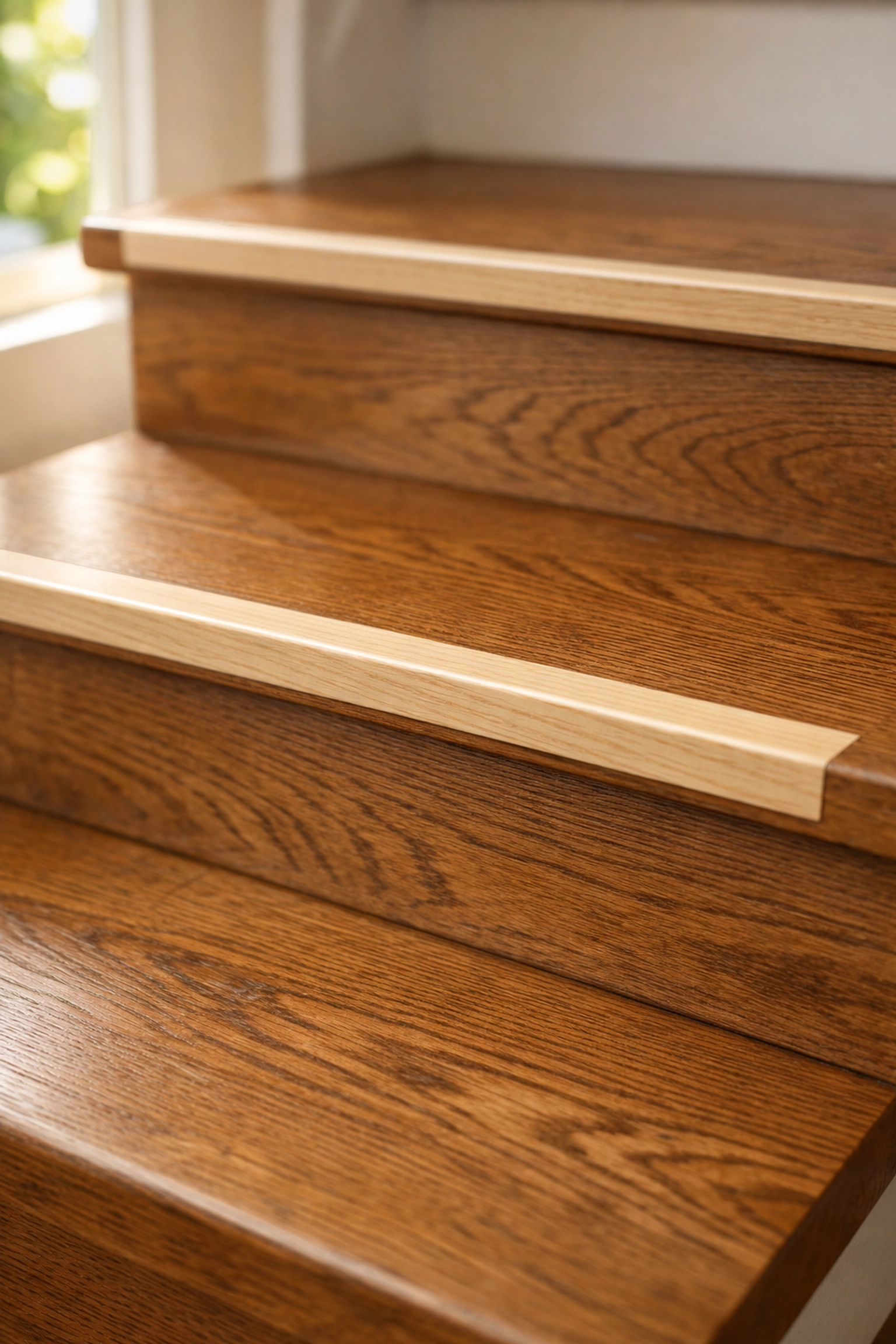
If you have bare wood or tile, you don't have to cover the whole thing in carpet. You can apply transparent anti-slip adhesive strips or high-friction treads to the edge of each step. These provide the necessary "bite" for your shoes or feet without hiding the beauty of the wood. If you prefer carpet, ensure it is a low-pile variety (thick, shag carpet is actually a trip hazard because it hides the edge of the step) and make sure it is installed using the "cap and band" method, which tightly wraps the carpet around the nose of the stair.
4. Ignoring the "Rhythm" of the Steps
Our brains are remarkably good at picking up patterns. When you walk up a flight of stairs, your brain calculates the height of the first two steps and then "automates" the rest of the climb. This is why uneven step heights (even by as little as a quarter of an inch) are so dangerous.
Commonly, the bottom or top step might be a slightly different height due to floor renovations or settling of the house. This break in the rhythm causes the foot to catch on the riser or step into empty air.
The Fix:
While you might not be able to rebuild your entire staircase, you can make the edges more visible to help your brain manually adjust. Use a contrasting color of paint or a bright adhesive strip on the "nose" (the edge) of each step. This visual cue tells your brain exactly where the step ends. If a step is significantly uneven, it may be worth consulting a carpenter to shim or adjust the tread to match the others. Consistency is safety.
5. Using the Stairs as a Temporary Storage Unit
We’ve all done it: placing a book, a basket, or a pair of shoes on the bottom step to be carried up "later." This is one of the most dangerous habits a household can have.
Stairways are narrow by design. When you clutter them, you force yourself to change your natural gait to avoid the objects. This might mean stepping more to one side or shortening your stride. On a flat floor, this is annoying; on a staircase, it’s a hazard. Furthermore, if you do have a minor slip, those objects become secondary hazards that can cause further injury.
The Fix:
Implement a "Zero-Object Policy" for the stairs. Nothing: absolutely nothing: should ever sit on a step, even for a minute. If you find yourself frequently carrying things up and down, consider installing a sturdy shelf at the top and bottom of the stairs. Place the items on the shelf instead. This keeps the path clear and allows you to keep both hands on the rails while you move between floors.
6. Navigating Stairs with "Transition" Lenses or Bifocals
This is a mistake that has nothing to do with the house and everything to do with how we see it. Bifocals and trifocals are wonderful for reading and driving, but they can be a nightmare on the stairs.
When you look down through the bottom portion of a bifocal lens to see where you are stepping, it often magnifies the view or blurs the distance. This distorts your perception of where the step actually is. Many falls occur because a person thought the step was two inches closer or further away than it actually was.
The Fix:
Talk to your optometrist about "stair-specific" glasses. Many seniors find that having a dedicated pair of single-vision glasses for moving around the house makes a world of difference. If that isn't an option, the best habit to form is tucking your chin to your chest when looking at the stairs. This allows you to look through the top part of your bifocals (the distance portion), which provides a more accurate representation of where the steps are.
7. The "One-Hand" or "No-Hand" Carry
If you are carrying a laundry basket, a tray of food, or a heavy box, you are likely using both hands. This means you have zero hands on the handrail.
This is a high-risk behavior. Without a handrail, you have no way to arrest a fall if you lose your balance. Additionally, large items often block your view of your feet, meaning you are climbing or descending blind.
The Fix:
Never carry anything that requires two hands while on the stairs. If you need to move laundry, consider a "stair slide" or simply dropping the bag down the stairs (if it’s soft) before you descend. Better yet, use a backpack to transport items. This keeps your center of gravity stable, keeps your line of sight clear, and leaves both of your hands free to grip those dual handrails we talked about earlier.
A Final Reassuring Thought
Making these changes isn't about admitting "weakness"; it's about being smart and proactive. Think of it like wearing a seatbelt in a car. You don't put it on because you expect to crash; you put it on because it's a simple step that provides massive protection.
Most of these fixes: adding a second rail, clearing clutter, and improving lighting: can be done in a single weekend. Once they are in place, the stairs stop being a source of stress and go back to being just another part of your home.
If you aren't sure where to start, try the "Step-by-Step Audit." Walk your stairs today and look for those shadow zones. Give your handrail a firm shake to see if it’s loose. Check your "nose" visibility. By taking it one step at a time, you can ensure your home stays a safe, comfortable place for years to come.

