
Stairs are often the most daunting part of a home for anyone concerned about mobility. Whether you are aging in place, recovering from surgery, or caring for a loved one, the staircase represents a significant transition point, both physically and mentally. At Fall Guys Products, we believe that your home should be a place of comfort, not a source of anxiety.
Hi, I’m Brian Kerr. Over the years, I’ve seen how small, seemingly insignificant details on a staircase can make the difference between a confident climb and a dangerous slip. Most homes are built to "standard" codes, but standard doesn't always mean safe for everyone. We often overlook the subtle risks because we’ve walked those same steps thousands of times. But as our needs change, our environment needs to change with us.
In this guide, we’re going to look at seven common mistakes homeowners make with stair safety and, more importantly, how you can fix them without needing a full-scale renovation.
1. Ignoring the "Golden Ratio" of Steps
One of the most common issues in older homes is inconsistent step dimensions. Have you ever walked up a flight of stairs and felt yourself stumble for no apparent reason? It might not be you: it might be the stairs.
The human brain relies on rhythm when climbing. Once you take the first two steps, your brain "programs" the height (riser) and depth (tread) of the stairs. If even one step is a half-inch higher or lower than the others, it breaks that rhythm, leading to a trip.
The Fix:
Measure your stairs. Standard safe dimensions usually call for a riser height between 6 and 7 inches and a tread depth of at least 11 inches. If you find that your steps are uneven or too steep (a slope greater than 37 degrees), you may not be able to rebuild the whole staircase, but you can improve the situation.
For steps that are too shallow, you can sometimes add "nosing" extensions, though this must be done carefully to avoid creating a new trip hazard. If the stairs are simply too steep, the best fix is to focus heavily on the other safety features mentioned below to compensate for the challenging geometry.
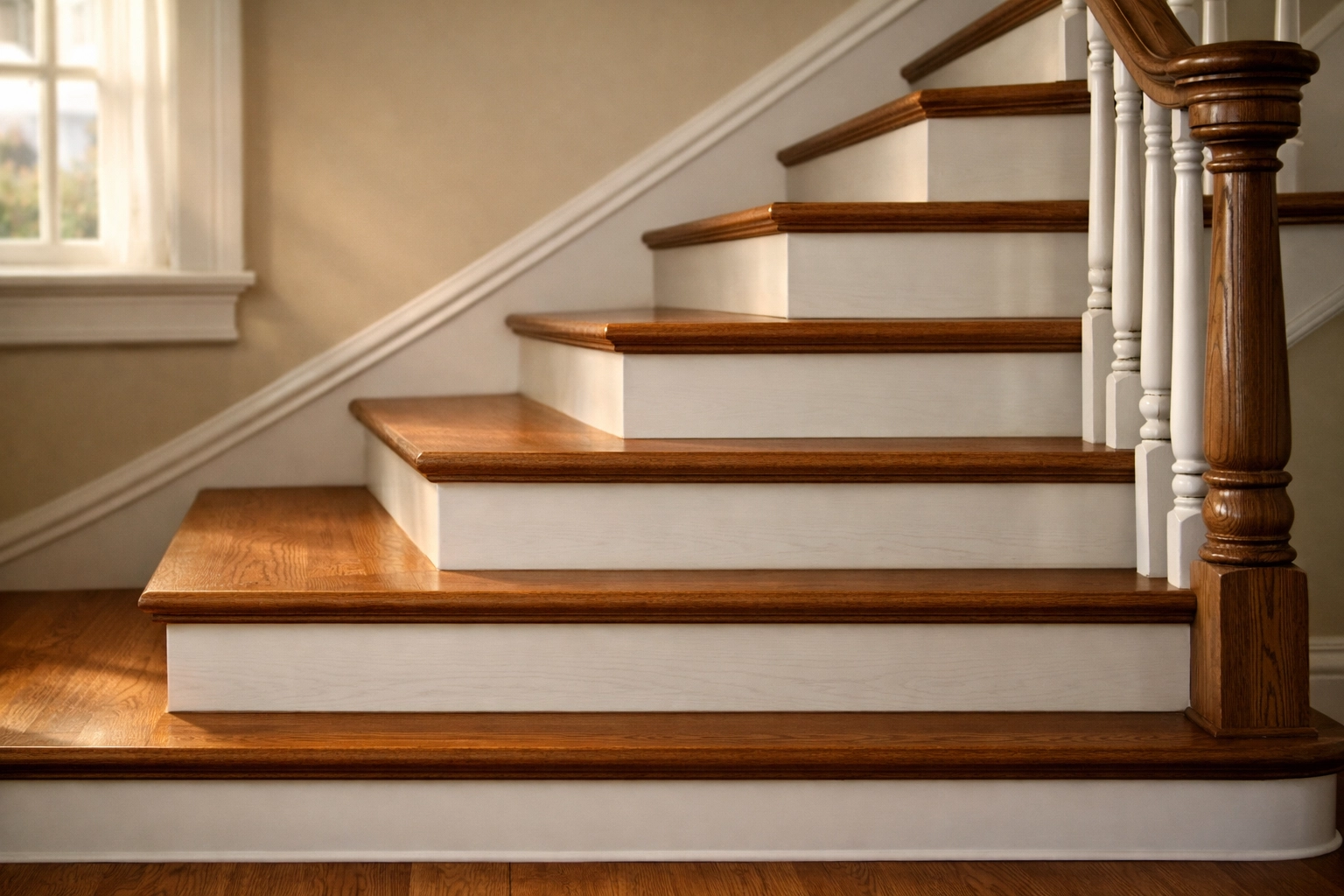
2. Settling for a Single Handrail
Most building codes only require a handrail on one side of a staircase. While this might be enough for a young, fit adult, it’s a major oversight for anyone with balance issues, unilateral weakness (like from a stroke), or arthritis.
Relying on one rail means that on the way down, you might be using your non-dominant hand, or worse, have nothing to hold onto if your "strong" side isn't toward the rail.
The Fix:
Install a second handrail. This allows for "bilateral support," meaning you can use both arms to stabilize yourself and pull your weight upward or steady yourself downward.
Ensure the handrail is "graspable." This is a technical term that basically means you should be able to wrap your fingers all the way around it. Many modern homes use wide, flat boards as handrails because they look nice, but they are nearly impossible to grip firmly if you actually start to fall. Look for a round or oval rail with a diameter of about 1.25 to 2 inches.
3. Operating in the Shadows
Lighting is perhaps the most underrated element of stair safety. As we age, our eyes require significantly more light to see clearly. Shadows can hide the edge of a step, making it look like the tread is wider or narrower than it actually is.
The worst-case scenario is a single overhead light at the top of the stairs that casts the climber's own shadow directly over the steps they are trying to see.
The Fix:
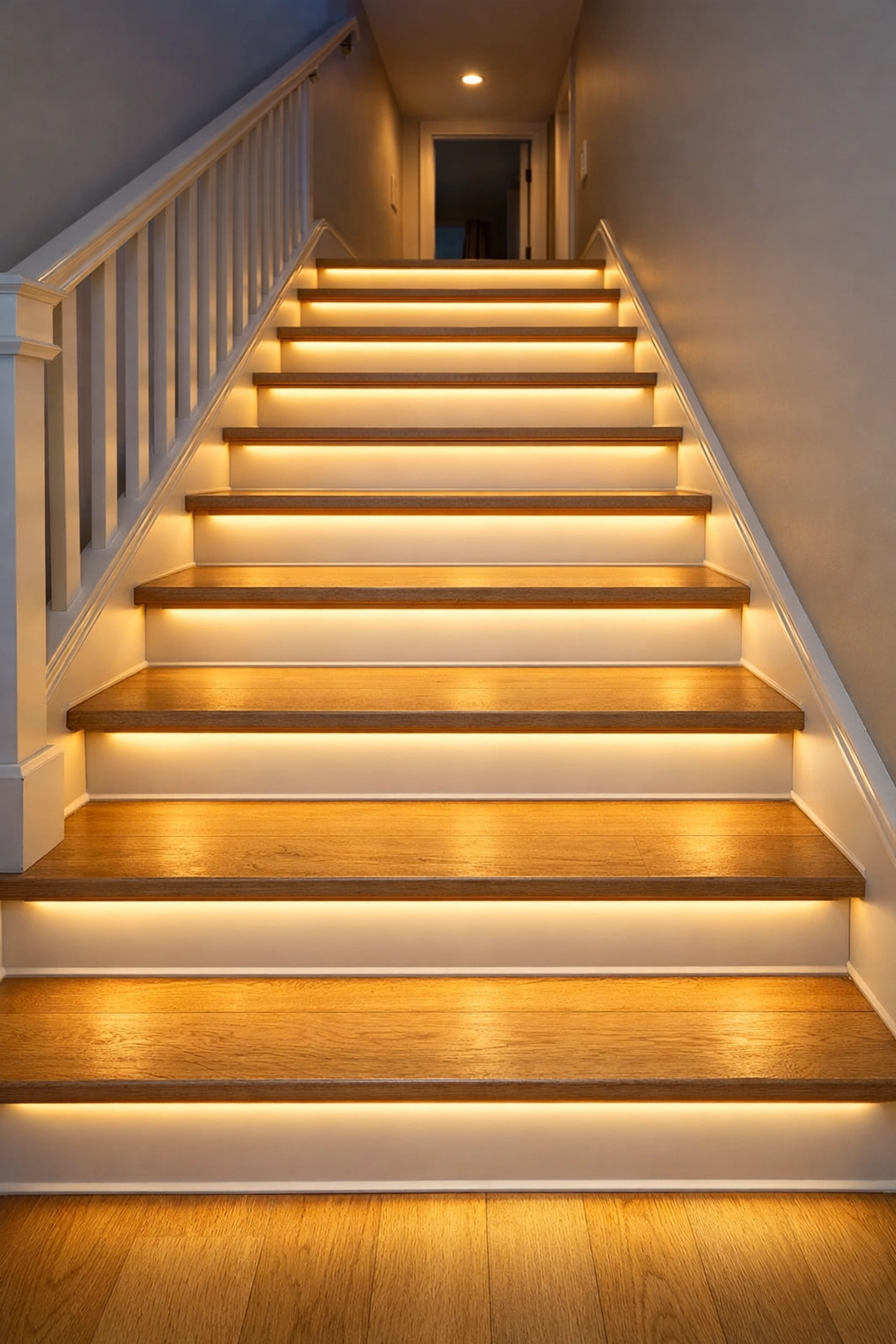
You want uniform lighting from top to bottom. If you can’t hire an electrician to hardwire new fixtures, there are excellent battery-operated, motion-sensing LED lights that can be adhered to the wall just above each step.
Ideally, you want "task lighting" that illuminates the treads themselves. Motion sensors are a game-changer because they ensure the stairs are bright the moment you approach them, eliminating the need to fumbled for a switch in the dark.
4. Overlooking Surface Friction
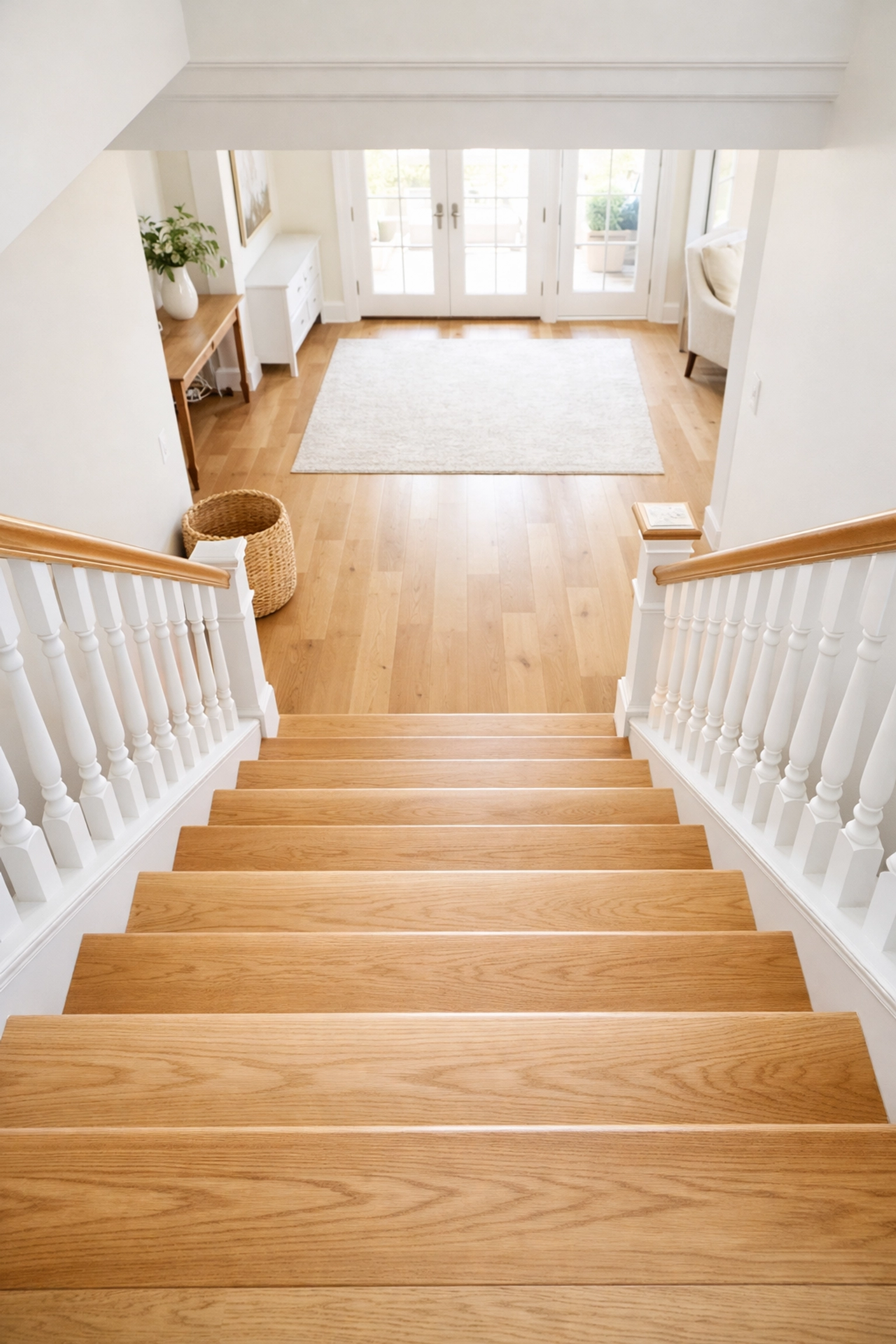
Beautifully polished hardwood stairs are a staple of home design, but they are effectively "ice rinks" for anyone wearing socks or smooth-soled slippers. Even carpet can be a problem if it’s low-pile and slippery, or if it’s so thick that it rounds off the edge of the step, hiding the "nose" where your foot needs to plant.
The Fix:
If you have wooden or tile stairs, you don't have to cover them in ugly industrial tape. There are transparent anti-slip adhesive strips that provide grit and traction without ruining the aesthetic of the wood.
If your stairs are carpeted, ensure the carpet is tightly wrapped and secured with stair rods or heavy-duty staples. Loose carpet is a major sliding hazard. For the ultimate safety, consider removing the carpet and using high-friction wooden treads with non-slip nosing.
5. Using the Stairs as a Temporary Storage Shelf
We’ve all done it. "I’ll just leave these books on the bottom step so I remember to take them up later." This is one of the most dangerous habits a household can have.
Stairs are a high-focus zone. When you are navigating steps, your brain is calculating depth, balance, and motor control. Adding an obstacle: even a small one: forces your brain to multitask. If you have to step around an object, you are shifting your center of gravity at the exact moment it needs to be most stable.
The Fix:
Establish a "Zero Tolerance" policy for stair clutter. Nothing stays on the steps: not even for a minute. If you need to move items between floors, use a "stair basket" with a handle that sits at the top or bottom of the stairs (not on the steps themselves). Carry the basket only when you have a free hand and feel stable, or better yet, ask someone else to carry it for you.
6. Ignoring Structural "Warnings"
Stairs often try to tell us when they are failing. A squeak, a slight wobble in the handrail, or a tread that "gives" slightly when you step on it are all warning signs.
Over time, the nails holding treads to the "stringers" (the side supports) can loosen. A loose tread can shift just enough to cause a loss of balance. Similarly, a handrail that wobbles even a quarter of an inch isn't going to provide the support you need if you actually have to lean your full weight into it during a slip.
The Fix:
Conduct a "Stair Audit" once every six months. Walk up and down slowly, listening for creaks and feeling for movement.
- For loose treads: Use wood screws (not nails) to re-secure the tread to the stringer. Screws have much better "pull-out" resistance.
- For wobbly rails: Ensure the brackets are screwed into wall studs, not just the drywall. If the bracket is loose, you may need to move it slightly to find fresh wood or use a heavy-duty toggle bolt.
7. The "Bifocal" Trap
This mistake isn't about the stairs themselves, but how we look at them. Many people who wear bifocals or progressive lenses find stairs particularly difficult. Because the bottom portion of the lens is designed for reading (close-up vision), looking down at your feet through that part of the glass makes the steps look blurry or distorted in distance. This leads to misjudging where the step actually is.
The Fix:
When navigating stairs, be conscious of your head position. You may need to tilt your chin down further than usual so you are looking through the "distance" (top) portion of your glasses at the steps.
Alternatively, many physical therapists recommend having a dedicated pair of "single-vision" glasses for moving around the house if you find that your progressives are making you dizzy on the stairs.
Bonus: The Importance of the Landing
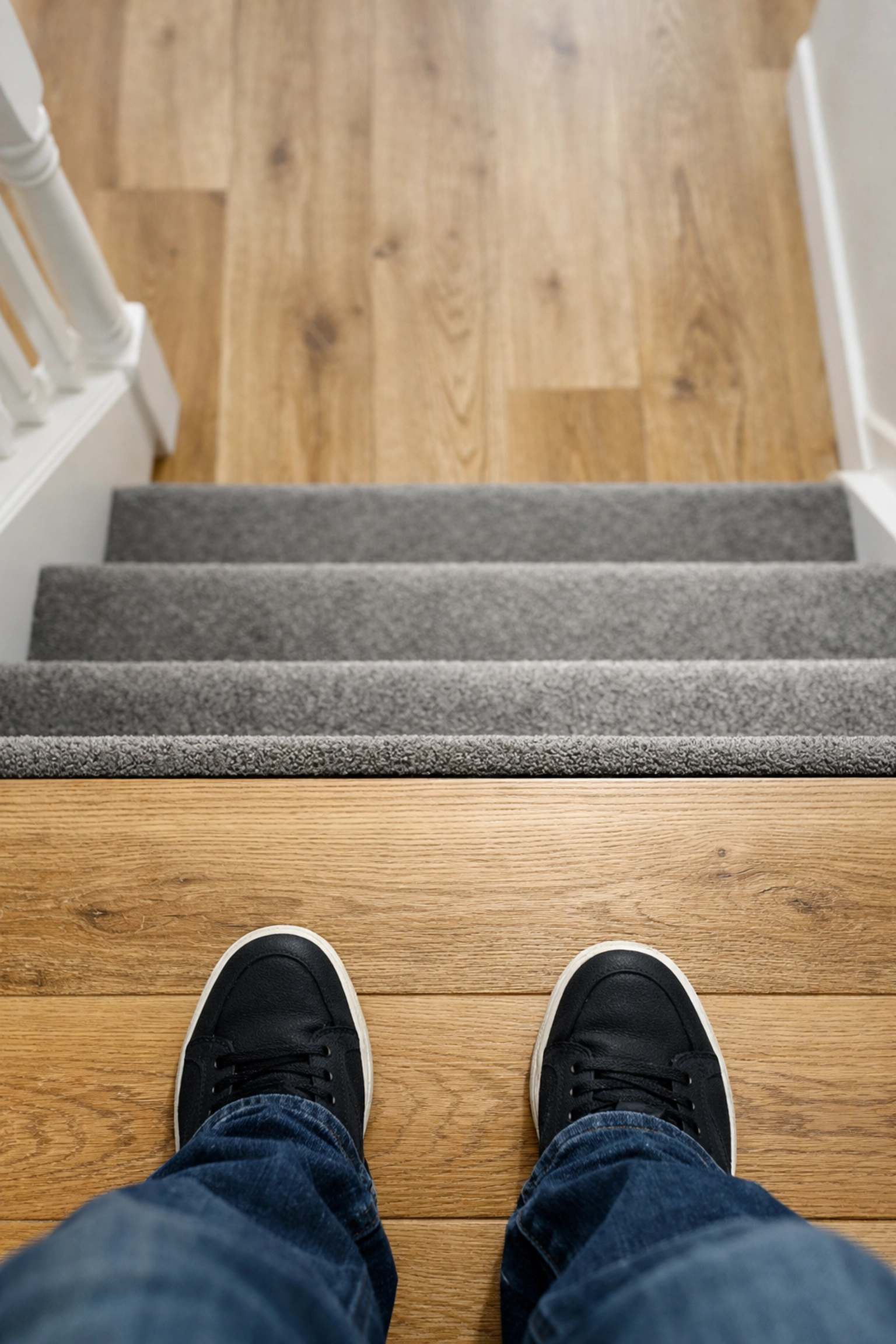
We often focus so much on the steps that we forget the landing. A safe staircase ends in a safe "exit zone." If the bottom of your stairs leads directly into a doorway or a cluttered hallway, you increase the risk of a fall right at the finish line.
Ensure there is a clear "landing zone" of at least 36 inches at both the top and the bottom of the stairs. Remove any throw rugs at the base of the stairs; these are notorious for sliding out from under people as they take that final, high-impact step onto the floor.
Making Safety a Priority
I know that thinking about these things can feel overwhelming. It can feel like your home is suddenly full of "traps." But the goal of identifying these mistakes isn't to create fear: it's to empower you. Most of these fixes are simple, low-cost, and can be done in a single afternoon.
Stair safety is about layers. One handrail is good; two are better. Good lighting is helpful; non-slip treads make it even safer. By fixing these seven common mistakes, you aren't just preventing a fall; you’re reclaiming your home. You’re ensuring that you can move between your living room and your bedroom with the confidence and peace of mind you deserve.
Remember, the best time to fix a staircase is before a fall happens. Take a look at your stairs today: not as a part of the house you’ve known for years, but as a path that needs to support you for many years to come.
Stay safe, stay mobile, and keep moving forward. We’re here to help you every step of the way.

