
Stairs are often the most intimidating part of a home as we get older or when we are caring for someone with limited mobility. It is a common concern, and if you’ve ever felt a bit uneasy heading down to the laundry room or up to the bedroom at night, you are certainly not alone. At Fall Guys Products, we believe that the home should be a place of comfort, not a source of stress.
The good news is that most stair-related incidents are not caused by the stairs themselves, but by small, often overlooked "safety gaps" in how we maintain and use them. By identifying these common mistakes, we can transform a potential hazard into a predictable, safe part of your daily routine.
Here are the seven most common mistakes people make with stair safety and, more importantly, the practical steps you can take to fix them today.
1. Choosing Style Over Substance with Handrails
One of the most frequent issues we see in modern and traditional homes alike is the "decorative" handrail. Many handrails are designed to look beautiful: perhaps they are wide, flat pieces of oak or elaborate wrought iron: but they aren't actually functional for someone who needs to rely on them for balance.
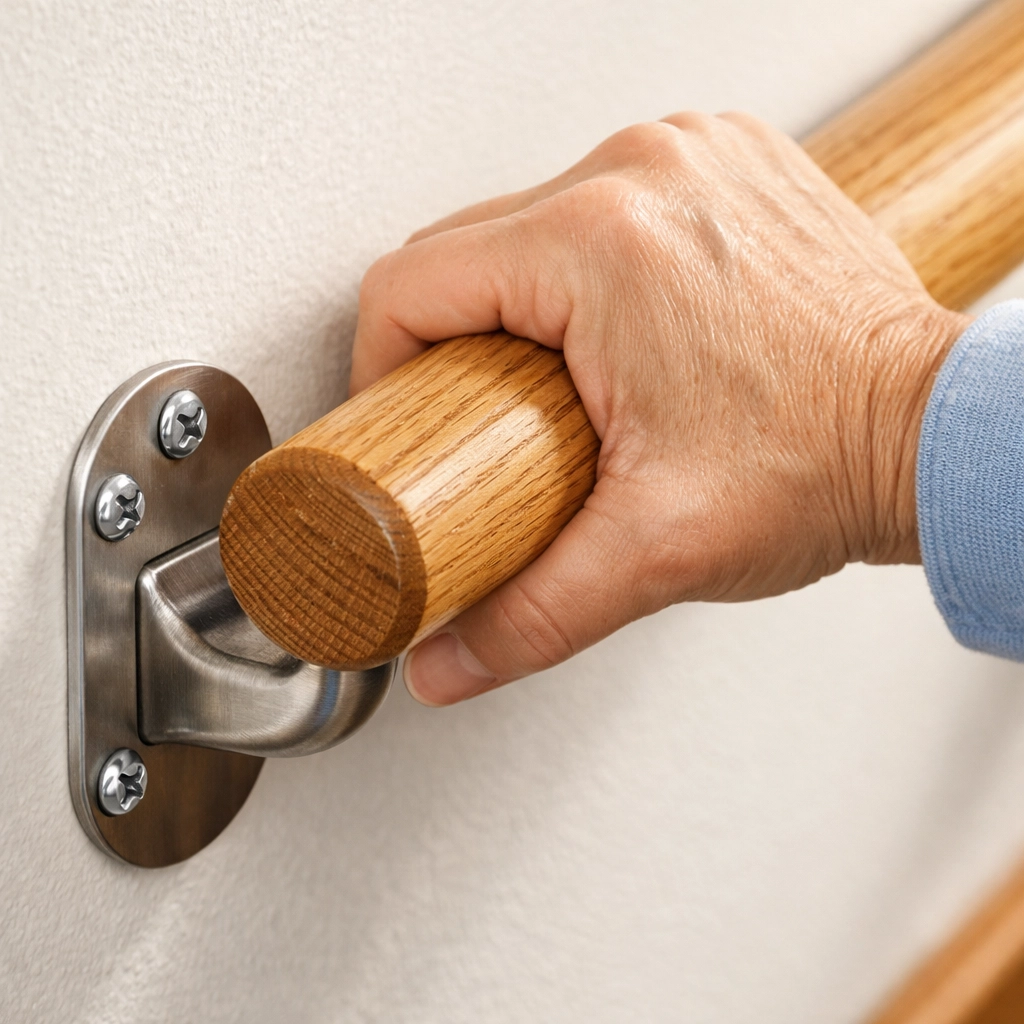
A handrail’s primary job is to provide a "power grip." This means your hand should be able to wrap almost entirely around the rail so that your fingers and thumb can meet. If a rail is too wide or too flat, you can only "palm" it. In the event of a slip, a palmed grip will likely slide right off, whereas a wrap-around grip allows you to hold your full body weight.
How to Fix It:
- Install Round Rails: Replace flat or oversized rails with rounded ones that have a diameter between 1.25 and 2 inches.
- Check the Clearance: Ensure there is at least 1.5 inches of space between the wall and the rail. If it’s too close to the wall, you won't be able to get a firm grip in a hurry.
- Go Full Length: The rail should extend at least 12 inches beyond the top and bottom steps. This gives you a "lead-in" and "lead-out" so you aren't searching for support while you are already in motion.
- Double Up: If you only have a rail on one side, consider adding a second one. Having support for both hands significantly increases stability and reduces the load on your joints.
2. Underestimating the Danger of "The Shadow Zone"
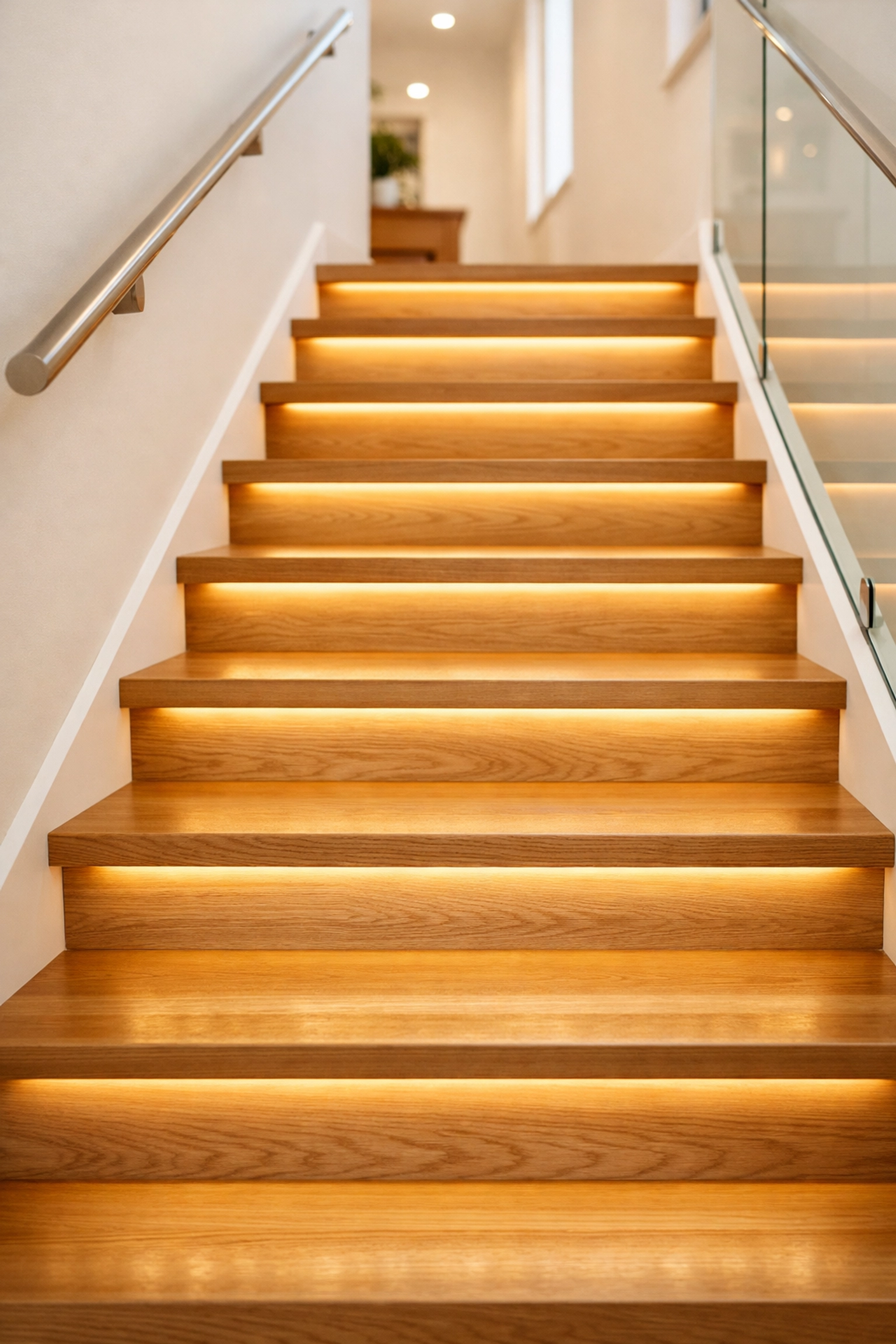
Lighting is the unsung hero of fall prevention. Many stairwells have a single overhead light at the top or the bottom. This creates long shadows that can obscure the edge of the steps, making it difficult to judge exactly where to place your foot. As we age, our eyes require significantly more light to see clearly, and our ability to perceive depth in dim environments decreases.
If you find yourself squinting or "feeling" for the next step with your toe, your lighting is likely inadequate.
How to Fix It:
- Increase the Wattage: Switch to brighter, "daylight" LED bulbs. These provide a crisp, clear light that mimics natural sun, making edges much easier to define.
- Install Dual Switches: Ensure there is a light switch at both the top and the bottom of the stairs. Never attempt to navigate stairs in the dark because you didn't want to walk across the room to the switch.
- Motion-Activated Strips: Battery-operated LED motion sensor strips are a game-changer. You can stick them under the lip of each tread or along the baseboard. They light up as soon as they detect movement, guiding your path without you having to find a switch.
- Reduce Glare: While you want it bright, you don't want bare bulbs blinding you. Use frosted globes or shaded fixtures to ensure the light is even and diffused.
3. Ignoring the "Bottom-Step Illusion"
The bottom step is statistically one of the most dangerous places on a staircase. This is often due to a visual phenomenon called the "bottom-step illusion." In many homes, the flooring of the hallway or landing is a similar color or pattern to the stairs. When looking down from above, the final step can blend in with the floor, leading the person to believe they have reached the ground when they actually have one more step to go.
This "missing" step results in a jarring drop that can easily cause a stumble or a knee injury.
How to Fix It:
- Visual Contrast: Use a high-contrast color to mark the edge of the last step. This could be a strip of brightly colored anti-slip tape or a different colored wood stain.
- Change the Texture: Placing a thin, rubberized mat at the very bottom landing (ensure it is secured and non-slip) provides a tactile "signal" to your brain that you have officially reached level ground.
- Highlight the Nosing: The "nosing" is the front edge of the step. Applying a contrasting color or a textured strip to every nosing on the staircase helps define the beginning and end of every single tread.
4. Treating the Stairs Like a Storage Unit
We’ve all done it: we place a book, a pair of shoes, or a basket of laundry on the bottom steps, intending to take them up "on the next trip." This is perhaps the most preventable mistake on this list, yet it remains a leading cause of household falls.
Stairs are a transit zone, not a storage zone. Even a small object can catch a heel or cause a person to swerve unexpectedly, leading to a loss of balance.
How to Fix It:
- The "Zero-Object" Policy: Make it a firm rule in your home that nothing: absolutely nothing: ever sits on the stairs.
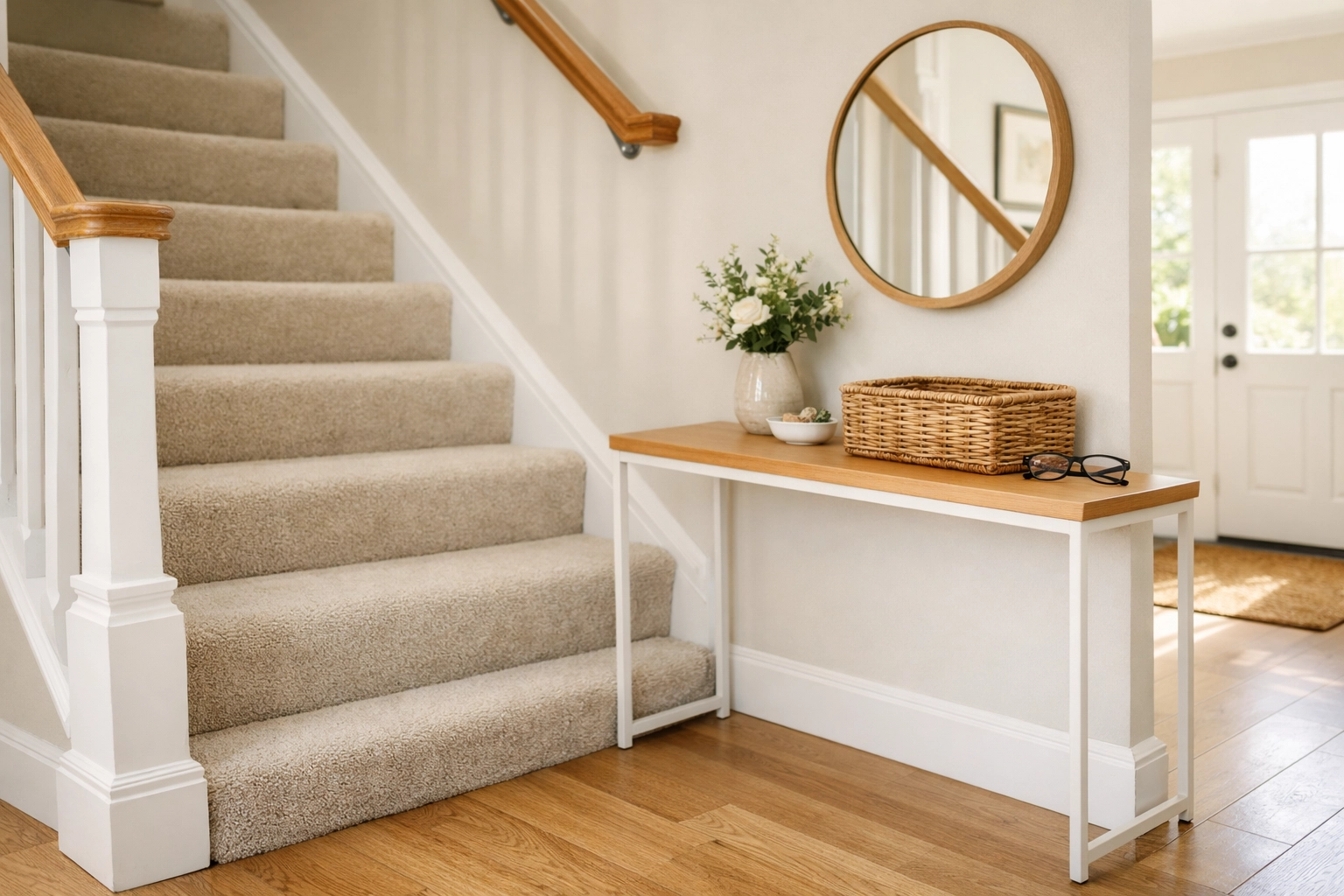
- The Landing Zone: If you have items that need to go up or down, place a small table or a "stair basket" at the very top and very bottom of the stairs, but off the actual walking path.
- Clear the Path: Ensure that no rugs or runners at the top or bottom of the stairs are loose. A rug that bunches up can be just as dangerous as a toy left on a step.
5. Overlooking Surface Slickness
Beautifully polished hardwood or high-gloss tile stairs are a staple of home design, but they can be incredibly slippery, especially if you are wearing socks or smooth-soled slippers. Even carpet can become a hazard if it is plush and rounded at the edges, as it can hide the actual "corner" of the step, causing your foot to slide forward.
How to Fix It:
- Anti-Slip Treads: There are many clear, adhesive anti-slip strips available that provide a gritty texture without ruining the look of your wood stairs.
- Carpet Runners: If you prefer carpet, ensure it is a "low-pile" variety. Low-pile carpet provides grip without the "rolling" effect of thick shag. Ensure the runner is professionally installed with heavy-duty staples or rods so it cannot shift.
- No Socks Policy: Encourage the use of "indoor shoes" with rubber soles or high-grip socks with rubberized bottoms. Bare feet are actually safer than standard socks on wood stairs.
6. Living With "Rhythm" Issues
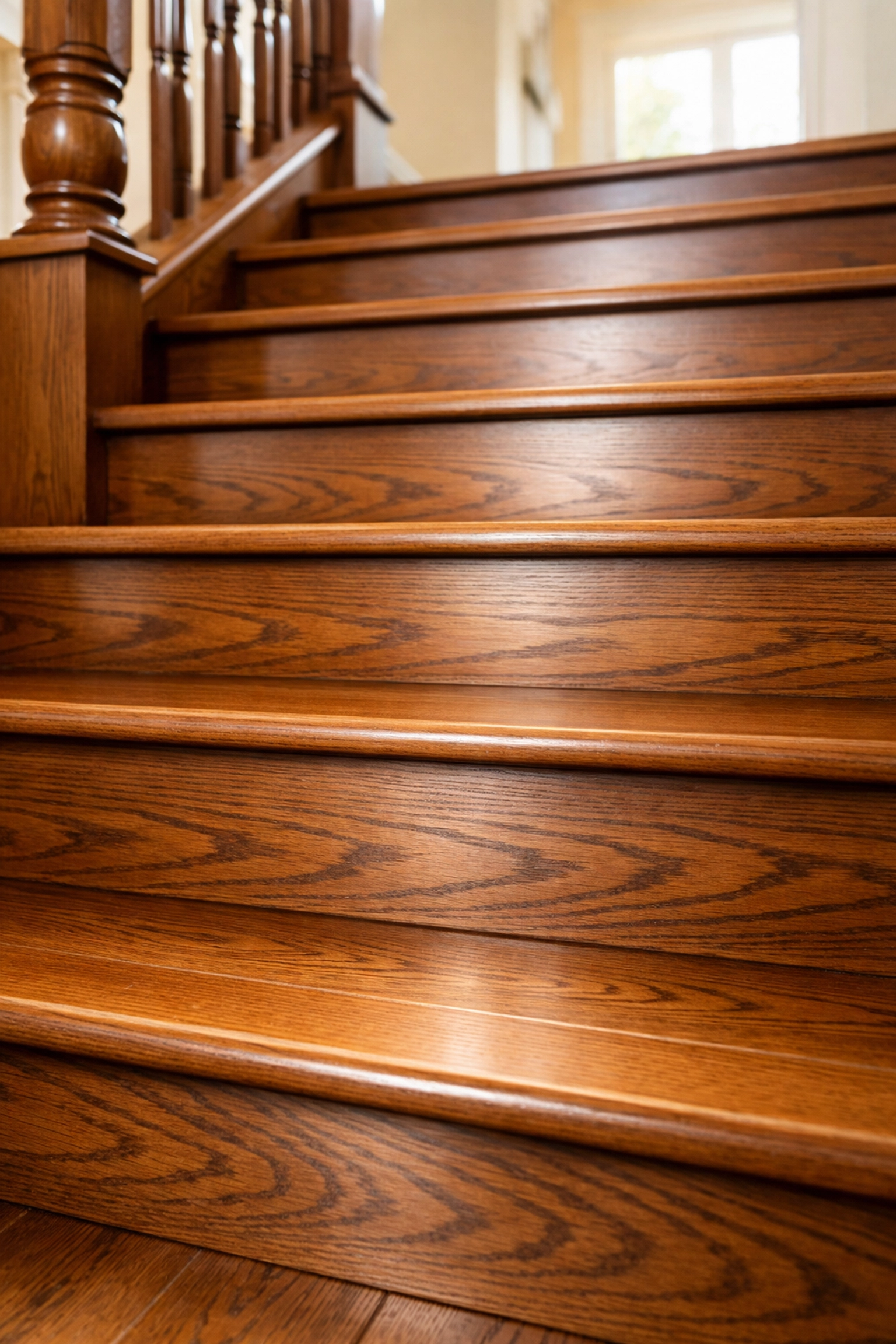
Human beings walk in a rhythm. Our brains quickly map out the height (riser) and depth (tread) of a staircase after the first two steps. We then go on "autopilot." If one step is even half an inch taller or shorter than the others, it breaks that rhythm. Your foot will either hit the riser too early or find "empty air" where it expected solid ground.
Inconsistent step height is often found in older homes or in DIY renovations where the bottom or top step wasn't adjusted to account for new flooring.
How to Fix It:
- The 3/8 Inch Rule: Use a tape measure to check your steps. If there is a difference of more than 3/8 of an inch between any two steps, it is a significant trip hazard.
- Professional Repair: Fixing uneven steps often requires a carpenter. While it may seem like a large task, it is a one-time fix that permanently removes a hidden danger.
- Temporary Marking: If you cannot immediately fix an uneven step, use high-visibility tape to mark that specific step as a "warning" to pay extra attention.
7. Neglecting Basic Maintenance
A staircase is a hardworking part of the home. Over time, wood can shrink or warp, nails can loosen, and handrails can begin to wobble. We often ignore a "squeaky" step, but a squeak is actually a sign of movement. If a tread is moving, it isn't fully stable. A handrail that wobbles even a tiny bit won't be able to support you if you truly need to lean your weight into it during a stumble.
How to Fix It:
- The Monthly Shake Test: Once a month, give your handrail a firm shake. It should feel like it is part of the wall. If there is any "give," tighten the brackets or move them to ensure they are anchored into a wall stud, not just the drywall.
- Secure the Treads: If a step feels loose or squeaks, secure it with wood screws (which hold better than nails over time). You can cover the screw heads with wood filler for a clean look.
- Check for Wear: Look for frayed carpet, loose metal nosing strips, or splintering wood. These small defects can catch a sock or a toe and initiate a fall.
A Reassuring Path Forward
Addressing stair safety doesn't mean you have to remodel your entire home. Most of these fixes: adding a second handrail, upgrading a lightbulb, or clearing away clutter: are simple, low-cost actions that provide immediate results.
The goal isn't just to prevent falls; it’s to give you or your loved ones the confidence to move freely throughout the house. When you know the handrail is rock-solid, the steps are clear, and the edges are visible, the stairs stop being an obstacle and go back to being just another part of your home.
If you are ever unsure about the safety of your stairs, consider having a professional, such as a physical therapist or a home accessibility specialist, perform a walk-through. They can often spot subtle issues: like a slightly loose bannister or a confusing shadow: that we might miss because we see them every day.
Take it one step at a time, and remember that a few small changes today can lead to years of safer, more confident living.

