
Stairs are a fundamental part of many homes, yet they are often the most common site for household accidents. For many of us, navigating a flight of stairs is a routine action we perform dozens of times a day without a second thought. However, as we age or as our mobility needs change, the staircase can transform from a simple architectural feature into a significant obstacle.
At Fall Guys Products, we believe that staying safe at home shouldn't mean feeling restricted. It’s about understanding the environment and making small, smart adjustments. Most stairway falls aren't caused by a single catastrophic event, but rather by a combination of overlooked maintenance, environmental factors, and simple habits.
If you are a homeowner or a caregiver looking to make a living space safer, identifying these seven common mistakes is the first step toward a worry-free home.
1. Overlooking the "Grip Factor" of Handrails
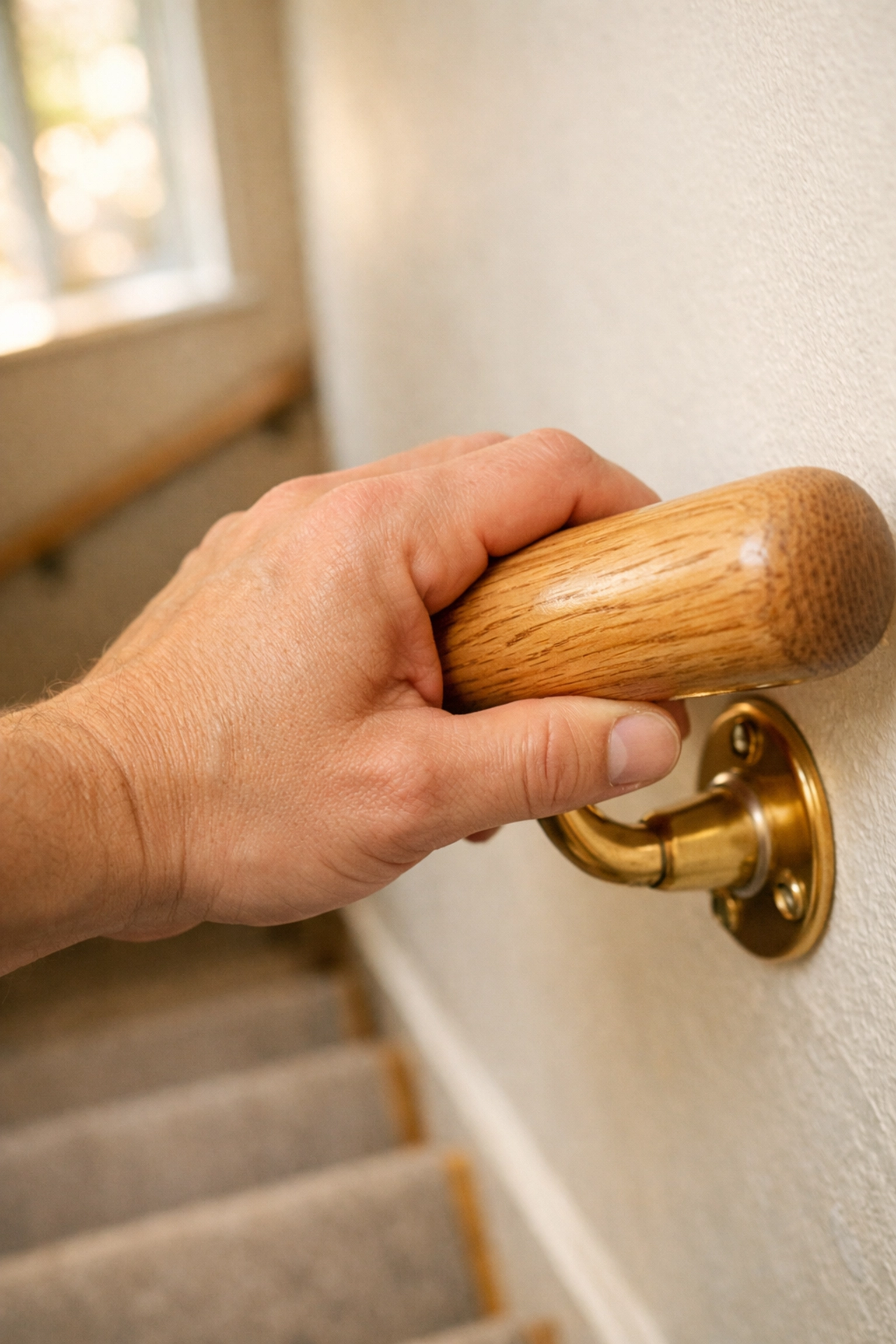
One of the most frequent mistakes people make is assuming that any railing is a safe railing. In many modern or older homes, handrails are designed for aesthetics rather than ergonomics. You might have a beautiful, chunky wooden banister or a thin, decorative wrought-iron rail, but if you cannot wrap your hand completely around it, it isn't doing its job.
The Mistake: Using decorative, oversized, or ornately shaped handrails that are difficult to grip firmly. Many homes also only have a handrail on one side of the staircase, which offers no support if you need to use your dominant hand or if you experience a balance shift on the "open" side.
The Fix: The ideal handrail should be "graspable." This means it should be rounded and have a diameter that allows your fingers to meet your thumb when you hold it. If your current rail is too wide, consider installing a secondary, smaller rail onto the wall.
Furthermore, handrails should be installed on both sides of the stairs. This provides a "continuous path" of support. Ensure the rails extend about 12 inches beyond the top and bottom steps so you have something to hold onto before you even start your ascent or descent.
2. Neglecting the "Socks-Only" Hazard on Slippery Surfaces
We all love the look of polished hardwood or sleek tile stairs. They are elegant and easy to clean. However, these surfaces provide almost zero traction. When you combine a smooth wooden step with a pair of standard cotton socks, you essentially create a slide inside your home.
The Mistake: Leaving stair surfaces slick and polished, or frequently walking on them in socks, stockings, or smooth-soled slippers. Even a tiny bit of moisture from a spill or a damp foot can make these surfaces incredibly dangerous.
The Fix: Traction is your best friend. You don't necessarily have to cover your beautiful wood with thick carpeting. Instead, look into transparent anti-slip adhesive strips or textured "treads" that can be applied directly to the edge of each step. These provide the necessary friction without hiding the staircase's design.
If you prefer carpeting, ensure it is a low-pile variety. Thick, shaggy carpet can actually hide the edge of the step, leading to missteps. Most importantly, encourage the use of "indoor-only" shoes with rubber soles or non-slip grip socks to ensure every step is a secure one.
3. Relying on Inadequate or "Shadowy" Lighting
Visibility is perhaps the most underrated aspect of stair safety. If you can’t see exactly where one tread ends and the next begins, your brain has to guess. This is where miscalculations happen.
The Mistake: Having a single, dim light bulb at the top of the stairs that casts long shadows downward, or relying on ambient light from a nearby hallway. Shadows can mask the depth of a step, making it look wider or narrower than it actually is.
The Fix: You want uniform, bright lighting from the top to the bottom. Ideally, there should be a light switch at both ends of the staircase so you are never forced to navigate the stairs in the dark to reach a switch.
For a modern and effective fix, consider motion-activated LED strip lighting under the lip of each step or along the baseboards. This provides a clear "runway" effect, highlighting the transition of every single step. At the very least, a bright nightlight plugged into the outlets at the top and bottom landings can significantly reduce the risk during those late-night trips to the kitchen or bathroom.
4. Using the Stairs as a Temporary Storage Unit
We’ve all done it: we have a stack of mail, a pair of shoes, or a basket of laundry that needs to go upstairs, so we set it on the bottom step "just for now" to take up on the next trip.
The Mistake: Treating the stairs as a staging area for items moving between floors. Even if the items are tucked to one side, they narrow the walking path and create a significant trip hazard. If you have to step around an object, you are shifting your center of gravity and likely letting go of the handrail.
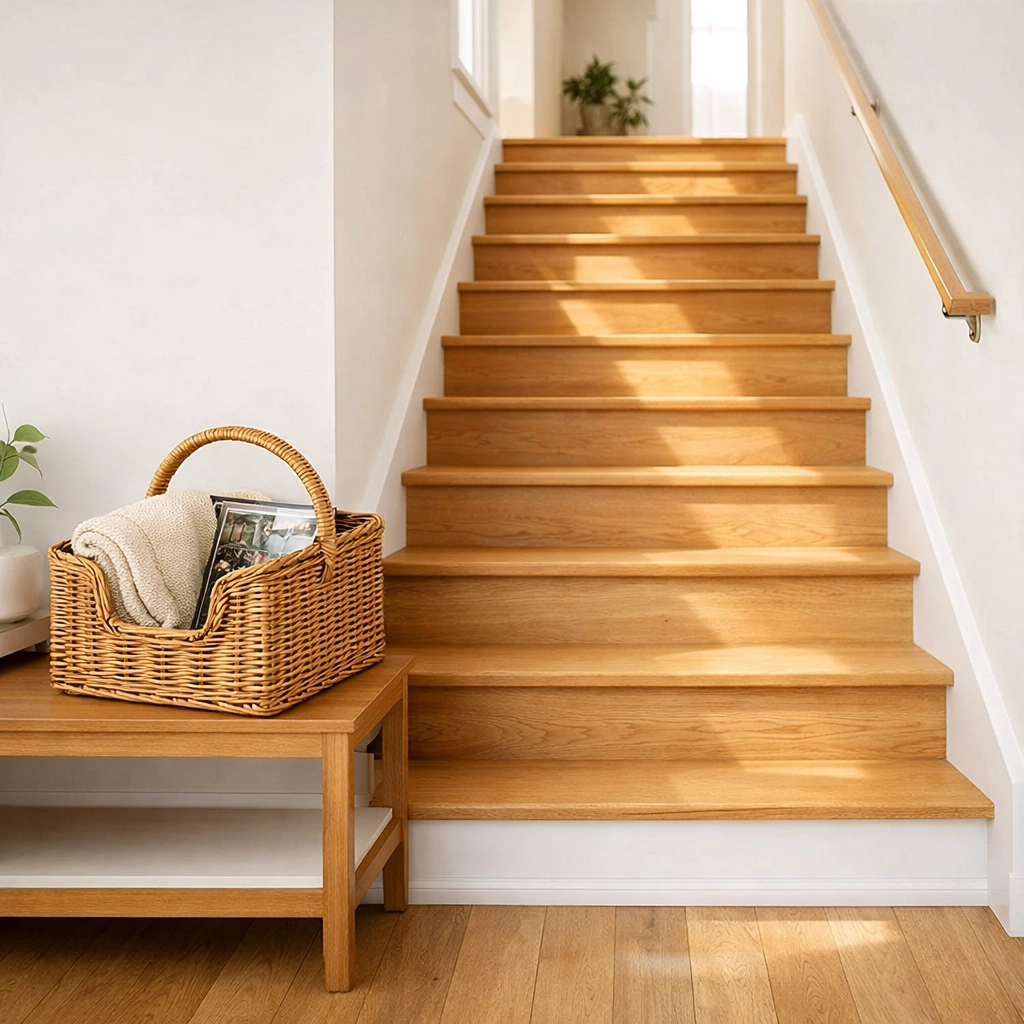
The Fix: Adopt a "zero-tolerance" policy for objects on the stairs. Nothing should ever sit on a step, even for a minute. If you find that items often pile up, place a dedicated "stair basket" on a sturdy table near the stairs, but never on them. This keeps the path clear while still keeping your items organized for the next trip.
5. Ignoring Structural Wear and Tear
Stairs undergo a lot of stress. Over time, wood can warp, nails can work their way loose, and carpeting can become un-stretched and "bubbly."
The Mistake: Dismissing a "creaky" step or a slightly loose banister as just a quirk of an old house. A loose tread can shift under your weight, causing a sudden loss of balance. A loose handrail can give way exactly when you need it most to steady yourself.
The Fix: Perform a "stair audit" once every few months. Walk up and down slowly, putting weight on different parts of each step. Listen for squeaks and feel for any movement. Grab the handrail and give it a firm shake; it should feel like it's part of the wall.
If you find a loose tread, secure it with wood screws (not nails, which can pull back out) and wood glue. If you have carpet, check the "nosing" (the front edge of the step) to ensure the carpet isn't bunching up. Tightening these small things now prevents a major accident later.
6. Overlooking Inconsistent Step Dimensions
In a perfect world, every step on a staircase would be the exact same height (rise) and depth (run). However, especially in older homes or DIY renovations, this isn't always the case. Your body develops a "muscle memory" as you climb; if one step is even half an inch higher than the rest, your foot might catch the edge.
The Mistake: Not accounting for "the bottom step illusion" or variations in step height. The bottom step is statistically the most dangerous because people often think they have reached the floor when they are actually still one step up.
The Fix: While you might not be able to rebuild your entire staircase, you can use visual cues to fix the problem. Use a contrasting color of tape or paint on the edge of the first and last steps. This "alerts" the brain that a transition is coming. If you have a landing where the floor color matches the stair color, the lack of contrast can make the steps disappear. Adding a rug (secured with a non-slip pad) at the base of the stairs can help define where the floor begins.
7. Rushing and "Dual-Tasking"
The final mistake is a behavioral one. We are often in a hurry, or we try to carry too much at once.
The Mistake: Running up or down stairs to answer a phone or doorbell, and carrying large items with both hands. When both hands are occupied, you have zero points of contact with a handrail. If you trip, you have no way to break your fall or stabilize yourself.
The Fix: Practice the "one hand free" rule. Never carry so much that you can't keep one hand firmly on the handrail. If you have a large load of laundry or heavy items, consider using a "stair slide" or, better yet, ask for help.
Slow down. Make it a habit to stop for a second at the top and bottom of the flight to orient yourself. Ensure your vision is clear: if you wear bifocals, be extra careful, as the lower lens can distort your view of the steps at your feet. Many people find it safer to tuck their chin down slightly to look through the top part of their glasses when descending.
Building a Safer Routine
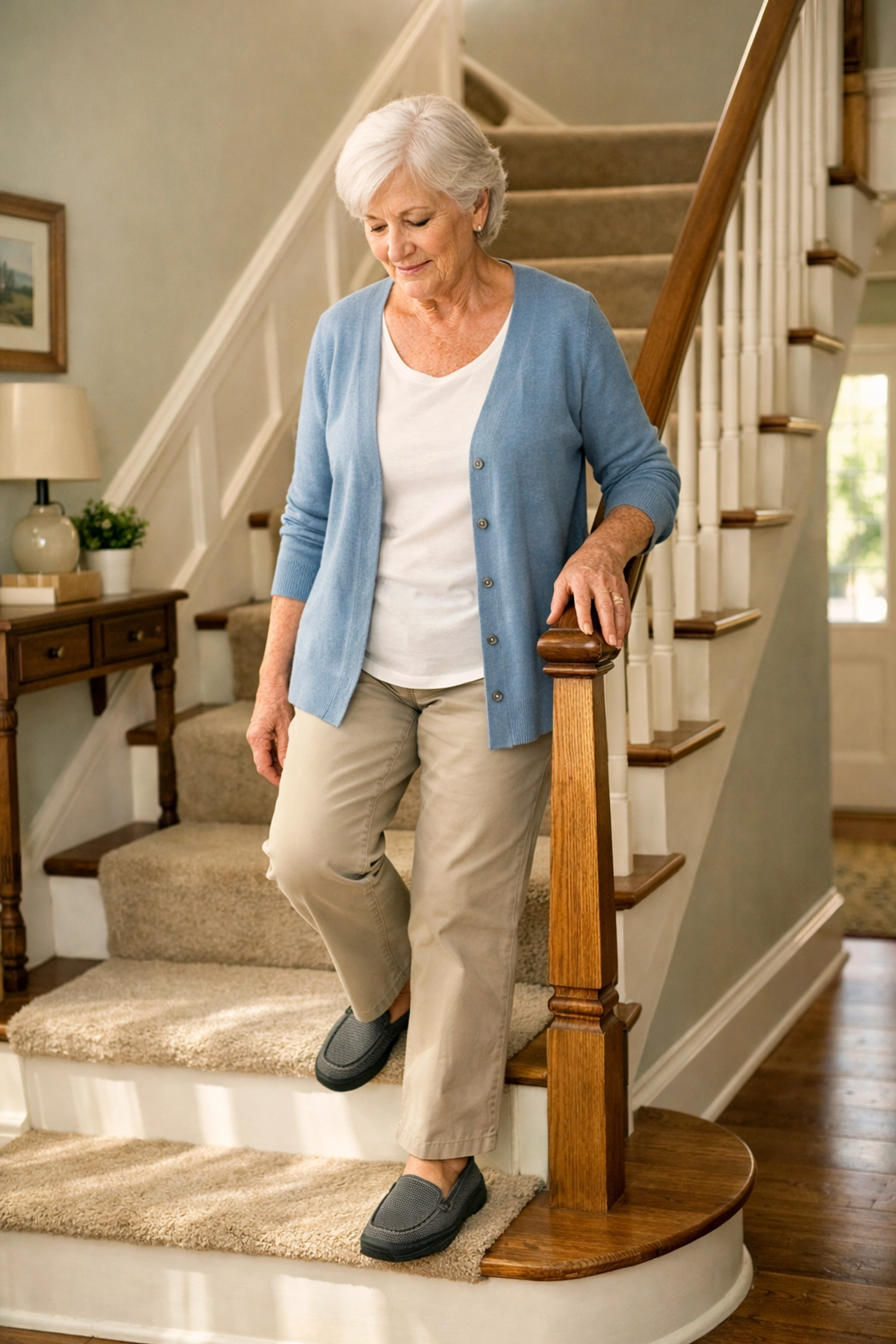
Fixing these mistakes doesn't require a total home remodel. Most of these solutions: adding a better handrail, improving the lighting, or clearing away clutter: are simple weekend projects that offer an immense return on investment in terms of safety and peace of mind.
Remember, the goal of fall prevention is to maintain your independence. By taking the time to audit your staircase and address these seven common pitfalls, you are ensuring that your home remains a place of comfort rather than a place of risk.
If you are unsure where to start, consider walking through your home with a friend or a professional who can provide a fresh set of eyes. Often, we become "blind" to the hazards we live with every day. A quick adjustment today can prevent a life-changing fall tomorrow. Stay safe, move mindfully, and keep your paths clear.

