
Stairs are often the most daunting part of a home as we get older or begin to experience mobility changes. It isn't just about the physical effort of climbing; it’s about that nagging feeling of uncertainty every time you look down from the top landing. If you’ve ever found yourself gripping the railing a little tighter or taking a deep breath before heading down to the laundry room, you aren’t alone.
At Fall Guys Products, we believe that your home should be a place of comfort, not a series of obstacles. The good news is that most stair-related accidents aren't "just part of aging." They are often the result of small, overlooked environmental factors: architectural quirks or habits that have simply become second nature.
By identifying these common mistakes, we can transform the staircase from a source of anxiety into a safe, functional part of your home. Here are seven mistakes you might be making with your stair safety and, more importantly, exactly how to fix them.
1. Choosing Style Over Grip: The Decorative Railing Trap
Many homes, especially those with a bit of character or high-end finishes, feature handrails that look beautiful but are functionally useless in a crisis. We see it all the time: large, rectangular wooden beams or ornate, wrought-iron scrolls.
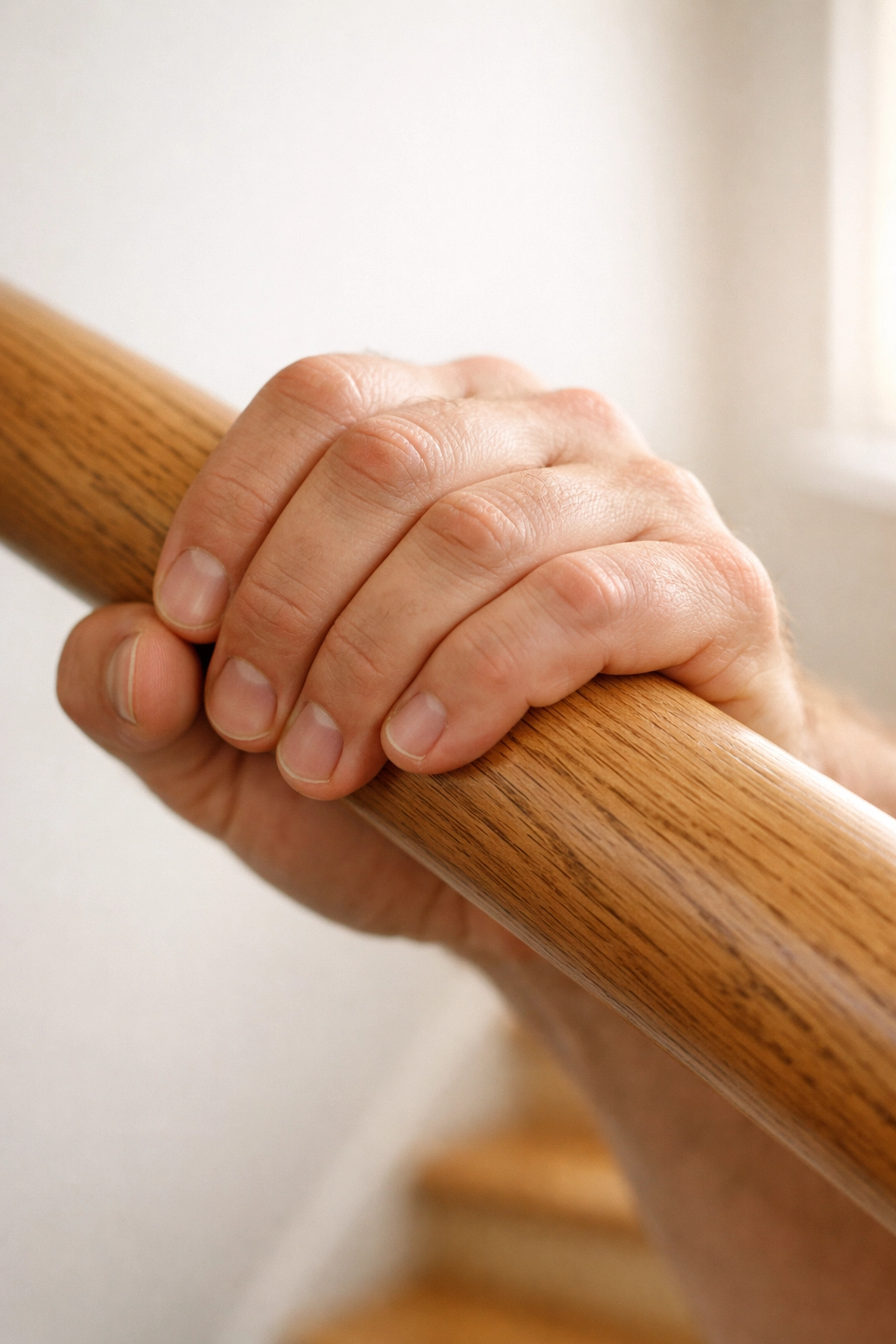
The mistake here is prioritizing aesthetics over what physical therapists call a "power grip." If you cannot comfortably wrap your thumb and fingers all the way around the railing, you don't have a secure hold. In the event of a slip, a flat or over-sized rail acts more like a ledge than a safety device; your hand will simply slide off the top.
The Fix:
The safest handrails are "circumferential," meaning they are rounded and have a diameter of about 1.25 to 2 inches. This allows your hand to fully encircle the rail, providing maximum leverage. If your current rails are too bulky, you don’t necessarily have to tear them out. You can often mount a secondary, smaller "grab-friendly" rail slightly below the decorative one.
Additionally, ensure the rail is mounted between 30 and 36 inches from the floor and extends at least 12 inches beyond the top and bottom steps. This gives you a "lead-in" and "lead-out" so you aren't reaching into empty air while your feet are still on the move.
2. The Invisible Danger of Inconsistent Step Heights
Our brains are incredible at automating repetitive tasks. When you walk up a flight of stairs, your brain "maps" the height of the first two steps and then assumes every subsequent step will be exactly the same. This is called muscle memory.
A common mistake in home construction: or the result of settling over time: is a variation in "rise" (the height) or "run" (the depth) of the steps. Even a difference of half an inch can be enough to cause a trip. A particularly dangerous version of this is the "missing nosing" on a top landing, where the top step is wider than the others, causing you to overstep or understep as you transition to flat ground.
The Fix:
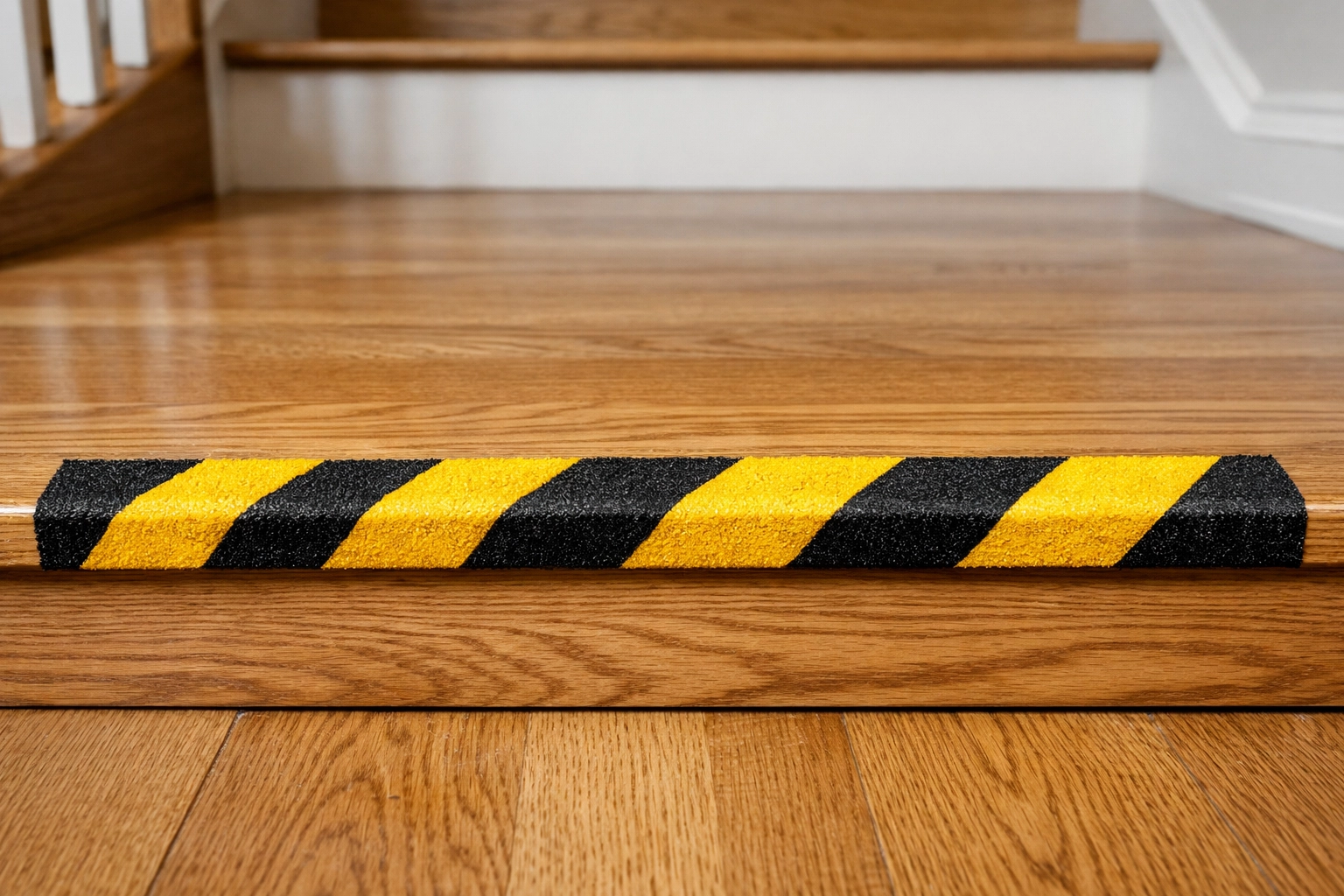
Grab a tape measure and check your stairs. If you find significant variations (more than a quarter-inch difference between steps), it may be time for a carpenter to level them out. If a full renovation isn't in the cards, you can use visual cues to help your brain compensate. Adding high-contrast anti-slip strips to the edge of every step helps the eye distinguish where one ends and the next begins, breaking the "autopilot" that leads to trips.
3. Treating Stairs Like Storage Units
We’ve all done it. You have a pile of mail, a pair of shoes, or a basket of laundry that needs to go upstairs, so you set it on the bottom two steps to remind yourself to take it up "next time."
This is perhaps the most preventable mistake on this list, yet it’s one of the leading causes of falls. Anything placed on a step reduces the "effective tread depth," meaning you have less room to place your foot. Even worse, if you are carrying something down and your view of the steps is blocked, that pair of shoes becomes a hidden landmine.
The Fix:
Adopt a "Zero Tolerance" policy for stair clutter. If something needs to go up or down, it either goes all the way or stays on a flat table nearby. If you find it hard to carry items while holding the railing, consider installing a small "stair lift" basket that slides on the railing, or simply use a backpack to keep your hands free. The goal is to keep the entire width of the path clear at all times.
4. Polished Surfaces and the "Socks Only" Risk
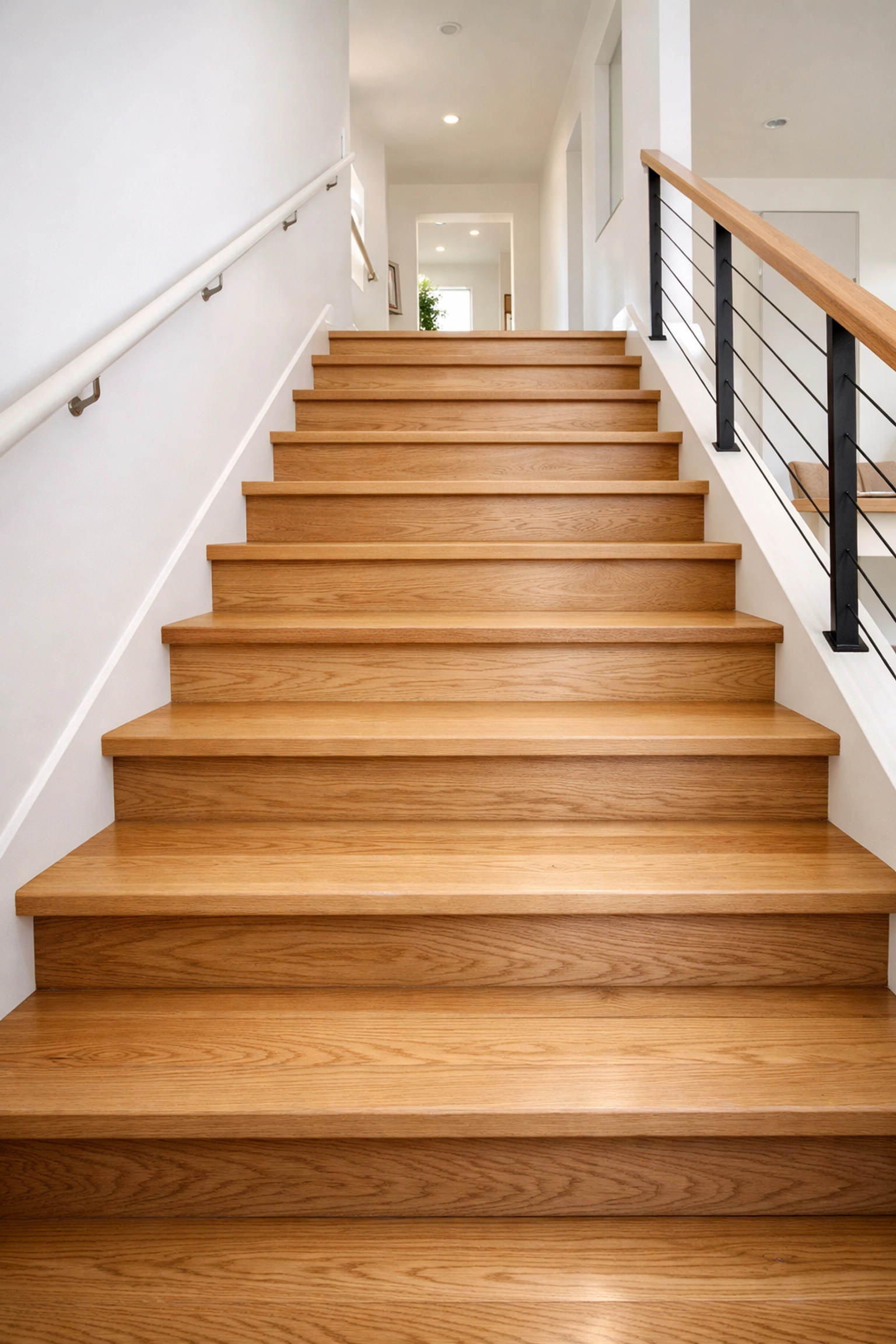
Hardwood, tile, and polished stone stairs are staples of modern interior design. They are also incredibly slippery. When you combine a smooth surface with a pair of cotton socks, you’ve essentially created a domestic ice rink.
Many people mistake "cleanliness" for safety, thinking that a freshly waxed floor is a good thing. In reality, high-gloss finishes reduce friction to dangerous levels.
The Fix:
You don't have to cover your beautiful wood stairs with thick, dated carpeting. There are several modern solutions:
- Clear Adhesive Treads: These are transparent, textured strips that provide grip without hiding the wood grain.
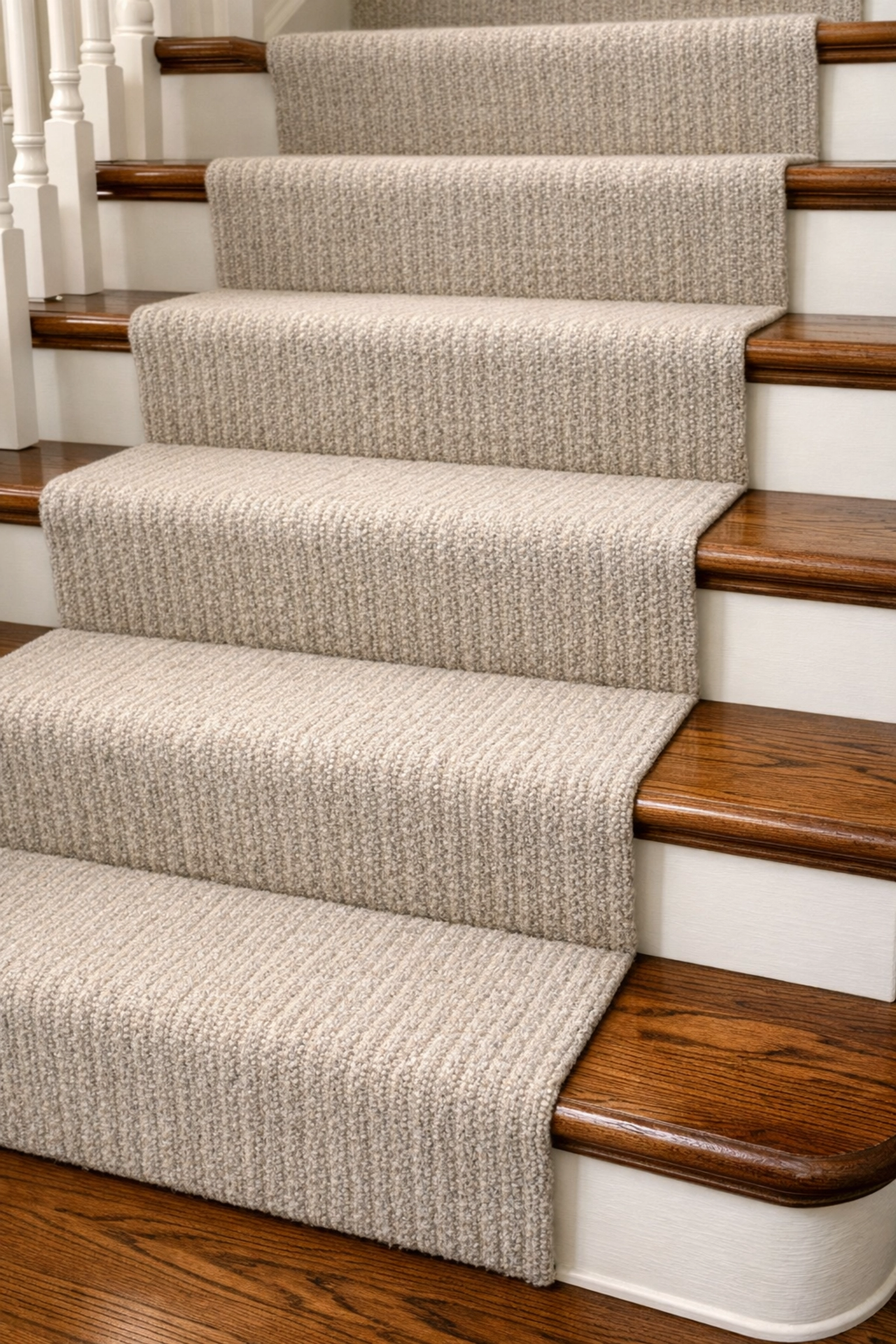
- A Stair Runner: A carpet runner down the center of the stairs provides traction and a soft landing, while still leaving the wood visible on the sides. Just ensure the runner is "waterfall" installed (tightly tucked into the crotch of the step) so it doesn't bunch up.
- Non-Slip Coatings: There are specialized transparent paints and sprays that add a "gritty" texture to the surface that is nearly invisible to the eye but highly effective for the feet.
5. Living in the Shadows: Inadequate Lighting
As we age, our eyes require significantly more light to see the same level of detail we once did. A single dim bulb at the top of the hallway often isn't enough to illuminate the bottom of the flight. Shadows can play tricks on your depth perception, making a step look deeper or shallower than it actually is.
Mistaking a shadow for a step (or vice versa) is a recipe for a fall. Furthermore, if the light switch is only at the top of the stairs, you’re forced to navigate the climb in the dark before you can turn it on.
The Fix:
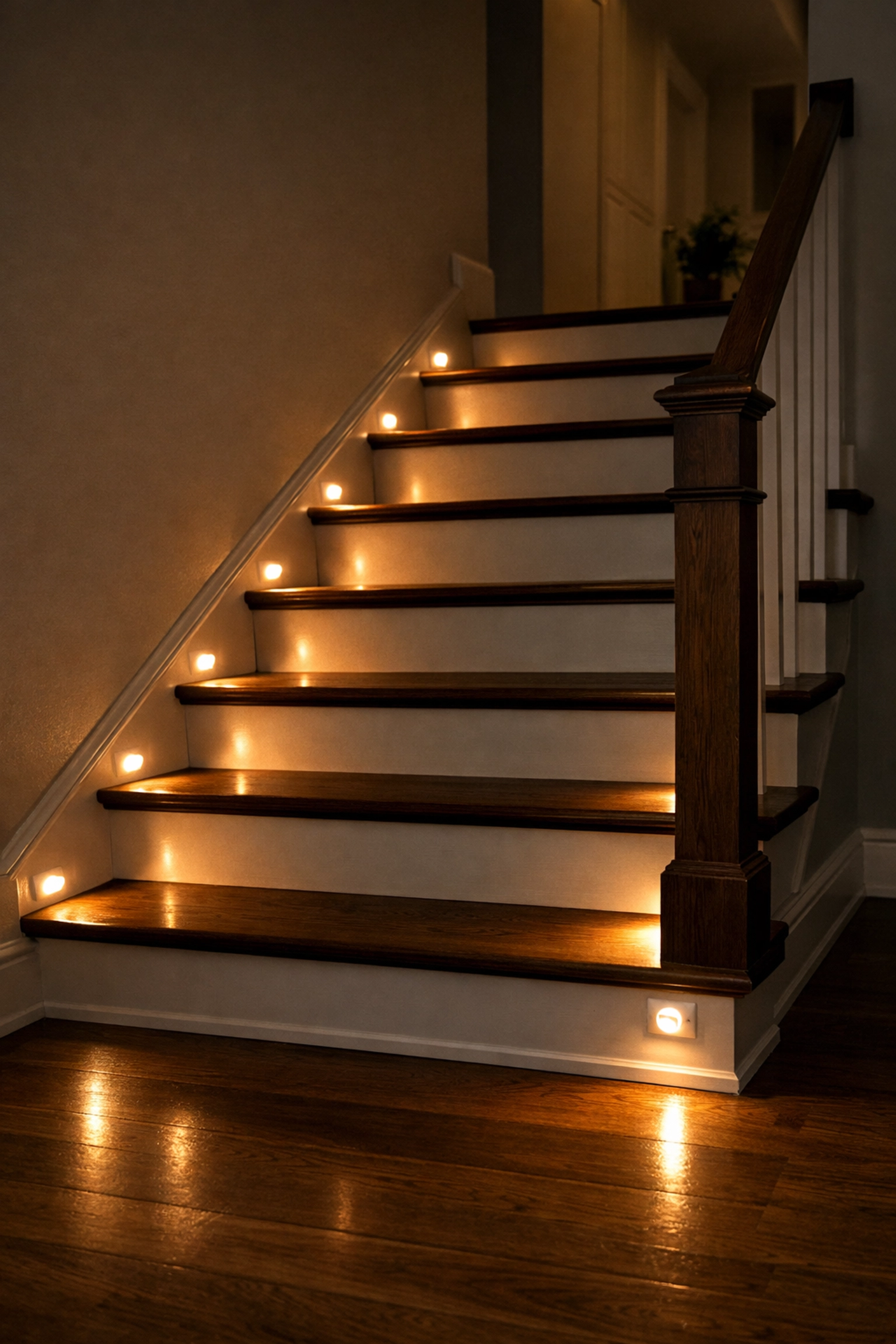
Ensure there are light switches at both the top and the bottom of the stairs (3-way switches). If rewiring is too expensive, consider battery-operated, motion-sensing LED lights. You can stick these along the baseboards or under the lip of each tread. They provide a "runway" effect, lighting up only when you approach, which is perfect for middle-of-the-night trips to the kitchen. Aim for "warm" white light that reduces glare but increases contrast.
6. The "Bottom-of-Flight" Illusion
There is a specific phenomenon where the last step of a flight blends visually into the flooring of the landing. This is especially common if the stairs and the floor are the same material, such as identical oak planks or the same beige carpet.
When you reach the bottom, your eyes may signal that you are already on flat ground when you actually have one more step to go. This "phantom step" causes you to jar your leg or lose your balance as you drop unexpectedly onto the floor.
The Fix:
Create a visual "break" at the bottom. You can do this by using a different color of anti-slip tape on the very last step, or by placing a brightly colored (but very thin and non-slip) mat at the landing. The goal is to give your brain a clear signal: "The stairs have ended, and the floor has begun."
7. Ignoring the Signs of Wear and Tear
Stairs undergo a lot of stress. Over years of use, treads can become loose, nails can pop up, and handrails can begin to wobble. We often ignore a "squeak" or a slight wiggle in the railing because we've lived with it for so long it feels normal.
However, a railing that gives even half an inch when you lean on it isn't doing its job. If you lose your balance and put your full weight on a loose rail, it could pull away from the wall entirely, turning a minor stumble into a serious fall.
The Fix:
Conduct a "Seasonal Safety Check." Every few months, walk your stairs and check for:
- Stability: Shake the handrail. If it moves, tighten the brackets or move the bracket to a new wall stud.
- Levelness: Use a level to ensure treads haven't tilted forward.
- Fasteners: Ensure no nail heads are sticking up. If a tread is loose, use wood screws (which have much better "bite" than nails) to secure it to the stringer.
- Edges: Check for frayed carpet or cracked wood that could catch a toe or a heel.
A Note on Footwear and Habits
While fixing the environment is crucial, our personal habits play a role too. Even the safest stairs in the world can't protect someone who is rushing or distracted.
- Avoid the "Sling": Don't carry large loads that require both hands. Always keep one hand free to use the railing.
- Footwear Matters: Try to avoid walking on stairs in loose slippers, flip-flops, or just socks. Look for footwear with a firm sole and a closed heel.
- The "Two-Point" Rule: Try to maintain two points of contact at all times (e.g., one hand on the rail and one foot on a step).
Final Thoughts
Stair safety isn't about making your home look like a hospital; it's about making smart, subtle adjustments that allow you to move freely and confidently. Most of the fixes we’ve discussed: improving lighting, adding grip, and clearing clutter: can be done in a single afternoon.
Taking the time to address these seven mistakes is an investment in your independence. When you know your stairs are solid, well-lit, and easy to grip, that "nagging feeling" starts to disappear, replaced by the peace of mind that comes from a safe home. Keep climbing, keep moving, and most importantly, stay safe.

