
Stairs are often the most daunting part of a home as we get older or deal with mobility changes. For many of us, a staircase represents a challenge to our independence, and unfortunately, it is also the site of the most serious falls in the household.
At Fall Guys Products, we believe that your home should be your sanctuary, not a source of anxiety. Most people think they have their stair safety covered because they have a railing or a light switch nearby. However, after years of looking at home environments, we’ve found that many of the most dangerous risks are subtle. They are the small things we walk past every single day without realizing they are accidents waiting to happen.
If you’re worried about your own safety or looking out for a loved one, fixing these seven common mistakes can significantly lower the risk of a fall and help everyone navigate the home with more confidence.
1. Relying on "Decorative" or Improper Handrails
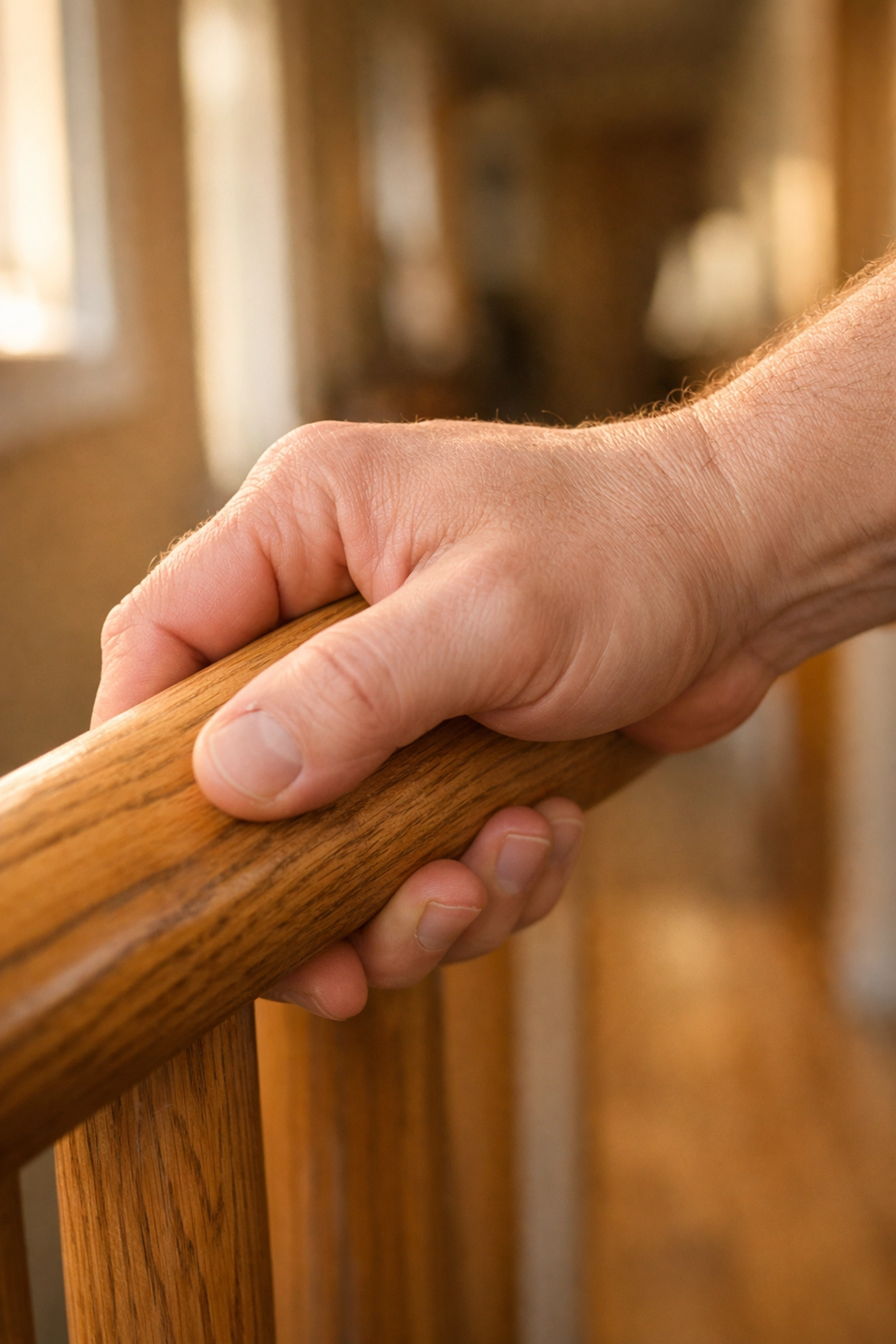
One of the biggest mistakes we see in home design is the presence of handrails that look beautiful but offer almost no actual safety. Many high-end homes feature "bread-loaf" style rails or wide, rectangular wooden beams. While they look great, they are often too wide for a hand to wrap around securely.
In a moment of a slip or a stumble, your hand needs to be able to "power grip" the rail. This means your fingers and thumb should be able to meet, or nearly meet, on the underside. If the rail is too bulky, you can only palm it. In a fall, a palm-only grip will slide right off.
The Fix:
Look for rounded handrails with a diameter between 1.25 and 2 inches. This size allows for the most secure grip. Additionally, ensure the rail is continuous. If you have to let go of the rail to navigate a landing or a turn, you are at your most vulnerable during that transition. If your stairs only have a rail on one side, consider installing a second one. Having a rail for both hands provides much better balance and allows you to choose which side to lean on if one side of your body is weaker than the other.
2. Neglecting the "Transition Zones" (Lighting)
Most people have a light at the top of the stairs and a light at the bottom. The mistake isn't a lack of light; it’s the presence of shadows. If the lighting is directional, it can create long shadows on the treads, making it difficult to tell where one step ends and the next begins. This is especially dangerous for those with declining vision or depth perception issues.
Another common lighting mistake is the "middle of the night" trip. Walking to the kitchen or bathroom in the dark is when many falls occur because we don't want to "wake ourselves up" by flipping on a bright overhead light.
The Fix:
Install lighting that illuminates the entire flight of stairs evenly. LED strip lighting under the lip of each tread or along the baseboards is an excellent way to define each step without creating glare. For nighttime safety, use motion-sensor plug-in lights in the hallways leading to the stairs and on the landings. This ensures that the path is lit before you even reach the first step, without you having to fumbled for a switch in the dark.
3. Treating the Stairs Like an Extra Shelf
We’ve all done it: we have a pile of mail, a pair of shoes, or a basket of laundry that needs to go upstairs, so we set it on the bottom two steps to take up on the next trip. This is one of the most common causes of tripping. Even if you think you’ll remember it’s there, a moment of distraction: a ringing phone or a doorbell: can cause you to forget that the path isn't clear.
Clutter isn't just about items left on the steps; it’s also about what’s at the very top and bottom. Throw rugs at the landing of a staircase are a major hazard. They can slide as you transition from the stairs to the flat floor, leading to a fall in a very awkward position.
The Fix:
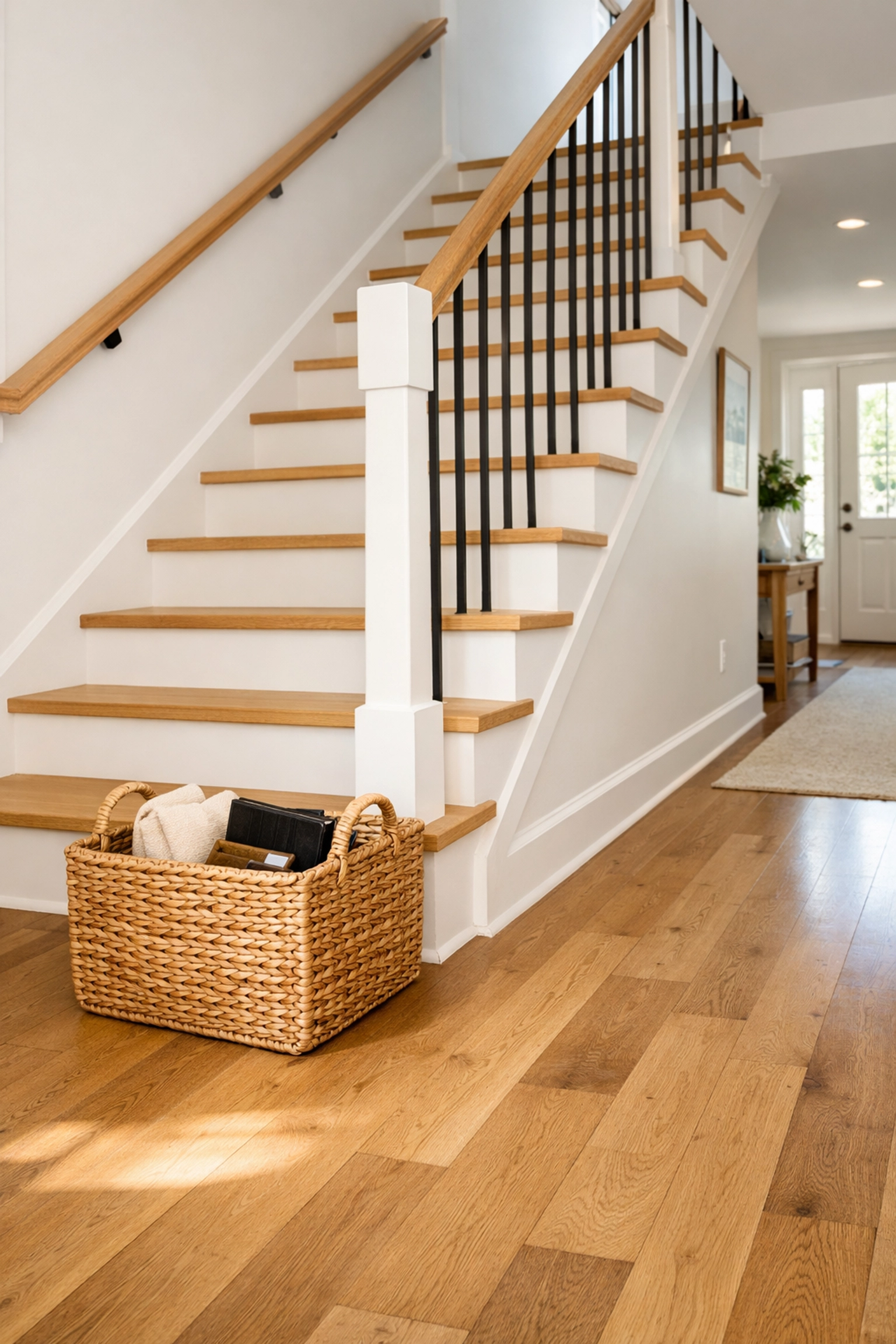
Make it a strict rule: nothing ever sits on the stairs. If you need to move items between floors, use a "stair basket" with handles that sits safely on the floor at the base or top of the stairs: but never on the steps themselves. Additionally, remove all decorative rugs from the areas immediately leading to or coming off the stairs. If you must have a rug there, ensure it is low-pile and firmly tacked down or secured with a high-quality non-slip pad.
4. Ignoring the Surface Texture
Polished hardwood and stone stairs are stunning, but they are essentially "ice rinks" for anyone wearing socks or smooth-soled slippers. Even if the wood is high-quality, the finish can be incredibly slick. Over time, the "nose" or the front edge of the step can become rounded and smooth from wear, which reduces the surface area your foot has to grip.
Many people try to fix this with "stair runners" (carpet strips). While carpet can provide more grip than bare wood, if the carpet is thick or plush, it can actually make the stairs more dangerous by rounding out the edge of the step and making it harder for your foot to feel the "drop."
The Fix:
If you have bare wood or tile stairs, apply transparent anti-slip adhesive strips. They provide a sandpaper-like grip without ruining the aesthetic of the wood. If you prefer carpet, choose a very low-pile, industrial-strength carpet that is tightly wrapped over the edge of each step. You want your foot to feel the firm edge of the stair, not a soft, rounded cushion.
5. Rushing and Multi-tasking
The stairs are not the place to be efficient. Many falls happen because someone is trying to carry a large laundry basket with both hands, or they are looking at their phone while walking down. When you carry a large object, you lose your line of sight to your feet, and you lose your ability to grab the handrail.
There is also the "hurry" factor. Rushing to answer the door or the phone causes us to take stairs too quickly, often leading to a misstep on the final two or three steps: the most common place for "end-of-flight" stumbles.
The Fix:
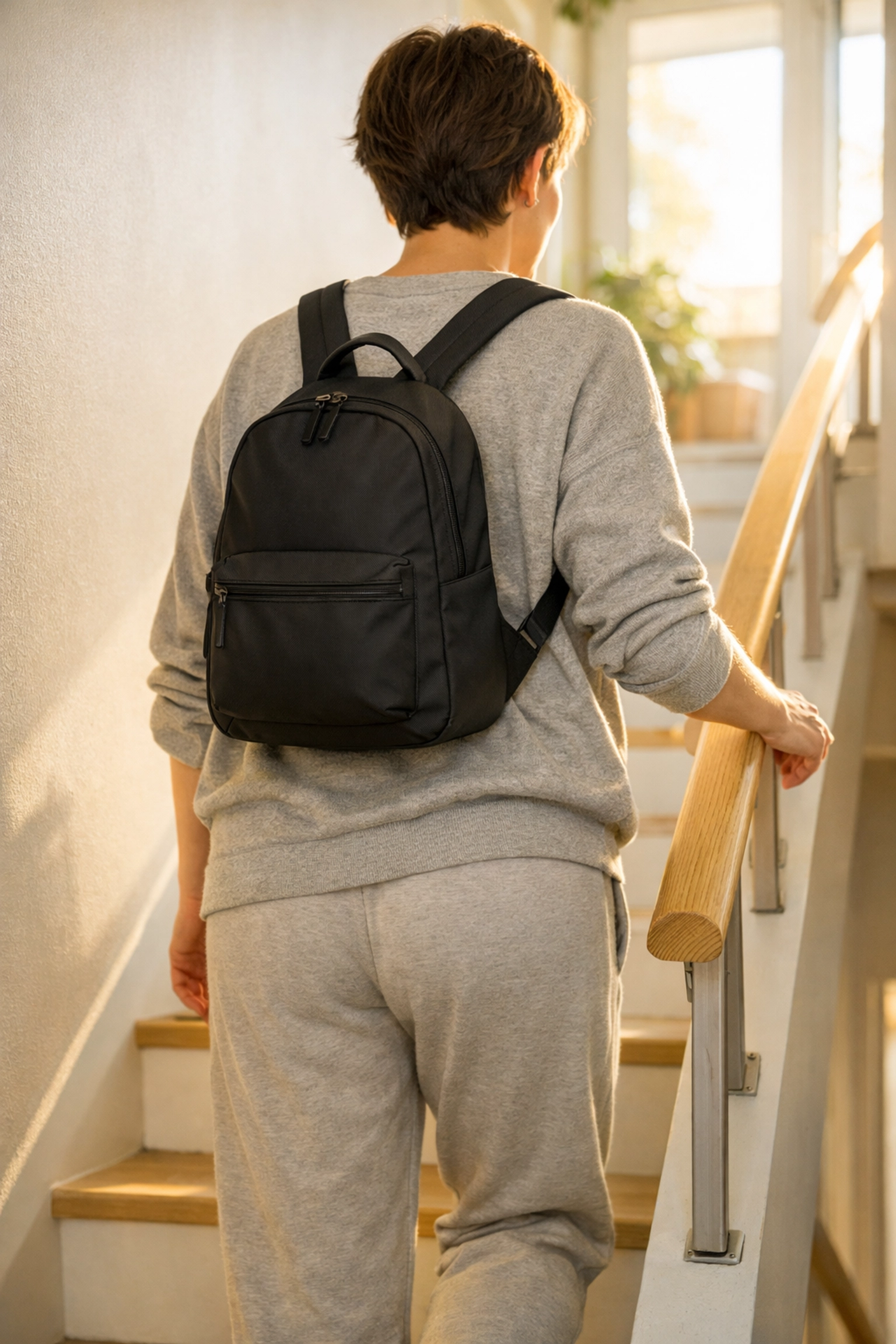
Practice the "one hand for the rail" rule. Never carry anything that requires both hands while on the stairs. If you have a lot to move, consider using a small backpack to keep your hands free, or simply make more trips with smaller loads. Take your time. Consciously think about each step, placing your foot firmly and ensuring your weight is centered before moving to the next one.
6. Wearing the Wrong "Indoor" Footwear
Most falls at home happen when people are in their "comfy" clothes. This usually means loose slippers, flip-flops, or just socks. Socks on a smooth stair surface offer zero traction. Backless slippers are just as bad because they can slip off your heel mid-step, causing you to stumble as you try to "catch" the shoe with your toes.
Footwear provides two things: grip on the bottom and stability for the ankle. Without both, your risk of a slip increases exponentially.
The Fix:
Invest in a pair of "indoor shoes" that are never worn outside. These should have a rubber, non-slip sole and a closed back. They should fit snugly so your foot doesn't slide around inside them. If you absolutely prefer socks, ensure they are specific "grip socks" with high-friction silicone patterns on the entire bottom of the foot, though shoes are always the safer bet for stair navigation.
7. Overlooking Structural Wear and Tear
Stairs take a lot of abuse over the decades. In older homes, it’s common for the "stringers" (the structural supports) to settle, leading to uneven step heights. A difference of even a quarter of an inch between one step and the next is enough to trip the human brain, which expects a rhythmic, identical distance for every stride.
Loose floorboards or "creaky" steps aren't just annoying noises; they are signs that the tread is not securely fastened. If a tread shifts even slightly under your weight, it can throw off your balance.
The Fix:
Perform a monthly "stair check." Walk up and down slowly, feeling for any wobbles or shifts. Look at the "nosing" (the edge) of each step to see if it’s loose or cracked. If you find a step that feels different than the others, it’s worth having a carpenter or a handyman come out to secure it. Keeping the stairs structurally sound is just as important as keeping them clear of clutter.
Building Confidence on the Stairs
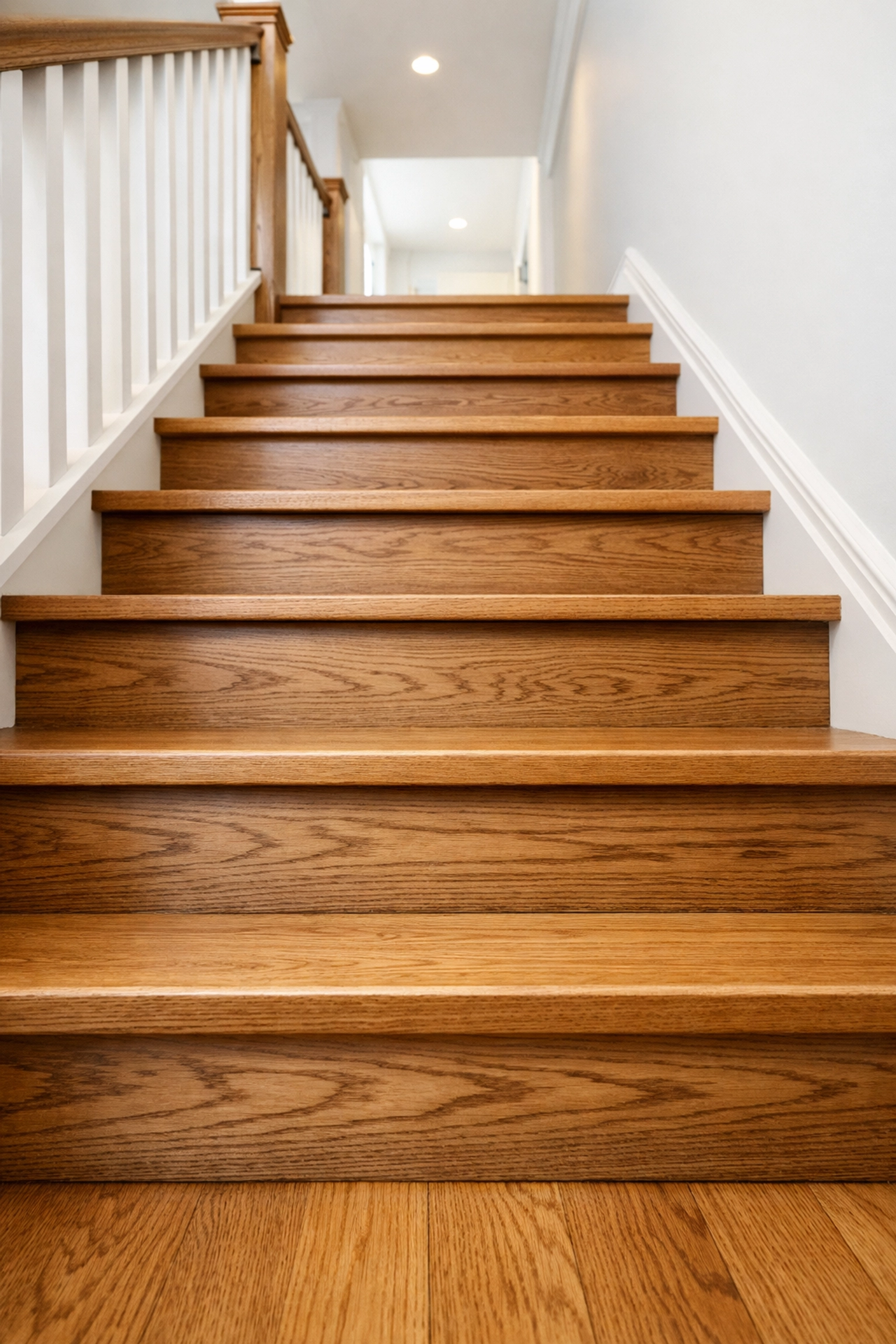
Fixing these mistakes isn't just about preventing a physical injury; it’s about the peace of mind that comes with knowing your home is safe. When you aren't afraid of the stairs, you are more likely to stay active, move between floors, and utilize your entire home.
Safety is often a series of small adjustments. By fixing the lighting, upgrading your handrails, and being mindful of your footwear and habits, you can turn a major hazard into a manageable part of your daily routine. If you ever feel that the stairs are becoming too much to handle even with these fixes, don't hesitate to reach out to a physical therapist for a mobility assessment. They can provide specific exercises to strengthen the muscles used for climbing and descending, giving you the physical foundation to match your safe environment.
Remember, independence starts with safety. Take a look at your stairs today( what’s the first small change you can make?)

