
Hi there, I’m Brian Kerr. Most of us don’t spend much time thinking about our stairs. We go up and down them dozens of times a day, often while carrying laundry, chatting on the phone, or rushing to catch the doorbell. They’re just a functional part of the house: until they aren't.
As we get older, or as we care for parents who are aging in place, those sixteen steps between the living room and the bedroom start to look a little different. They aren't just a path; they’re a potential hazard. But here is the good news: stair safety isn't about being afraid of your home. It’s about making smart, simple adjustments that build confidence.
In my years working with mobility and fall prevention, I’ve seen the same few mistakes pop up over and over again. These aren't just "accidents waiting to happen": they are manageable risks that we can fix with a little bit of knowledge and a weekend of effort.
Here are the seven most common mistakes people make with stair safety and, more importantly, exactly how you can fix them.
1. The "One-Hander" Habit: Missing or Inadequate Handrails
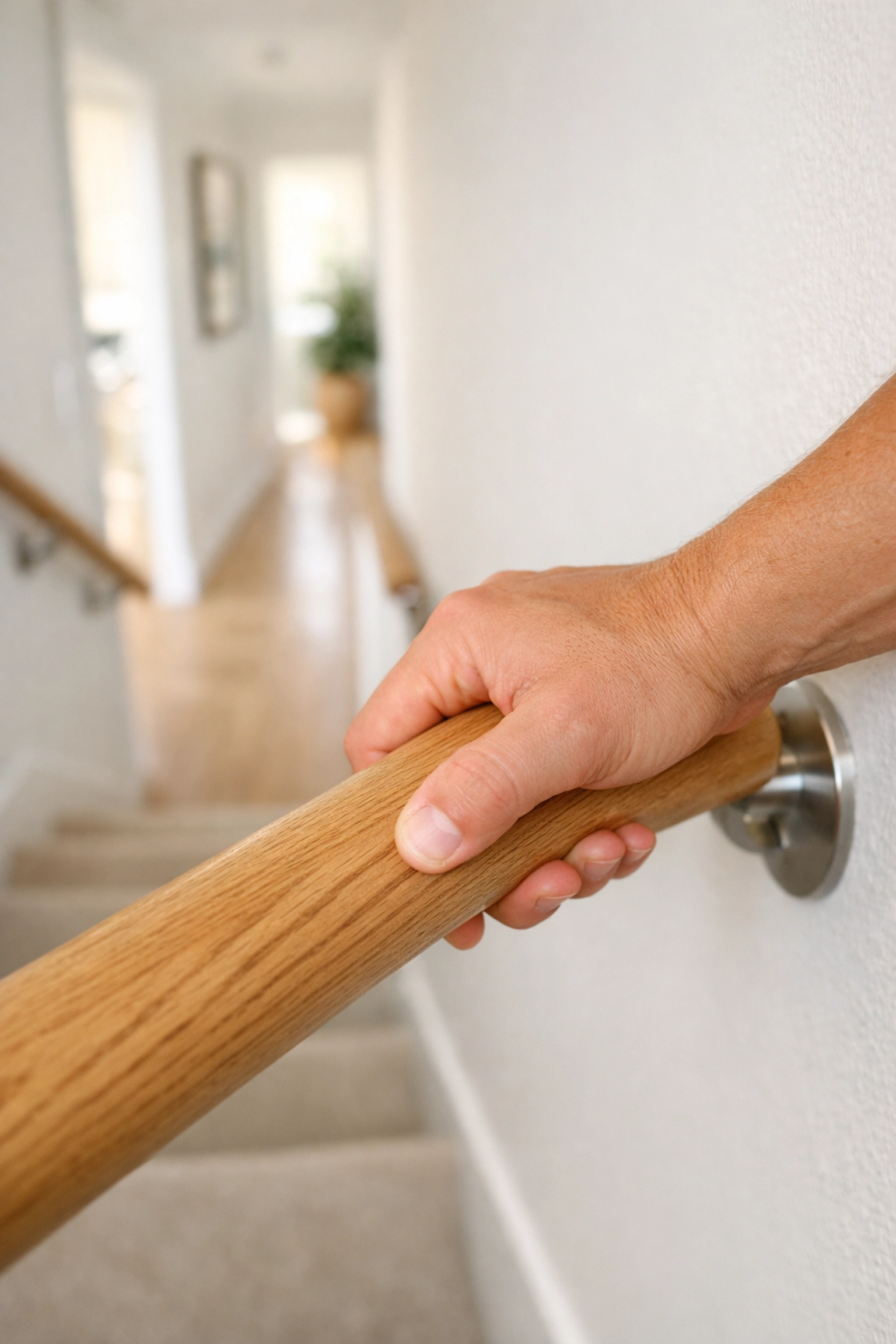
The most common mistake I see is a staircase that only has a handrail on one side. Many building codes only require one rail, but for someone managing balance issues or joint pain, one rail simply isn't enough.
When you only have one rail, you’re forced to rely on one side of your body. If your "strong" side is away from the wall on the way down, you’re in a vulnerable position. Furthermore, many older handrails are "decorative" rather than functional. If you can’t wrap your fingers completely around the rail (what we call a "power grip"), it won't do much good if you actually start to slip.
How to Fix It:
- Install a second rail: Every staircase should have a railing on both sides. This allows you to use both arms for stability, significantly reducing the load on your knees and hips.
- Check the "Grip-ability": Ensure the rail is "circumferential." This means it’s round or oval and stands out from the wall far enough (usually about 1.5 to 2 inches) so your hand can firmly grasp it.
- Check the Height: A standard, safe height for a handrail is between 34 and 38 inches from the nose of the step. If yours is lower, you'll find yourself leaning forward too much, which shifts your center of gravity dangerously.
2. Using the Stairs as a Temporary Warehouse
We’ve all done it. You have a pair of shoes that needs to go upstairs, or a stack of books, or a bag of donations. You think, "I'll just leave this on the bottom step and grab it the next time I head up."
This is one of the most dangerous habits a household can have. Stairs are designed for one thing: walking. Anything placed on a tread: no matter how small: reduces the surface area for your foot and creates a massive tripping hazard. Even if you think you’ll remember it’s there, your brain often goes on autopilot when you're tired or distracted.
How to Fix It:
- The "Clear Path" Rule: Adopt a strict "nothing on the stairs" policy. If something needs to go up, it either goes up immediately or stays in a designated basket near the stairs, but never on them.
- Stair Baskets (The Right Way): If you use a stair basket, place it on a landing or a table at the top or bottom of the stairs. Never place the basket on the actual steps.
- Landing Maintenance: Keep the areas at the very top and very bottom of the stairs completely clear. You need a "staging area" to find your footing before you start your ascent or descent.
3. The "Shadow Effect": Poor Lighting
Vision plays a massive role in balance. As we age, our eyes need more light to see clearly, and our depth perception can become less sharp. Many staircases are lit by a single, dim bulb at the top, or worse, a light that creates long, confusing shadows over the edge of the steps.
If you can’t clearly see where the "nose" (the front edge) of the step is, your brain has to guess where to put your foot. That split second of uncertainty is often when a stumble happens.
How to Fix It:
- Double-End Switches: Ensure there is a light switch at both the top and the bottom of the stairs. You should never have to navigate a dark staircase to reach a switch.
- Increase Lumens: Replace old, dim bulbs with high-output LEDs. Look for "Daylight" or "Cool White" bulbs, as they provide better contrast than "Warm" yellow bulbs.
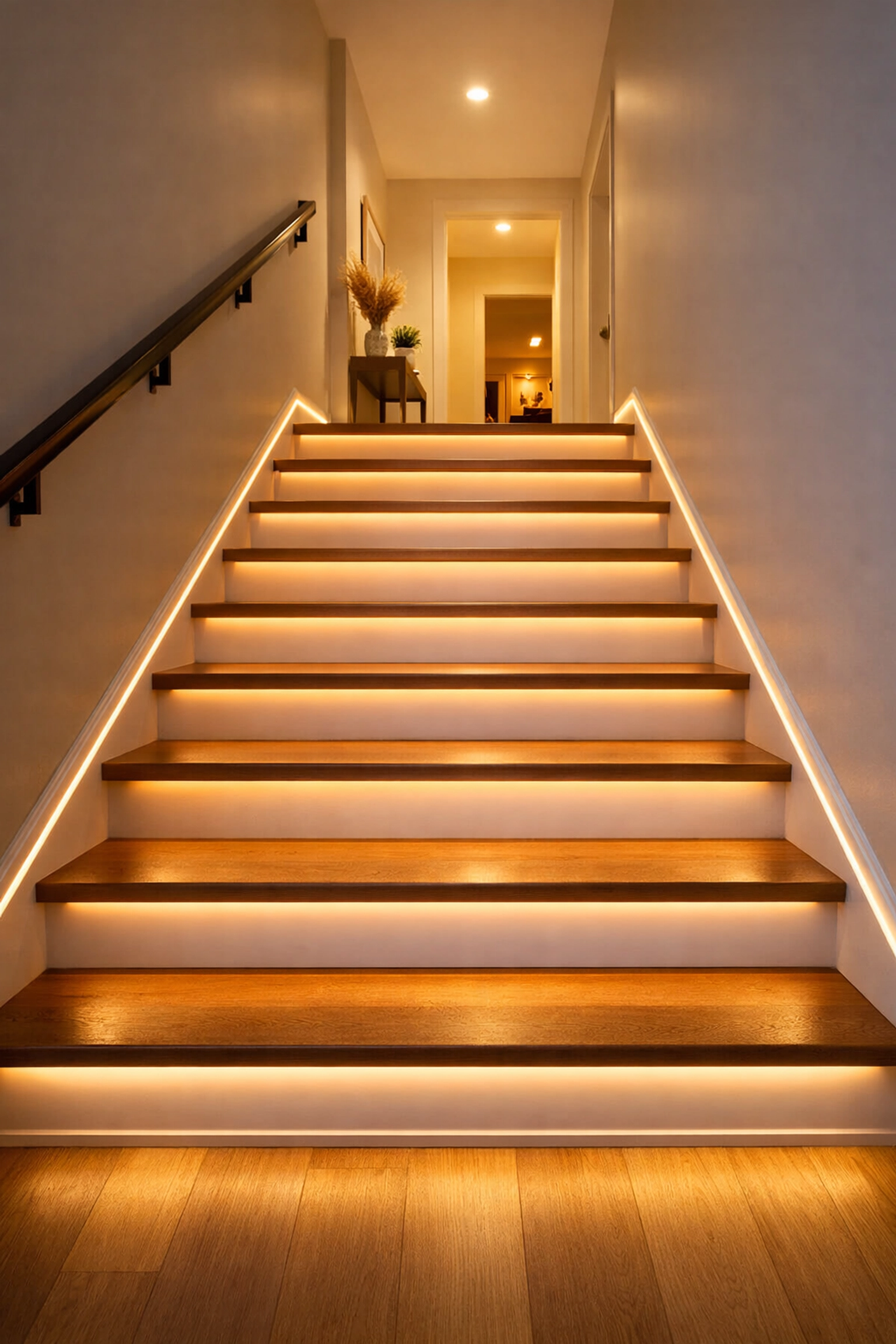
- Automate with Sensors: Install motion-activated lights along the baseboards or under the handrails. These are great because they turn on automatically if you need to go downstairs for a glass of water in the middle of the night.
4. The "Sock Slide": Slippery Surfaces
Polished hardwood stairs are beautiful, but they can be incredibly slick, especially if you’re wearing socks or smooth-bottomed slippers. Even carpet can be a risk if it’s worn down and "shiny" or if it’s a thick shag that hides the edge of the step.
Traction is your best friend when it comes to stair safety. Your foot needs to "bite" into the surface to give you the leverage needed to move upward or stabilize yourself moving downward.
How to Fix It:
- Non-Slip Treads: For wooden or tile stairs, you can apply clear, adhesive non-slip strips. They are almost invisible but provide a gritty texture that prevents sliding.
- Contrast Strips: If you have low vision, apply a strip of colored tape or a specialized "stair nose" protector in a contrasting color (like white on dark wood). This helps your eyes clearly identify where each step ends.
- Proper Footwear: Avoid walking on stairs in stocking feet. Encourage the use of "house shoes" or slippers with rubberized, non-skid soles.
5. Neglecting the "Small" Repairs
Do you have a step that creaks? Or a piece of carpet that’s slightly loose? Maybe the handrail wiggles just a tiny bit when you pull on it. We often ignore these minor annoyances, but on a staircase, a "minor" issue can lead to a major fall.
A loose tread can shift under your weight, causing you to lose your balance. A loose handrail won't support you if you actually need to put your full weight on it during a stumble.
How to Fix It:
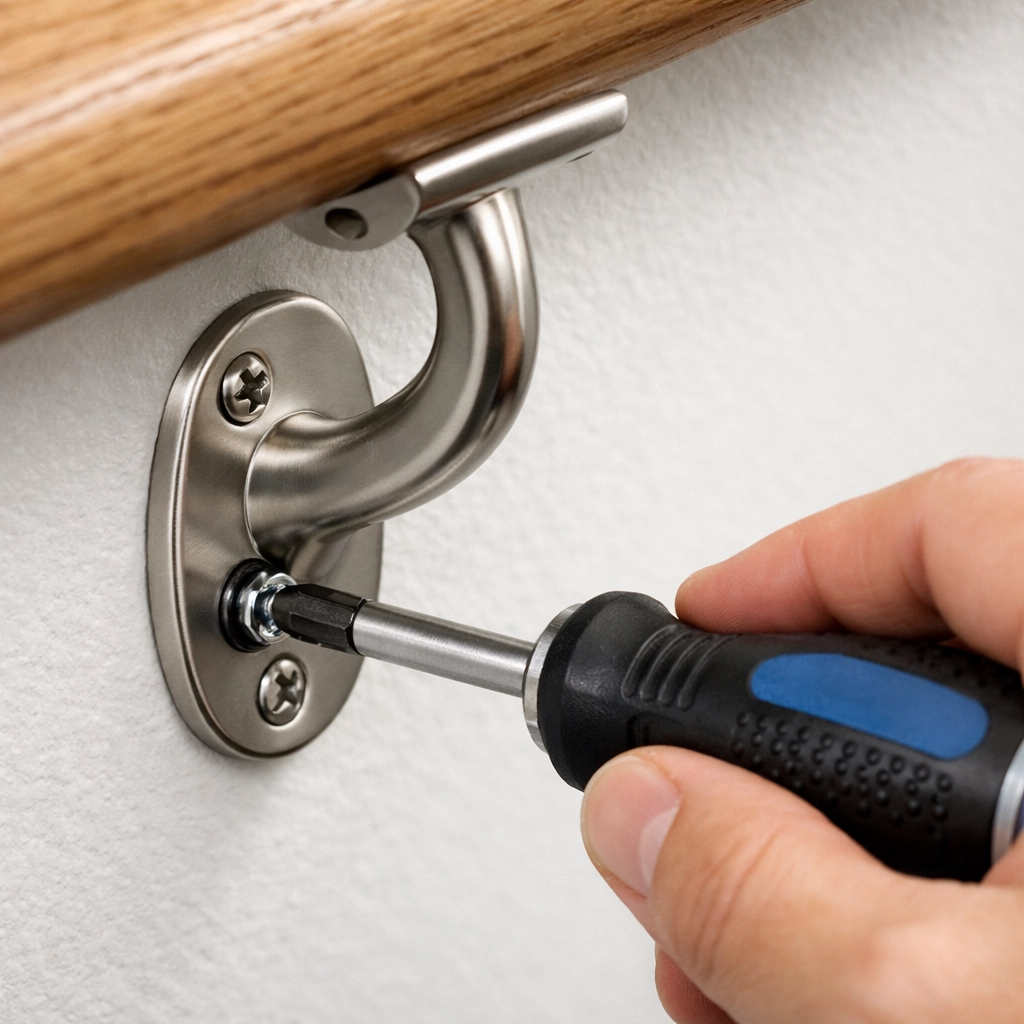
- The Monthly "Pull Test": Once a month, give your handrails a firm shake. If they move at all, they need to be tightened or re-anchored into a wall stud.
- Secure the Carpet: If you have a carpet runner, check for any "bubbles" or loose edges. Use a staple gun or carpet tacks to pull the material tight against the riser and tread.
- Fix the Squeaks: A squeak usually means a board is rubbing against a nail. Using wood screws to secure the tread to the stringer (the side support) can eliminate the movement and the noise, making the structure more solid.
6. Ignoring Step Consistency
The human brain is an incredible machine. When you take the first two steps of a staircase, your brain "maps" the height and depth of the steps. It then puts your legs on autopilot for the rest of the climb.
If one step is even half an inch taller or shorter than the others: a common issue in older homes or DIY renovations: it breaks that rhythm. This is often called a "trip step." Your foot expects the floor to be at a certain level, and when it isn't, you stumble.
How to Fix It:
- The Uniformity Check: Use a tape measure to check the height (rise) and depth (run) of every step. If you find a step that is significantly different, it may need professional attention to level it out.
- Nosing Awareness: Ensure the "nose" of the step doesn't protrude too far. A protrusion of more than 1.25 inches can catch your heel on the way down or your toe on the way up.
- Visual Cues: If a step cannot be easily repaired to match the others, use a high-contrast visual marker (like bright tape) to alert your brain that this specific step is different.
7. Rushing and Carrying Too Much
This isn't a physical flaw in the house; it’s a flaw in how we use it. We lead busy lives. We try to carry the laundry basket with both hands, or we try to carry a tray of food while navigating the steps.
When you carry a large object with both hands, two dangerous things happen: you can’t see your feet, and you can’t use the handrail. If you lose your balance while your hands are full, you have no way to break your fall or grab for support.
How to Fix It:
- The "One Hand Free" Rule: Never carry anything that requires both hands while on the stairs. Always keep one hand firmly on the railing.
- Break It Down: Instead of one big laundry basket, take two smaller trips. Or, better yet, drop the laundry down the stairs (if it’s soft) and meet it at the bottom.
- Slow Down: Treat the stairs like a transition zone. Stop for a second at the top, find your grip, and take the steps one at a time. It only takes five extra seconds, but those five seconds could save you months of recovery.

Summary Checklist for a Safe Staircase
If you're feeling overwhelmed, don't worry. You don't have to fix everything today. Start by walking through your home with this simple checklist:
- Can I turn on a light before I start climbing, and turn it off when I reach the other end?
- Is there a sturdy, easy-to-grip rail on both sides of the stairs?
- Are the steps completely clear of shoes, books, or decor?
- Is the surface of each step "grippy" rather than slippery?
- Can I see the edge of each step clearly, even in the evening?
By addressing these seven mistakes, you aren't just making your home safer; you’re maintaining your independence. Stairs shouldn't be a source of anxiety. With the right lighting, the right rails, and a clear path, you can move through your home with the confidence and peace of mind you deserve.
Remember, safety isn't a one-time event; it’s a habit. Take a look at your stairs today: you might be surprised at how much a few small changes can help.

