
Stairs are one of those things we use every single day without giving them much thought. From the time we’re toddlers, we’re taught how to navigate them, and eventually, it becomes muscle memory. But as we get older, or as we care for parents who are aging in place, those same stairs can start to feel a bit more like a mountain than a simple transition between floors.
I’ve spent a lot of time looking at homes through the lens of safety. What I’ve realized is that most people think their stairs are "fine" because they haven't had a fall yet. However, many staircases are actually full of small, hidden risks that are surprisingly easy to fix once you know what to look for.
Stair safety isn't about being afraid; it’s about being prepared. By making a few adjustments, you can turn a high-risk area into a confident part of your home. Here are seven common mistakes people make with stair safety and, more importantly, how you can fix them.
1. Relying on "Decorative" Handrails
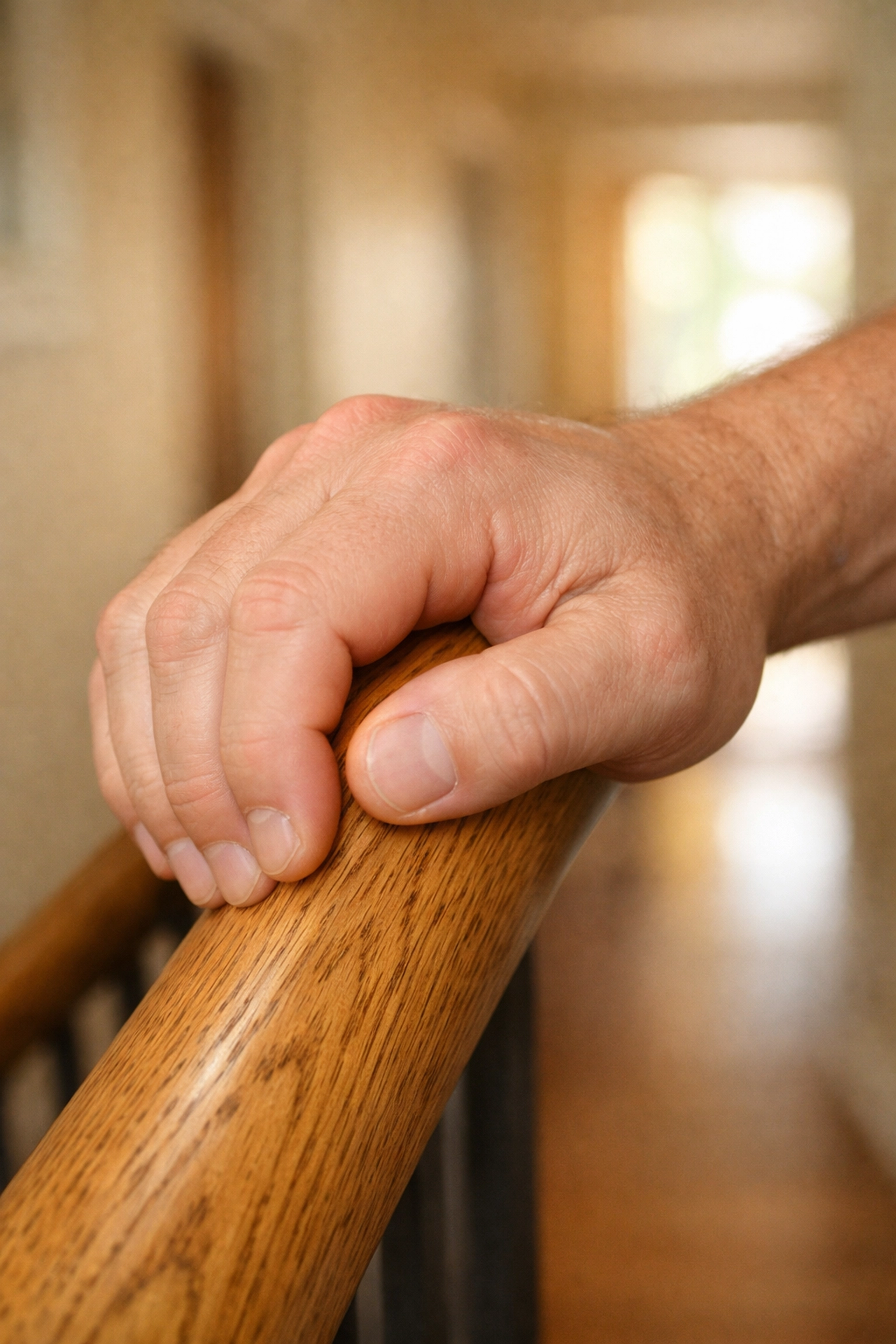
One of the biggest mistakes I see in older or more traditional homes is the use of decorative handrails that aren't actually designed for safety. You know the ones: they might be thick, ornate, or have a wide, flat top. While they look beautiful, they are incredibly difficult to grip if you actually lose your balance.
A functional handrail should allow for a "power grip." This means your hand can almost entirely encircle the rail, allowing your fingers to meet your thumb. If a rail is too wide or too close to the wall, you can only "pinch" it or rest your palm on top. In a moment of a slip, a palm-rest isn't going to stop a fall.
The Fix:
If your handrails are hard to grab, consider replacing them with rounded rails that have a diameter of about 1.25 to 2 inches. Ensure there is at least 1.5 inches of clearance between the rail and the wall so your fingers don't get pinched. Most importantly, if you only have a rail on one side, install a second one on the opposite side. Having two points of contact: one for each hand: significantly increases stability and reduces the physical strain on your legs as you climb.
2. Ignoring the "Bottom-of-Flight" Illusion
Have you ever reached the bottom of the stairs and thought there was one more step, only to realize you’re already on the floor? Or worse, thought you were on the floor but there was actually one more step? This is known as the "bottom-of-flight" illusion. It happens because our brains often struggle to distinguish the last step from the landing, especially if the flooring material is the same.
When the treads (the horizontal part of the step) and the floor look identical, the depth perception can fail. This is a leading cause of stumbles and twisted ankles at the base of the staircase.
The Fix:
You need to create a visual "break" between the stairs and the floor. You can do this by using a high-contrast strip of non-slip tape on the edge of the very last step. If you have carpet, you might use a different colored rug (securely taped down!) at the landing. The goal is to give your eyes a clear signal that the transition from vertical to horizontal has occurred.
3. The Stealth Danger of Slippery Surfaces
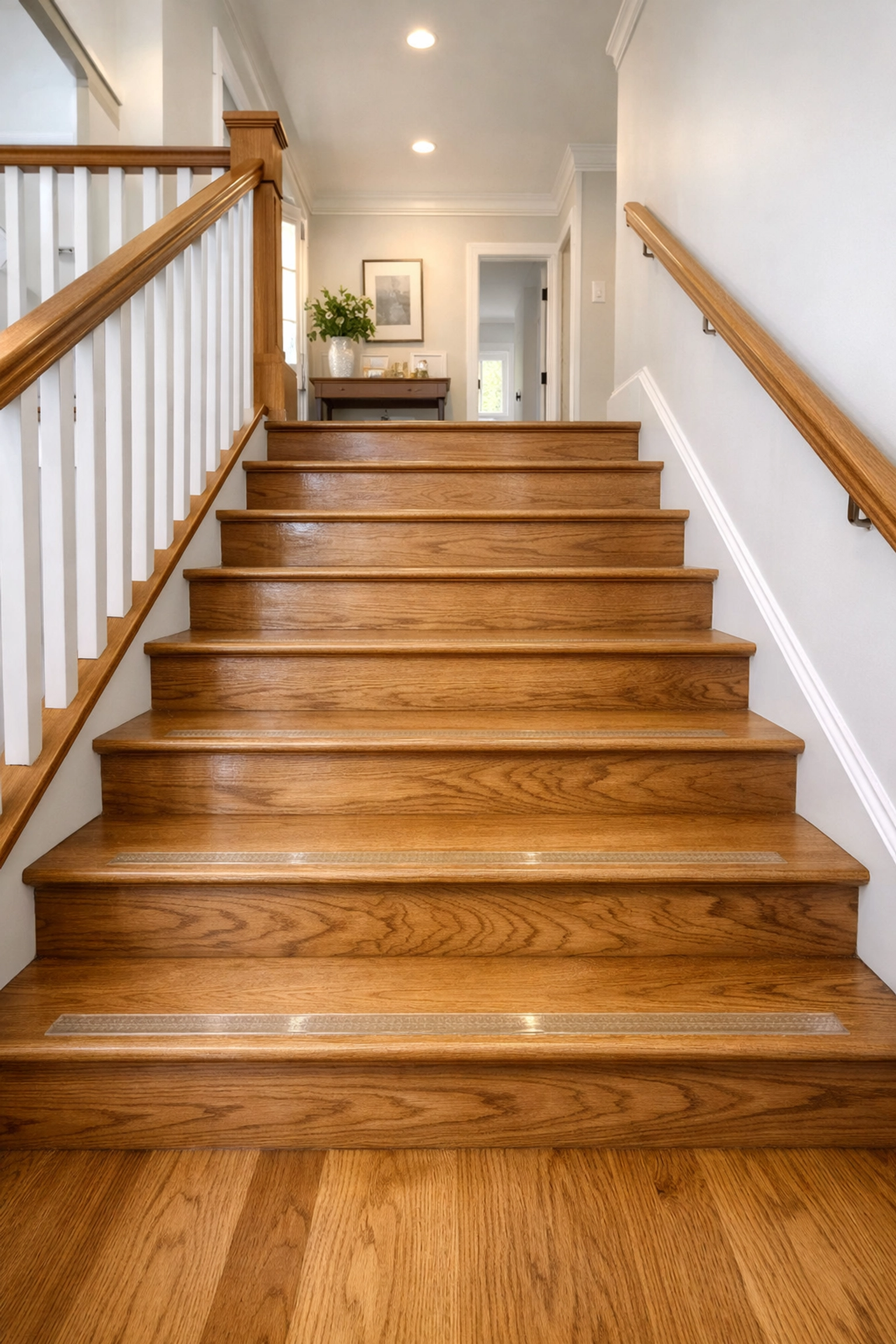
Polished hardwood and high-gloss finishes look stunning, but they are essentially ice rinks when you’re wearing socks. Even some types of low-pile carpet can become slick over time as the fibers flatten out.
Many people think that if they just "be careful," they’ll be fine. But balance can shift in a split second, and if your feet can't find purchase, a small wobble turns into a slide.
The Fix:
Traction is your best friend. For wooden or tile stairs, clear adhesive anti-slip strips are a great solution: they provide grip without hiding the beauty of the wood. If you prefer a softer feel, you can install "stair treads," which are small individual rectangular pieces of carpet or rubber that sit on each step. Just ensure they are firmly attached; loose "tread covers" are often more dangerous than the slippery stairs themselves.
4. Inadequate Lighting and Deep Shadows
Most staircases have a light at the top or a light at the bottom, but rarely do they have lighting that illuminates the entire path evenly. If you’re walking down the stairs and your own body casts a shadow over the next step, you’re essentially walking into a blind spot.
As we age, our eyes need significantly more light to see clearly and process depth. A dim hallway might have been fine in your 30s, but in your 70s, it can be a major hazard.
The Fix:
First, make sure you have light switches at both the top and bottom of the stairs (two-way switches). If you don't want to deal with rewiring, motion-activated LED puck lights are a lifesaver. You can stick them along the baseboards or under the lip of the stairs. They turn on automatically when they sense movement, lighting your path without you having to fumble for a switch in the dark. Aim for "warm" light that isn't blindingly bright but fills the space evenly to eliminate shadows.
5. Using the Stairs as a Staging Area
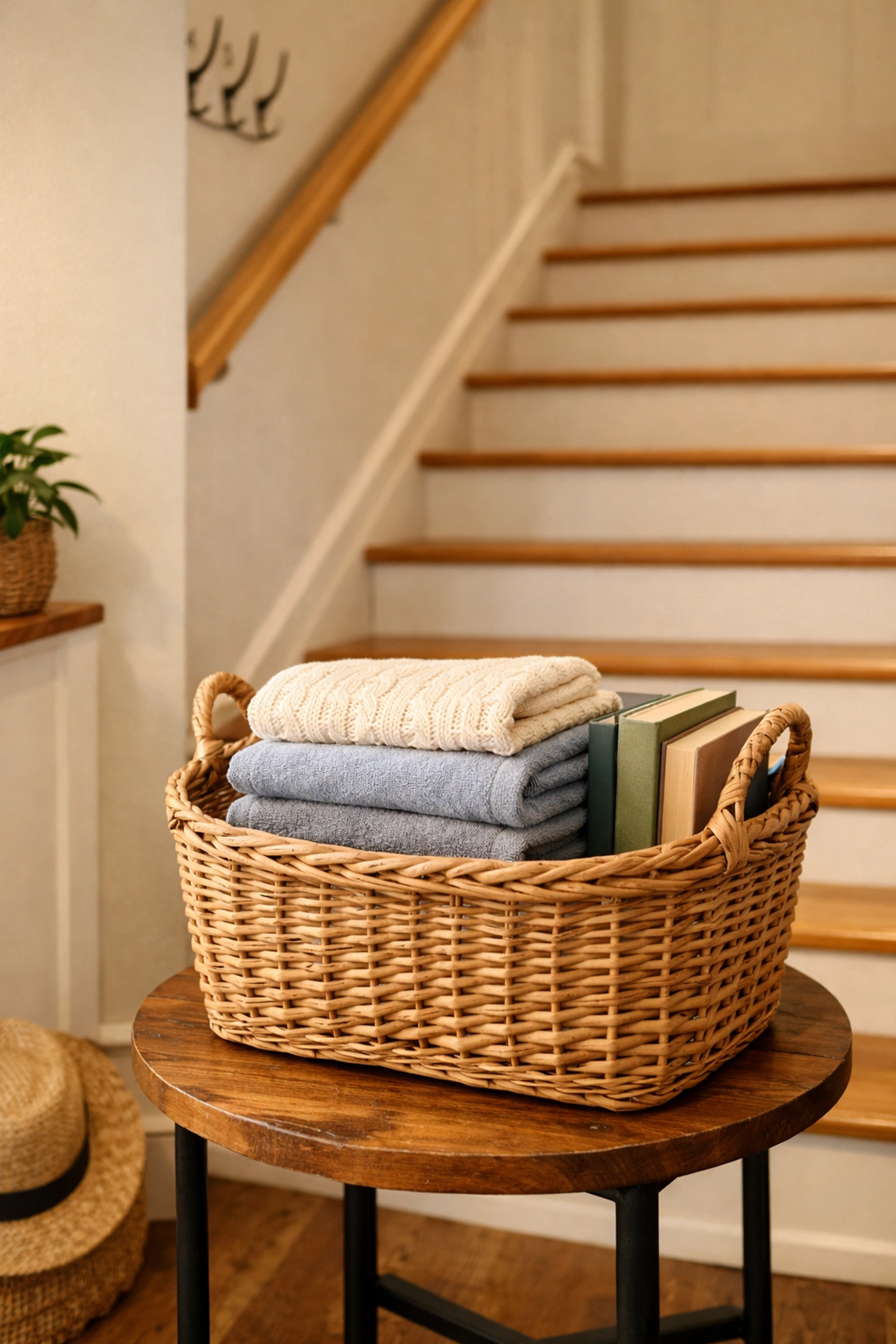
We’ve all done it. "I’ll just leave this book/shoe/basket here on the bottom step so I can take it up next time I go." It seems efficient, but it’s one of the most dangerous habits you can have.
Stairs are meant for transit, not storage. Even a small object on the side of a step narrows your walking path and creates a trip hazard. If you have to swerve your foot to avoid an object, you’re throwing off your center of gravity on a surface where balance is already compromised.
The Fix:
Adopt a "clear stairs" policy. If something needs to go up or down, it either goes all the way right now, or it stays in a designated "stair basket" located at least three feet away from the base or top of the stairs. Never place anything directly on the steps, not even "just for a minute."
6. Overlooking Inconsistent Step Dimensions
In a perfect world, every step on a staircase would be the exact same height (riser) and the exact same depth (tread). However, in older homes or DIY renovations, this isn't always the case. A difference of even half an inch in height between two steps can trip up your internal "rhythm."
Your brain calculates the effort needed for the first two steps and then puts the rest on autopilot. If the fifth step is slightly higher than the fourth, your toe is likely to catch the edge.
The Fix:
Take a tape measure and check your stairs. If you find a significant inconsistency, it might be time to have a professional look at them. While you might not be able to rebuild the whole staircase, you can sometimes fix "nosing" issues (the part of the step that hangs over) or add structural shims under treads to level them out. At the very least, knowing which step is the "odd one out" allows you to be extra mindful at that specific point.
7. Rushing and Carrying Too Much
The final mistake is behavioral rather than environmental. We often treat stairs as an annoyance to get through as quickly as possible. We carry laundry baskets with both hands, blocking our view of our feet and leaving us with no way to grab a handrail if we stumble.
Rushing increases the force of your impact on each step, making it harder to recover if your foot placement is slightly off.
The Fix:
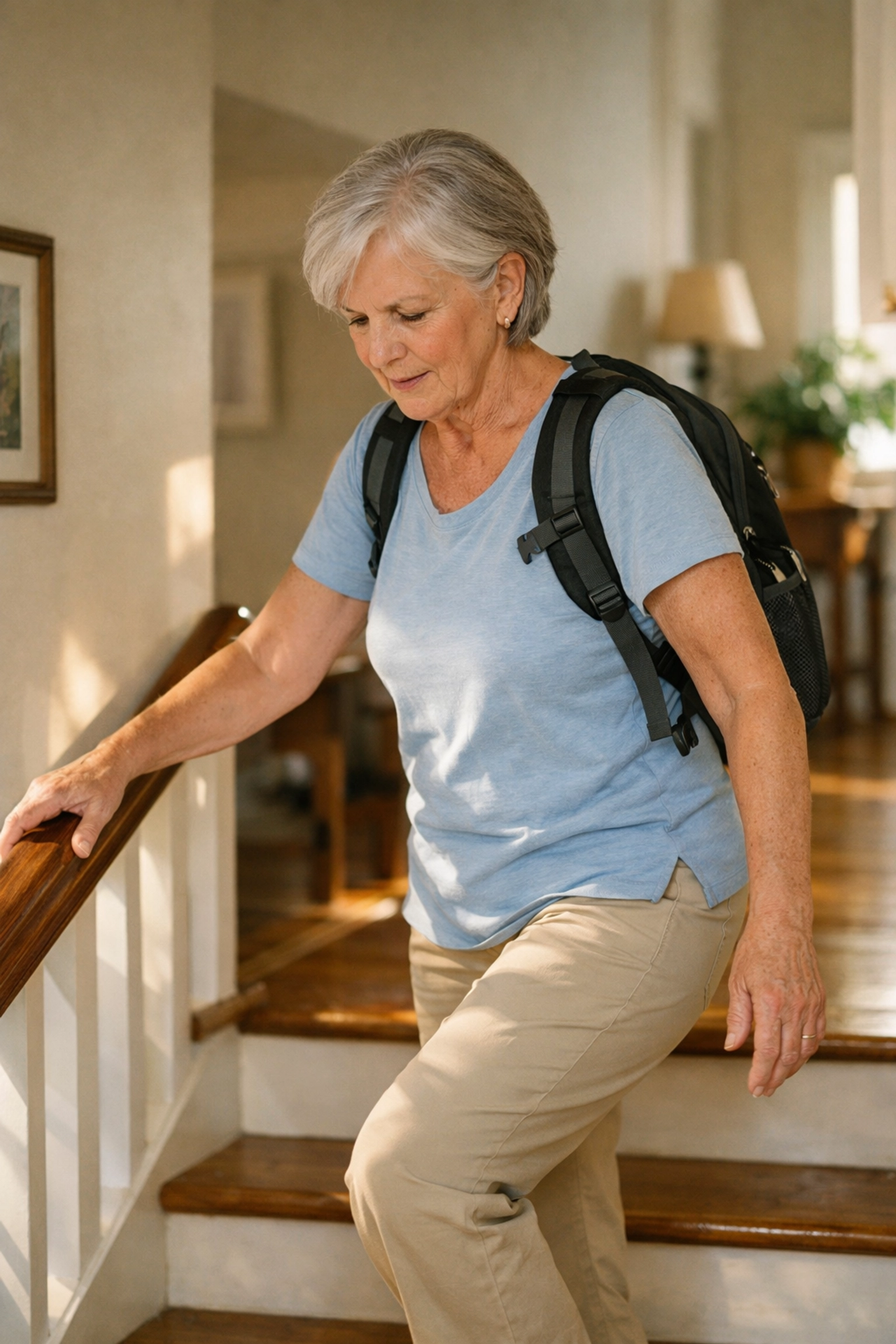
Slow down. It sounds simple, but it’s the most effective way to stay safe. Always keep at least one hand free to hold the railing. If you have to move items between floors, consider using a backpack or a small shoulder bag so your hands remain free. If you have a lot of laundry, try dropping the bag down the stairs first (if it's safe to do so) and then walking down with both hands on the rails.
Bonus: The Role of Footwear and Health
While the stairs themselves are important, how you interact with them matters just as much.
- Footwear: Avoid walking on stairs in loose slippers, flip-flops, or just socks. The best footwear for stairs is a sturdy shoe with a non-slip rubber sole and a closed heel. If you prefer to be barefoot, that’s generally safer than wearing socks, but shoes are always the gold standard for grip.
- Vision: If you wear bifocals or progressive lenses, be extra careful. These lenses can distort your depth perception when you look down through the bottom portion of the glass. Many people find it helpful to tilt their head down further so they are looking through the top (distance) part of their lenses while navigating stairs.
- Physical Maintenance: Stair climbing requires leg strength and balance. Simple exercises like calf raises or standing on one leg while holding onto a kitchen counter can help build the muscles needed to handle stairs with confidence.
Creating a Culture of Safety
At the end of the day, stair safety is about respect for the environment. We don't need to be intimidated by our homes, but we do need to acknowledge that our needs change over time.
By fixing these seven common mistakes: improving your grip, enhancing visibility, and changing a few habits: you aren't just preventing a fall; you're preserving your independence. A safe home is a home where you can move freely without worry. Take twenty minutes this weekend to walk your stairs with a critical eye. You might be surprised at how much a few small changes can improve your daily life.

