
Stairs are often the most functional part of a home, connecting our living spaces and providing access to the places we rest. However, as we age or help our loved ones navigate their golden years, those same stairs can start to feel a bit more like a hurdle than a hallway. At Fall Guys Products, we believe that staying independent in your own home shouldn't feel like a high-wire act.
Most falls on stairs don’t happen because of a lack of effort; they happen because of small, overlooked details in the environment. We call these "hidden hazards." By identifying these common mistakes and implementing simple, practical fixes, you can transform a source of anxiety into a safe, reliable part of your home.
Let’s walk through the seven most common mistakes people make with stair safety and, more importantly, how to fix them.
1. Underestimating the Power of Light
The most common mistake people make isn't actually about the stairs themselves, it's about the air around them. Poor lighting is a leading contributor to missteps. As we age, our eyes require more light to see clearly, and our ability to perceive depth can diminish. A dim staircase makes it incredibly difficult to distinguish where one tread ends and the next begins.
Many homes have a single, weak bulb at the top or bottom of the hall. This creates long, deceptive shadows. If you can't see the "nose" or the edge of the step, your foot is more likely to miss its mark.
How to fix it:
First, swap out standard bulbs for high-lumen LED bulbs. Look for "daylight" or "cool white" tones, as these provide better contrast than warm, yellow tones.
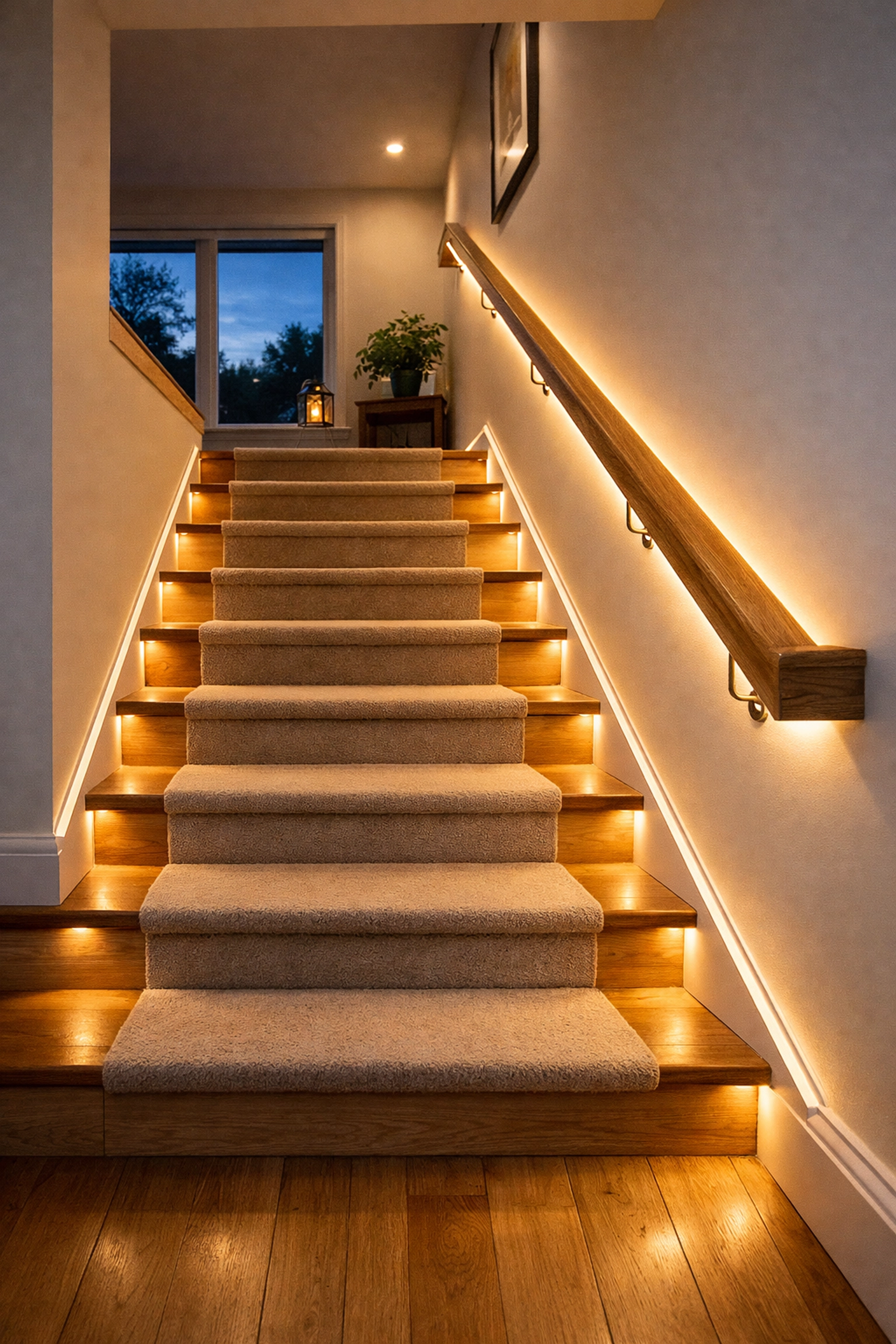
Second, consider motion-activated lighting. You can find battery-operated LED strips that stick under the handrail or along the baseboards. These light up the moment you approach, ensuring you never have to fumble for a switch in the dark. If you’re doing a larger renovation, recessed lighting directly into the risers is the gold standard for visibility.
2. Choosing Style Over Traction
We all love the look of polished hardwood or glossy tile. They are beautiful and easy to clean, but they are also incredibly slippery, especially if you are wearing socks or slippers without grips. A staircase with a high-gloss finish is essentially a slide waiting to happen.
Even carpet can be a mistake if it’s a deep, "shag" style or if it has a busy pattern. Thick carpet can hide the edge of the step, while complex patterns can create an optical illusion that makes it hard to gauge the height of the risers.
How to fix it:
If you have hard surfaces, the best fix is to add non-slip treads. You don't have to sacrifice style; there are many transparent adhesive strips or stylish rubber-backed "stair rugs" that provide the necessary grip.
For carpeted stairs, ensure the carpet is tight and low-pile. If the carpet is loose, it can bunch up underfoot, creating a trip hazard. If you’re keeping the wood look, apply an anti-slip coating, a clear finish that adds a slight texture to the surface without changing the color.
3. Ignoring the "Handrail Gap"
A handrail is your best friend on the stairs, but many homes have rails that are either insecure, too short, or only on one side. A mistake we often see is the "partial rail," where the handrail stops a few inches before the last step. That final transition from the stairs to the flat floor is where many balance shifts occur. If the rail isn't there to support you through the entire movement, you're at risk.
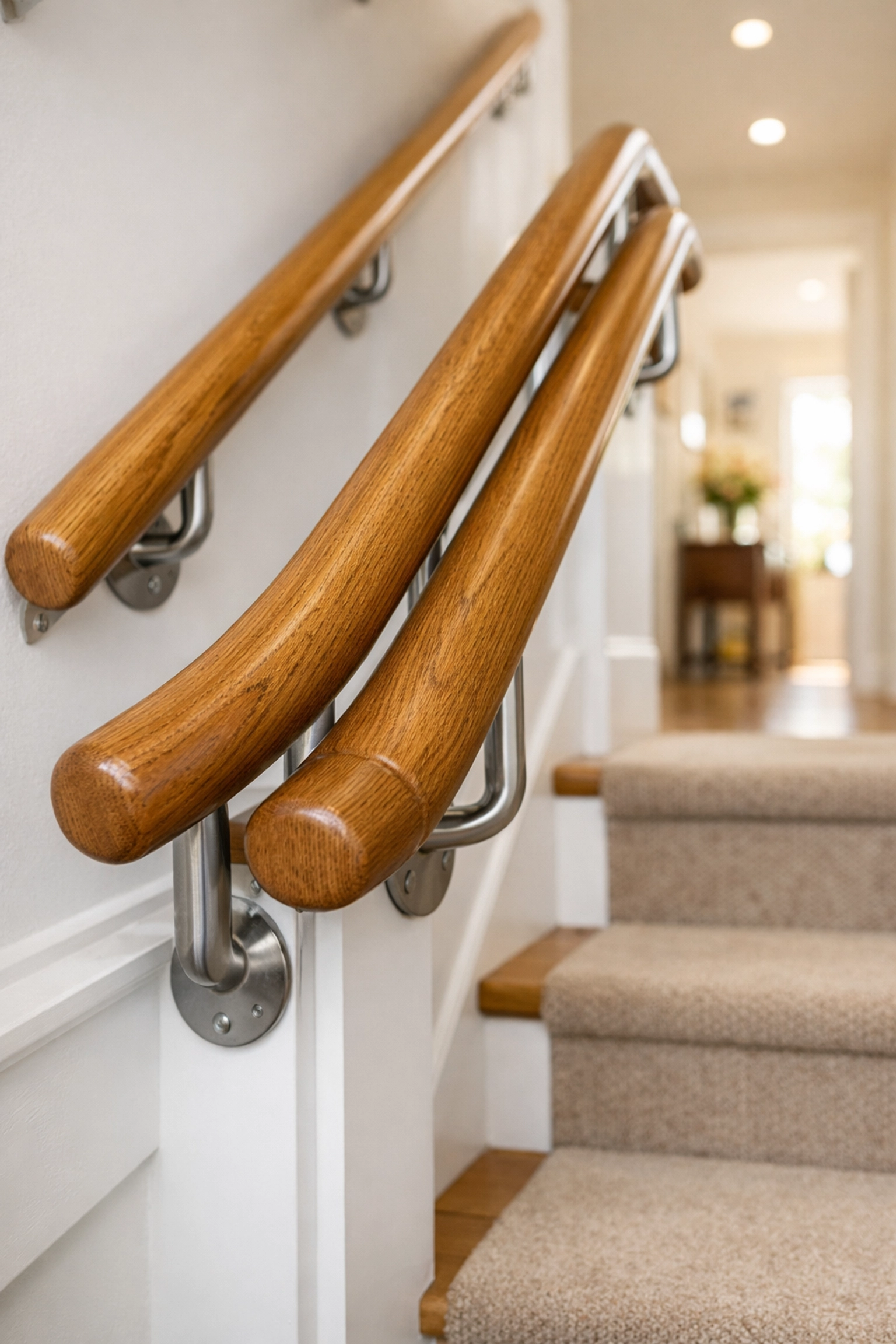
Another issue is the "grip-ability" of the rail. If a handrail is too wide or awkwardly shaped (like a flat board), you can't wrap your hand around it securely. In a moment of a slip, you need to be able to "power grip" that rail.
How to fix it:
Ensure you have handrails on both sides of the stairs. This allows you to use your strongest side for support regardless of whether you are going up or down.
Check that the rails extend at least 12 inches beyond the top and bottom steps. This gives you a "landing gear" to hold onto before you even start the climb. Finally, if your rail is too thick to wrap your fingers around, consider installing a secondary, smaller diameter rail that is easier to grasp.
4. Overlooking Uneven Riser Heights
Most of us navigate stairs using muscle memory. Our brains calculate the height of the first two steps and then "automate" the rest of the climb. This is why even a tiny variation in step height, as little as a quarter of an inch, can cause a trip.
Uneven risers often happen in older homes where the house has settled, or after a DIY renovation where the flooring was added to the top or bottom without adjusting the steps. If one step is slightly taller than the rest, your foot will catch the edge. If it's shorter, you may "overstep" and lose your balance.
How to fix it:
Grab a tape measure and check every single step. Measure from the top of one tread to the top of the next. If you find a significant discrepancy, it might be time to call a professional carpenter. While it sounds like a big job, fixing a single "trip step" is much easier than recovering from a fall. In the short term, you can use high-contrast tape on the edge of the uneven step to give your brain a visual cue that something has changed.
5. Living with Narrow or Shallow Treads
A "tread" is the horizontal part you step on. If the tread is too shallow, your heel or toe might hang off the edge. This forces you to turn your feet sideways to get a full footprint, which completely throws off your center of gravity and makes the climb much more tiring and dangerous.
This mistake is common in attic conversions or basement stairs where space was tight during construction.
How to fix it:
While you can’t easily "stretch" a staircase, you can improve how you use it. If your treads are narrow, it is even more vital to have dual handrails and excellent lighting.
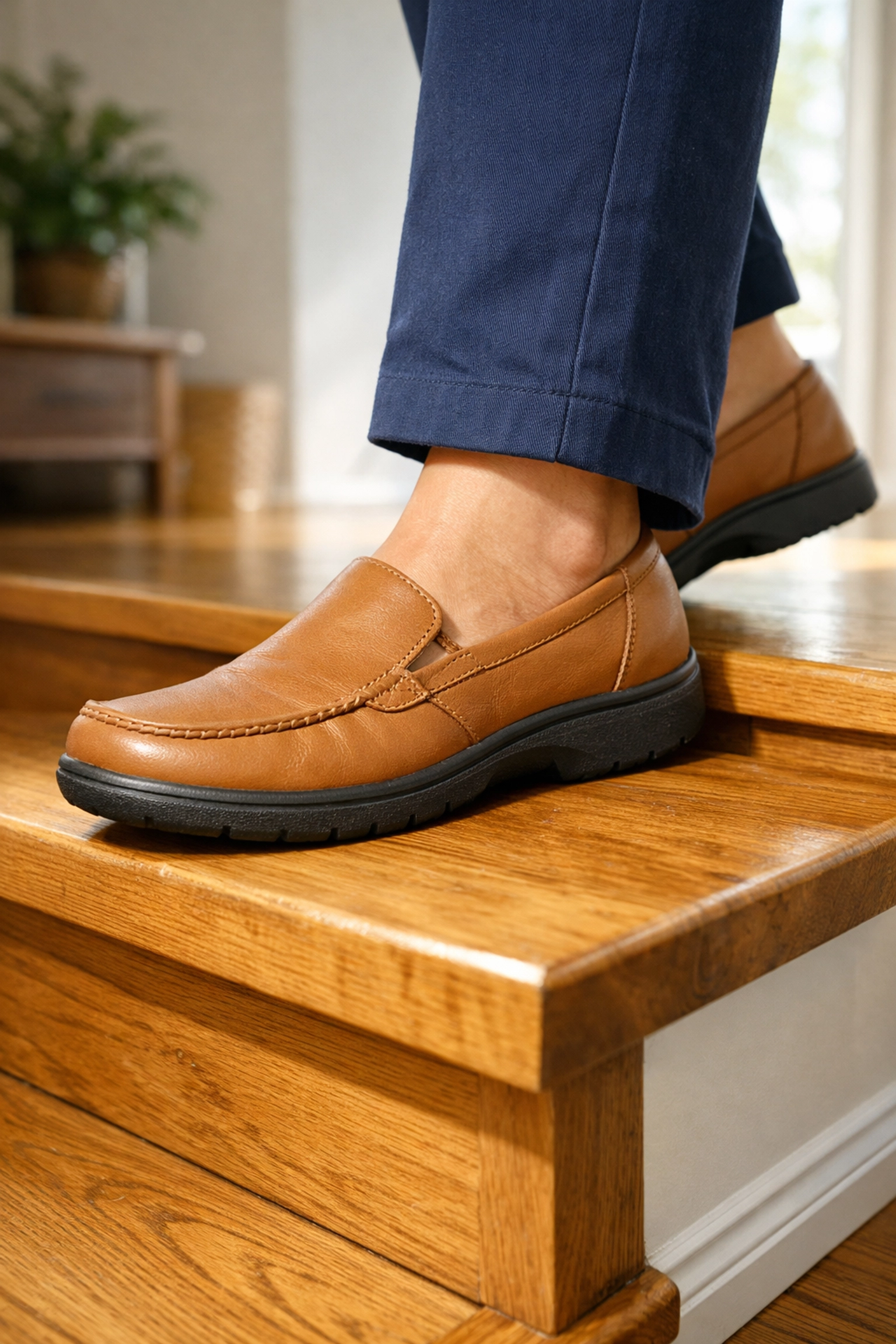
For those looking for a structural fix, "tread extenders" can sometimes be installed to give you an extra inch or two of depth. However, the most effective fix is often behavioral: ensuring you are wearing supportive, thin-soled shoes (rather than bulky sneakers or loose slippers) helps your foot feel the surface better, allowing for more precise placement on narrow steps.
6. Using the Stairs as a Storage Shelf
We’ve all done it. "I’ll just leave this book on the third step so I remember to take it up later." This is perhaps the most dangerous habit in any multi-level home.
Stairs are a transit zone, not a storage area. Objects on the stairs, even small ones, reduce the amount of space you have for your feet and create an immediate tripping hazard. Furthermore, if you are carrying something up the stairs to "clear the clutter," you likely only have one hand (or no hands) on the rail.
How to fix it:
Implement a "zero-tolerance" policy for items on the stairs. If something needs to go up, take it all the way up or leave it in a designated "upstairs" basket at the base of the stairs (but not on the first step!).
If you find yourself carrying heavy loads frequently, consider if there’s a way to move those items differently. For example, can you keep a set of cleaning supplies on both floors so you aren't carrying a heavy vacuum or caddy up and down?
7. Ignoring "Visual Cliffing"
Visual cliffing is a phenomenon where the colors of the stairs blend together, making the staircase look like one flat, sloping ramp rather than individual steps. This is very common with monochromatic wood stairs or dark carpeting. If the "nose" of the step is the same color as the "tread" below it, your eyes can struggle to find the edge.
This mistake is especially dangerous for those with low vision or cataracts, as depth perception is the first thing to go in low-contrast environments.
How to fix it:
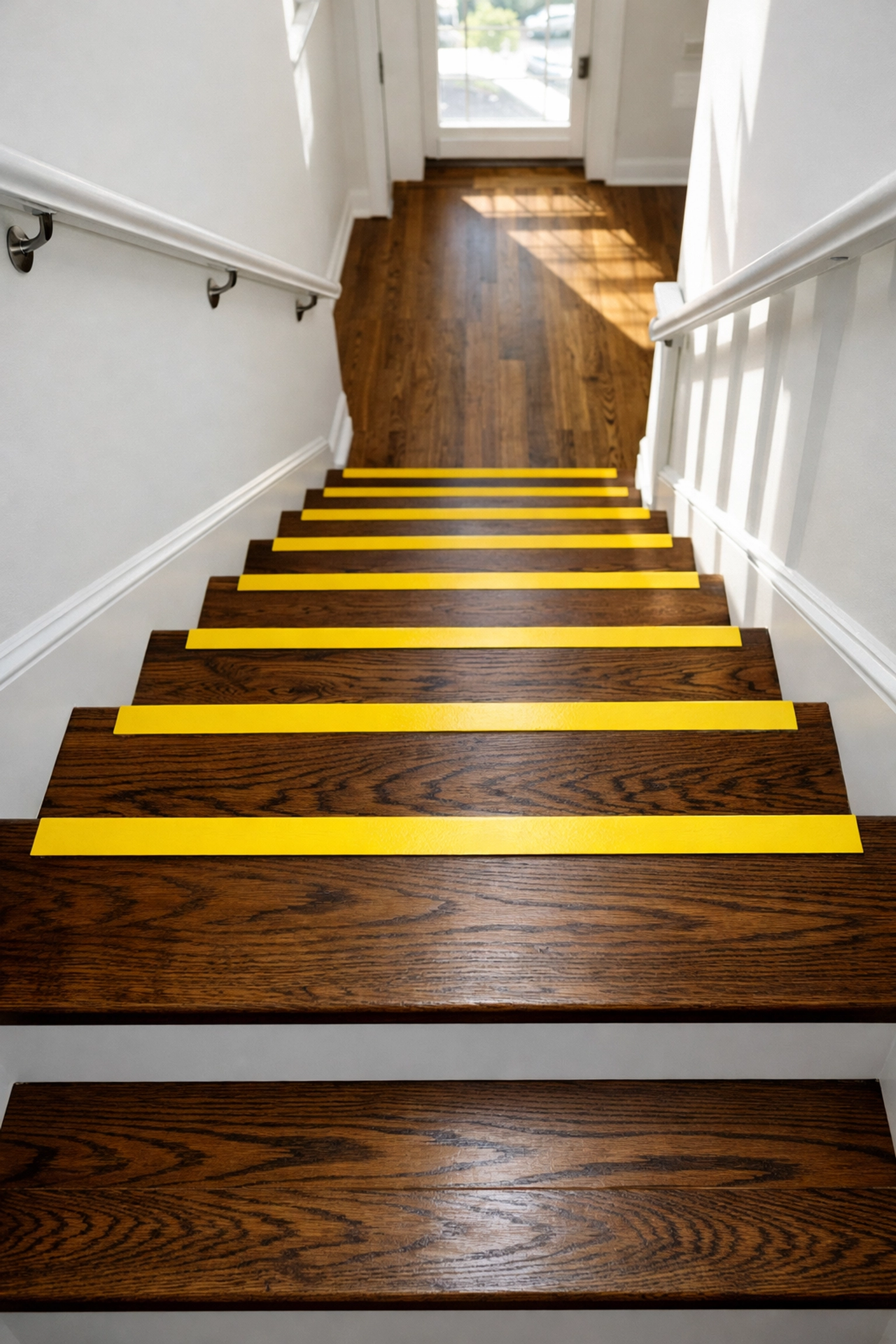
The fix here is simple and incredibly effective: contrast. You want the edge of each step to pop out visually. You can achieve this by painting the "riser" (the vertical part) a different color than the "tread" (the horizontal part).
Alternatively, apply a strip of high-contrast anti-slip tape or a "stair nosing" in a color that stands out. For example, if you have dark oak stairs, a white or light-grey edge strip can make a world of difference. This provides a clear "target" for your foot and helps your brain map out the descent safely.
Conducting Your Own Stair Audit
Safety isn't a one-time event; it's a habit of observation. We recommend doing a "stair audit" once every few months. Walk your stairs slowly and ask yourself these questions:
- Do I feel a "wobble" in the handrail?
- Are there any shadows hiding the steps at 8:00 PM?
- Do I find myself looking down at my feet the whole time because I’m unsure of the footing?
- Are my socks sliding on the surface?
If the answer to any of these is "yes," don't wait. Most of the fixes we’ve discussed: better bulbs, non-slip tape, and clearing clutter: can be done in a single afternoon for very little cost.
At Fall Guys Products, our goal is to help you feel confident in your home. Stairs shouldn't be a source of fear. By taking these seven common mistakes and turning them into safety wins, you aren't just preventing falls: you're preserving your freedom to move comfortably through every inch of your house.
Take it one step at a time, stay observant, and remember that a few small changes today can make a lifetime of difference in your safety and independence.

