
Stairs are often the most daunting part of a home as we get older or deal with mobility challenges. They represent independence: the ability to access the second floor, the basement, or the front porch: but they also represent a significant risk. In fact, a large percentage of home falls occur on staircases.
The good news is that most stair-related accidents are preventable. Often, it isn't a single "freak accident" that causes a fall, but rather a combination of small, overlooked habits or environmental factors that have gone unnoticed for years. At Fall Guys Products, we believe that safety shouldn't feel like a hospital ward; it should feel like a natural, reassuring part of your home.
Let’s walk through the seven most common mistakes people make with stair safety and, more importantly, how you can fix them today.
1. Viewing Handrails as "Optional" or Decorative
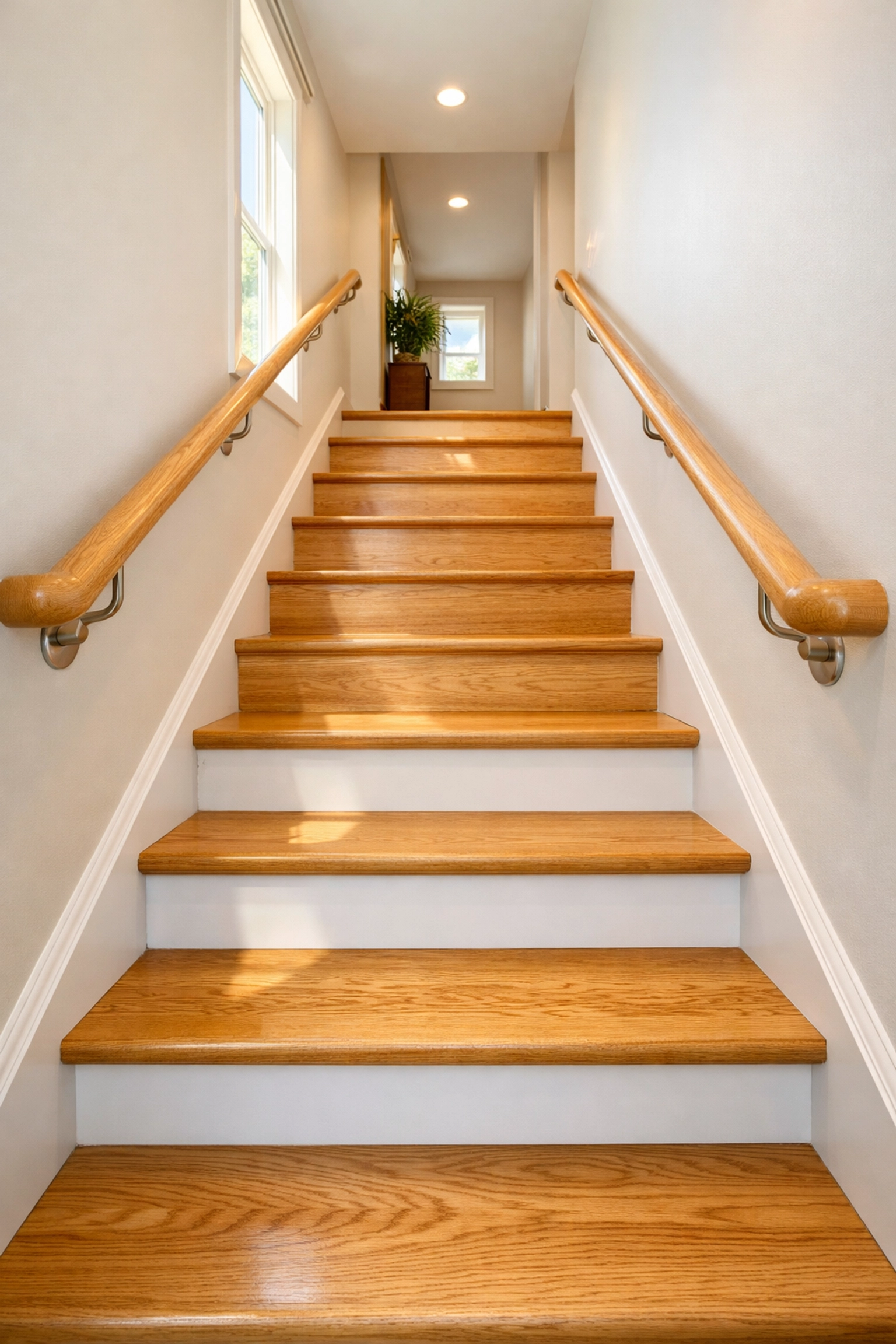
The biggest mistake people make is thinking of a handrail as something to use only when they feel unsteady. In reality, a handrail should be an active part of every single trip up or down the stairs. Many homes have handrails that are purely decorative: too thick to grab properly, or perhaps only located on one side of the staircase.
The Fix:
You should aim for "continuous contact." This means having a handrail that you can comfortably wrap your hand around (a "power grip") rather than just resting your palm on top of it.
- Install rails on both sides: Having a rail on both the left and right sides allows you to use your strongest side regardless of whether you are going up or down.
- Check the height: Standard safety guidelines suggest handrails should be between 30 and 36 inches from the floor of the steps.
- Extension: Ensure the rail extends slightly past the top and bottom steps so you have support before you start your ascent and after you’ve finished your descent.
2. Neglecting the "Friction Factor"
Hardwood stairs are beautiful. Polished stone is elegant. However, smooth surfaces are a recipe for slips, especially if you are wearing socks or smooth-bottomed slippers. Even carpet can become a hazard if it is high-pile or worn down, as it can hide the edge of the step or become slippery over time.
The Fix:
Increasing traction is one of the fastest ways to make a staircase safer.
- Non-slip treads: You can find transparent or decorative non-slip adhesive strips that provide a "gritty" surface without ruining the aesthetic of your wood stairs.
- Low-pile carpet: If you prefer carpet, ensure it is a tight, low-pile weave and that it is securely tacked down.
- The "No-Socks" Rule: Encourage everyone in the home to avoid walking on stairs in just socks. Bare feet are actually safer than socks on wood, but high-traction footwear is best.
3. Living with "The Shadow Zone"
Poor lighting is a silent contributor to falls. If you can’t clearly see where the "tread" (the flat part) ends and the "riser" (the vertical part) begins, your brain has to guess where to place your foot. Shadows can be particularly deceptive, making a flat surface look like a drop-off or vice versa.
The Fix:
Your staircase should be the brightest part of your hallway.
- Dual-switch systems: Ensure there are light switches at both the top and the bottom of the stairs. Never "brave" a dark staircase because you forgot to turn the light on before you started moving.
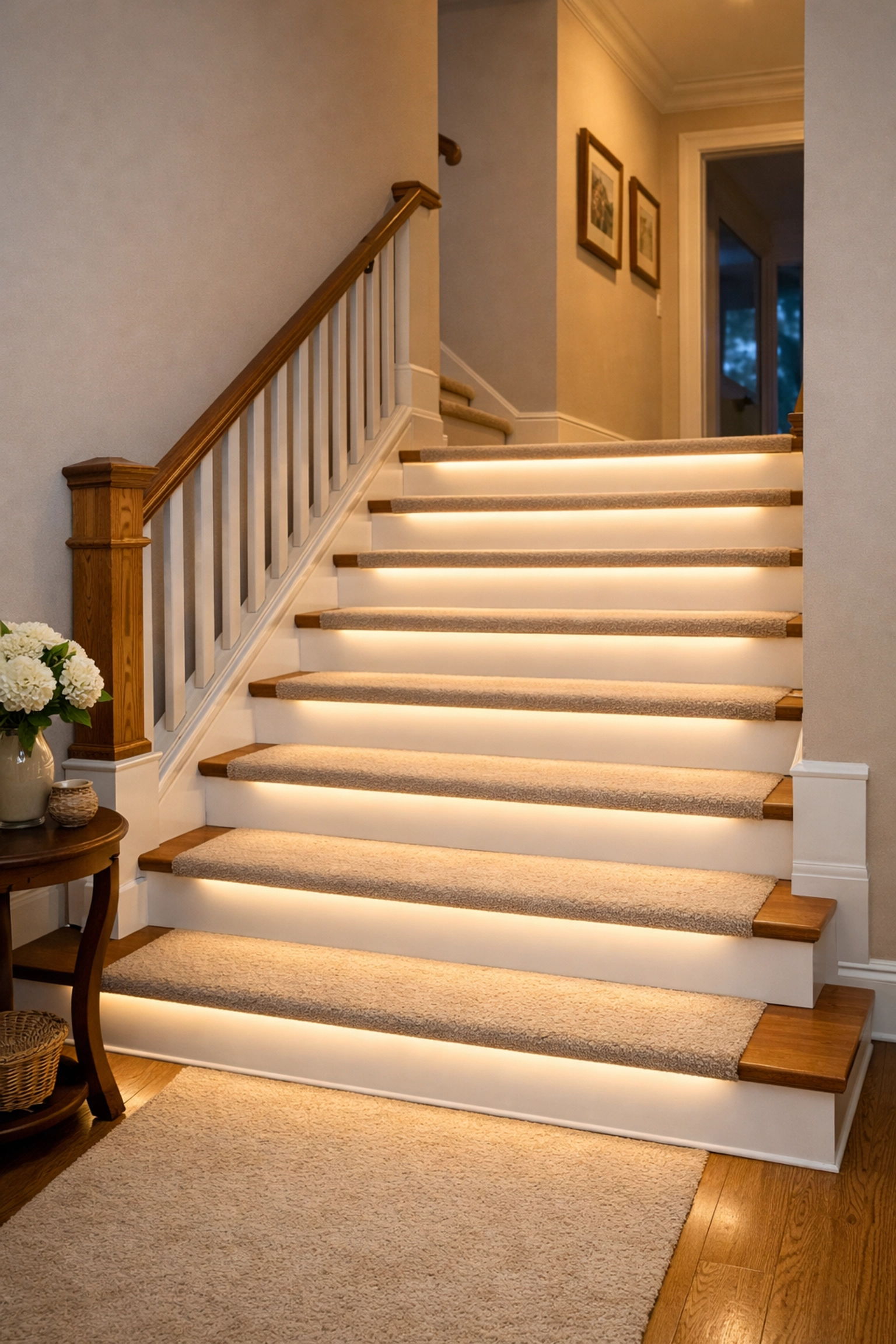
- Motion sensors: Battery-operated LED motion lights are an excellent, low-cost fix. They can be stuck to the wall near the baseboards and will automatically illuminate the steps as you approach.
- Contrast: If the steps are all the same color, it can be hard to distinguish the edges. Adding a strip of contrasting colored tape or paint to the edge of each step can provide a visual cue that helps your depth perception.
4. Using the Stairs as a Temporary Storage Shelf
We’ve all done it. You have a pair of shoes, a book, or a basket of laundry that needs to go upstairs, so you set it on the bottom two steps to "take up next time." This is a major tripping hazard. In a moment of distraction: perhaps the phone rings or the doorbell goes off: that item becomes a dangerous obstacle.
The Fix:
Establish a strict "nothing on the stairs" policy.
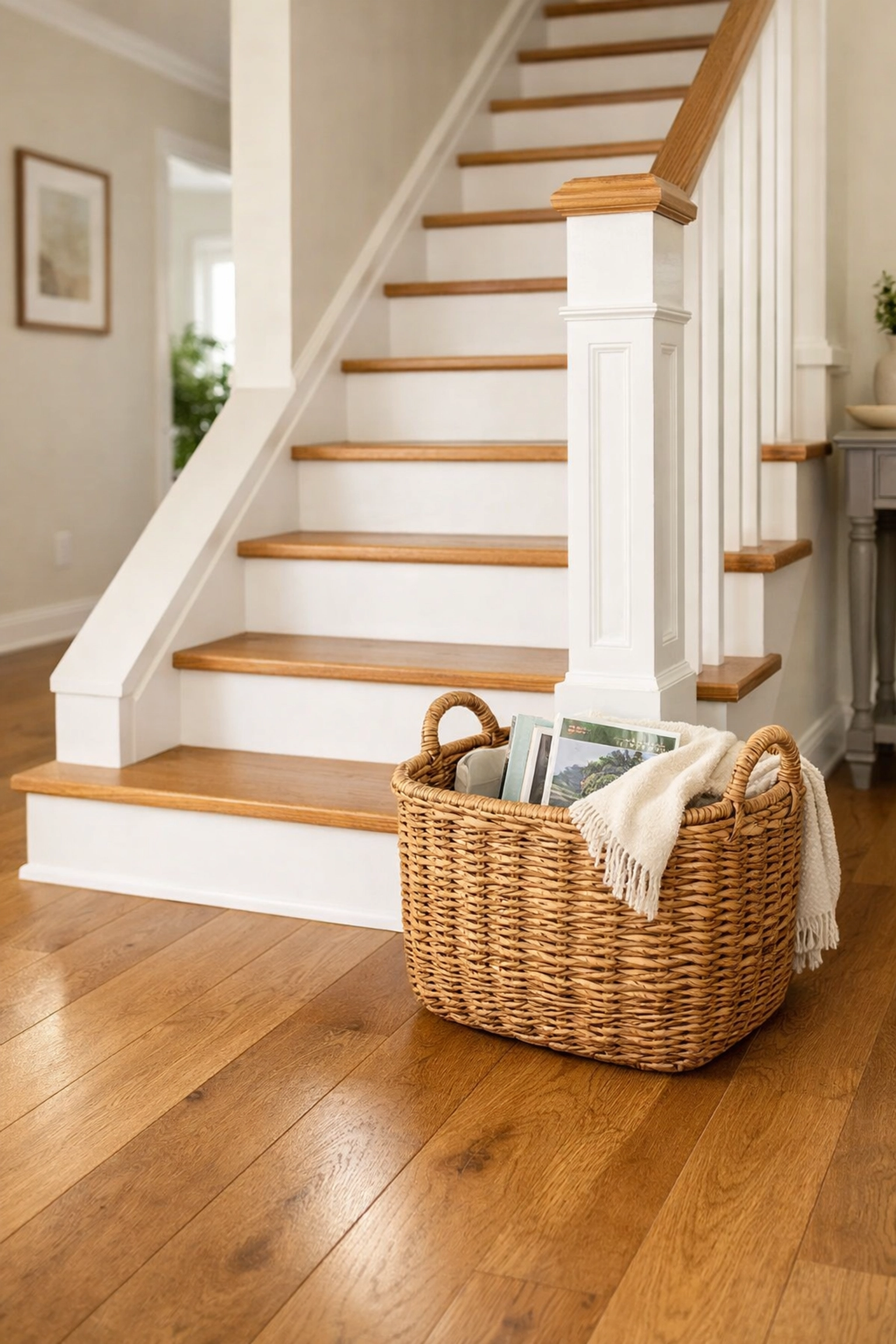
- The "Stair Basket" Alternative: If you need to collect items to move between floors, place a dedicated basket at the base of the stairs, but keep it on the floor away from the walking path.
- Clear the landings: Ensure the areas immediately at the top and bottom of the stairs are also clear of rugs or furniture that could cause a stumble as you transition to flat ground.
5. Prioritizing Comfort Over Footwear Function
It’s tempting to shuffle around the house in loose slippers or even "backless" shoes. While these are comfortable for sitting on the couch, they are dangerous for navigating elevation changes. Slippers often lack a heel counter (the part that holds your heel in place), meaning your foot can slide out, causing you to lose your balance.
The Fix:
Invest in a "house shoe" that provides stability.
- Full coverage: Choose footwear that secures the entire foot, including the heel.
- Rubber soles: Ensure the soles have a good grip and are not overly thick. Thick "platform" soles can actually decrease your ability to feel the ground, which is vital for balance.
- Check the laces: If you wear tie-up shoes, always ensure they are double-knotted. A loose lace on a staircase is an immediate danger.
6. The "In-a-Hurry" Mindset
Modern life is fast, and we often find ourselves rushing to answer the phone or get to the kitchen before a pot boils over. Rushing on stairs leads to "short-stepping," where you don’t place your full foot on the tread. This significantly increases the risk of a slip.
The Fix:
Practice mindful movement.
- The "One-Step" Rule: Take each step deliberately. Wait until both feet are secure before moving to the next level if you feel at all unsteady.
- Eliminate distractions: Don't carry bulky items that block your view of your feet. If you must carry something, keep one hand free for the handrail at all times.
- Pause at the transition: When you reach the top or bottom, take a three-second pause to ensure your balance is centered before walking away.
7. Ignoring Subtle Structural Warnings
Homes settle, wood warps, and carpet staples loosen. A "creak" in a stair isn't just a house being "old": it can be a sign that a tread is no longer level. If one step is even a quarter-inch higher or lower than the others, your muscle memory will be thrown off, which is a common cause of trips.
The Fix:
Perform a seasonal "Stair Audit."
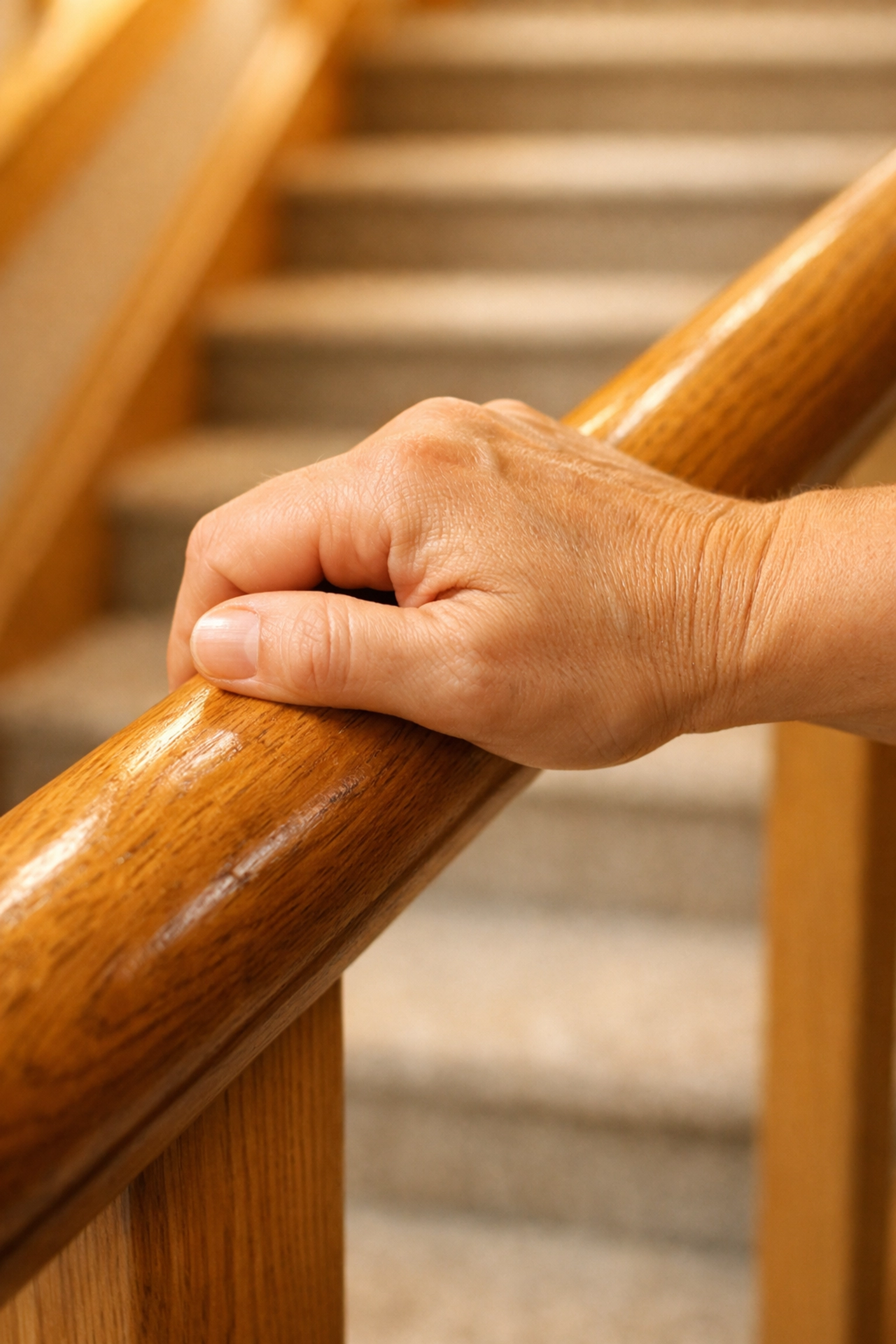
- Check for wobbles: Grab your handrails and give them a firm shake. If they move, they need to be re-anchored into the wall studs immediately.
- Inspect the treads: Look for any loose boards or peeling carpet. Use a level to ensure the steps haven't slanted over time.
- Listen to the steps: If a step squeaks or feels "springy," it may need reinforcement from underneath to ensure it stays stable under your weight.
The Role of Physical Awareness
Beyond the environment, stair safety is also about your body. Strength and balance are muscles that we can continue to train regardless of age. If stairs feel more difficult than they used to, it may be worth consulting with a physical therapist. They can provide specific exercises to strengthen the quadriceps and ankles, which are the primary "brakes" and "engines" for stair climbing.
Sometimes, a fear of falling on stairs leads people to avoid them entirely. This "avoidance behavior" can actually lead to a decline in leg strength, making the stairs even more dangerous when you eventually have to use them. By fixing the environmental mistakes listed above, you can reduce that fear and maintain your independence with confidence.
Creating a Reassuring Environment
At the end of the day, your home should be your sanctuary. Safety improvements don't have to be clinical or ugly. They are simply adjustments that allow you to move through your day with peace of mind. By taking an hour this weekend to check your lighting, clear the clutter, and test your handrails, you are making a profound investment in your long-term health and mobility.
Stairs don't have to be the enemy. With a few smart fixes and a change in habit, they can remain a safe, functional part of your home for years to come. Take it one step at a time, literally.

