
Stairs are often the most daunting part of a home as we age or deal with mobility changes. They represent a significant transition in height, require balance, strength, and coordination, and: if things go wrong: they are the site of the most impactful falls in the household.
At Fall Guys Products, we spend a lot of time thinking about how to make environments safer. We’ve found that most people want to be safe, but they often overlook the "small" things that contribute to a staircase's danger level. Whether you are a senior looking to stay in your "forever home" or a caregiver helping a loved one, identifying these mistakes is the first step toward a safer daily routine.
Let’s walk through the seven most common mistakes people make with stair safety and, more importantly, how you can fix them today.
1. The "One Side is Enough" Handrail Logic
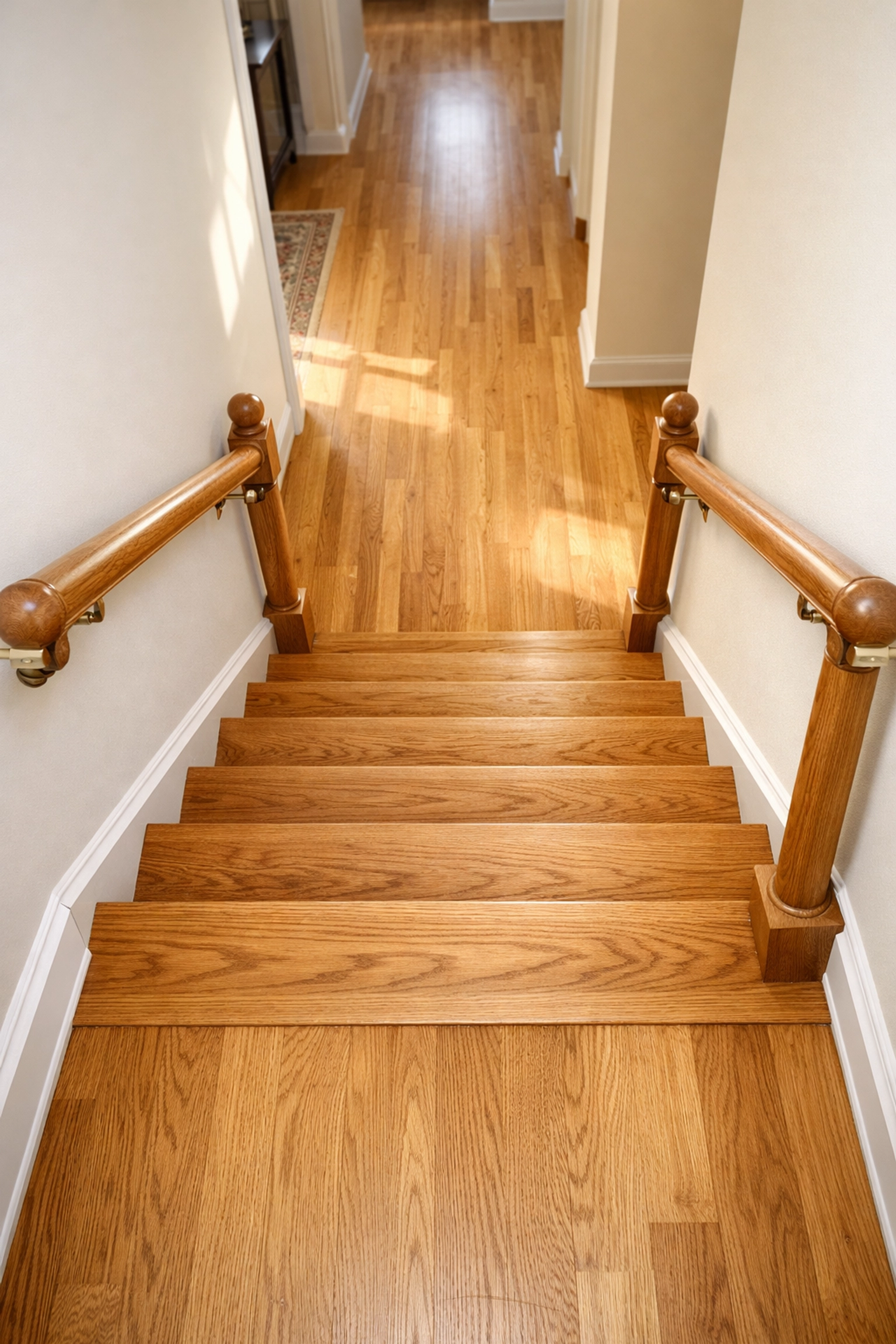
Perhaps the most common mistake is having only one handrail. Most building codes require at least one, but for someone with balance issues, a single rail often isn't enough. If your dominant hand is on the side without the rail while you're descending, your stability is significantly compromised.
Furthermore, many handrails are "decorative" rather than functional. They might be too thick to grip properly or too close to the wall for your fingers to wrap around.
The Fix:
Install a second handrail so that there is a grip available for both hands, regardless of whether you are going up or down. Ensure the rails are "circumferential": meaning you can wrap your hand all the way around them. A good rule of thumb is that the rail should be about 1.5 to 2 inches in diameter.
Additionally, make sure the handrail extends beyond the top and bottom steps. Many falls happen because the rail ends before the person has safely transitioned to the flat floor. Having that extra 12 inches of rail allows you to stabilize yourself before you even take that first step.
2. Relying on "Mood Lighting"
We all love a cozy, dimly lit home, but the staircase is the last place where you want "ambiance." Many staircases are tucked away in hallways where natural light doesn't reach, or they rely on a single overhead bulb that casts long, confusing shadows over the edge of the steps.
If you can’t clearly see where the "nose" (the edge) of the step is, your brain has to guess where to put your foot. That split second of guesswork is when missteps happen.
The Fix:
Increase the wattage of your bulbs or switch to high-output LED lights that mimic daylight. The goal is to eliminate shadows.
A great modern fix is installing motion-activated LED strip lighting under the lip of each tread or along the baseboard. This ensures that the stairs are illuminated the moment you approach them, which is especially helpful for those late-night trips to the kitchen or bathroom. Also, ensure there are light switches at both the top and the bottom of the stairs so you never have to navigate them in the dark to reach a switch.
3. Ignoring the "Sock Slide" on Hardwood
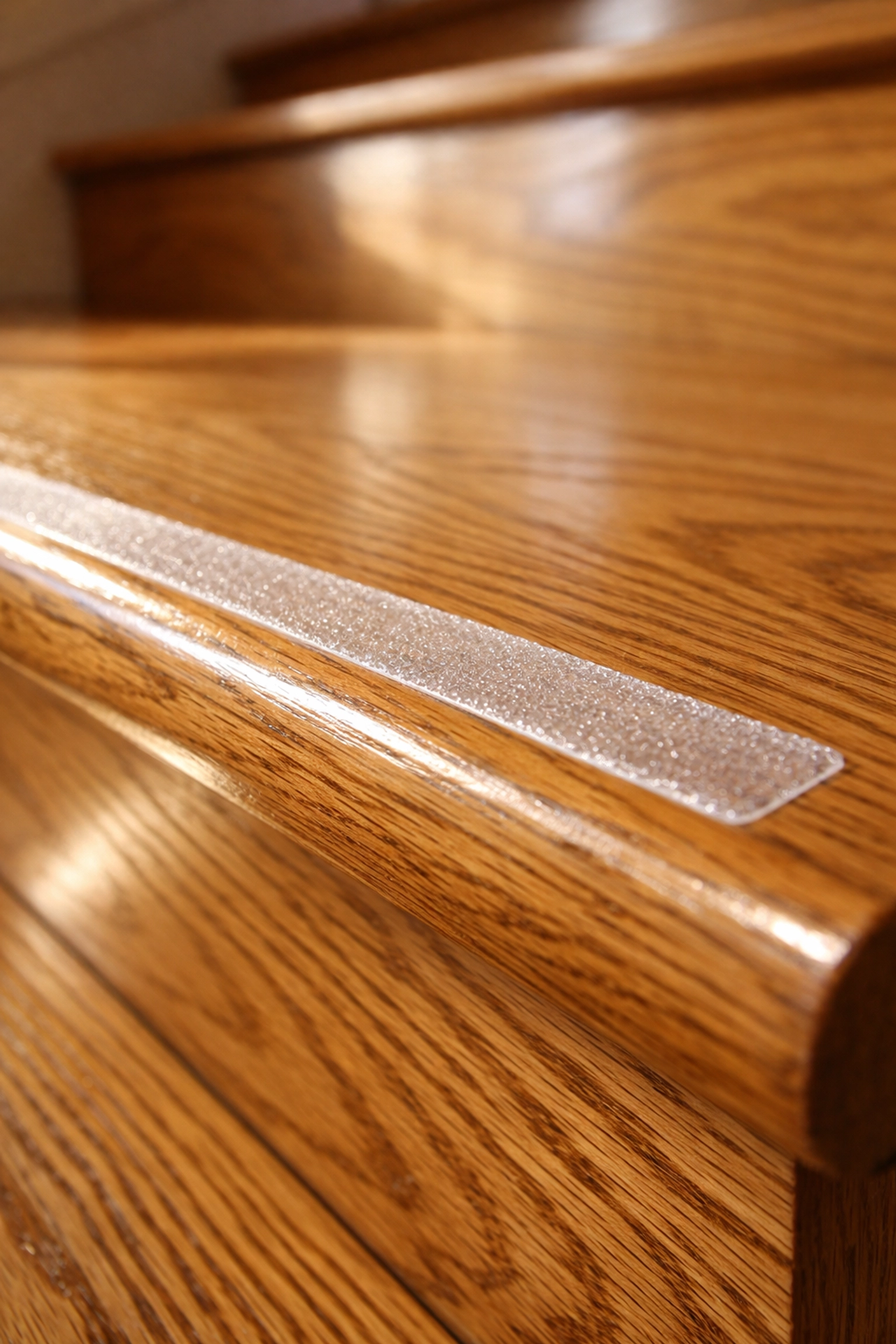
Polished wood stairs are beautiful, but they are essentially vertical ice rinks if you’re wearing socks or smooth-soled slippers. Even if the wood isn't freshly waxed, the combination of a smooth surface and a lack of friction from footwear is a recipe for a slide.
Many people assume that because they’ve lived in the house for thirty years without slipping, it won't happen now. However, as our gait changes and our reaction time slows, that lack of traction becomes a much higher risk.
The Fix:
You don’t have to carpet over your beautiful hardwood to stay safe. Clear, anti-slip adhesive strips are a fantastic solution. They provide a gritty texture that grips the bottom of your feet or shoes without hiding the wood grain.
If you prefer a more tactile feel, you can install individual carpet treads on each step. Just ensure they are securely fastened: never use "scatter rugs" or unanchored treads on stairs, as they can slide out from under you, making the problem worse.
4. Using the Stairs as a "Waiting Room" for Laundry
We’ve all done it: we have a pile of mail, a pair of shoes, or a basket of laundry that needs to go upstairs, so we set it on the bottom step to take up "next time."
This is one of the most dangerous habits you can have. Even if you think you’ll remember it’s there, it only takes one moment of distraction: a ringing phone or a barking dog: to forget about that obstacle. Clutter on stairs narrows your walking path and creates a massive trip hazard.
The Fix:
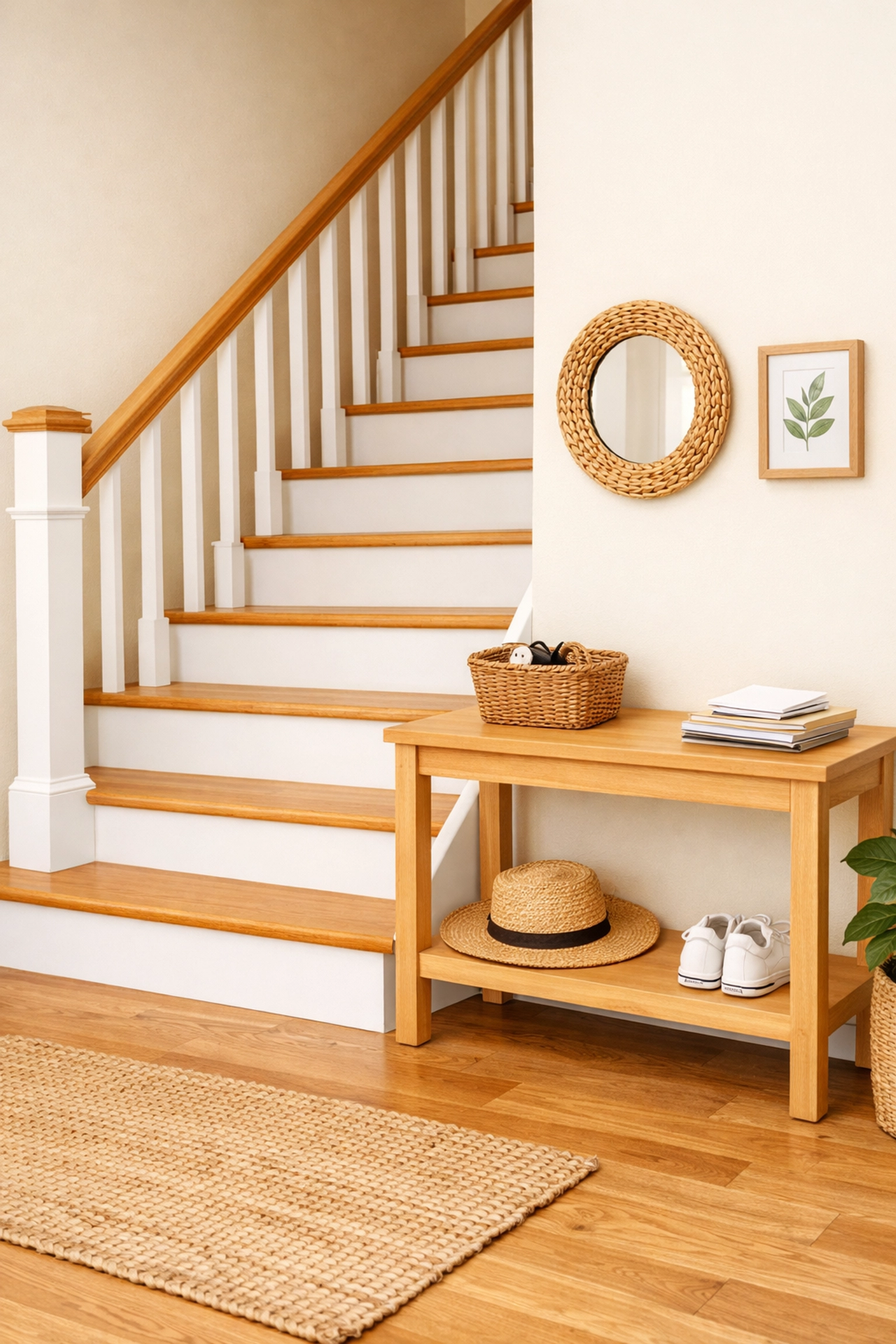
Adopt a "clear stairs" policy. Nothing should ever sit on a step, even for a minute. If you find it difficult to carry items up and down while holding the handrail, consider installing a small shelf at the top and bottom of the stairs. You can place items there, walk up safely using both hands on the rails, and then retrieve the items once you are on level ground.
Alternatively, a "stair basket" with a sturdy handle can help you carry multiple items at once, provided you can still maintain at least one firm hand on the railing.
5. Overlooking Step Uniformity
In older homes, it’s common for stairs to "settle." This can result in one step being slightly taller or deeper than the others. The human brain is incredible at pattern recognition; after the first two steps, your legs automatically adjust to a specific rhythm. If the fifth step is even half an inch higher than the others, your toe will likely catch it.
Worn-down "nosing" (the front edge of the step) is another hidden danger. If the edge is rounded off from decades of use, your foot has less surface area to plant on, increasing the chance of a heel-slip.
The Fix:
Take a tape measure and check the "rise" (height) and "run" (depth) of your steps. If you find significant variations, it might be time for a carpenter to level them out.
If the edges are worn and slippery, you can install "stair nosing" protectors. These are metal or rubber strips that wrap over the edge of each step, providing a sharp, high-traction edge for your foot to find. Using a contrasting color for the nosing (like a dark strip on light wood) also helps with depth perception.
6. Poor Footwear Choices
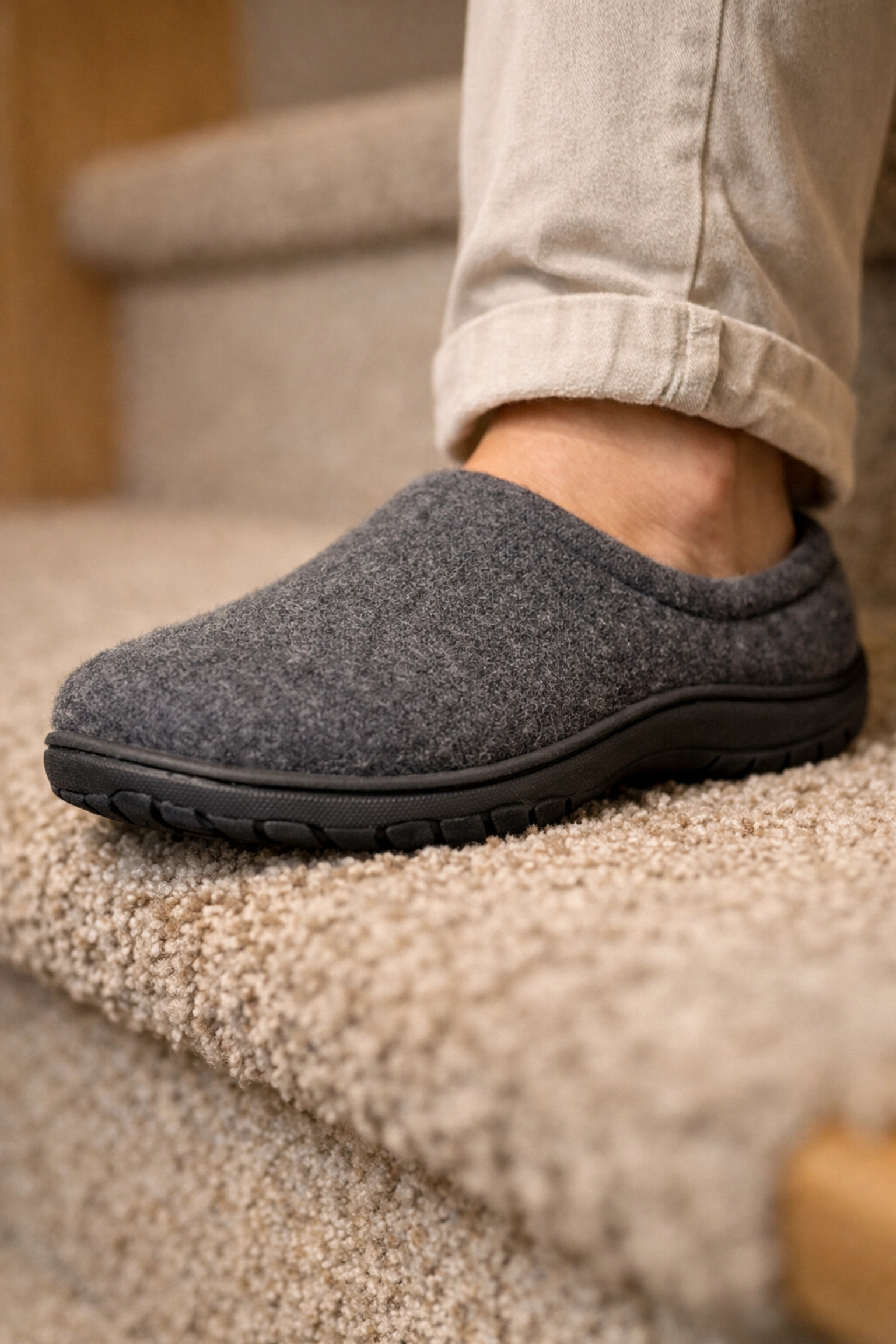
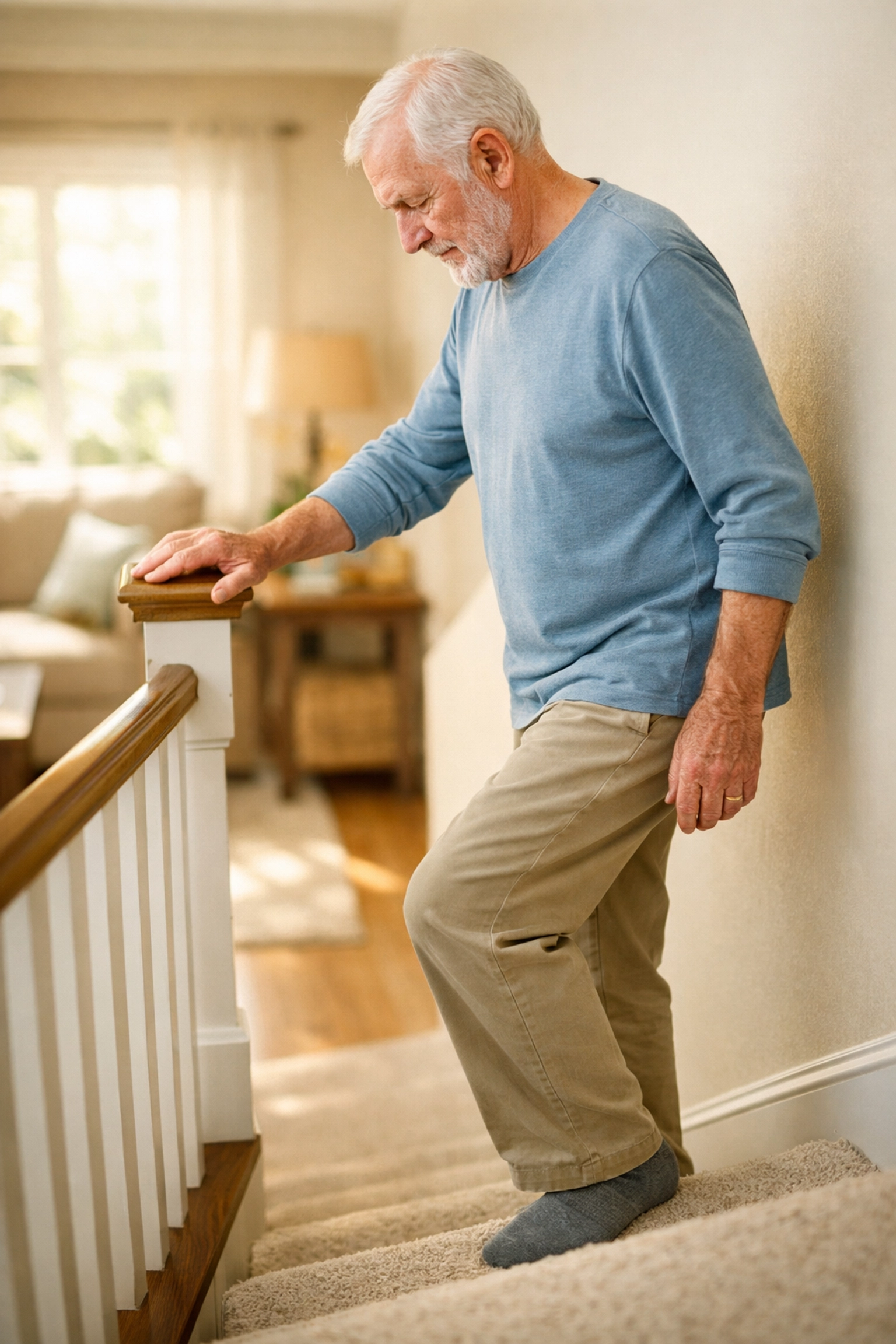
What you wear on your feet is just as important as the stairs themselves. Many people transition into loose-fitting slippers or "flip-flops" when they are at home. These types of footwear often lack a heel back, meaning your foot can slide out of them while you are descending.
Worse yet is walking in just socks. Most household falls on stairs involve someone in stockings or socks who loses their footing on a smooth surface.
The Fix:
Inside the house, wear "house shoes" that have a firm, non-slip sole and a closed back. Your foot should be secure within the shoe so it doesn't move independently when you plant your weight.
If you prefer to be barefoot, that is actually safer than wearing socks, as your toes can provide natural grip and sensory feedback to your brain about where the edge of the step is. However, for those with neuropathy or foot pain, a supportive, non-slip shoe is always the gold standard.
7. The "Rushing" Habit
It sounds simple, but rushing is a primary cause of stair accidents. We rush to answer the door, we rush because we’re tired, or we rush because we’ve done these stairs ten thousand times and feel overconfident.
When we rush, we tend to look ahead to where we’re going rather than where our feet are landing. We also tend to take "partial steps," where only the ball of the foot lands on the tread, leaving the heel hanging off the edge.
The Fix:
Make the stairs a "mindful zone." Every time you approach the staircase, take a breath and consciously decide to slow down. Use the "two-point contact" rule: at any given moment, you should have either two feet on a step, or one foot and one hand firmly on the rail.
Never carry items in both hands. If you need to move something heavy, ask for help or move it one step at a time, keeping your hands free to stabilize yourself. Remember, it’s not about how fast you get to the top; it’s about getting there safely every single time.
A Note on Maintenance
Stair safety isn't a "set it and forget it" task. Wood expands and contracts with the seasons, screws loosen, and carpet fibers wear down.
Perform a "Stair Audit" every six months. Walk up and down slowly and listen. Do you hear any new creaks? Does the handrail wiggle when you put your full weight on it? Is the carpet starting to bunch up at the top of the landing? Addressing these tiny issues today prevents them from becoming the cause of a fall tomorrow.
Building a Safer Home
Staircases don't have to be a source of anxiety. By fixing these seven common mistakes, you transform a high-risk area into a manageable part of your home. Safety is often about the cumulative effect of small changes: a tighter screw, a brighter bulb, and a slower pace.
If you’re unsure where to start, begin with the lighting and the handrails. Those two changes alone provide the greatest "return on investment" for your physical safety. Your home should be your sanctuary, and with a little bit of attention to detail, you can keep it that way for years to come.

