
Mobility aids are often seen as symbols of lost independence, but for many seniors, they are actually the keys to freedom. A well-chosen cane, walker, or rollator allows you to stay active, visit friends, and navigate your home safely. However, simply having the equipment isn’t enough. If the aid isn’t right for your body, if it isn’t maintained, or if it’s used incorrectly, it can actually create more risks than it solves.
At Fall Guys Products, we believe that education is the best form of prevention. Many of the falls we see could have been prevented by a simple adjustment to a walker’s height or a quick check of a rubber tip. In this guide, we’ll walk through the seven most common mistakes seniors and caregivers make with mobility aids and, more importantly, how to fix them.
1. Choosing the Wrong Tool for the Job
One of the most frequent mistakes happens before the aid even leaves the store: selecting the wrong type of equipment. It’s common for people to pick a cane because it feels less "obvious" than a walker, or to choose a rollator (the kind with four wheels and a seat) because it looks easier to move.
However, your choice should be based on your specific balance needs and physical strength. A cane is meant for minor balance issues or to take pressure off a single painful joint. It is not designed to support a significant portion of your body weight. If you find yourself leaning heavily on a cane, you likely need a walker.
Conversely, using a rollator when you have significant balance issues can be dangerous because the wheels can "run away" from you if you don't have the coordination to use the brakes effectively.
How to Fix It:
Before buying anything, consult with a physical therapist (PT). A PT can perform a mobility assessment to determine exactly how much support you need. They will look at your gait, your upper body strength, and your environment to recommend the specific type of aid that will keep you safest.
2. Incorrect Height Adjustment
A mobility aid that is too high or too low is a recipe for physical strain. If a walker is too high, your shoulders will be perpetually hunched toward your ears, leading to neck and shoulder pain. If it’s too low, you’ll be forced to lean forward, which shifts your center of gravity and increases the likelihood of a forward fall.
Many people guess the height, but there is a specific anatomical "sweet spot" that ensures the aid provides maximum stability without causing secondary pain.

How to Fix It:
To find the correct height for a cane or walker:
- Stand as straight as possible with your normal shoes on.
- Let your arms hang naturally at your sides.
- The handle of the device should align with the crease of your wrist.
- When you grip the handle, your elbow should have a slight, comfortable bend: usually about 15 to 20 degrees.
If you aren't sure, have a friend or family member help you measure from the floor to your wrist crease.
3. Poor Technique and "Walker Leading"
Walking with a mobility aid isn’t always intuitive. A common mistake with walkers is pushing the device too far out in front of the body. When the walker is far ahead, you end up "chasing" it, which leaves you unsupported during the most vulnerable part of your step.
Another technical error involves canes. Many people instinctively use the cane on their "bad" side to support the weak leg. However, a cane should actually be used on the side opposite of the weakness. This allows the cane to move in tandem with the weaker leg, providing a wider base of support and mimicking the natural swing of your arms.
How to Fix It:
- For Walkers: Keep your body "inside" the frame of the walker. As you move, step into the walker rather than walking behind it.
- For Canes: Use the cane on your strong side. Move the cane and your weaker leg forward at the same time, then step through with your stronger leg.
- Training: Spend thirty minutes with a physical therapist specifically for "gait training." They can watch how you move and correct these small habits before they become muscle memory.
4. Neglecting Routine Maintenance
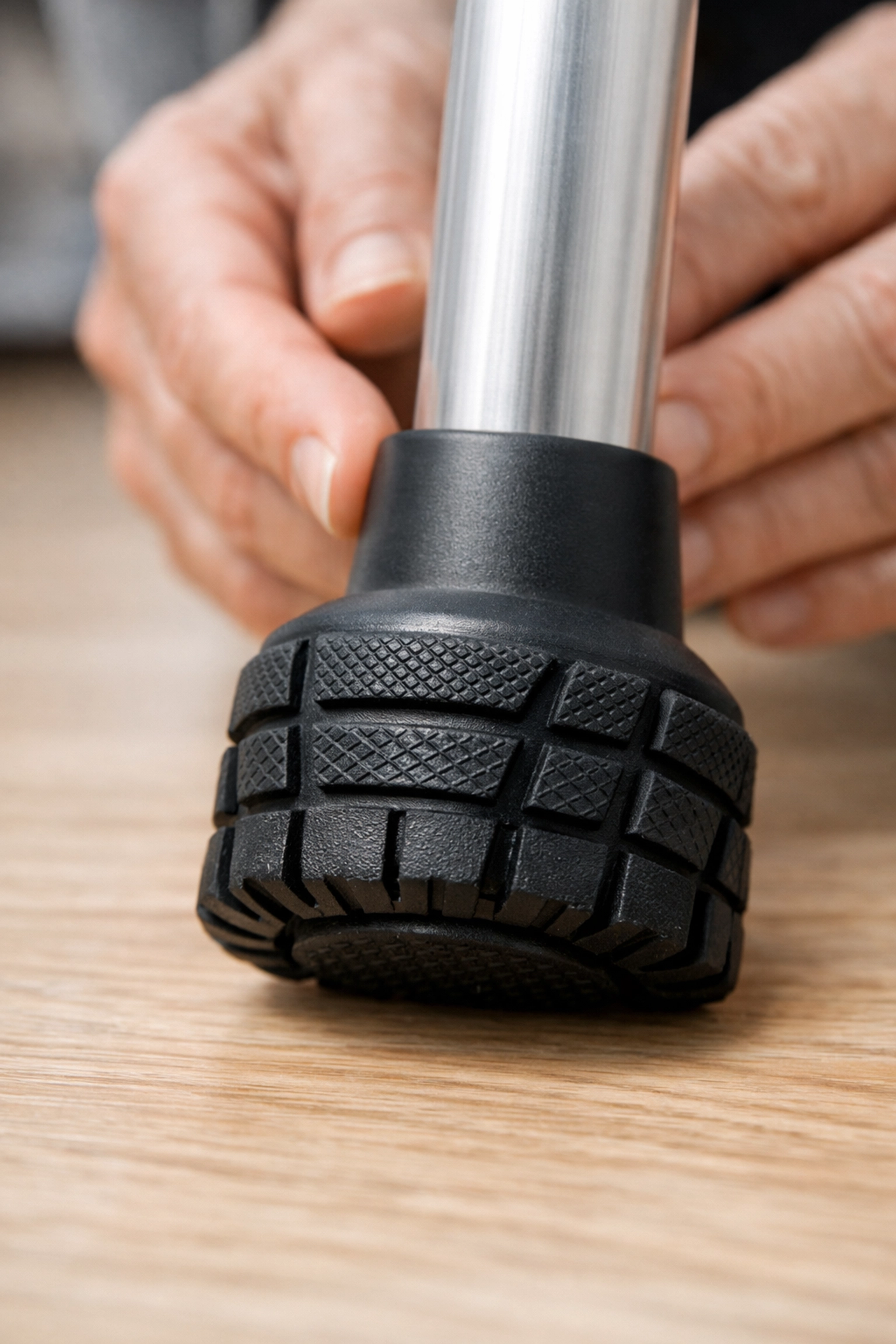
We often treat canes and walkers like furniture: set them down and forget about them. But these are mechanical tools that experience wear and tear. The most critical component is the rubber tip at the bottom. These tips are designed to provide traction, but over time, the tread wears down, making them slick and prone to sliding on hardwood or tile floors.
For those using rollators or wheeled walkers, the brakes are equally vital. If one brake is tighter than the other, the walker will pull to one side. If the brakes fail entirely, the seat is no longer safe to use.
How to Fix It:
Create a "Safety Sunday" routine once a month to inspect your equipment:
- Check the Tips: Look at the rubber bottoms. If the tread is smooth or if you can see the metal of the cane poking through the rubber, replace the tip immediately.
- Tighten Bolts: Ensure no screws or wingnuts have vibrated loose.
- Test Brakes: On rollators, ensure the brakes lock firmly and the wheels don't slide when the brakes are engaged.
- Clean the Grips: Use a mild disinfectant to remove oils and dirt from the handles, which can make them slippery.
5. Wearing the Wrong Footwear
A mobility aid is only as stable as the person using it, and your connection to the ground starts with your shoes. You might have the best walker in the world, but if you’re wearing loose-fitting slippers, high heels, or shoes with slick soles, your risk of falling remains high.
Slippers are a major culprit because they often lack a back, meaning your foot can slide out, or the toe of the slipper can "catch" on a rug or threshold, causing a trip.
How to Fix It:
When using a mobility aid, always wear sturdy, closed-toe shoes with non-slip rubber soles. Look for shoes with:
- Firm heel support: To keep your foot from sliding side-to-side.
- Low heels: To keep your center of gravity stable.
- Adjustable closures: Like laces or Velcro, to ensure a snug fit even if your feet swell during the day.
6. Overlooking the Home Environment
A mobility aid adds width and length to your footprint. A mistake many seniors make is trying to navigate a "pre-mobility aid" home without making adjustments. A walker can easily snag on a throw rug, or get stuck in a narrow doorway.
Many falls occur when a senior tries to "maneuver" their walker around a piece of furniture, loses their balance, and lets go of the device to grab a table or chair that isn't bolted down.

How to Fix It:
Conduct a home walk-through while using your mobility aid.
- Clear the Path: Move coffee tables or plant stands that narrow your walking paths. You should have at least 32 to 36 inches of clear space in all hallways and doorways.
- Remove Rugs: Throw rugs are the enemy of walkers and canes. Either remove them entirely or use heavy-duty double-sided tape to secure the edges.
- Check Thresholds: If you have high transitions between rooms (like going from carpet to tile), consider a small threshold ramp to prevent the wheels of your walker from getting stuck.
7. The "Just This Once" Inconsistency
The most dangerous mistake is inconsistent use. We often hear, "I only use my walker when I go to the store, but I don't need it to get to the bathroom at night."
Statistically, the majority of falls happen in the home, often during routine tasks like getting out of bed or walking to the kitchen. When you are tired, half-asleep, or in a rush, your balance is at its worst. Choosing not to use your aid "just this once" is when accidents are most likely to occur.
How to Fix It:
View your mobility aid as a permanent part of your outfit, like your glasses or your shoes. If you are on your feet, your aid should be in your hand.
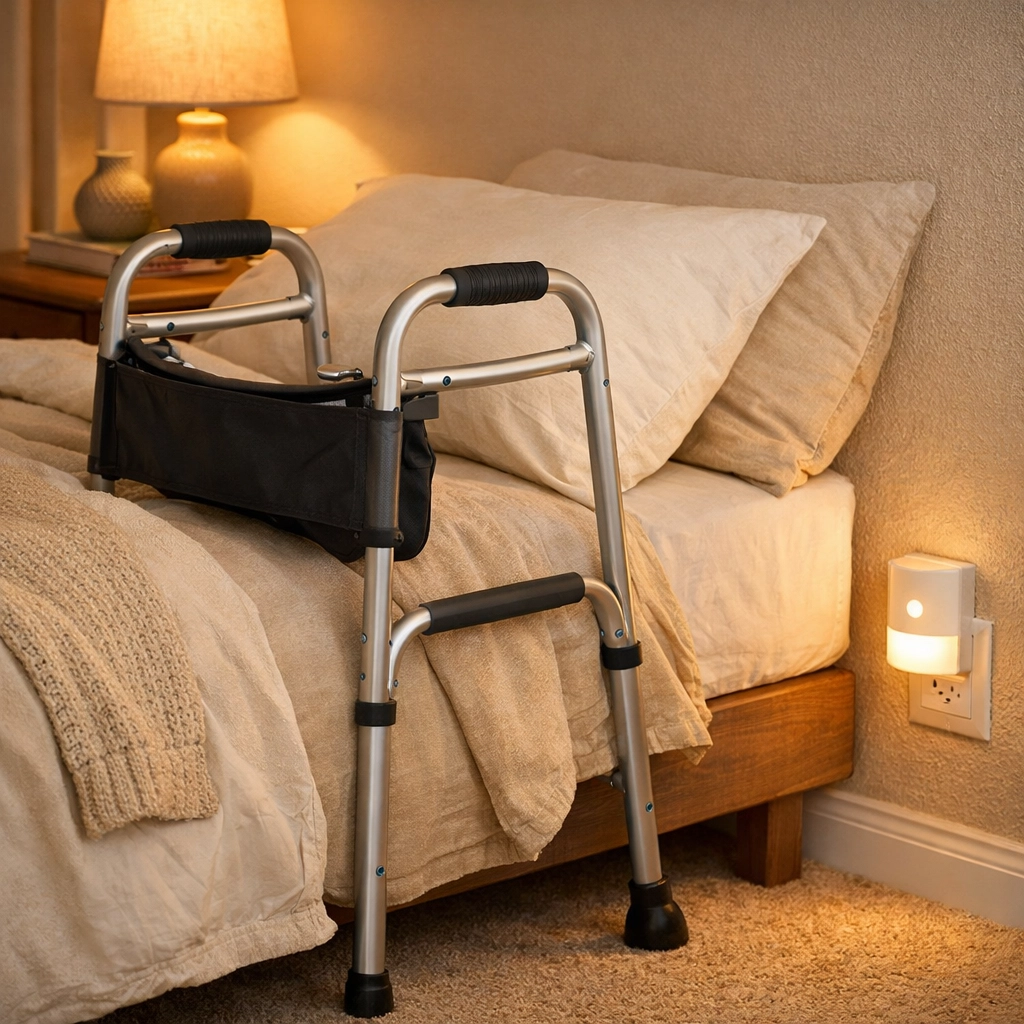
- Keep it Close: Park your walker or cane right next to your bed or favorite chair so it's the first thing you touch when you stand up.
- Night Lighting: Ensure your path to the bathroom is well-lit with motion-sensor nightlights so you can clearly see to position your walker correctly in the dark.
The Importance of Professional Guidance
While it’s tempting to grab a second-hand walker from a garage sale or borrow a cane from a neighbor, your safety is worth a professional opinion. Every body is different. A physical therapist doesn't just "give you a walker"; they teach you how to live with one. They can show you how to safely transition from sitting to standing, how to navigate curbs, and how to manage stairs if necessary.
Using a mobility aid shouldn't feel like a burden. When used correctly, it’s a tool that provides the confidence to keep moving. By avoiding these seven common mistakes, you aren't just preventing falls: you’re protecting your ability to stay active, engaged, and independent for years to come.
Remember, the goal isn't just to have a mobility aid; the goal is to use it as a bridge to a safer, more mobile life. Take the time to measure, maintain, and practice. Your safety is the best investment you can make.

