
Stairs are often the most daunting part of a home as we get older or deal with mobility changes. They represent a transition between living spaces, but they also represent one of the highest-risk areas for falls. At Fall Guys Products, we believe that staying safe at home shouldn't feel like a series of compromises. It’s about understanding the environment and making informed adjustments so you can move with confidence.
Most people assume that as long as a staircase is standing, it’s safe. However, many homes: especially older ones: were built under codes that are now considered outdated or even hazardous. Beyond the physical structure, our own habits can sometimes create risks we don’t even notice.
Here are the seven most common mistakes homeowners make regarding stair safety and the practical, educational steps you can take to fix them.
1. Incorrect Tread and Riser Dimensions
The rhythm of walking is a subconscious process. When you walk up or down a flight of stairs, your brain "maps" the first two steps and assumes every subsequent step will be exactly the same. This is why even a tiny variation in step height can cause a stumble.
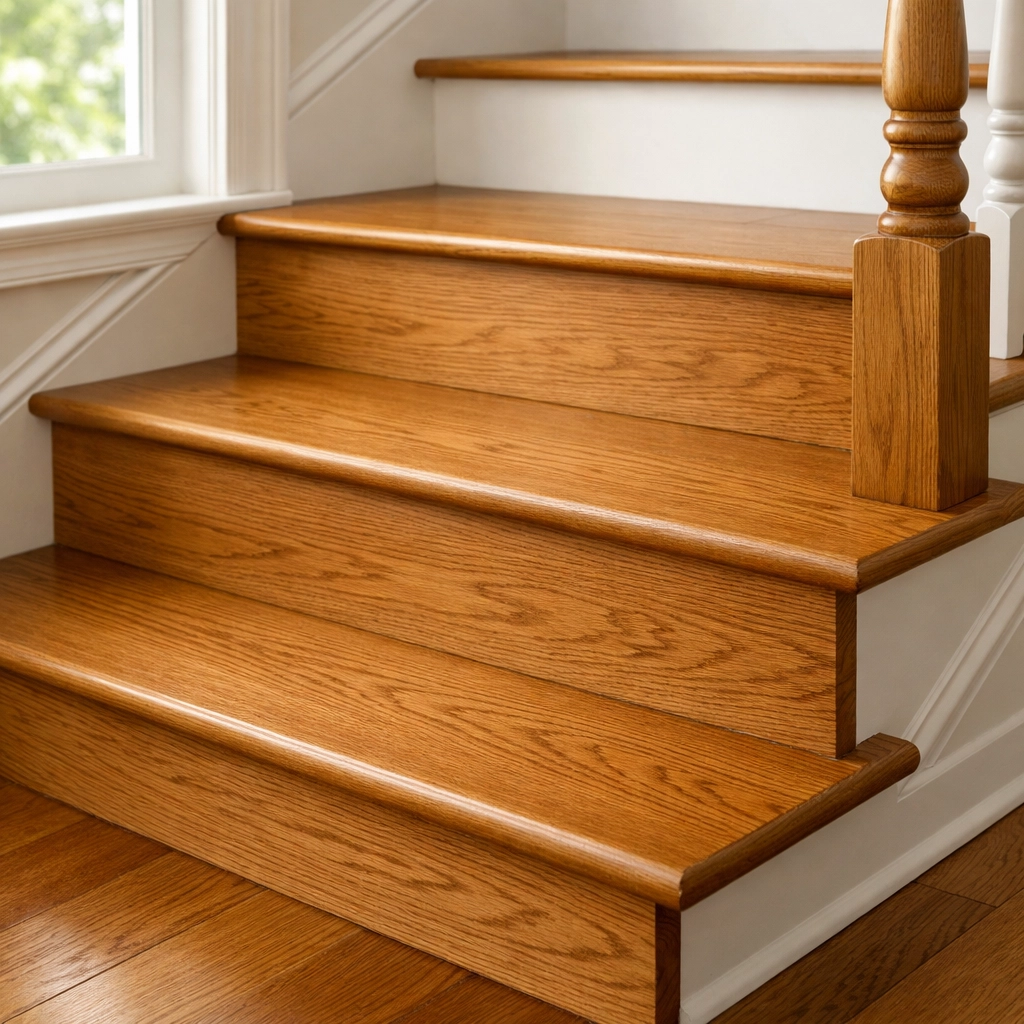
The Mistake: Many staircases have "irregular risers" (the vertical part of the step) or "narrow treads" (the horizontal part where you place your foot). If one step is even a quarter-inch higher than the rest, your foot may catch the edge. Furthermore, if the tread is too narrow, your heel or toe might hang off the edge, reducing your stability.
The Fix: Modern safety standards generally recommend a tread depth of 10 to 11 inches and a riser height of about 7 inches. If you are renovating or concerned about your current stairs, use a tape measure to check for consistency. If you find significant variations, it may be time to consult a professional contractor to shim or adjust the treads. For a quick improvement in stability, ensure the "nosing" (the edge of the step) is clearly visible and not rounded off or slippery.
2. Overly Steep Staircase Slopes
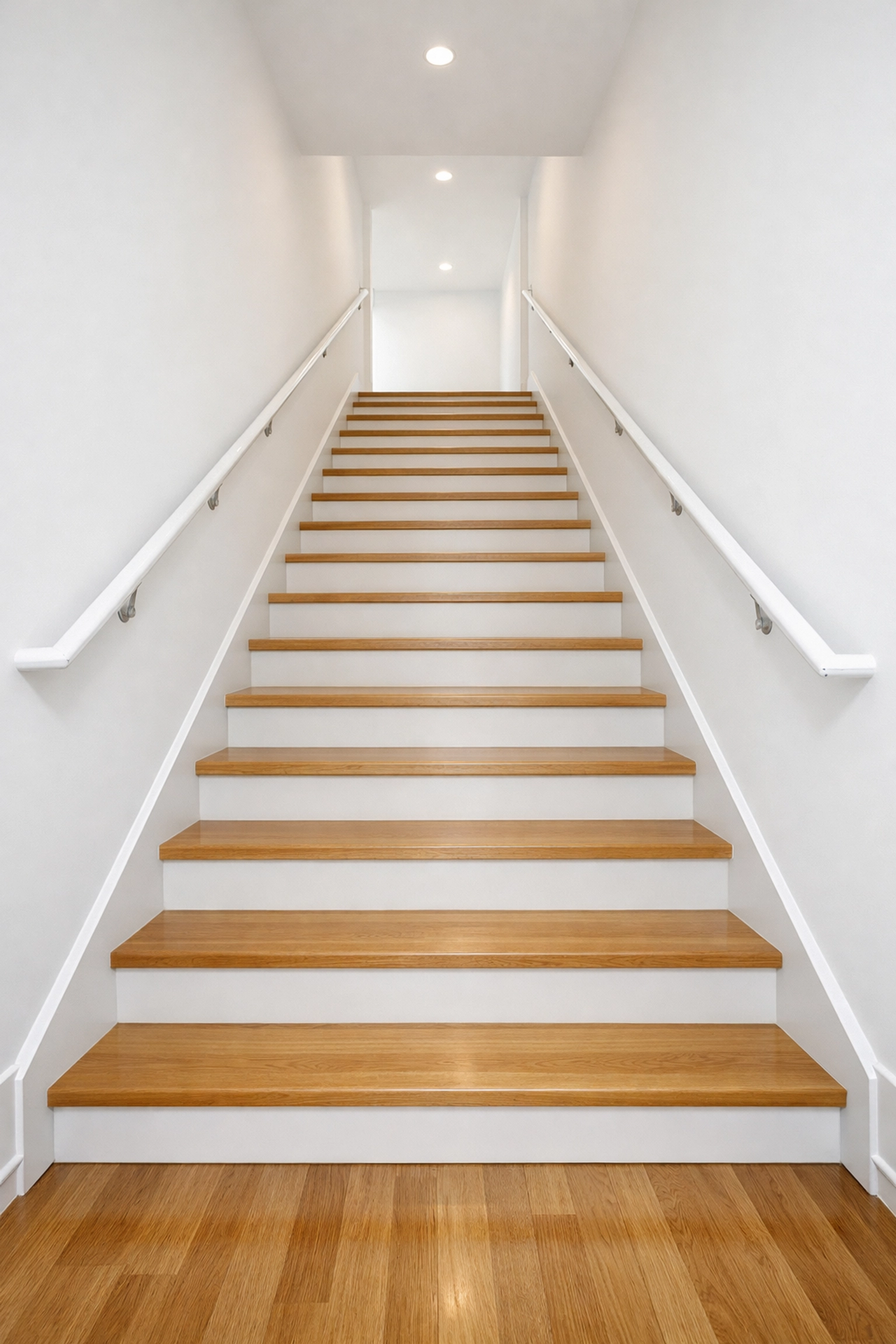
In an effort to save square footage, many older homes feature staircases that are incredibly steep. While this might have been an efficient use of space in 1950, it creates a high center of gravity during ascent and descent, making it much harder to recover if you lose your balance.
The Mistake: Using a staircase with a pitch greater than 40 to 45 degrees. A steep slope requires more exertion and places more stress on the knees and hips, which can lead to fatigue: and fatigue is a major contributor to falls.
The Fix: Ideally, a staircase should sit at a slope between 30 and 37 degrees. While you can't easily change the pitch of an existing staircase without major construction, you can manage the risk. If your stairs are steep, focus on "pacing." Take one step at a time, bringing both feet to the same step before moving to the next. This "step-to" pattern significantly reduces the physical demand and increases your stability compared to the "step-through" pattern of alternating feet.
3. Weak or Inadequate Handrails
A handrail shouldn't just be a decorative element; it needs to be a structural safety feature capable of supporting a person’s full weight during a sudden slip.
The Mistake: Many homes only have a handrail on one side of the stairs, or the rail is too thick to grip properly. Another common error is a handrail that stops short of the top or bottom step, leaving the user unsupported during the most critical part of the transition.
The Fix:
- Install Dual Rails: Having a handrail on both sides of the staircase allows you to use both arms for balance and support.
- The "Power Grip": Ensure the handrail is "circular" or "oval" in shape and roughly 1.25 to 2 inches in diameter. This allows for a "power grip," where the thumb and fingers can overlap, providing much more security than a flat, wide board.
- Extension: The rail should extend at least 12 inches past the top riser and continue past the bottom step. This ensures you have a firm grip before you start climbing and after you’ve finished.
- Height: Mount handrails between 34 and 38 inches above the nose of the stair treads.
4. Poor Lighting and Inadequate Headroom
Vision plays a massive role in balance. As we age, our eyes require more light to distinguish depth and contrast. A staircase that looks "fine" during the day can become a hazard at dusk.
The Mistake: Relying on a single overhead light at the top of the stairs, which often casts shadows over the treads. This makes it difficult to see exactly where the edge of the step is. Additionally, low headroom can cause a person to duck or shift their posture, throwing off their center of gravity.
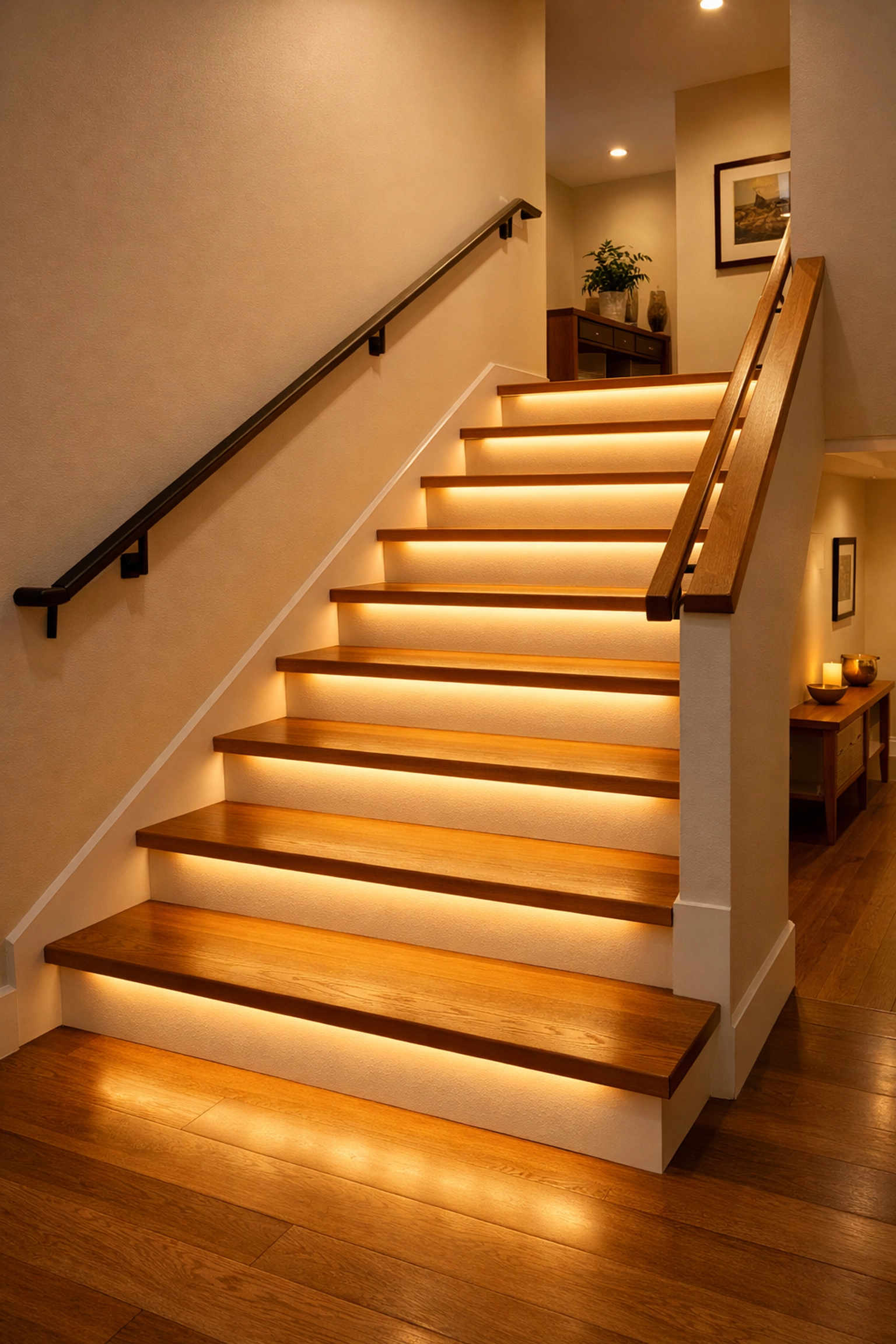
The Fix: Install lighting that illuminates the entire path. Motion-activated LED strips under the lip of each tread are an excellent way to provide clear visibility without glaring in your eyes. If that’s not an option, ensure there are light switches at both the top and bottom of the stairs. For better depth perception, you can apply a strip of high-contrast tape (such as white tape on dark wood) to the edge of each step to clearly define where the tread ends.
5. Ignoring Building Codes and Structural Wear
Building codes are often viewed as bureaucratic red tape, but in reality, they are the "minimum passing grade" for safety. Over time, stairs can also warp, creak, or pull away from the wall.
The Mistake: Assuming that because the stairs haven't collapsed, they are safe. Loose balusters (the vertical poles under the handrail), creaky treads, or a handrail that "wiggles" are all signs of structural fatigue. Even a tiny amount of "give" in a handrail can cause a person to panic and lose their footing.
The Fix: Periodically perform a "stress test" on your stairs. Pull on the handrails and balusters to ensure there is no movement. Check the treads for any signs of tilting or loosening. If you notice any issues, tighten the brackets or add structural screws. If you live in an older home, it may be worth having a mobility specialist or a physical therapist perform an in-home assessment to identify areas where your stairs fall short of modern safety codes.
6. Sacrificing Width for Aesthetics or Storage
A narrow staircase is difficult to navigate, especially if you need to carry items or if you require the assistance of another person or a mobility aid.
The Mistake: Keeping furniture, plants, or decorative items on the steps to "save space." Even a small basket sitting on a step narrows your field of movement and creates a significant tripping hazard. Furthermore, narrow staircases make it impossible for a caregiver to walk alongside you to provide "standby assistance."
The Fix: Keep the staircase completely clear. The path should be at least 32 to 36 inches wide. If your staircase is naturally narrow, avoid carrying items in both hands. Always keep at least one hand free to use the handrail. If you must move items between floors, consider using a "stair basket" that sits securely on a step, but only move it when you are not navigating the stairs yourself, or better yet, use a small backpack to keep your hands free.
7. Slippery Surfaces and Improper Footwear
The material of your stairs is just as important as the structure. A beautiful hardwood staircase can be like an ice rink if you’re wearing the wrong footwear.
The Mistake: Polished wood, tile, or laminate stairs offer very little traction. This risk is multiplied if you walk on the stairs in socks or smooth-bottomed slippers. Conversely, thick, plush carpeting can sometimes "hide" the edge of the step, making it hard to feel where your foot should land.
The Fix:
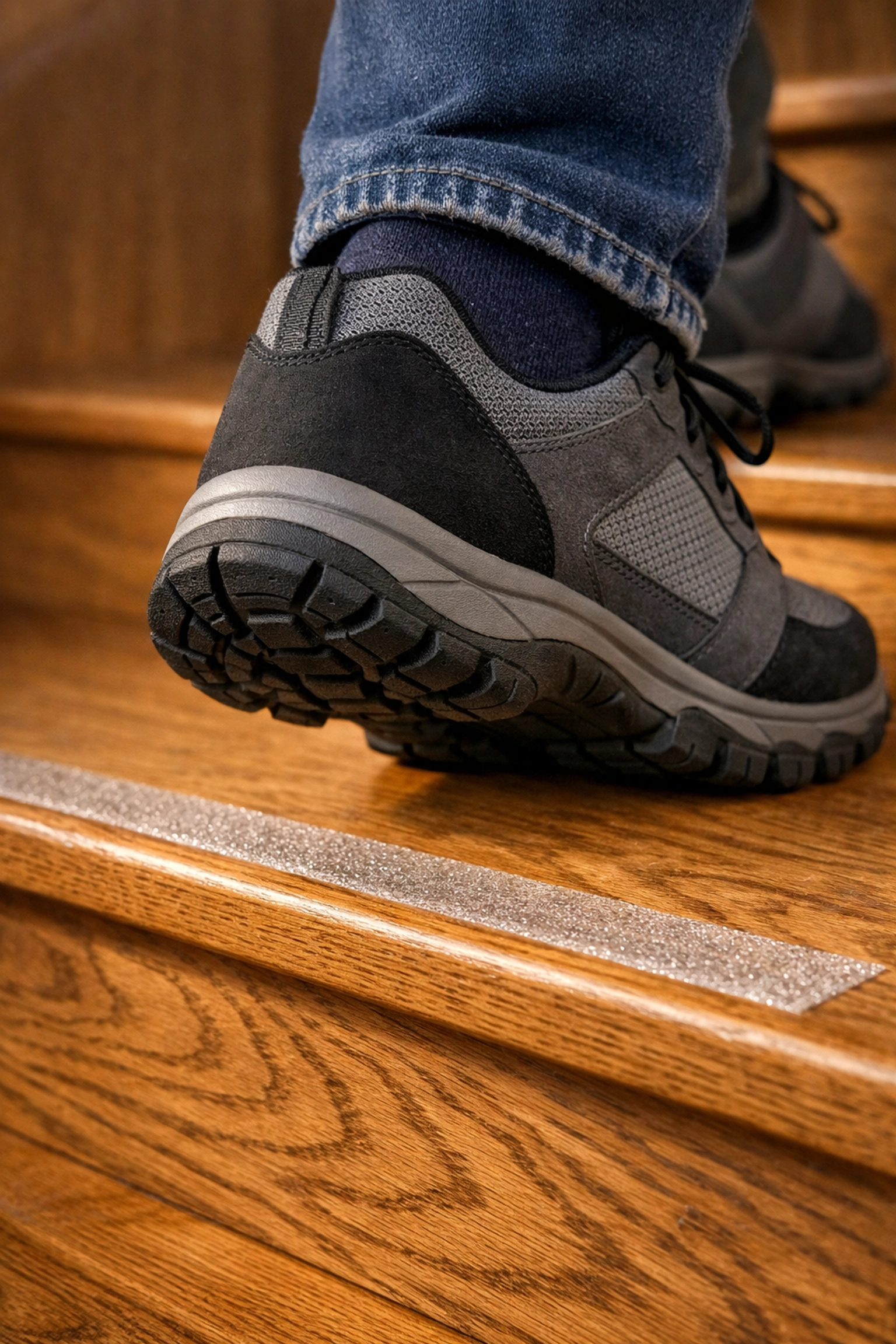
- Increase Friction: If you have hard-surface stairs, consider adding transparent anti-slip adhesive strips or low-pile carpet treads. These provide much-needed "grip" without hiding the beauty of the wood.
- Footwear Habits: Avoid walking on stairs in socks. Wear shoes with non-slip rubber soles or "grip socks" that have rubberized patterns on the bottom.
- Maintenance: Keep stairs clean of dust and polish. Waxing wooden stairs may make them look great, but it significantly increases the risk of a slide.
The Role of Behavioral Safety
Fixing the environment is only half the battle; the other half is how we interact with it. Even the safest staircase in the world can be dangerous if we are distracted or rushing.
Take Your Time
Never rush for the phone or the doorbell. If the person at the door is important, they will wait. Transitioning to a "slow and steady" mindset on the stairs is one of the most effective fall prevention strategies.
The "Third Point of Contact"
In the world of professional safety, they talk about "three points of contact" (two feet and one hand). When you are on the stairs, always have a firm grip on the rail before you move your foot. This ensures that if your foot slips, your arm is already engaged to catch your weight.
Vision and Bifocals
If you wear bifocals or trifocals, be extra cautious. These lenses can distort your depth perception when you look down at your feet. Many physical therapists recommend tucking your chin to look through the "distance" portion of your glasses rather than the "reading" portion when navigating stairs.
When to Consider Professional Help
If navigating the stairs is becoming painful or causing significant anxiety, it may be time to consult with a professional. Occupational Therapists (OTs) are experts at evaluating how a person interacts with their environment. They can provide personalized recommendations for modifications that go beyond basic repairs.
Sometimes, the best "fix" for a stair safety issue is to minimize the need to use them. Moving a bedroom to the first floor or installing a sturdy grab bar at the top of the landing can make a world of difference.
Summary Checklist for Homeowners
To wrap things up, here is a quick audit you can perform today:
- Light: Can you see the edge of every single step clearly?
- Grip: Is the handrail sturdy and easy to wrap your hand around?
- Path: Is the staircase 100% free of clutter?
- Traction: Are the steps slippery, or do they have a "grip" surface?
- Consistency: Are all the steps the same height and depth?
Making your home safe shouldn't be a source of stress. By addressing these seven common mistakes, you’re not just fixing a staircase: you’re protecting your independence and your peace of mind. Stay safe, move carefully, and remember that a few small changes today can prevent a major problem tomorrow.

