
Stairs are often the most intimidating part of a home as we get older. I’ve spoken with countless families who view their second floor as a "no-go zone" or a source of constant anxiety. It makes sense: stair-related falls are a leading cause of injury in the home. But here’s the thing: most staircases aren't inherently "evil." Usually, it’s a combination of small design flaws and habits that have crept in over the years.
At Fall Guys Products, we believe that staying in the home you love starts with identifying these hidden risks. My name is Brian Kerr, and I’ve spent a lot of time looking at how we can make everyday environments safer without making them feel like a hospital ward.
If you or a loved one are starting to feel a bit "loopy" or unsteady on the steps, it’s likely because of one of these seven common mistakes. Let’s break them down and talk about how to fix them in a way that’s practical and reassuring.
1. The "Guesswork" Step: Inconsistent Tread and Riser Proportions
One of the most dangerous things about a staircase isn't necessarily how high it is, but how unpredictable it is. Our brains are incredibly good at "mapping" a staircase within the first two steps. Once your foot feels the height of the first riser (the vertical part) and the depth of the first tread (the horizontal part), your muscle memory takes over.
If one step is even a half-inch higher or shallower than the rest, your brain won't realize it until your toe catches or your heel misses the edge. This is what we call a "geometric inconsistency."
The Fix:
Ideally, a safe residential stair should have a tread depth of 10 to 11 inches and a riser height of about 7 inches. If you are renovating or building, stick to these standards strictly. If you already have inconsistent steps, you don't necessarily need to tear down the house. You can often use contrasting colored tape on the edges of the "problem" steps to give a visual cue to the brain to pay extra attention.
2. Relying on "Decorative" or Loose Handrails
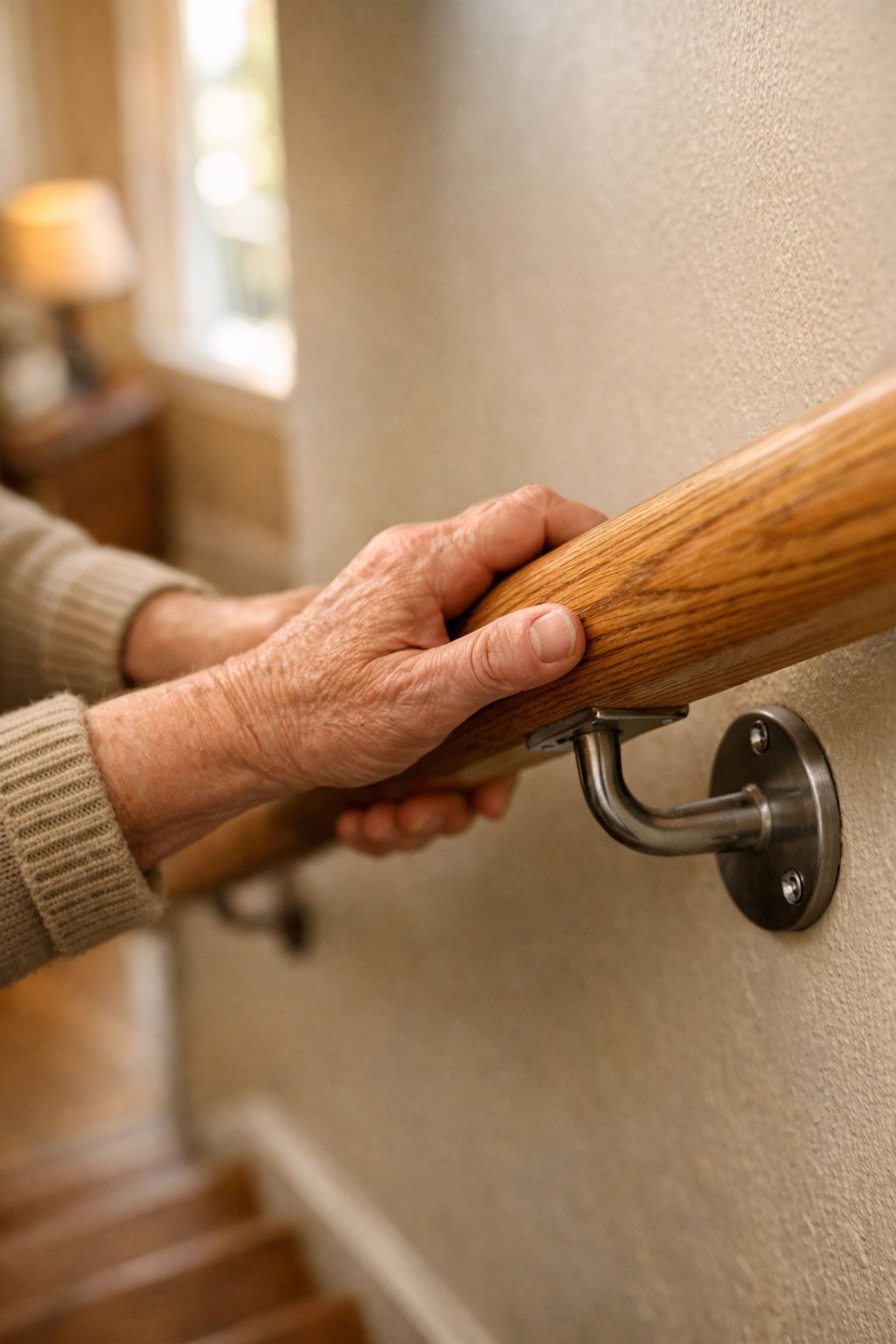
I see this all the time: handrails that look beautiful but wiggle the moment you put real weight on them. A handrail shouldn't just be a guide; it needs to be a structural support system. If you were to lose your balance, that rail needs to hold your full body weight during a sudden jolt.
Another common mistake is having a handrail that stops a few inches before the actual stairs do. This leaves you vulnerable during the most dangerous part of the journey: the transition from the floor to the first step and the last step back onto solid ground.
The Fix:
Check your handrails today. Give them a firm shake. If they move, the brackets need to be tightened or relocated into the wall studs. For maximum safety, you should have handrails on both sides of the stairs. They should also extend at least 12 inches (300mm) beyond the top and bottom steps. This allows you to get your balance fully situated before you start climbing or descending.
3. The "Midnight Shadow" Problem: Poor Lighting
You might be able to navigate your stairs blindfolded during the day, but at night, the game changes. As we age, our eyes require more light to distinguish depth and contrast. Inadequate lighting creates shadows that can make a step look deeper or shallower than it actually is.
Many homes have a single overhead light at the top of the landing that casts the person’s own shadow directly onto the steps in front of them as they walk down. This effectively "hides" the very stairs they are trying to see.
The Fix:
Lighting should be bright and uniform. If possible, install light switches at both the top and the bottom of the stairs. Even better, look into motion-sensor LED strips that stick under the lip of each tread or along the baseboard. These illuminate the actual walking surface without creating a blinding glare. It ensures that every time you approach the stairs, the path is clear and visible.
4. Worn, Slippery, or "Invisible" Surfaces
Hardwood stairs are beautiful, but they can be incredibly slick, especially if you’re wearing socks or smooth-soled slippers. On the other hand, old carpeting can be just as dangerous. Carpet that has become loose or "rounded" at the edge of the step creates a curved surface that makes it easy for your foot to slide right off.
There is also the issue of "visual blending." If the stairs and the floor are the same color and material, it’s hard for the eye to tell where the landing ends and the first step begins.
The Fix:
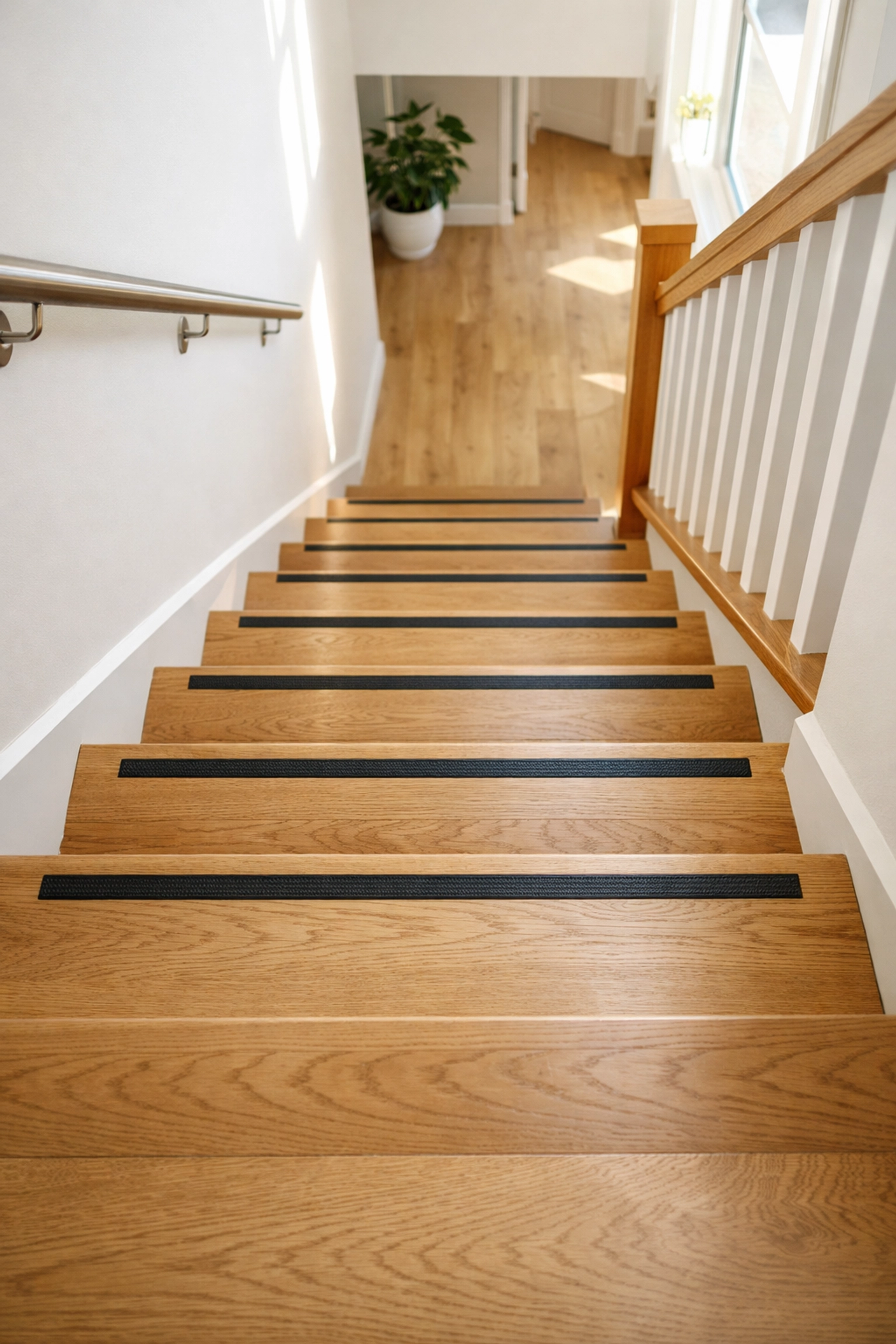
For hard surfaces, apply anti-slip adhesive strips. They come in transparent versions if you don't want to ruin the look of the wood. If you have carpet, ensure it is tightly tacked down and not bulging at the edges. One of the most effective fixes is to use a contrasting color on the edge of each step. A simple strip of non-slip tape in a color that stands out from the wood or carpet can provide the visual contrast needed to navigate safely.
5. The "Storage" Mentality: Clutter on the Steps
We’ve all done it: placing a book, a pair of shoes, or a basket on the bottom step "to take up later." This is a recipe for disaster. On a staircase, your focus should be 100% on your footing. Having to navigate around a stray shoe or a stack of mail breaks your rhythm and forces you to shift your center of gravity in ways that can lead to a fall.
The Fix:
Establish a "zero-tolerance policy" for stair clutter. Nothing stays on the steps, ever. If you have the habit of carrying things up and down, try to keep one hand free for the railing at all times. If you have a lot to carry, consider a small "stair basket" with a handle, but never leave it on the steps themselves: keep it on the floor at the top or bottom.
6. Ignoring the "Headroom" Hazard
If a staircase has low clearance, people tend to duck their heads or lean forward as they descend. This shift in posture moves your center of gravity forward, making it much easier to overbalance and tumble down the steps. In many older homes, the "headroom" (the vertical distance between the step and the ceiling above) is less than the recommended 6 feet 8 inches.
The Fix:
If your home has a low ceiling over the stairs, you need to be consciously aware of your posture. Avoid leaning forward. If the structural clearance cannot be changed, ensure the area is extremely well-lit so you aren't squinting or ducking unnecessarily. Sometimes, simply painting the low-hanging beam a bright, contrasting color can serve as a reminder to keep your posture upright.
7. Overconfidence and "The One-Hand Carry"
The final mistake isn't about the stairs themselves, but how we use them. Many falls happen when someone is carrying something with both hands: like a laundry basket or a tray of food: and they can't see their feet or reach the handrail.
Even if you feel strong and balanced, the stairs are a high-stakes environment. A single trip on a flat floor might result in a bruised knee; a single trip on the stairs can be much more serious.
The Fix:
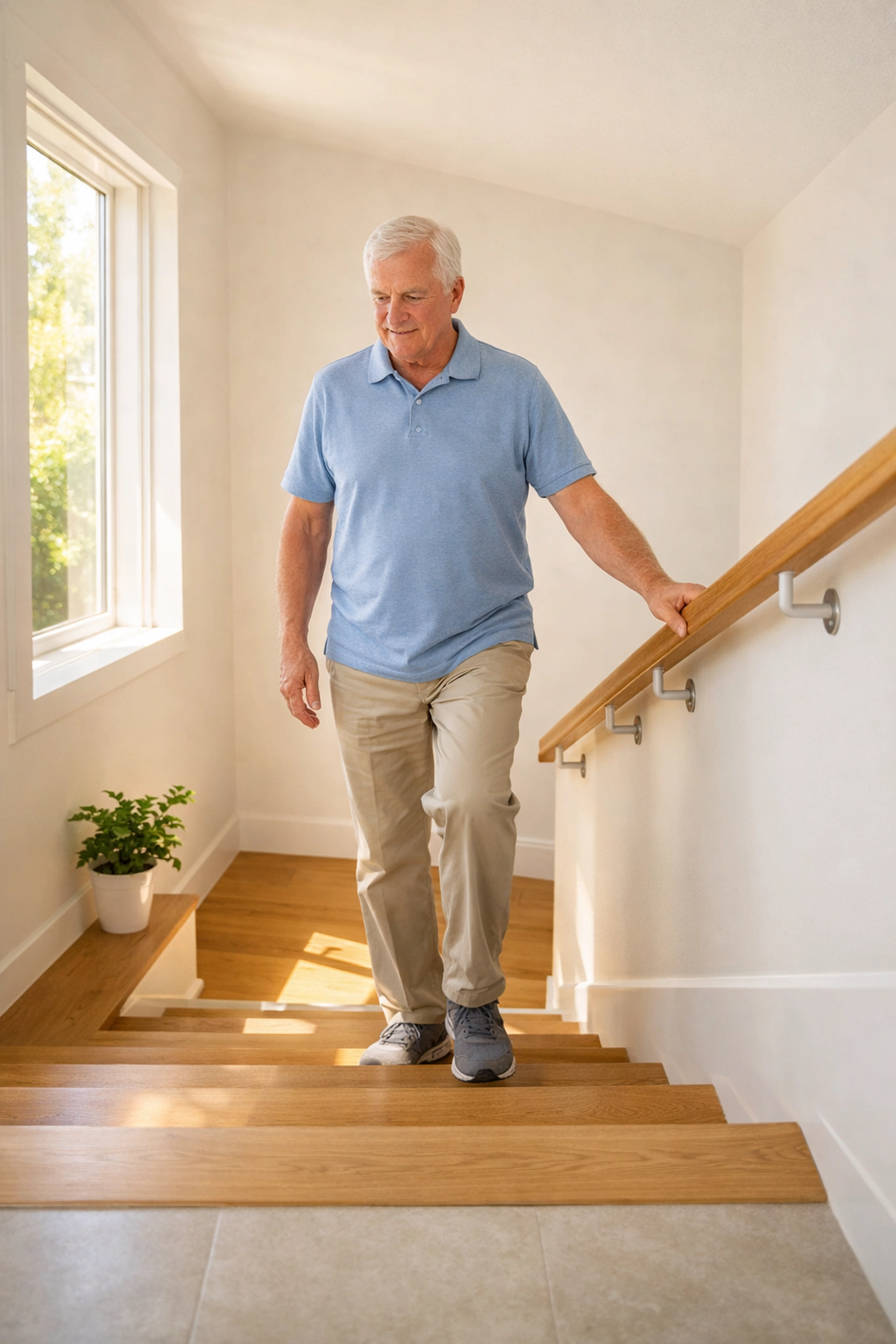
Always keep one hand on the rail. If you have laundry to move, try dropping the basket down the stairs (if they are carpeted) or taking smaller loads in a backpack so your hands remain free. It might feel like it takes a little longer, but the safety trade-off is worth it.
Beyond the Stairs: A Holistic Approach
Safety doesn't stop at the top of the staircase. To truly feel secure, it helps to look at the bigger picture.
The Role of Vision and Balance
Your ability to navigate stairs is directly tied to your vision and your physical strength. Regular eye exams are crucial to ensure your depth perception is accurate. Additionally, simple balance exercises: like standing on one leg while holding onto a kitchen counter: can strengthen the stabilizer muscles in your ankles and hips, making you much more "sure-footed" on the steps.
Physical Therapy Consultations
If you’re feeling nervous about the stairs, consider a few sessions with a physical therapist. They can teach you specific techniques for "stair climbing" that use less energy and provide more stability. They can also assess if you need more significant home modifications, such as a stair lift or a ramp, depending on your specific mobility needs.
What to Do If a Fall Happens
Despite our best efforts, accidents can happen. Knowing how to react can prevent further injury. If you do fall on the stairs, the first rule is: don't move right away. Take a breath, check for pain, and move slowly. If you can’t get up, having a medical alert system or a phone nearby is a lifesaver.
Creating a Reassuring Environment
Making these changes isn't about admitting defeat or "getting old." It’s about taking control of your environment so you can live with confidence. A well-lit, clear, and structurally sound staircase takes the "fear factor" out of moving around your home.
Start small. Check your handrails today. Clear off that bottom step. Change a lightbulb. These tiny steps lead to a much safer, more comfortable home for everyone. At Fall Guys Products, we’re here to remind you that safety isn’t a destination: it’s a series of small, smart choices that keep you moving forward.

