
When we talk about home safety, it’s easy to focus on the big things: maybe a major bathroom renovation or installing a chair lift. But in my years working with seniors and caregivers at Fall Guys Products, I’ve realized that the real risks often hide in the small, everyday details we take for granted.
Falling isn't an inevitable part of aging, though it can feel that way when you look at the statistics. Most falls happen right in the comfort of our own homes, usually during routine activities like getting out of bed or walking to the kitchen. The good news? Many of these incidents are preventable with a few simple shifts in perspective.
If you’re looking to make a home safer for yourself or a loved one, it helps to know where the common pitfalls are. Here are seven mistakes people frequently make with home fall prevention and, more importantly, how you can fix them.
1. Choosing Comfort Over Support in Footwear
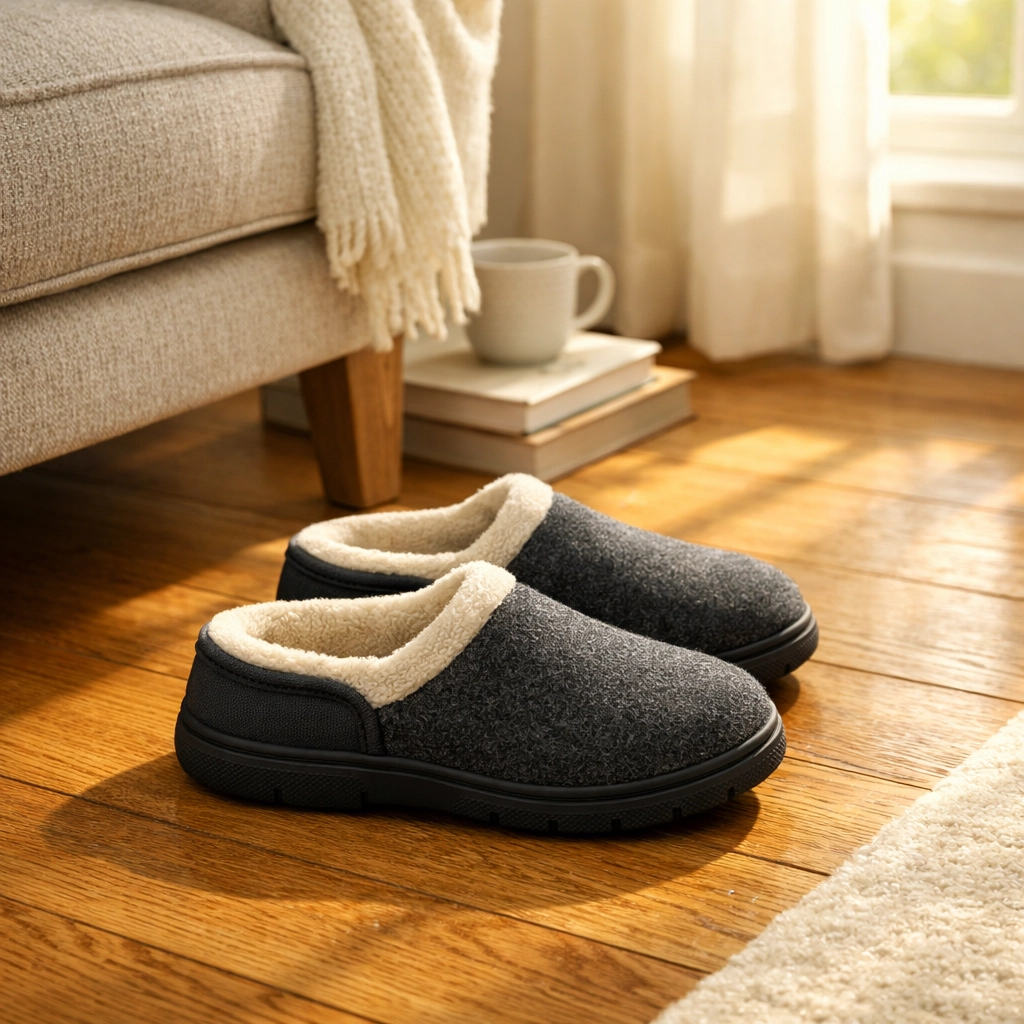
We all love a pair of cozy, broken-in slippers. They’re easy to kick off and feel great on a cold morning. However, from a fall-prevention standpoint, floppy or loose-fitting slippers are one of the biggest hazards in a home.
Most slippers lack a "back," meaning your heel isn't secured. This forces your toes to "grip" the shoe to keep it on, which alters your natural gait and tires out your feet. Furthermore, slippers often have smooth, worn-down soles that provide zero traction on wood or tile floors.
The Fix:
Swap the slippers for supportive indoor shoes. Look for "house shoes" or athletic sneakers that have:
- A firm back: To keep your heel from sliding out.
- Non-slip outsoles: Rubberized grips are essential.
- Secure closures: Velcro or laces are better than slip-ons because they allow you to adjust the fit if your feet swell during the day.
- Low heels: High-soled sneakers can actually be a trip hazard for some; a thin but firm sole often provides the best balance of protection and ground feel.
2. Thinking Your Throw Rugs are "Safe Enough"
It’s hard to part with a beautiful area rug that ties a room together. Many people try to compromise by using a bit of double-sided tape or just "being careful" around the edges. Unfortunately, "being careful" isn't a reliable safety strategy, especially at 2:00 AM when you’re headed to the bathroom in a daze.
Rugs create two main problems: the edges can curl up, creating a trip wire, and the entire rug can slide across the floor like a banana peel if you step on it the wrong way.
The Fix:
The safest option is to remove throw rugs and small area rugs entirely. If you simply cannot part with them, you must secure them properly:
- Full-coverage non-slip pads: Don't just do the corners. Use a pad that covers the entire underside of the rug.
- Heavy-duty rug tape: Secure all edges flat to the floor so a toe or a walker frame can’t catch on the lip.
- Contrast: Ensure the rug is a different color than the floor so it’s easy to see where the surface changes.
3. Dealing with a Bed That’s the Wrong Height
We don't often think about the height of our furniture until it becomes a struggle to get up. A bed that is too low is a significant fall risk. When a bed is low, you have to lean your torso far forward and "rock" yourself to gain enough momentum to stand. This forward momentum can easily cause a loss of balance, leading to a fall right as you stand up.
Conversely, a bed that is too high requires you to "hop" down or slide off the edge, which is equally dangerous.
The Fix:
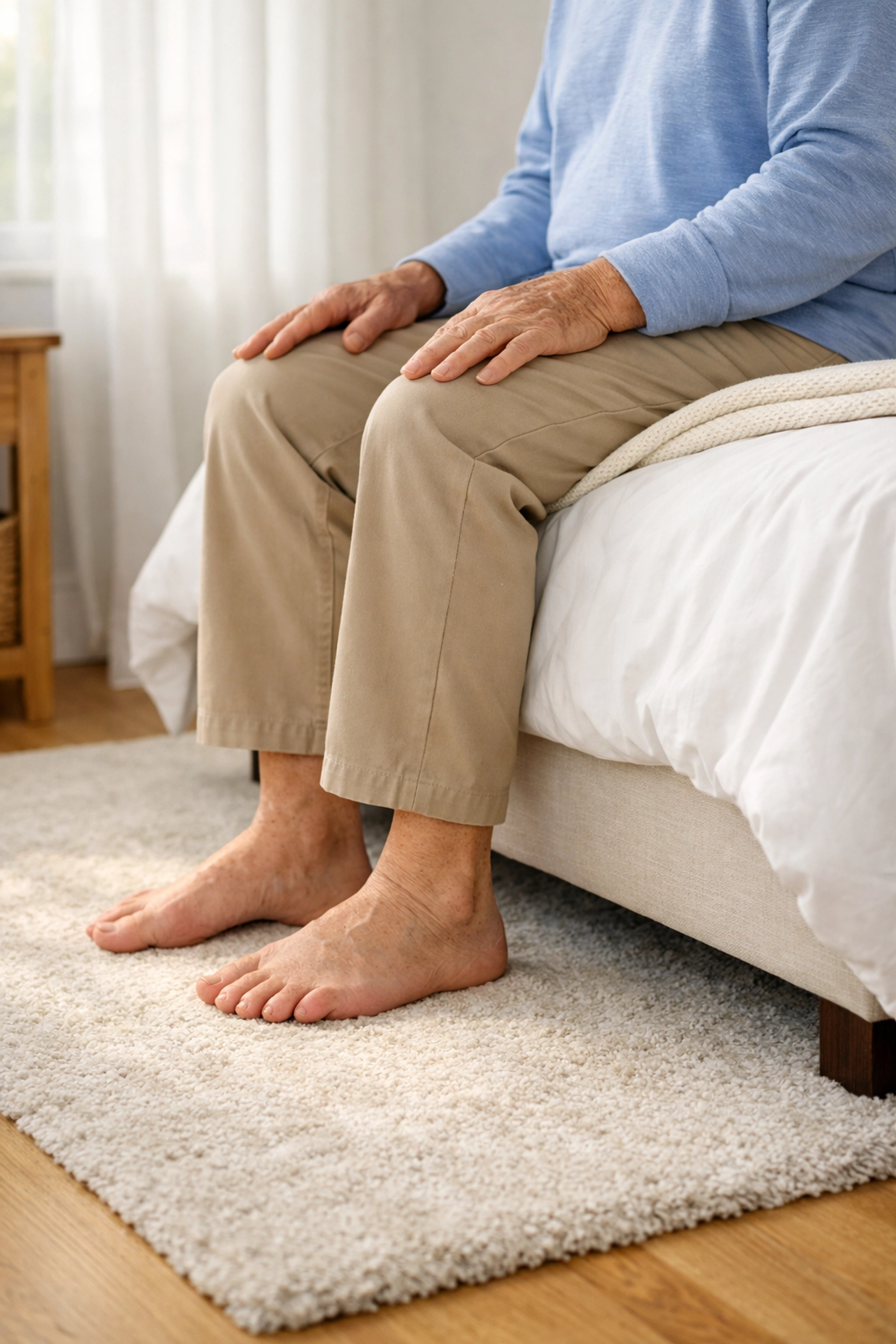
Your bed should be at a height where your feet can rest flat on the floor while you are sitting on the edge, with your knees level with or slightly lower than your hips.
- For low beds: Use furniture risers under the legs or add a second, firmer mattress topper to gain a few inches.
- For high beds: You might need to remove the bed frame and place the box spring on a lower-profile base.
- The "Knee Crease" Rule: Generally, the top of the mattress should be roughly at the level of the back of your knees when you are standing.
4. Relying on Towel Racks as Grab Bars
This is perhaps the most dangerous mistake of all. In a moment of instability in the bathroom: maybe after a long shower or when reaching for a towel: it’s human nature to grab the nearest solid-looking object. Usually, that’s a towel rack or a soap dish.
The problem is that towel racks are designed to hold a few pounds of fabric; they are not anchored into the wall studs to support 150+ pounds of human weight. When they pull out of the drywall, they don't just fail; they often cause the person to fall backward with even more force.
The Fix:
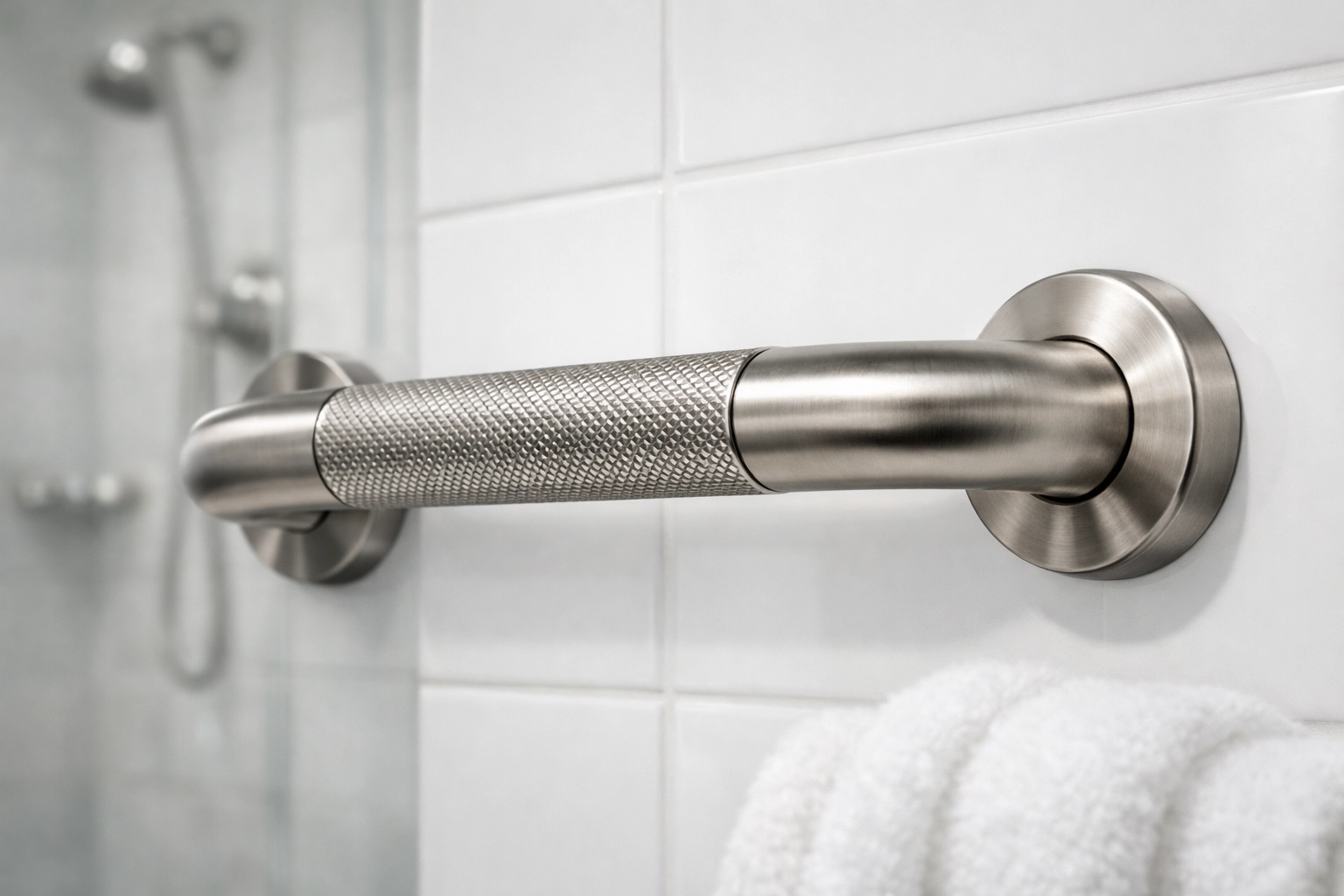
Install actual, ADA-compliant grab bars.
- Placement: Put them inside the shower, near the entry/exit point of the tub, and next to the toilet.
- Professional Installation: Unless you are very handy with a stud finder and heavy-duty anchors, have a professional install them. They must be secured into the wood studs behind the wall to be truly safe.
- Texture: Choose bars with a textured or "knurled" surface to ensure a good grip even when your hands are soapy or wet.
5. Underestimating the Danger of "Shadow Zones"
Poor lighting is a silent contributor to falls. As we age, our eyes require significantly more light to see clearly, and our ability to adjust to changes in light levels slows down. A hallway that looks "dim but fine" to a 30-year-old might look pitch black to an 80-year-old.
Shadow zones: areas where the light doesn't quite reach, like corners or the middle of a staircase: can hide pets, stray shoes, or changes in floor texture.
The Fix:
Light up your life. It sounds simple, but it’s incredibly effective.
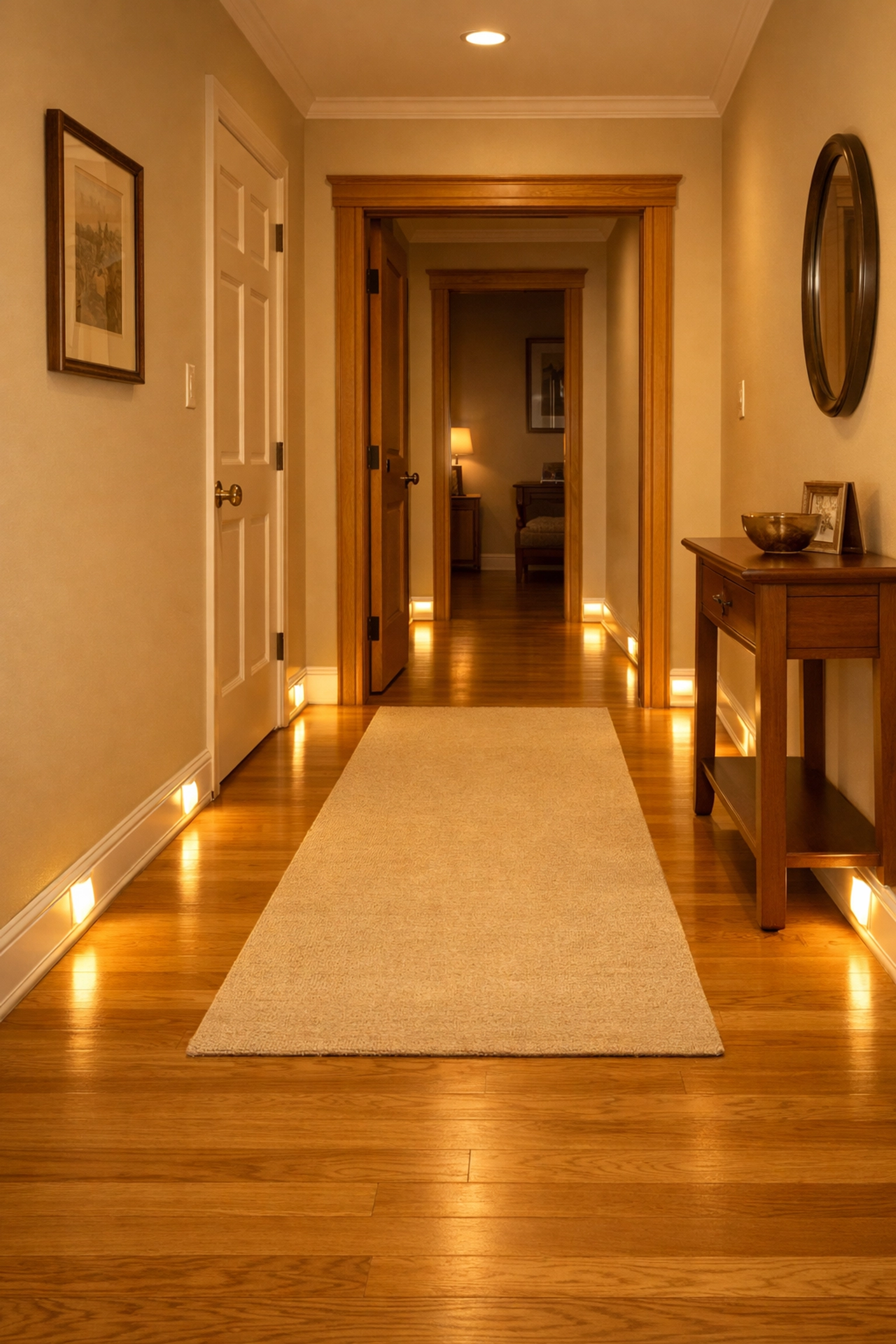
- Motion-activated nightlights: Place these in the bedroom, hallway, and bathroom so the path is illuminated the moment you sit up in bed.
- High-wattage LED bulbs: Swap out old, dim bulbs for bright, "daylight" spectrum LEDs. They last longer and provide much better clarity.
- Two-way switches: Ensure there are light switches at both the top and bottom of every staircase so you never have to climb or descend in the dark.
6. Ignoring the "Small" Maintenance Tasks
A loose floorboard, a slightly frayed carpet edge, or a wobbly stair railing might seem like minor annoyances you’ll get to "eventually." In reality, these are accidents waiting to happen. We tend to adapt to our environment and subconsciously "navigate" around these hazards, but the one time you’re distracted or tired, that loose board will catch you.
The Fix:
Conduct a "Safety Walkthrough" every month.
- Check the floors: Look for any transitions between rooms (like the metal strip between carpet and tile) that might be coming loose.
- Check the stairs: Make sure the handrails don't wiggle when you put weight on them. If they do, tighten the brackets immediately.
- Clear the cords: Look for phone chargers or lamp cords that have migrated into the walking path. Use cord organizers or tape them along the baseboards.
7. Forgetting the "Human Factor" (Strength and Balance)
The biggest mistake is thinking that fall prevention is only about the house. You can have the safest house in the world, but if your physical balance is declining or your medications are making you dizzy, a fall can still happen.
Fall prevention is a two-part equation: the environment and the individual. Neglecting your physical strength and balance training is just as risky as leaving a bunch of clutter on the floor.
The Fix:
Focus on your foundation.
- Leg Strength: Simple exercises like "sit-to-stands" (basically a slow squat using a chair) can dramatically improve the muscles you need for stability.
- Balance Practice: Activities like Tai Chi or specific balance exercises recommended by a physical therapist can "re-train" your brain and body to stay upright.
- Medication Reviews: Some medications (or combinations of them) cause orthostatic hypotension: a fancy term for a sudden drop in blood pressure when you stand up. Talk to your doctor or pharmacist about whether your prescriptions might be increasing your fall risk.

Moving Forward with Confidence
Fall prevention isn't about living in a bubble or stripping your home of all its personality. It’s about making smart, proactive adjustments so you can continue living independently and safely.
If you’re a caregiver, try to approach these changes as a collaboration. Instead of saying, "We have to get rid of this rug because it’s dangerous," try saying, "Let’s make sure this path is clear so you can move around more easily."
By addressing these seven common mistakes, you’re not just fixing a house; you’re building a foundation for long-term health and peace of mind. Start with one thing today: maybe it’s checking your slippers or adding a nightlight; and build from there. Safety is a journey, not a destination, and every small step counts.

