
Hey there. I’m Brian Kerr, and I’ve spent a lot of time thinking about how we move through our homes as we get older. Most of us want to stay in our own houses for as long as possible. It’s where our memories are, where our favorite chair is, and where we feel most like ourselves.
But here’s the reality: our homes aren’t always as safe as we think they are. We get used to that one loose floorboard or the way we have to dim the lights to save on electricity. Over time, these small habits turn into significant risks. Fall prevention isn't about making your home look like a hospital; it’s about making small, smart adjustments so you can keep living your life with confidence.
I see well-intentioned families and seniors make the same few mistakes over and over. They want to be safe, but they miss the "invisible" hazards. Today, I want to walk through the seven most common mistakes I see in home fall prevention and, more importantly, how you can fix them today.
1. The "Comfort" Trap: Keeping Throw Rugs and Small Area Rugs
We all love a good rug. They add color, they’re soft underfoot, and they make a room feel finished. However, in the world of fall prevention, throw rugs are often the number one enemy.
The mistake is thinking that a rug is "fine" because it’s been there for twenty years. But as our gait changes: perhaps we don’t lift our feet quite as high as we used to: that slightly curled edge or the way the rug bunches up becomes a major tripping hazard. Even rugs with "non-slip" backing can lose their grip over time.
How to Fix It:
The gold standard is to remove throw rugs entirely. I know that can be a tough pill to swallow if it’s a beautiful heirloom, but clear floors are safe floors. If you absolutely cannot live without a rug, you must secure it. Use heavy-duty double-sided rug tape or specialized rubberized mats that go underneath. Check the edges every single week. If the edge is curling, it has to go. Transition strips between different types of flooring (like carpet to hardwood) should also be low-profile and secure.
2. Living in the Shadows: Underestimating the Power of Light
As we age, the amount of light reaching the back of our eyes decreases. A 60-year-old needs significantly more light to see as well as a 20-year-old. Many seniors keep their homes "moody" or dim to save on power or simply because they’ve grown used to it.
The mistake here is failing to realize that you can’t avoid a hazard you can’t see. Tripping over a pet, a stray shoe, or a transition in the floor often happens simply because the lighting was too dim to register the obstacle in time.
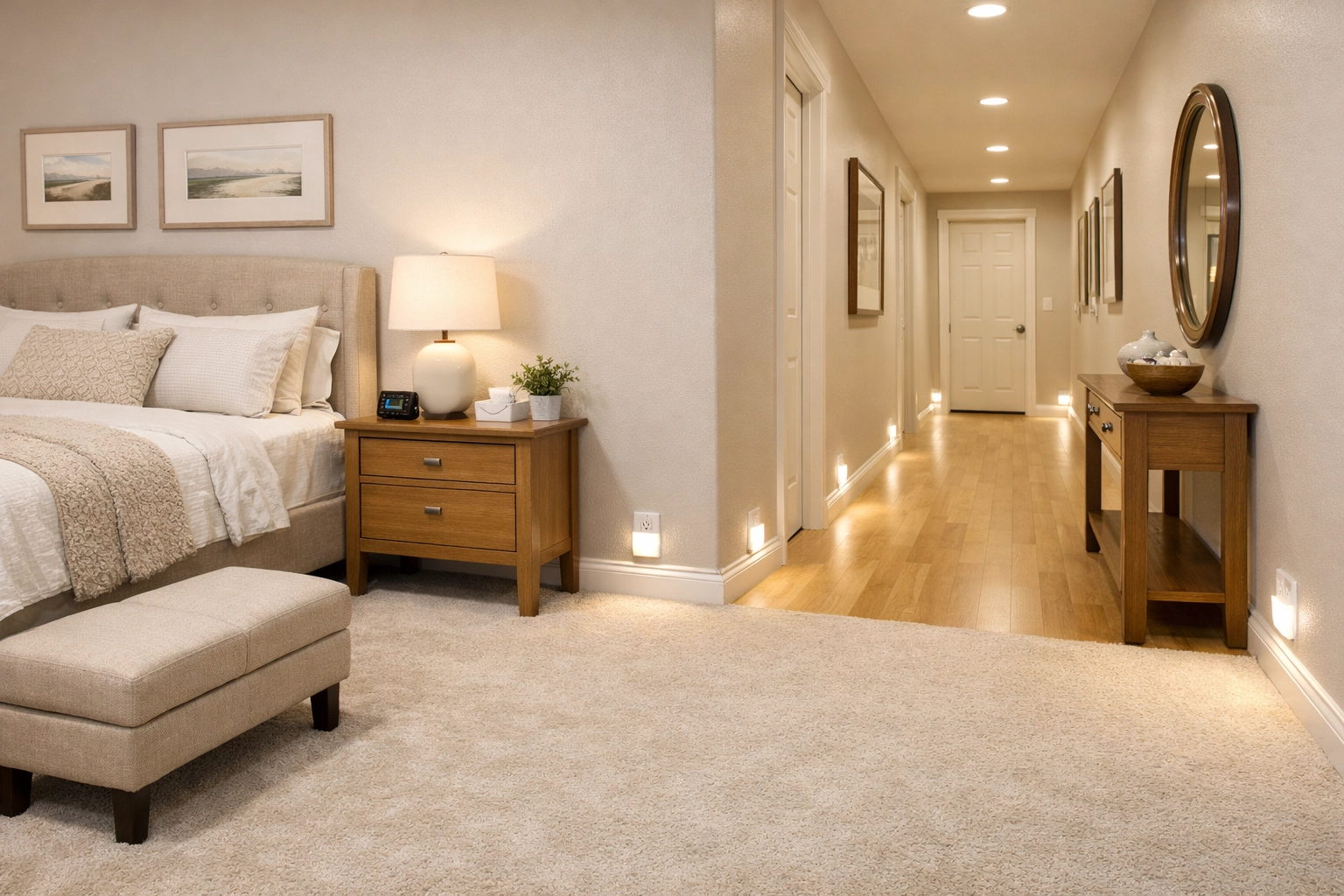
How to Fix It:
Start with a "Lighting Audit." Walk through your home at dusk. Are there dark corners in the hallway? Is the path from the bed to the bathroom pitch black?
- Increase Wattage: Switch to bright LED bulbs. They provide more "lumens" (brightness) while using less energy.
- Nightlights are Non-Negotiable: Install motion-sensing nightlights in every hallway, bathroom, and bedroom. You want the floor to illuminate the moment your feet hit the ground.
- Task Lighting: Add extra lamps near chairs where you read and under-cabinet lighting in the kitchen so you can see what you’re doing on the counters.
3. The Clutter Creep: Ignoring Walkways
We all collect things. Books, magazines, shoes by the door, and decorative baskets. In a busy home, these items often migrate into the natural walking paths.
The mistake is assuming you’ll "just remember" that the basket is there. But when you’re tired, rushing to answer the phone, or navigating in the middle of the night, your brain isn't focused on the floor. Clutter narrows your "safety margin," leaving you with no room to correct your balance if you stumble.
How to Fix It:
Adopt the "18-inch Rule." Every major walkway in your home: hallways, the path between the couch and the kitchen, the route to the bathroom: should be at least 18 to 32 inches wide and completely clear of debris.
- Clear the "Landing Zones": Remove everything from the bottom and top of the stairs.
- Manage Cords: Use cord organizers to zip-tie electrical wires to the baseboards. Never run a cord across a walkway or under a rug.
- The Daily Sweep: Before bed, do a quick "safety sweep" to make sure no shoes or bags have been left in the middle of the room.
4. The Stigma of Support: Missing Handrails and Grab Bars
I hear it all the time: "I don't need those yet; I'm not that old." This is perhaps the most dangerous mistake of all. Waiting until after a fall to install support is like buying a seatbelt after a car accident.
Many people rely on "furniture walking": touching the backs of chairs, the edges of tables, or the doorframe to steady themselves. This is dangerous because furniture can move or tip, and doorframes don't provide a grip.
How to Fix It:
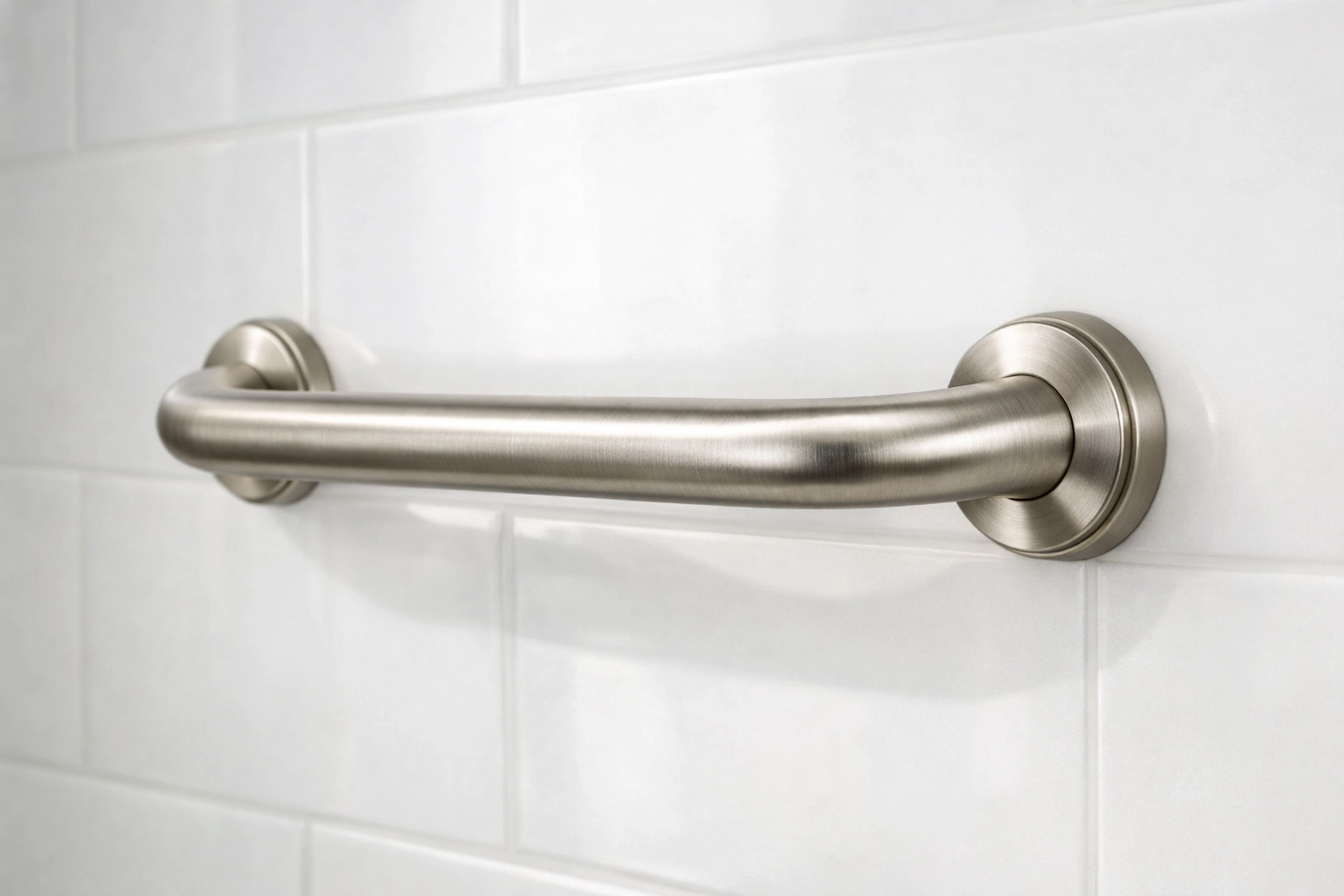
Think of grab bars and handrails as "performance equipment" for your home. They give you leverage and stability.
- The Bathroom: This is the highest-risk area. You need a grab bar inside the shower and one next to the toilet. Look for bars that are screwed into the wall studs: suction cup bars are notoriously unreliable.
- The Entryway: If you have even one or two steps leading into your home, you need a sturdy handrail on both sides.
- Vertical Supports: For areas like the middle of a room or next to a bed where a wall isn't close by, consider floor-to-ceiling tension poles. They provide a rock-solid point of contact without requiring a major renovation.
5. The "Slip and Slide": Neglecting Wet Surfaces
We often focus on the floor, but we forget how the environment changes. A bathroom floor might be safe when dry, but add a little steam from a shower or a few drops of water, and it becomes a skating rink.
The mistake is using standard bath mats that don't have a high-friction rubber backing. Many people use a towel on the floor instead of a mat, which is incredibly dangerous because towels provide zero grip against the tile.
How to Fix It:
- Non-Slip Strips: Apply non-slip adhesive strips or a high-quality rubber mat to the floor of the tub or shower.
- The "Check-Back" Rule: Every few months, flip your bath mats over. If the rubber backing is peeling, cracking, or feels "slick," throw it away and get a new one.
- Keep it Dry: Use a weighted shower curtain to ensure water stays inside the basin. If you have a walk-in shower, ensure the drainage is sufficient so water doesn't pool on the bathroom floor.
6. The "Reach" Problem: Storing Frequently Used Items Too High
Have you ever reached for a heavy flour jar on the top shelf and felt your center of gravity shift? Or worse, have you stood on a kitchen chair or a step stool to reach a lightbulb?
The mistake is keeping your daily essentials in places that require you to "over-reach" or climb. Balance becomes more precarious when our arms are extended above our heads or when we are standing on an unstable surface like a stool.
How to Fix It:
You need to reorganize your life into the "Active Zone." This is the area between your shoulders and your knees.
- The Kitchen Audit: Move the coffee mugs, the plates you use every day, and your favorite skillet to the lower cabinets or the countertop. The "fancy" china you use once a year can stay up high: but you should ask a family member to get it down for you when the time comes.
- The Pantry: Use pull-out organizers or "lazy Susans" so you don't have to reach into the dark depths of a cabinet.
- Stop Climbing: Get rid of the old, rickety step stool. If you must use one, ensure it is a high-quality model with a high handrail you can hold onto.
7. The Wrong Foundation: Improper Footwear
What you wear on your feet is just as important as the floor you walk on. Many falls occur because of "indoor habits": walking in stocking feet, wearing loose slippers with no back, or wearing shoes with slick soles.
The mistake is thinking that being "comfy" is the same as being safe. Socks on hardwood or tile are essentially like putting wax on skis. Loose slippers can slide off your heel, causing you to trip over your own shoe.
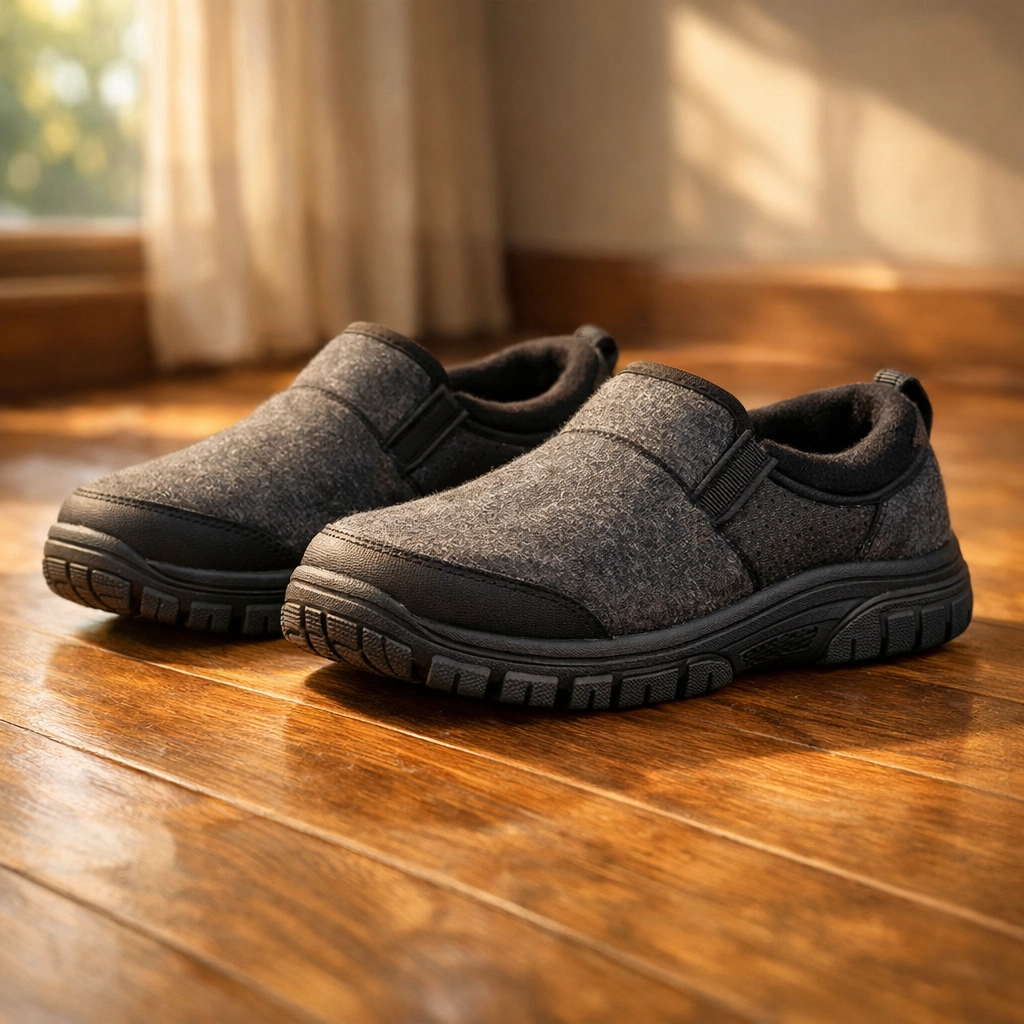
How to Fix It:
Your indoor footwear should be just as supportive as your outdoor footwear.
- The Backed Slipper: If you love slippers, choose a pair with a firm sole and a closed back. Your heel should be locked in.
- Grip Socks: If you really prefer socks, they must have high-quality rubber grips on the bottom. However, shoes are always the safer bet.
- Fit Matters: Make sure your shoes aren't too big. Baggy shoes lead to a "shuffling" gait, which increases the chance of catching your toe on a threshold.
Looking Beyond the House: The Human Element
While fixing the environment is crucial, it’s only half the battle. Fall prevention is a holistic process. As you work through the physical changes in your home, keep these three "Human Factors" in mind:
Strength and Balance
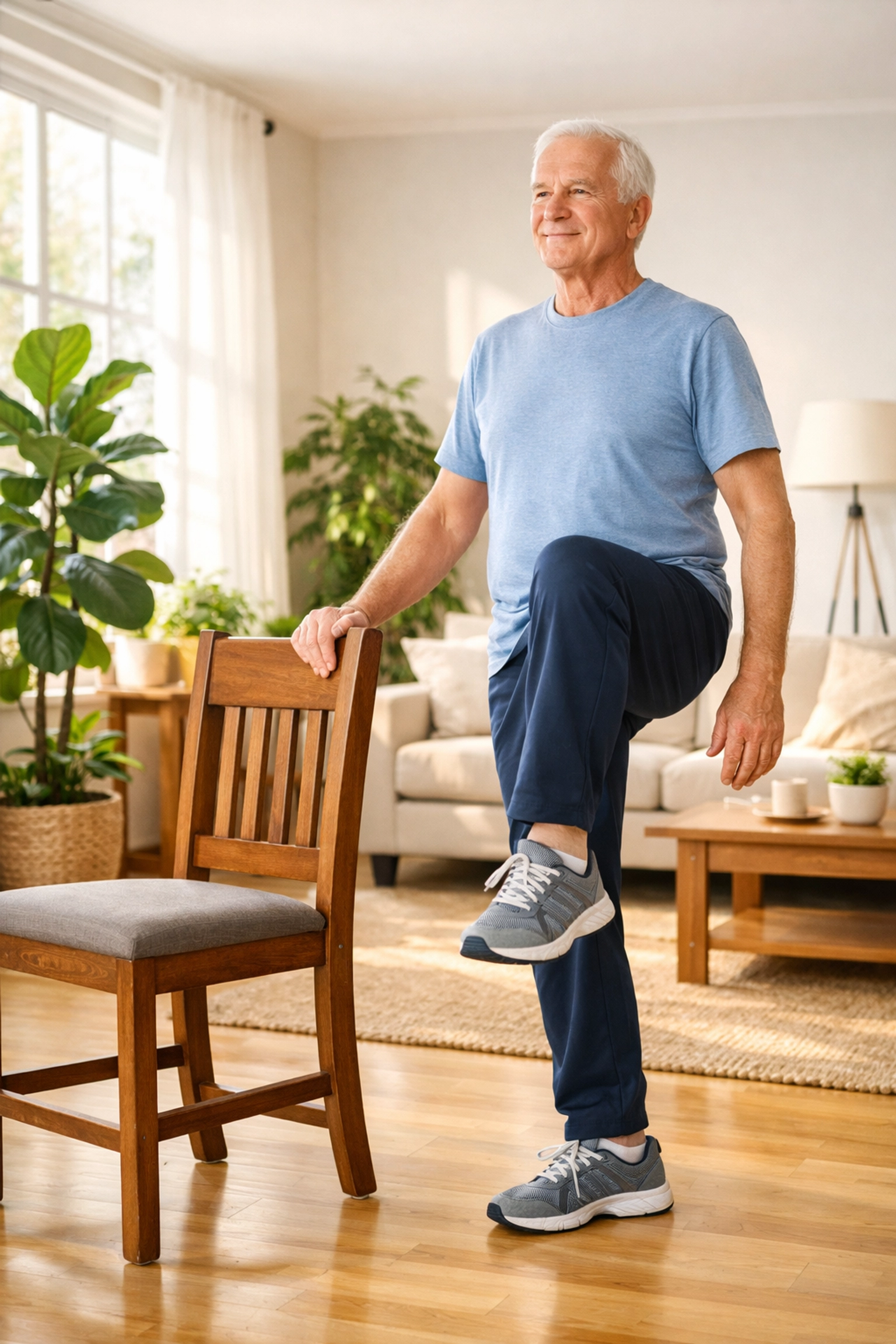
Our muscles are use-it-or-lose-it systems. Simple exercises like standing on one leg (while holding onto a sturdy counter!) or practicing "sit-to-stands" from a chair can dramatically improve your stability. Many communities offer Tai Chi or "Silver Sneakers" classes specifically designed for balance. It's never too late to start building that core strength.
Vision and Hearing
If you haven't had your eyes checked in a year, now is the time. Bifocals and trifocals can sometimes distort your depth perception when looking down at stairs, so talk to your eye doctor about the best options for navigating your home. Interestingly, hearing also plays a role in balance; our inner ear is our primary "gyroscope." If you’re struggling with hearing, it might be affecting your orientation in space.
Medication Management
Some medications, or combinations of them, can cause dizziness or "orthostatic hypotension" (that dizzy feeling when you stand up too fast). Review your list of medications with your doctor or pharmacist. Ask them specifically, "Do any of these increase my risk of falling?"
A Final Word of Reassurance
Making these changes isn't an admission of weakness or a sign that you're "getting old." It’s actually an act of independence. By taking control of your environment, you are ensuring that you can stay in the home you love, living the life you want, without the fear of a sudden accident.
Start small. Maybe today you just buy some new nightlights and clear the shoes away from the front door. Tomorrow, you might move those heavy pots to a lower shelf. Every little adjustment is a "win." Fall prevention is a journey, not a weekend project.
Take a breath, look around your living room, and see it with new eyes. You’ve got this, and we’re here to help you navigate it every step of the way. Stay safe, stay confident, and keep moving.

