
When we talk about home, we usually think of it as our safe haven. It’s the place where we can kick off our shoes, relax, and be ourselves. But as we get older, or as we care for aging parents, that same comfortable environment can quietly develop hazards we never noticed before.
I’m Brian, and here at Fall Guys Products, we spend a lot of time thinking about how to keep people moving safely. Most falls don’t happen because of a major catastrophe; they happen because of small, overlooked details in the rooms we use every day. The good news is that most of these risks are incredibly easy to fix once you know what to look for.
In this guide, we’re going to walk through the seven most common mistakes people make when trying to "fall-proof" a home. We’ll look at why these things are dangerous and, more importantly, give you practical, low-cost ways to fix them.
Why Home Safety Matters More Than You Think
Before we dive into the list, let’s talk about the mindset of fall prevention. Often, seniors feel that admitting they need home modifications is an admission of "getting old" or losing independence. In reality, it’s the exact opposite. Fall prevention is about maintaining independence.
A single fall can lead to a long recovery process that keeps you away from the activities you love. By proactively addressing hazards, you are ensuring that you can stay in your home and keep your lifestyle exactly as it is for as long as possible. It’s about empowerment, not limitation.
Mistake 1: Keeping Throw Rugs for "Decoration"
We all have them: that beautiful heirloom rug in the hallway or the cozy mat in front of the kitchen sink. Unfortunately, throw rugs and small area rugs are one of the most common causes of trips and falls in the home.
The problem is twofold. First, the edges of these rugs can curl up over time, creating a lip that’s easy to catch with a toe or the tip of a walker. Second, if the rug doesn't have a high-quality non-slip backing, it can slide across the floor like a banana peel the moment you step on it.
The Fix:
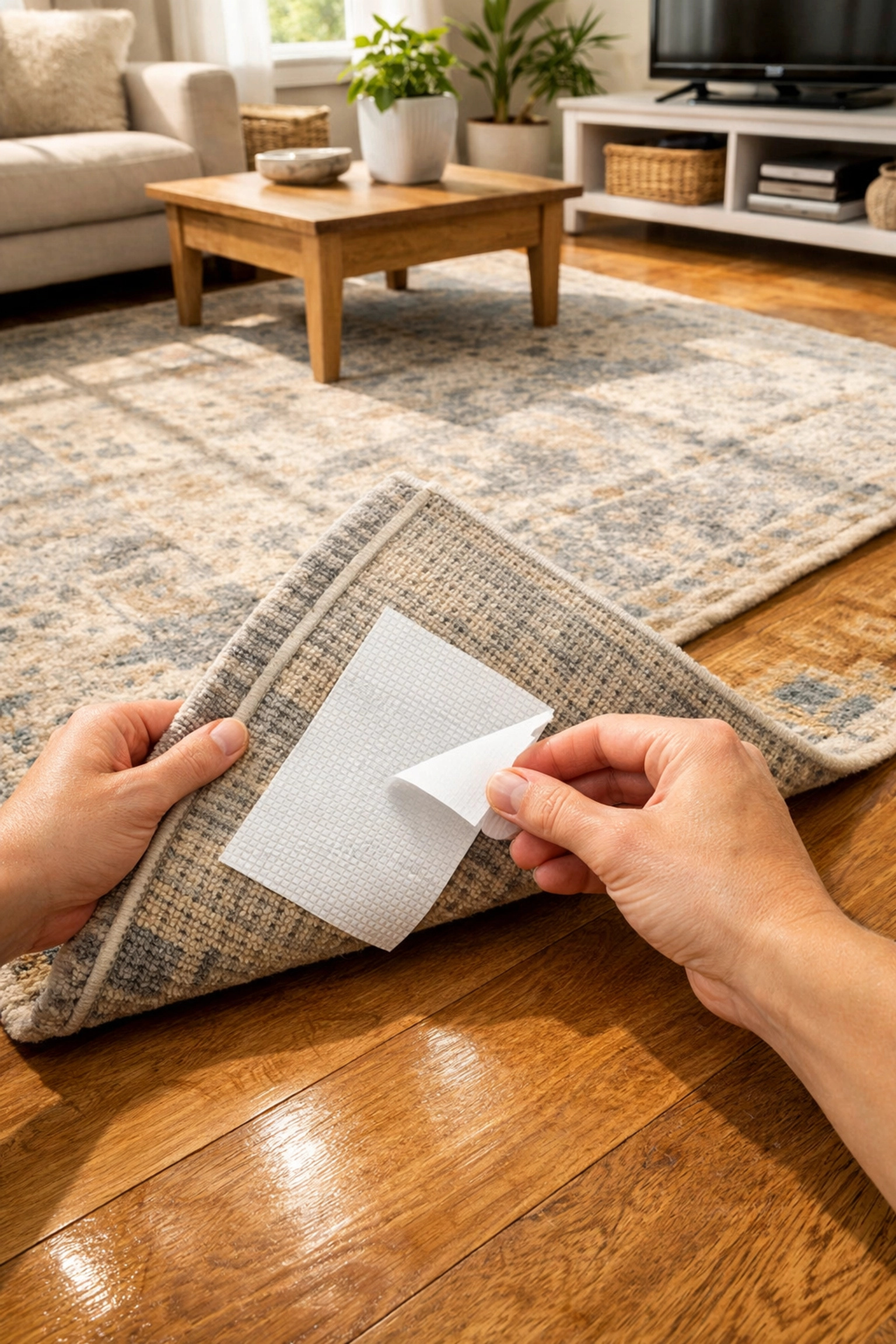
The safest option is always to remove throw rugs entirely. Hardwood, tile, and wall-to-wall carpeting are much more predictable surfaces. However, if you simply cannot part with a specific rug, you must secure it.
Use heavy-duty double-sided rug tape or specialized non-slip pads that cover the entire underside of the rug. Check the edges frequently to ensure they aren't fraying or lifting. If you use a walker or a cane, pay extra attention to how the device interacts with the rug's thickness; if it "plows" the rug, it has to go.
Mistake 2: Storing Essentials Out of Reach
Many kitchens and pantries were designed with maximum storage in mind, which often means high shelves and deep, low cabinets. We often see people keeping their daily coffee mugs on the top shelf or their favorite heavy pot in the back of a bottom cabinet.
The mistake here is forcing yourself to reach high or bend low while maintaining your balance. Reaching overhead shifts your center of gravity and can make you lightheaded. Using a step stool is even riskier, as many stools lack a handrail and provide a very small surface for your feet.
The Fix:
Do a "usage audit" of your home. Identify the items you use every single day: the tea kettle, the medicine bottle, the remote control: and move them to "the strike zone." This is the area between your hip and your shoulder.
Rearrange your kitchen so that frequently used items are on the counter or the middle shelves. If you have deep cabinets, consider installing pull-out drawers so you don't have to lean deep into a dark space to find what you need. If you absolutely must reach something high, never use a chair or a standard stool; use a specialized safety step with a high, sturdy handrail.
Mistake 3: Treating Towel Racks Like Support Bars
This is a mistake we see in almost every bathroom. When someone feels a bit unsteady getting out of the shower or rising from the toilet, they naturally reach for the nearest sturdy-looking object. Usually, that’s a towel rack or a wall-mounted soap dish.
The danger here is a matter of engineering. Towel racks are designed to hold the weight of a damp piece of fabric: maybe five pounds at most. They are usually held into the drywall by small plastic anchors or tiny screws. They are absolutely not designed to support 150 to 200 pounds of human weight. If you slip and grab a towel rack, it will likely pull right out of the wall, leading to a much worse fall because you’ve lost your "anchor."
The Fix:
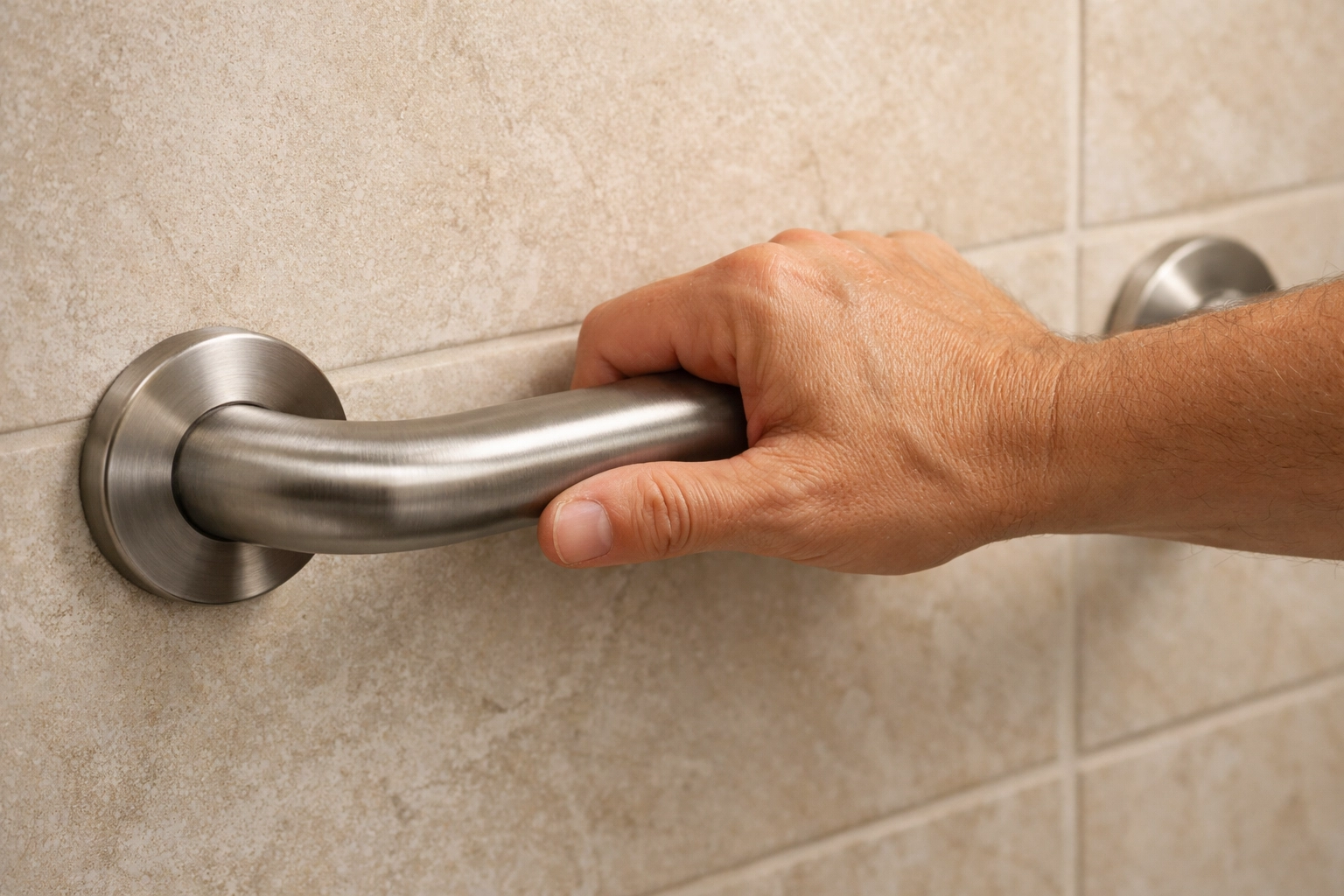
Replace towel racks with actual, ADA-compliant grab bars. These bars are made of heavy-duty metal or reinforced plastic and are designed to be bolted directly into the wooden studs behind your walls.
A proper grab bar can support hundreds of pounds of force. Today, you can even find "designer" grab bars that look exactly like high-end towel racks or toilet paper holders, so you don't have to sacrifice your bathroom's aesthetic for safety.
Mistake 4: Wearing Improper Footwear Indoors
Many of us grew up in "no shoes" households, or we love the feeling of walking around in cozy wool socks. However, walking in socks on smooth surfaces like wood, laminate, or tile is incredibly risky. Socks provide zero traction and zero support for your arches and ankles.
Similarly, loose-fitting slippers with open backs (clogs) are a major hazard. They can easily slide off your foot mid-stride, causing you to trip over your own footwear.
The Fix:
The safest choice for indoor wear is a sturdy, closed-toe shoe with a rubber, non-skid sole. If you prefer not to wear outdoor shoes inside, keep a dedicated pair of "indoor sneakers" that stay by the door.
If you absolutely must wear slippers, choose a "house shoe" style that has a back and fits snugly around your heel. Ensure the soles are made of a "grippy" material. For those who insist on socks, look for specialized "grip socks" that have silicone or rubber treads on the bottom, though these still lack the lateral support of a real shoe.
Mistake 5: Rushing Your Movements
This mistake is more about behavior than environment. We often rush to answer the phone, get to the door when the bell rings, or even just get out of bed because we have things to do.
Rushing leads to two problems. First, it makes us less mindful of our surroundings, meaning we’re more likely to miss a hazard. Second, moving too quickly from a lying or sitting position to a standing position can cause a sudden drop in blood pressure (orthostatic hypotension), which leads to dizziness or "seeing spots."
The Fix:
Practice the "pause." When you wake up, sit on the edge of the bed for a full 30 to 60 seconds before standing up. This gives your circulatory system time to adjust.
Once you stand, stay still for another 15 seconds. If the phone rings or the doorbell sounds, tell yourself: "The caller will leave a message" or "The delivery person will wait." No phone call is worth a hip fracture. Slow, deliberate movements are the key to staying upright.

Mistake 6: Neglecting the "Path of Light"
As we age, our eyes require significantly more light to see clearly and distinguish between different depths and textures. A hallway that looks "dim but fine" to a 30-year-old might look like a dark tunnel to an 80-year-old.
Many people leave their lights off to save on electricity or because they "know the house like the back of their hand." But even if you know where the wall is, you might not see the cat sleeping in the hallway or the shoe that was left out of place.
The Fix:
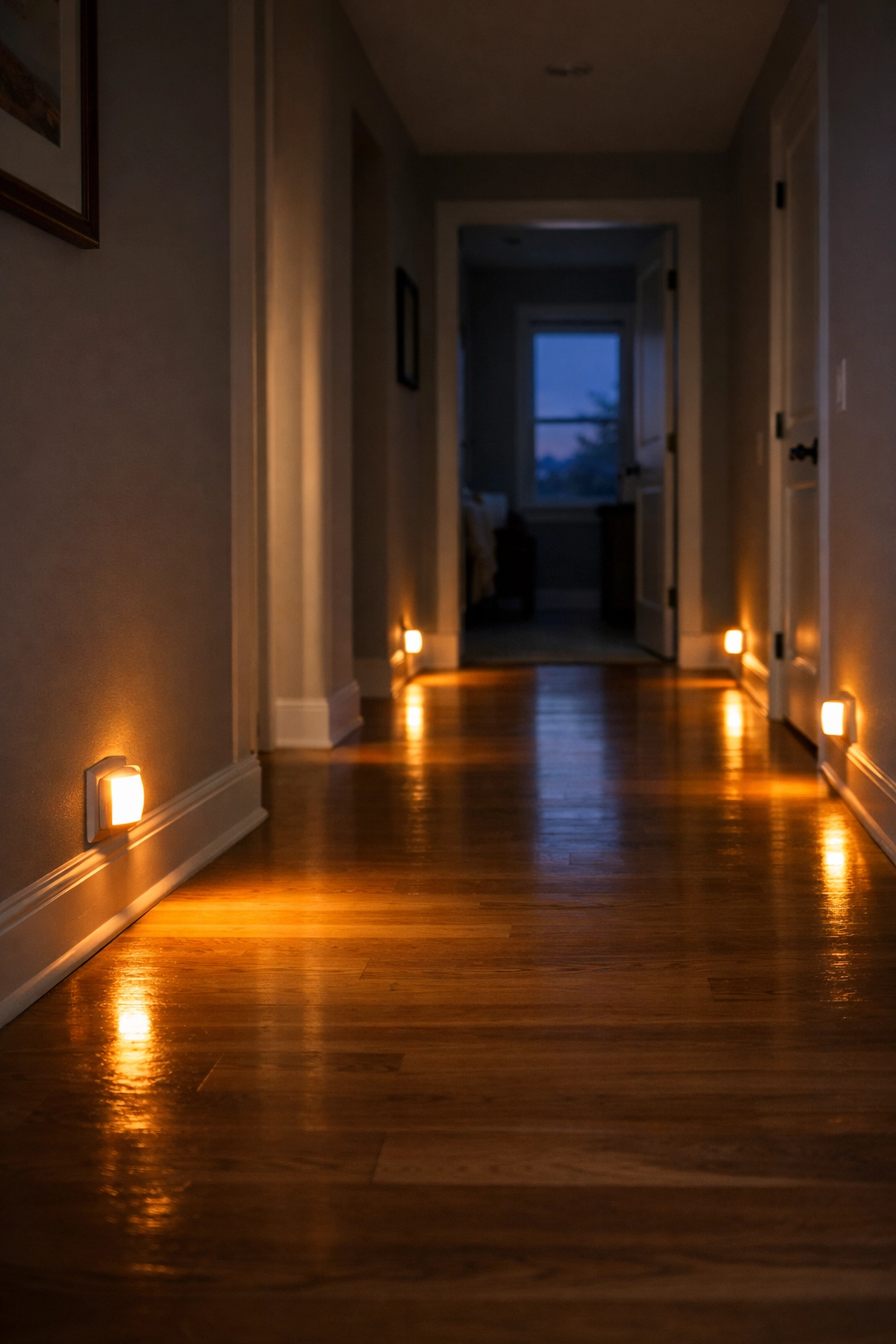
Ensure there is a clear "path of light" from the bedroom to the bathroom and the kitchen. The best way to do this without thinking about it is to install motion-sensor nightlights. These are inexpensive and plug into any standard outlet. They stay off during the day and automatically glow when they sense movement at night.
Additionally, replace old, dim lightbulbs with bright, "daylight" LED bulbs. Focus especially on stairways; there should be light switches at both the top and the bottom of every flight of stairs.
Mistake 7: Letting Clutter Accumulate in Walkways
It happens to all of us. We set a box down by the stairs to "take up later," or we let a tangle of charging cables grow behind the recliner. In a busy home, walkways often become narrower over time as furniture is shifted or items are stored on the floor.
Cords are particularly dangerous because they are thin, hard to see, and often "anchor" to heavy objects like lamps. If you catch your foot on a cord, you’re not just tripping: you might be pulling a heavy appliance down on top of you.
The Fix:
Keep your "traffic lanes" clear. There should be a wide, unobstructed path through every room. If you use a walker, that path should be at least 32 to 36 inches wide.
Check for electrical cords that cross walking paths. If you can’t move the appliance, use a cord cover that tapes flat to the floor. Better yet, have an electrician install more outlets where you actually need them. Finally, clear the stairs. Never use the steps as a temporary storage spot for items waiting to go up or down.

Beyond the House: Strength and Balance
Fixing these seven mistakes will significantly lower the risk of a fall, but environment is only half the battle. The other half is the person moving through that environment.
As we get older, we naturally lose some muscle mass (sarcopenia) and our sense of balance (proprioception) can dull. This makes us more vulnerable if we do happen to trip.
Consider incorporating simple balance exercises into your daily routine. This could be as simple as standing on one leg while you brush your teeth or doing "sit-to-stands" from a sturdy chair to build leg strength. Many communities offer "Tai Chi for Balance" classes, which have been scientifically proven to reduce fall risk.
Final Thoughts: Taking the First Step
Fall prevention isn't something you have to do all at once. It can feel overwhelming to look at a whole house and see nothing but hazards. My advice? Start with one room.
The bathroom is usually the most high-risk area, so start there. Check the rugs, look at the lighting, and evaluate the support bars. Once that's done, move to the bedroom. By tackling these seven mistakes one by one, you’re not just "fixing a house"; you’re investing in your own safety and your ability to live life on your own terms.
Stay safe, stay mobile, and remember: most falls are preventable. It just takes a little bit of foresight and a few small changes to make a world of difference.

