
![[HERO] 77 Mistakes You're Making with Fall Prevention at Home (and How to Fix Them)](https://cdn.marblism.com/559jz4ORXyl.webp)
When we talk about home, we usually think of it as our sanctuary, the place where we feel most comfortable and secure. However, as we age, the very environment we’ve loved for decades can quietly become a series of obstacles.
Hi, I’m Brian Kerr, the founder of Fall Guys Products. Over the years, I’ve seen how much a single fall can change someone’s life, not just physically but also in terms of their confidence. The good news is that most falls aren’t "just a part of getting older." They are often the result of small, overlooked habits or environmental factors that we can actually control.
If you are a senior or a caregiver, you’ve likely already taken some steps toward safety. Maybe you’ve installed a grab bar or cleared some clutter. But often, the most dangerous risks are the ones we think we’ve already handled.
Let’s walk through seven common mistakes people make with fall prevention and, more importantly, how you can fix them today to stay steady on your feet.
1. Choosing Comfort Over Traction: The Footwear Trap
It is incredibly tempting to walk around the house in a pair of cozy, oversized slippers or just a pair of soft socks. We want our feet to be warm and relaxed. However, footwear is arguably the most critical "equipment" you use every day.
Many people make the mistake of wearing backless slippers (scuffs) or smooth-bottomed socks. These provide zero grip on hardwood, tile, or laminate floors. Even worse, if a slipper is too loose, your foot can slide inside it, causing your ankle to turn or your gait to become unstable.
The Fix:
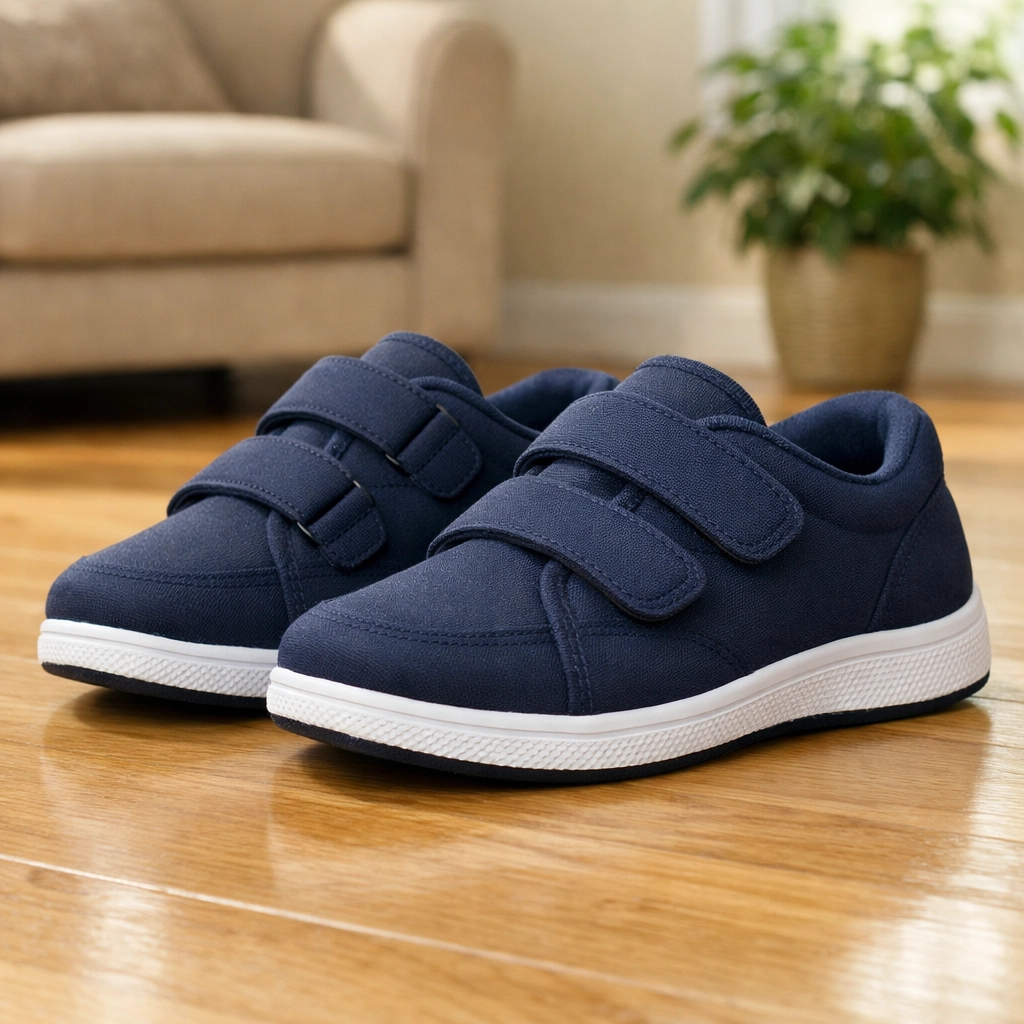
Treat your indoor shoes with the same importance as your outdoor shoes. Look for "house shoes" rather than slippers. A good indoor shoe should have:
- A firm, non-slip sole: Rubberized grips are essential.
- A closed back: Avoid "slide-ins." Your heel should be secure so the shoe moves with you.
- Adjustable closures: Velcro or laces allow you to tighten the shoe if your feet swell during the day.
- Proper fit: If you can kick the shoe off easily, it’s too loose.
If you absolutely must wear socks, ensure they are specialized medical-grade "grip socks" with silicone patterns covering the entire sole, not just a small patch on the ball of the foot.
2. The "Hand-Me-Down" Mobility Aid
I see this all the time: a senior using a cane that belonged to their spouse or a walker found at a garage sale. While the sentiment is well-meaning, using a mobility aid that isn't adjusted to your specific height and weight is often more dangerous than using nothing at all.
If a cane or walker is too high, it forces your shoulders up toward your ears, leading to muscle fatigue and poor balance. If it’s too low, you’ll be forced to hunch forward. Walking in a stooped position shifts your center of gravity too far forward, making a trip much more likely to result in a face-forward fall.
The Fix:
You need a "custom fit," even for standard equipment. To find the right height for a cane or walker:
- Stand up as straight as possible with your arms hanging naturally at your sides.
- The "handle" or grip of the device should line up with the crease of your wrist.
- When you grab the handle, your elbow should have a slight, comfortable bend (about 15 to 20 degrees).
If you’re unsure, a quick visit with a physical therapist can ensure your equipment is helping you rather than hindering you.
3. Storing Life on the Top Shelf
Most of our homes were designed for younger bodies with a full range of reaching motion. We tend to keep our holiday platters, extra paper towels, or heavy canned goods on high shelves or at the very back of deep cabinets.
The mistake here is the "I’ll just reach for it" mentality. Reaching overhead causes many seniors to lose their balance or experience a brief moment of dizziness. Even worse is the temptation to use a step stool: or heaven forbid, a kitchen chair: to reach those items.
The Fix:
It’s time for a kitchen and pantry "reset." Spend an afternoon reorganizing your most-used items.
- The Waist-High Rule: Move everything you use daily (coffee mugs, favorite pans, medications, frequently eaten foods) to shelves that are between hip and chest height.
- The Heavy Rule: Never store heavy items (like a gallon of juice or a heavy cast-iron skillet) above shoulder height or below knee height.
- Eliminate the Step Stool: If you can’t reach it while standing firmly on both feet, it shouldn't be there. If you must keep items high up, wait for a family member or caregiver to help move them down.

4. The "Decorative" Rug Dilemma
We love area rugs. They add color, warmth, and a sense of "home" to a room. But from a safety perspective, an unsecured rug is essentially a trap waiting to be sprung.
The mistake isn't just having the rug; it’s assuming that because it’s "heavy," it won't move. Or, perhaps the edges have started to curl up over time, creating a lip that a toe or a walker wheel can easily catch on. Even "non-slip" backing can dry out and lose its grip over the years.
The Fix:
The safest home has no area rugs, but we understand that isn't always realistic or desired. If you keep them, you must secure them properly:
- Double-Sided Tape: Use heavy-duty rug tape around the entire perimeter of the rug, not just the corners.
- Rug Pads: Use high-quality felt or rubber pads that cover the entire underside of the rug.
- The Transition Test: Walk from the hard floor onto the rug. If your foot or walker catches even slightly, the rug needs to go.
- Contrast: Ensure the rug is a different color than the floor. This helps those with declining vision see where the floor levels change.
5. Ignoring the "Physics" of Your Bed
Getting in and out of bed is one of the most common times for a fall to occur. Many people have beds that are either too high (requiring a "hop" to get in) or too low (requiring a massive "lunge" to get out).
If your bed is too low, you have to lean your torso very far forward to get enough momentum to stand up. This forward momentum, combined with being slightly groggy from sleep, is a recipe for a fall.
The Fix:
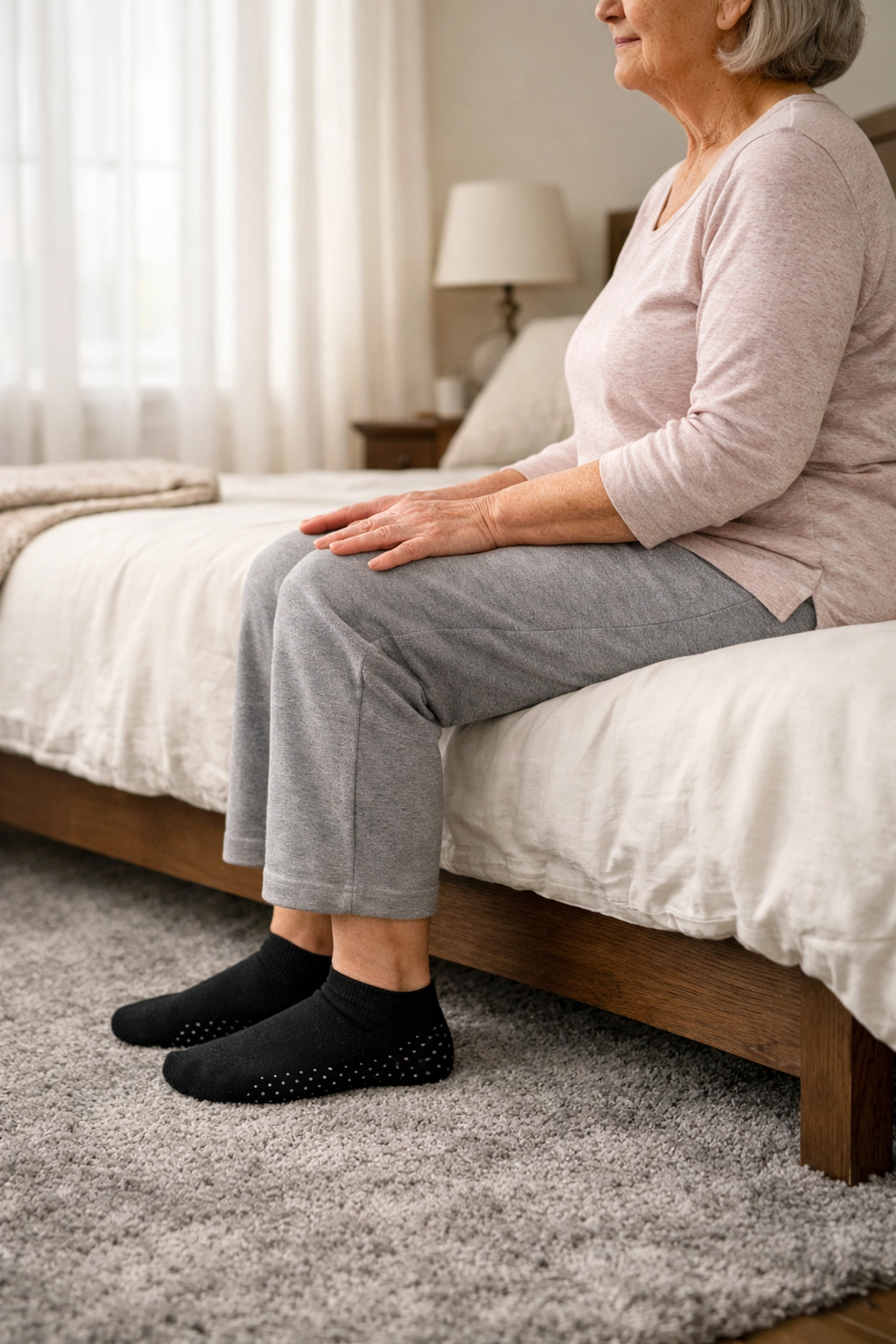
Check your bed height. When you sit on the edge of the mattress, your feet should be flat on the floor, and your knees should be level with your hips (forming a 90-degree angle).
- If it’s too low: You can buy inexpensive bed risers to lift the frame by 3 to 5 inches.
- If it’s too high: You might consider a lower-profile box spring or removing the frame altogether in favor of a lower platform.
- Firmness Matters: If the edge of the mattress is too soft, it will compress when you sit on it, making it harder to push off. A firm edge provides the support needed to stand up safely.
6. The "Quick-Start" Habit
We’ve all done it: the phone rings in the other room, or the doorbell rings, and we jump up to answer it. This is a significant mistake for seniors.
Many people experience a brief drop in blood pressure when moving from a lying or sitting position to standing. This is called orthostatic hypotension. It can cause a split second of dizziness or "seeing stars." If you start walking during that window of dizziness, your brain isn't fully communicating with your legs, and down you go.
The Fix:
Practice the "Pause and Pivot" method.
- The Sit-Pause: When you wake up or get up from the couch, sit on the edge for a full 30 to 60 seconds before standing.
- The Pump: While sitting, pump your ankles up and down or march your feet in place. This "wakes up" your circulation and gets blood flowing back to your brain.
- The Stand-Pause: Once you stand up, stay still. Hold onto a piece of furniture or your walker. Count to ten. Once you feel completely steady and your vision is clear, then start walking.
Let the phone go to voicemail. Whoever is at the door can wait an extra 30 seconds. Your safety is worth the delay.
7. Relying on "Good Enough" Lighting
As we age, the amount of light reaching the back of our eyes decreases. A 60-year-old eye needs about three times as much light as a 20-year-old eye to see clearly. Many seniors live in homes with "mood lighting" or dim hallways that they feel they "know by heart."
The mistake is assuming your memory of the layout will protect you. If a grandchild leaves a toy on the floor or a pet moves into your path, you won't see it in the shadows.
The Fix:
Lighting is one of the cheapest and most effective fall prevention tools.
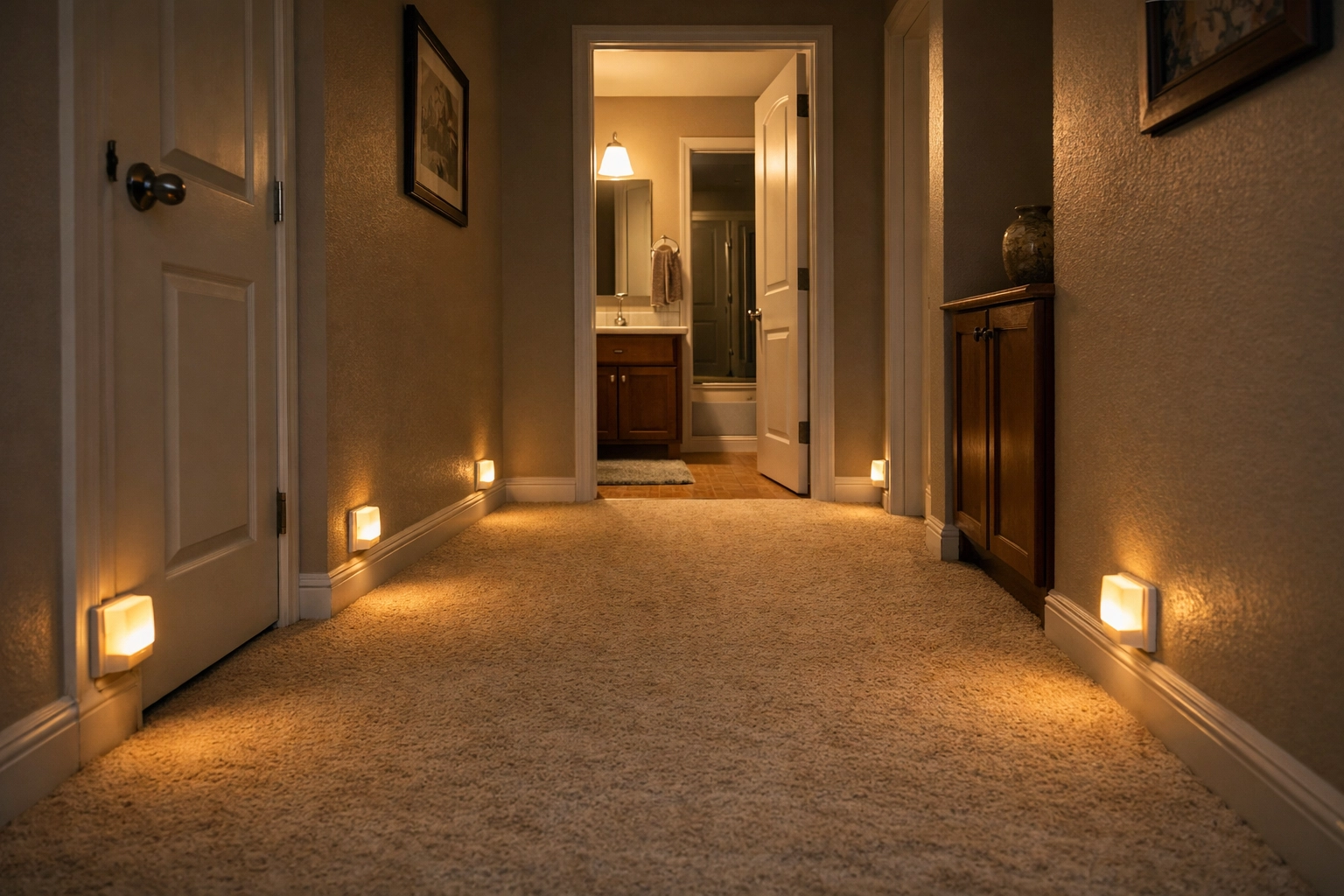
- Path Lighting: Install motion-sensor nightlights in the hallway between the bedroom and the bathroom. These should turn on automatically so you don't have to fumble for a switch.
- Brighten Up: Replace old incandescent bulbs with high-lumen LED bulbs (look for "daylight" or "cool white" tones).
- Consistent Levels: Try to keep lighting levels consistent between rooms. Moving from a very bright room to a dark hallway can cause temporary "blindness" while your pupils adjust.
- Switches at Both Ends: Ensure hallways and stairs have light switches at both the top and bottom.
Strength and Balance: The Internal Factor
While fixing the environment is vital, we also have to look at the "internal" environment: your body. A common mistake is thinking that "resting" is the best way to prevent falls. In reality, inactivity leads to muscle wasting (sarcopenia), which actually increases your risk.
Focus on Strength:
You don't need to lift heavy weights at a gym. Simple leg exercises, like standing up and sitting down from a sturdy chair (chair squats) without using your arms, can significantly build the quad muscles you need for stability.
Focus on Balance:
Balance is a skill that can be practiced. Standing on one leg while holding onto a kitchen counter for 30 seconds a day can help retrain your brain and nerves to maintain equilibrium.
Final Thoughts: A Reassuring Path Forward
Fall prevention doesn't have to be an overwhelming or scary process. It isn't about admitting "defeat" or "getting old." Instead, think of it as optimizing your environment so you can keep doing the things you love.
By fixing these seven common mistakes, you aren't just making your home safer; you're preserving your independence. Take it one step at a time. Maybe today you swap out your slippers, and next week you reorganize your pantry.
At Fall Guys Products, we believe that safety is the foundation of a happy life at home. Stay steady, take your time, and remember that small changes today lead to a much more confident tomorrow.

