
Your entryway is more dangerous than you think. It's where wet shoes meet slippery floors, where lighting is often inadequate, and where the transition between outdoors and indoors creates a perfect storm for falls. In fact, entryways are one of the most common locations for slip, trip, and fall incidents in homes: yet they're often overlooked when people think about fall prevention.
Whether you're a senior living independently, a caregiver looking after a loved one, or simply someone who wants to make their home safer, understanding these common entryway mistakes could prevent a serious injury. Let's walk through the seven most frequent errors people make and, more importantly, how to fix them before someone gets hurt.
Mistake #1: Using Mats That Are Too Small or Not Secured
You probably have a doormat at your entryway. But is it doing its job, or is it creating more hazards than it prevents?
The Problem
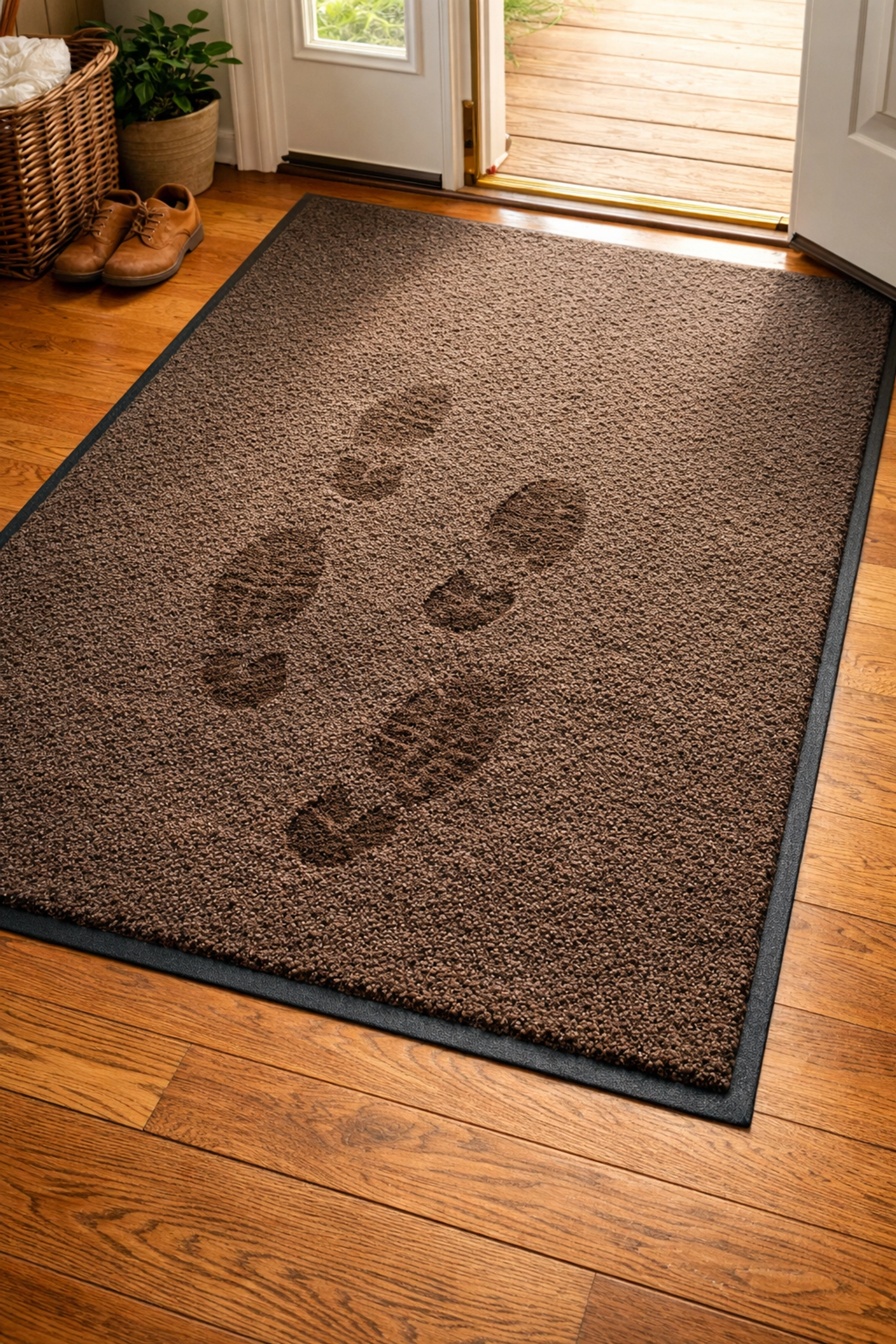
When mats are too small, water, dirt, and debris escape around the edges, creating wet patches on the surrounding floor. Even worse, unsecured mats can bunch up, slide, or curl at the edges: all of which become serious tripping hazards. Many people also leave saturated mats in place, which defeats their purpose entirely and spreads moisture throughout the entryway.
The Fix
Choose mats that are large enough that someone can take several full steps on them before reaching the dry floor beyond. This gives shoes adequate space to shed water and debris. The mat should extend at least three to four feet into the entryway for maximum effectiveness.
Secure your mats properly. Use mats with rubber backing, double-sided carpet tape, or specially designed mat anchors. The mat should lie completely flat with no curled edges or wrinkles.
Replace mats when they become saturated. During rainy or snowy seasons, you may need to swap out mats multiple times per day. Consider keeping backup mats on hand so you always have a dry replacement ready.
Mistake #2: Failing to Control Moisture and Wet Surfaces
Water doesn't stay where you want it to stay. That's the fundamental problem with entryways during wet weather.
The Problem
When moisture from shoes, umbrellas, and outerwear spreads beyond your mat area, it creates slip hazards throughout your entryway and into adjacent hallways. During winter months, snow melts and tracks through your home. During rainy seasons, water pools on tile or hardwood floors. These wet surfaces are especially dangerous because they're often unexpected: you don't anticipate a slippery floor several feet away from the door.
The Fix
Install barrier devices at doorways to contain water and prevent it from spreading into other areas. These can be simple threshold strips or more robust water barrier systems.
During winter, use additional absorbent mats in your entrance. Consider a "mat system" approach with an outdoor mat for initial debris removal, a transition mat just inside the door, and additional runners extending further into your home.
Treat outdoor walkways with ice melt products or sand. Prevention starts before someone even reaches your door. Keep a supply of ice melt near your entrance and apply it regularly during winter months.
Create a designated area for wet items. Set up a tray or shallow pan for wet umbrellas and a boot tray for wet shoes. This contains moisture in a controlled, predictable location rather than allowing it to spread across your floor.
Mistake #3: Inadequate or Missing Lighting
If you can't see a hazard, you can't avoid it. Yet many entryways are poorly lit or not lit at all.
The Problem
Dim lighting makes it difficult to spot water puddles, see the edge of a mat, or notice items left on the floor. This problem is worse during morning and evening hours when natural light is low. Older adults, whose vision naturally declines with age, are particularly vulnerable to poorly lit entryways.
Shadows, glare, and lighting that's positioned incorrectly can be almost as problematic as having no light at all. A single overhead fixture might create confusing shadows that obscure floor-level hazards.
The Fix
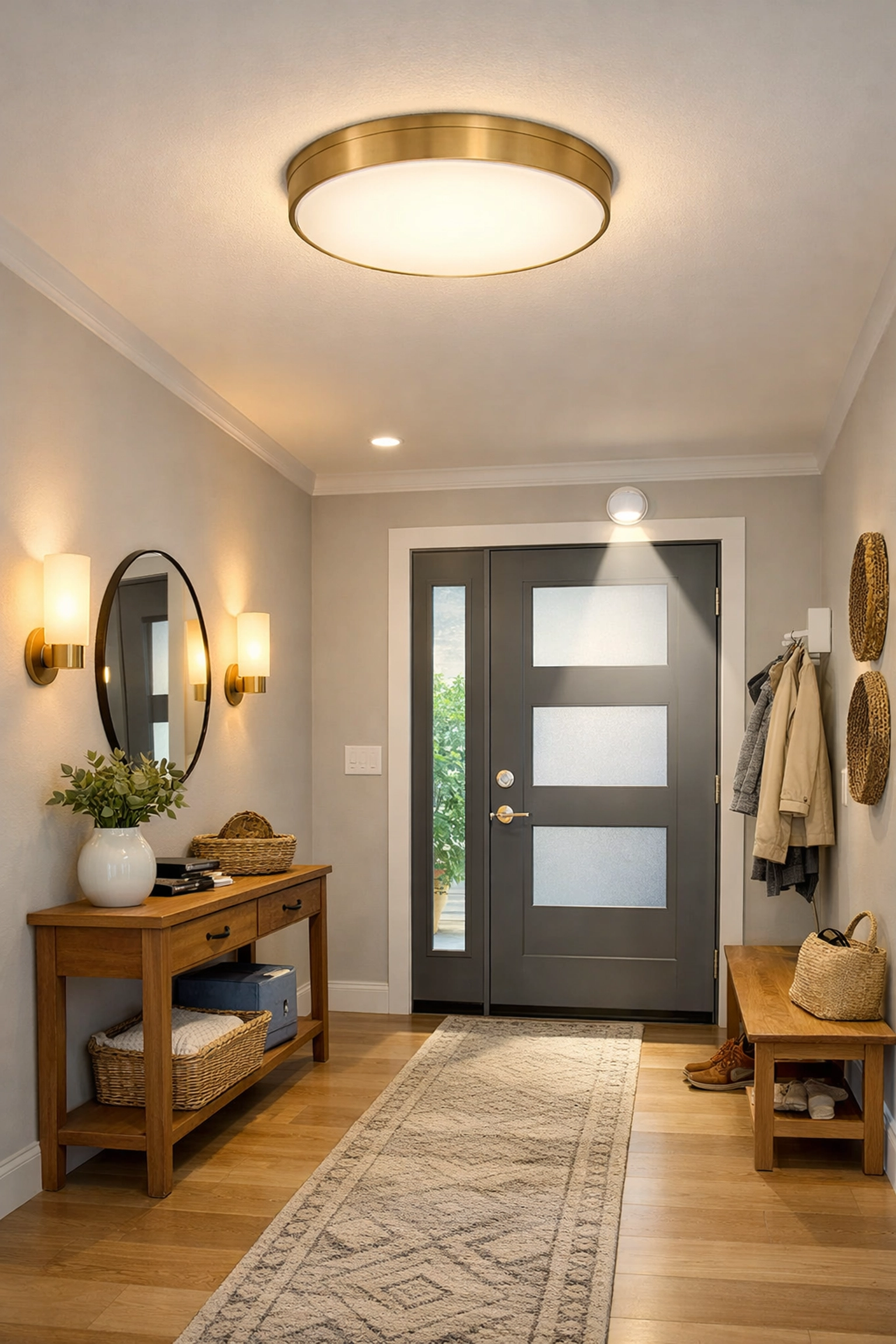
Install adequate lighting fixtures in your entryway with bulbs that provide sufficient brightness. As a general rule, entryways should be well-lit enough that you can clearly see the floor and any potential hazards.
Consider motion-activated lights that automatically illuminate when someone approaches. These are particularly helpful for evening arrivals when you're juggling bags, keys, and trying to find the light switch in the dark.
Install light switches at multiple locations. If you have stairs near your entrance, place switches at both the top and bottom. This ensures you're never navigating stairs or hallways in the dark.
Add supplemental lighting if needed. Under-cabinet lights, wall sconces, or even battery-operated stick-on lights can fill in dark corners that a single overhead fixture misses.
Mistake #4: Leaving Clutter and Obstacles in Walkways
Your entryway often becomes a dumping ground for shoes, bags, mail, packages, and seasonal items. All of these create tripping hazards.
The Problem
Boxes waiting to be unpacked, newspapers piled by the door, electrical cords running across walkways, shoes scattered about: these common entryway items create obstacles that are easy to trip over, especially when you're carrying things or not paying close attention.
The problem intensifies when mobility is already compromised. If someone uses a walker, cane, or wheelchair, even small obstacles can cause serious problems. In low light conditions, these items become invisible hazards.
The Fix
Remove debris from entryways regularly. Make it a daily habit to clear your entryway of accumulated items. Everything should have a designated home that's not in the walkway.
Secure cables with floor covers or run them along walls. If you must have electrical cords in your entryway area (for a lamp, phone charger, or other device), use cord covers or raceways that lie flat and prevent tripping.
Create organized storage solutions. Install hooks for coats and bags, a shoe rack or cubbies for footwear, and a basket or tray for mail and keys. When everything has a place, items are less likely to end up scattered on the floor.
Establish a "clear zone" policy. Designate the main walking path through your entryway as a permanent clear zone where nothing is ever placed, even temporarily.
Mistake #5: Ignoring Damaged or Uneven Flooring
Small floor imperfections that you walk over daily without thinking can be serious tripping hazards, especially for someone with balance issues or vision problems.
The Problem
Cracks in tile or concrete, loose floorboards, worn carpeting with exposed edges, tiles that have come loose, raised transitions between different flooring materials: all of these create uneven surfaces that can catch feet, walker wheels, or cane tips.
The danger is that you become accustomed to these imperfections. You know they're there and automatically adjust your gait. But visitors don't know, and even you might forget during a moment of distraction or when carrying something that blocks your view.
The Fix
Conduct routine inspections of your entryway flooring. Look specifically for cracks, loose materials, worn areas, and uneven transitions. Get down on your hands and knees if needed to really examine the floor surface.
Patch cracks that are greater than half an inch wide. For concrete or tile, use appropriate filling compound. For hardwood, fill gaps and splinters with wood filler.
Replace or re-stretch buckled carpeting. Carpet that has bubbles, wrinkles, or loose edges is a serious tripping hazard and should be repaired immediately.
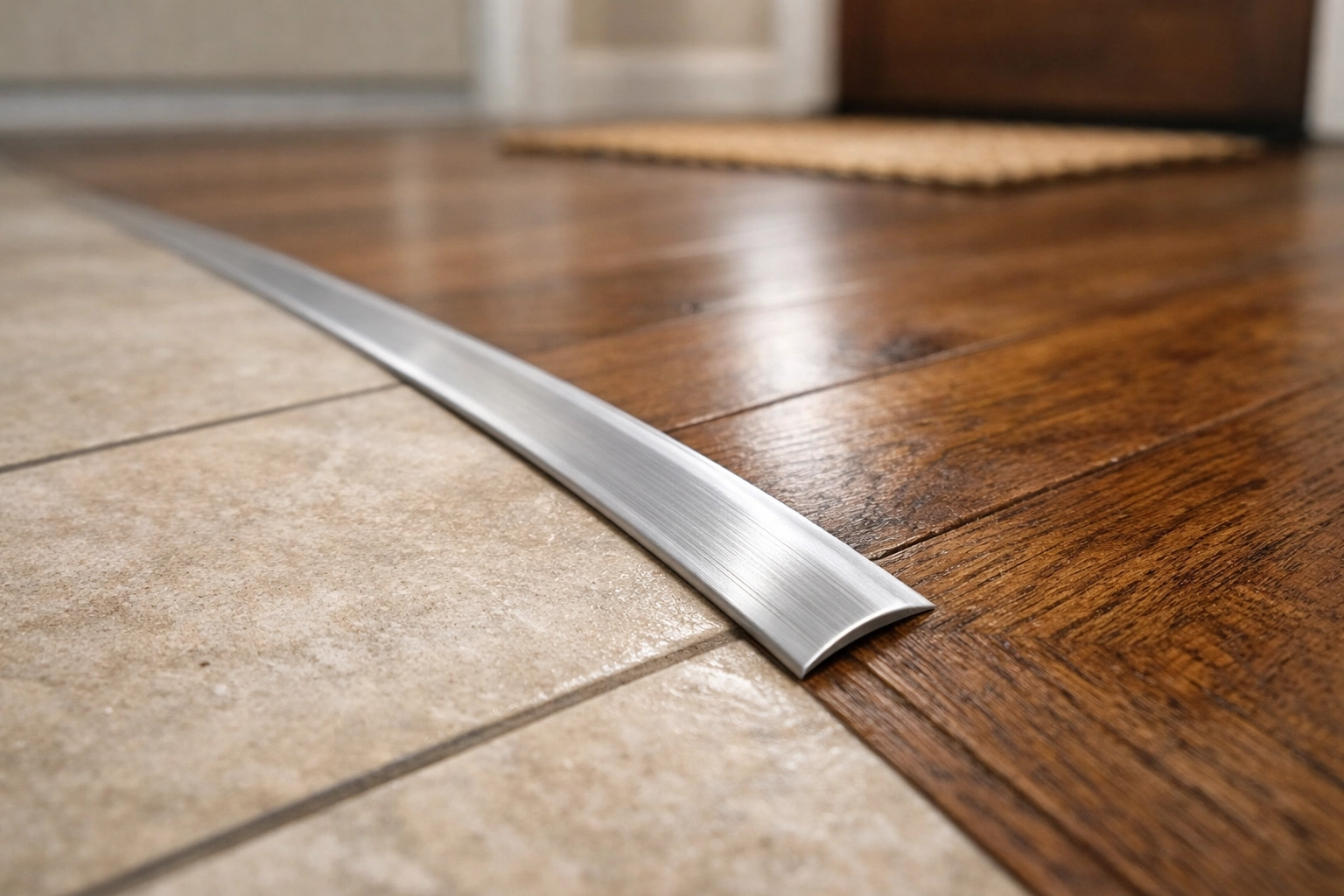
Level uneven transitions. The change between different flooring types: such as from tile to hardwood or from indoor flooring to an outdoor surface: should be smooth and gradual. Install transition strips if needed to create a gentle ramp rather than an abrupt edge.
Mistake #6: Missing or Loose Handrails and Grab Bars
Support structures are critical for maintaining balance during transitions, yet many entryways lack them entirely or have rails that aren't properly maintained.
The Problem
Entryway stairs without handrails provide no support when someone's balance wavers. Even a single step can be dangerous without something to hold onto. Loose or corroded railings are equally problematic: they feel secure until you put your full weight on them, then they give way.
For older adults or anyone with mobility challenges, the absence of support structures means every entry and exit becomes a potential fall risk. The problem is amplified when carrying groceries, packages, or other items that further compromise balance.
The Fix
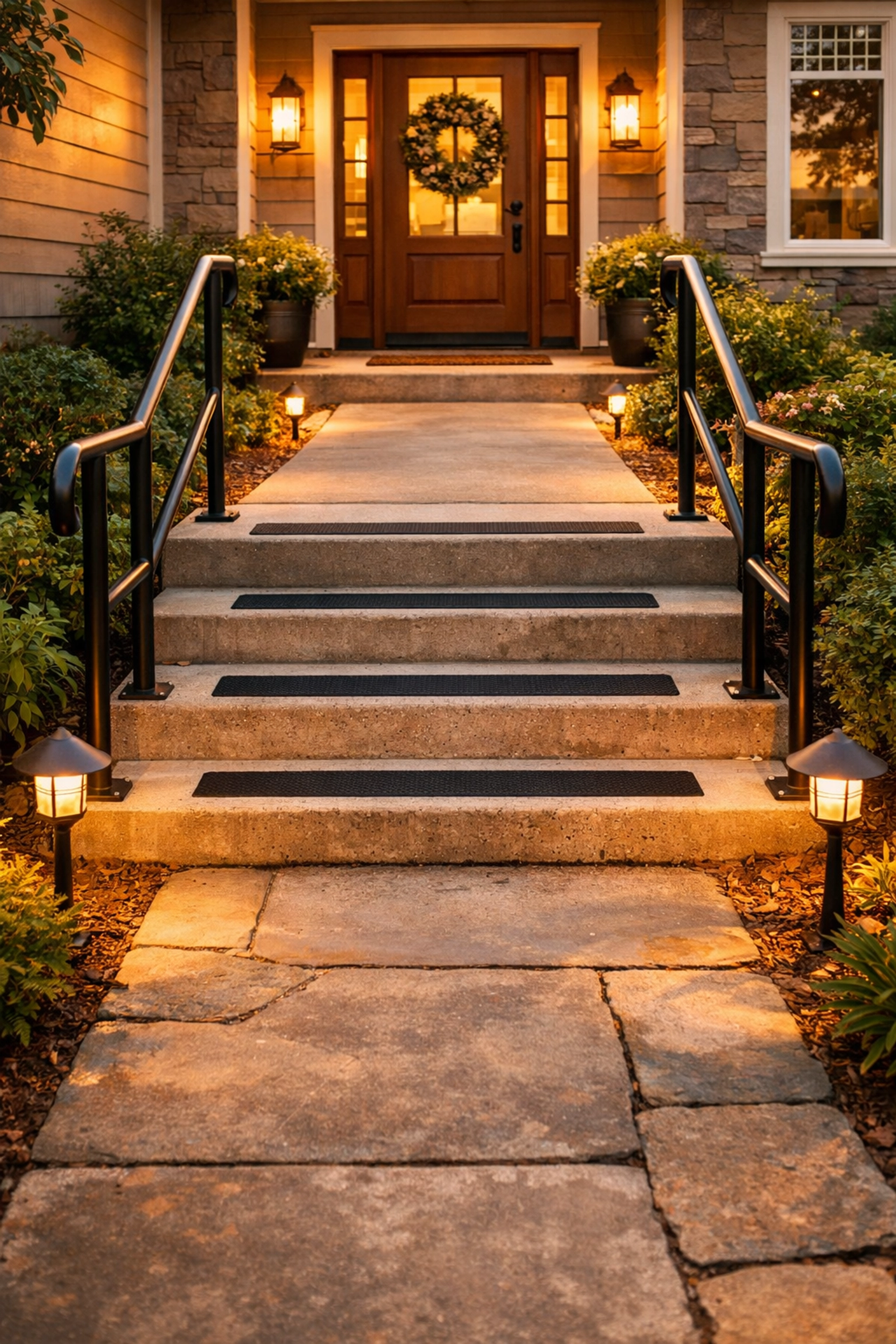
Ensure handrails are installed on both sides of any stairs in your entryway. Even if building codes only require one rail, two provides much better support and balance.
Check that handrails are properly secured and meet recommended height standards. Rails should typically be between 34 and 38 inches from the stepping surface. They should feel completely solid when you grip and pull on them.
Add grab bars near front doors to provide balance support when locking or unlocking doors, putting on or removing shoes, or simply transitioning between indoor and outdoor surfaces. A strategically placed grab bar can make the difference between maintaining balance and falling.
Inspect support structures regularly. At least once every few months, check all handrails and grab bars for loose mounting, corrosion, or other signs of wear. Tighten mounting hardware or replace damaged components immediately.
Mistake #7: Not Addressing Outdoor Entryway Hazards
Fall prevention doesn't start at your doorstep: it starts at the curb, sidewalk, or driveway leading to your entrance.
The Problem
Broken or uneven outdoor steps, cracks in sidewalks, debris on porches, seasonal ice and snow buildup, wet leaves in autumn, and poor outdoor lighting all create hazards before someone even reaches your door. Many people focus entirely on indoor safety while ignoring the equally important outdoor approach.
Outdoor hazards are particularly dangerous because they're exposed to weather conditions that constantly change their risk level. A perfectly safe walkway can become treacherous within hours when rain, ice, or fallen leaves appear.
The Fix
Inspect outdoor steps regularly for damage and unevenness. Look for crumbling edges, cracks, loose materials, or settling that has created uneven surfaces. Repair or replace damaged steps promptly.
Add non-slip material to outdoor stairways. Textured strips, non-slip paint, or outdoor-rated grip tape can significantly improve traction on outdoor steps and ramps.
Keep lawn and deck areas clear of fallen branches, leaves, and other debris. Establish a regular maintenance schedule, especially during autumn when falling leaves can quickly cover surfaces and hide other hazards.
Treat walkways seasonally. In autumn, remove wet leaves immediately. In winter, keep ice melt and sand readily available and apply them before they're needed. In spring, watch for uneven surfaces caused by freeze-thaw cycles. In summer, ensure that sprinklers aren't creating wet patches on walkways.
Turn on porch lights at night and anytime you'll be returning home after dark. Outdoor lighting should illuminate not just your door but your entire walkway from street or driveway to entrance.
Putting It All Together
Entryway safety isn't about making one big change: it's about addressing multiple small hazards that collectively create significant risk. Start by walking through your own entryway with fresh eyes. Better yet, ask someone else to point out potential hazards you might have stopped noticing.
Focus on quick wins first. Securing mats, removing clutter, and replacing burned-out light bulbs can happen today. Then tackle projects that require more time or resources, like repairing damaged flooring or installing additional handrails.
Remember that entryway conditions change with seasons and weather. What's safe today might be hazardous tomorrow after a rainstorm or snowfall. Build regular inspection into your routine: a quick walk-through every few days can catch new hazards before they cause problems.
The goal isn't perfection. It's progress. Each hazard you address reduces fall risk and makes your home safer for everyone who enters. Start with one mistake from this list, fix it, then move on to the next. Before you know it, your entryway will be significantly safer, and you'll have the peace of mind that comes from knowing you've reduced the risk of a preventable fall.

