
When we think about home safety, our minds often go straight to the bathroom or the kitchen. We think about grab bars near the shower or keeping the floor dry near the sink. But there is one area that acts as the "gatekeeper" to your independence, and it is frequently the most dangerous spot in the house: the entryway.
Whether it’s the front door, the garage entrance, or the back porch, the entryway is a transition zone. It’s where you move from uneven outdoor terrain to flat indoor surfaces, often while carrying groceries, fumbling for keys, or dealing with the glare of the sun. As we age, these transitions require more focus and better environmental design to stay safe.
At Fall Guys Products, we see the results of entryway accidents all the time. The good news is that most of these risks are entirely avoidable. By identifying the mistakes you’re making today, you can create a welcoming, secure entrance that keeps you moving confidently.
Here are seven common entryway safety mistakes and the practical steps you can take to fix them.
1. The "Invisible" Threshold
The most common mistake people make is overlooking the small lip or "threshold" at the base of the door. Even a rise of half an inch can be enough to catch a toe, especially if you have a shuffling gait or use a walker. These thresholds often blend into the color of the flooring, making them nearly impossible to see in low light or for those with declining depth perception.
How to Fix It:
Visual contrast is your best friend here. If your threshold is the same color as your porch and your interior hardwood, it creates a visual "flat" zone that tricks the brain.
- Apply Contrast Strips: Use a strip of high-visibility tape or a different colored floor finish to mark exactly where the elevation change occurs.
- Install a Threshold Ramp: If the lip is higher than a quarter-inch, consider a small rubber or aluminum threshold ramp. These provide a smooth, sloped transition that eliminates the "tripping edge" entirely.
2. Inadequate Lighting (The "Shadow" Trap)
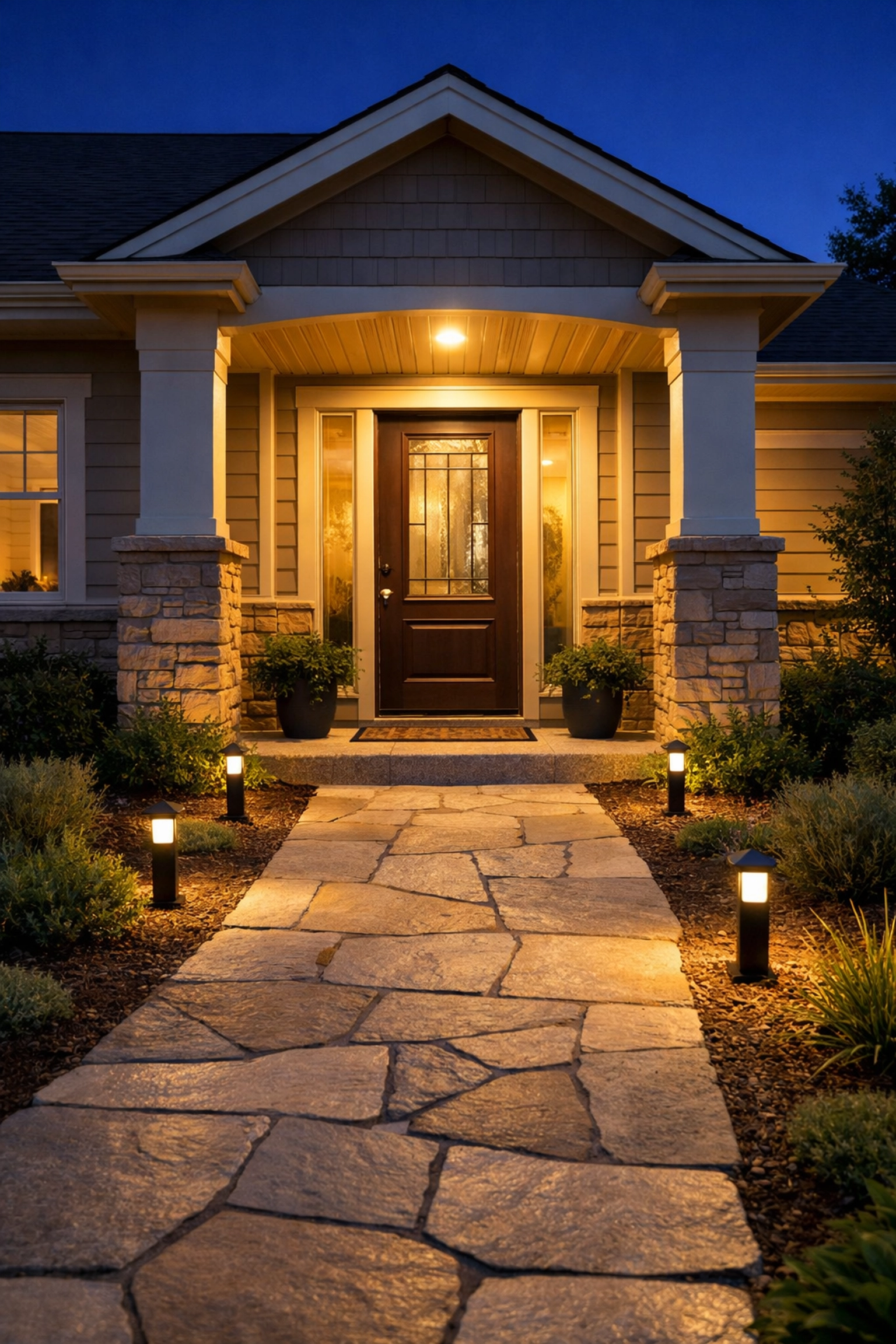
Many entryways rely on a single overhead porch light. While this might look nice from the street, it often creates harsh shadows right where you need to see most: the lock on the door and the steps beneath your feet. If you are squinting to find your keyhole, your balance is already compromised.
How to Fix It:
You need a layered lighting approach. Relying on one bulb isn’t enough for maximum safety.
- Motion-Sensing Lights: Install motion-activated lights that illuminate the path before you reach the door. This ensures you never have to navigate the dark to find a switch.
- Path Lighting: Use low-level solar or hardwired lights along the walkway leading to the door.
- Backlit Locks: If you struggle to see the keyhole, consider a smart lock with a backlit keypad or install a small, dedicated LED light directly above the handle.
3. Handrails That End Too Soon
A handrail is only useful if it’s there when you need it. A major mistake in entryway design is having a handrail that starts at the first step and ends exactly at the last one. The moment of greatest instability often happens at the very top or the very bottom of the stairs, where you are transitioning your weight to a flat surface.
How to Fix It:
Handrails should be continuous and extended.
- The 12-Inch Rule: Ideally, a handrail should extend at least 12 inches past the top and bottom steps. This allows you to stabilize your body before you begin to climb and keep your balance until you are safely on level ground.
- Double-Sided Rails: If your entryway has more than two steps, having a rail on only one side is a mistake. Asymmetry in support can lead to leaning, which increases the risk of a fall. Install rails on both sides to provide "centered" stability.
4. The "Drop Zone" Clutter
The entryway often becomes a catch-all for the things we bring into the house. Boots, umbrellas, packages, and mail tend to pile up right inside the door. When you are entering the house: perhaps a bit tired or in a hurry to get out of the elements: these items become a dangerous obstacle course.
How to Fix It:
Create a dedicated "landing strip" that is offset from the walking path.
- Clear the Path: Ensure there is a 36-inch wide clear path from the door into the main living area.
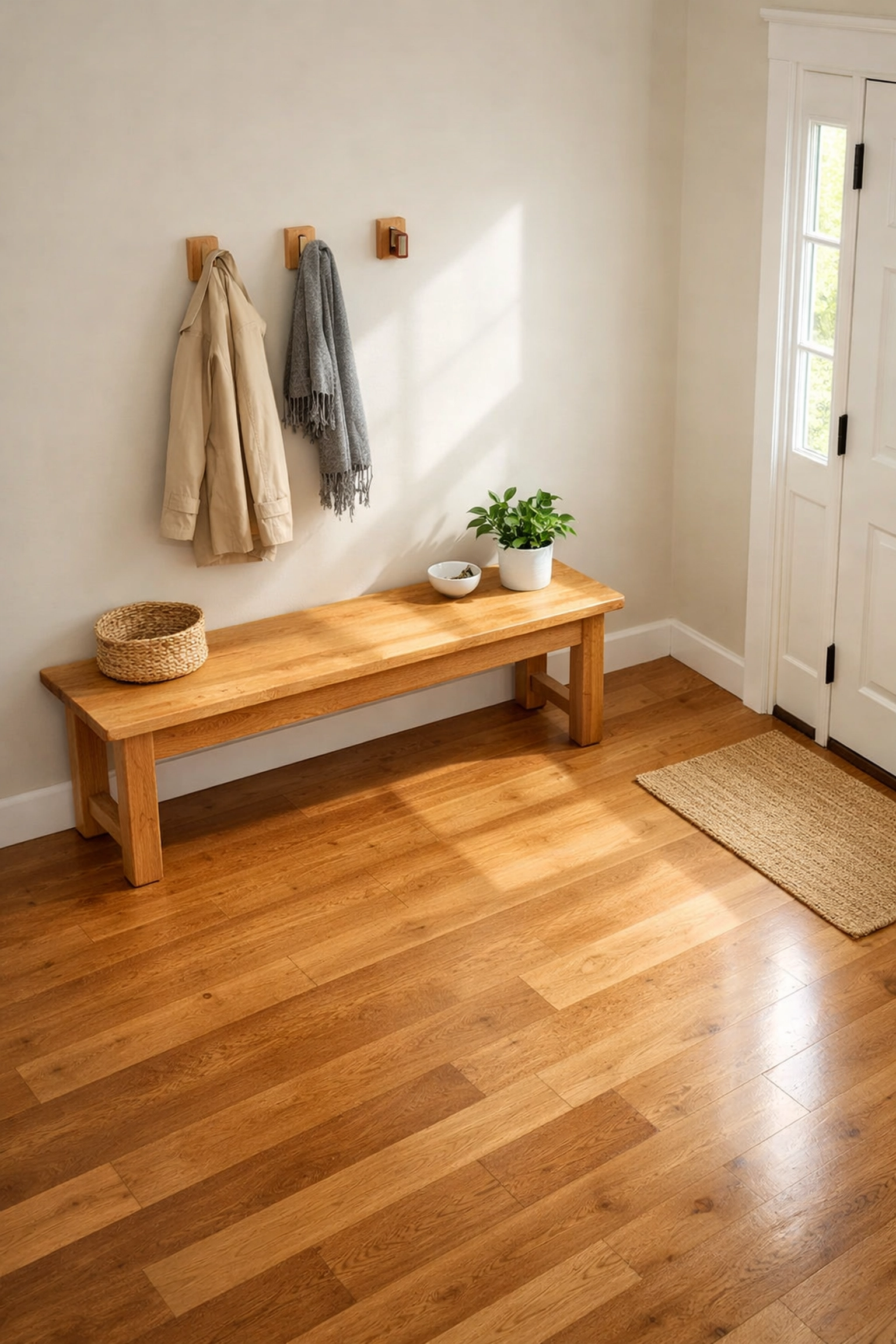
- Wall-Mounted Storage: Instead of a floor-standing coat rack or a basket for shoes, use wall-mounted hooks and shelves. Keeping the floor clear is the single most effective way to prevent trips in the "drop zone."
- A Sturdy Bench: If you need to take off shoes, don't do it while leaning against the wall. Place a sturdy, non-rocking bench near the door so you can sit down safely to manage footwear.
5. Dangerous "Welcome" Mats
It’s ironic, but the very thing designed to welcome people into your home is often a primary cause of falls. Thick, heavy coco mats or lightweight rugs without backing can slide across the floor or have corners that curl up over time. These "curled" corners are a nightmare for anyone using a cane or walker.
How to Fix It:
Don't choose a rug based on aesthetics alone.
- Beveled Edges: Look for heavy-duty rubber mats with beveled (sloped) edges. This prevents the "lip" that catches toes.
- Non-Slip Backing: If you use an indoor rug, it must have a rubberized, non-slip backing.
- Secure the Corners: For existing rugs, use double-sided "rug gripper" tape to ensure the corners stay perfectly flat against the floor. If a rug starts to curl and won't lay flat, it’s time to get rid of it.
6. Ignoring the "Weather Factor"
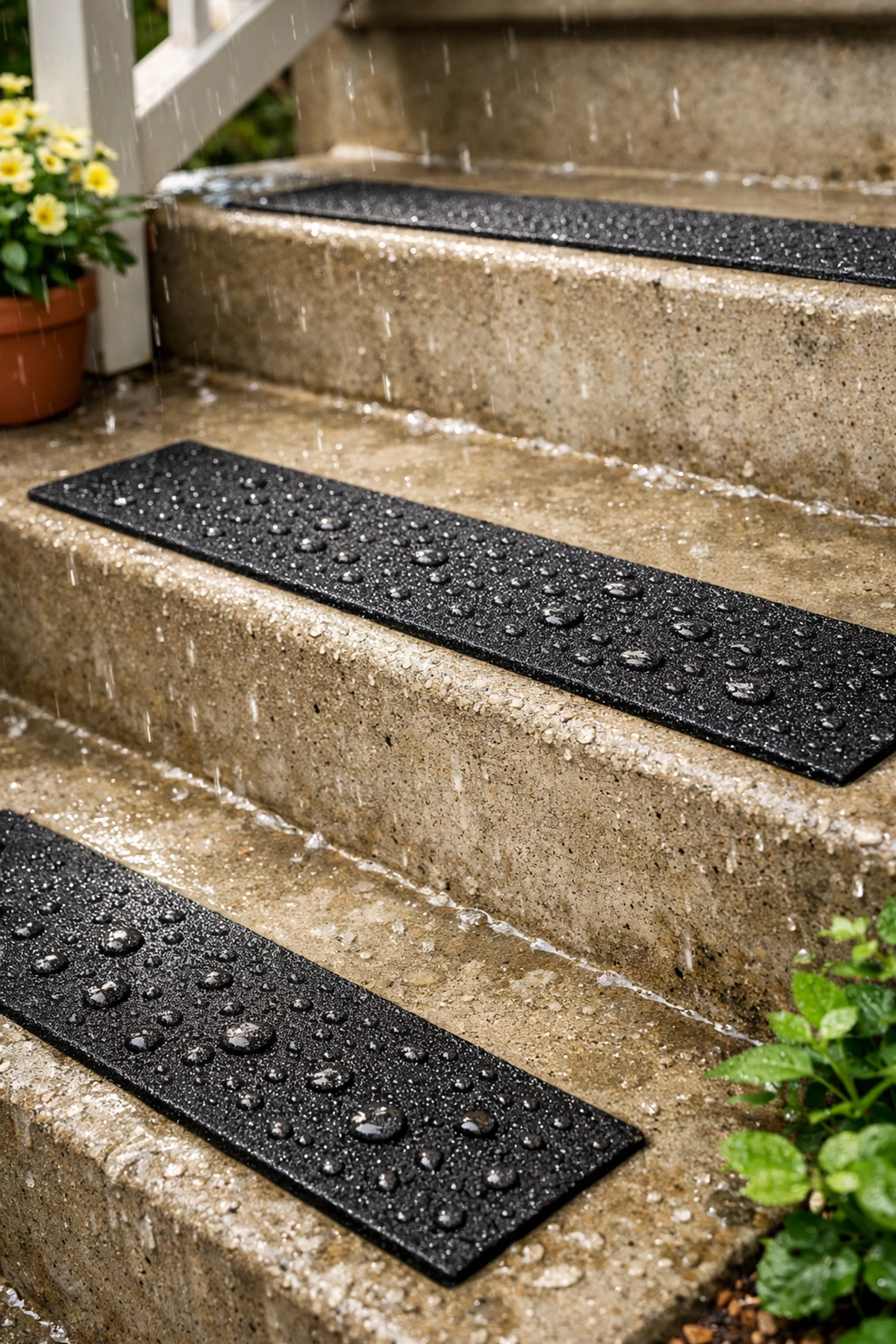
Rain, snow, and even morning dew can turn a porch into a skating rink. Many homeowners make the mistake of using smooth concrete or painted wood for their entryways. While these surfaces look clean, they lose almost all traction when wet.
How to Fix It:
Increase the "coefficient of friction" on your walking surfaces.
- Non-Slip Coatings: You can apply clear, grit-based coatings to wooden or concrete steps. This adds a sandpaper-like texture that provides grip even in the rain.
- Anti-Slip Treads: For outdoor stairs, consider adhesive anti-slip treads. These are often bright (providing the contrast we mentioned in point #1) and provide an aggressive grip.
- Adequate Overhang: If possible, ensure your entryway has a sufficient awning or porch roof. Keeping the area dry is much easier than trying to make a wet surface safe.
7. Carrying Too Much at Once
This is a behavioral mistake rather than a structural one, but it’s just as dangerous. We’ve all tried to make "one trip" with the groceries. However, carrying heavy or bulky bags shifts your center of gravity and prevents you from using your hands for balance or to grab a handrail.
How to Fix It:
Change the "entry protocol" to prioritize stability over speed.
- The "Half-Load" Rule: Never carry so much that you can’t see your feet or reach a handrail.
- Exterior Shelving: Install a small "package shelf" next to the door (about waist height). This allows you to set your bags or mail down safely while you unlock the door, rather than trying to balance them on your knee or set them on the ground (which requires a dangerous deep bend).
- Use a Cart: If you have a long walkway or many groceries, keep a foldable cart in the trunk of your car or inside the garage. It’s better to roll your items to the door than to carry them.
The Importance of the "Final Check"
Correcting these seven mistakes creates a "buffer zone" of safety. It transforms the entryway from a source of anxiety into a functional part of your home.
The best way to assess your entryway is to look at it through a fresh pair of eyes. Go outside at dusk and try to enter your home. Can you see the steps clearly? Is there a place to put your keys down? Does your handrail feel solid and reach far enough?
Home safety isn't about making massive, expensive renovations all at once. It’s about these small, intentional fixes that respect the reality of how our bodies move. By fixing the threshold, brightening the lights, and clearing the clutter, you aren't just preventing a fall: you’re ensuring that your home remains a place of comfort and independence for years to come.
Take a look at your front door today. Which of these seven mistakes can you fix this weekend? Your future self will thank you for the foresight.

