
When we talk about home safety for our aging loved ones, the bedroom is usually at the top of the list. It’s where we spend a third of our lives, but for a senior, it’s also where many falls happen: often in the middle of the night when they’re groggy or the lighting is dim.
Bed rails seem like the perfect solution. They offer a sturdy handhold for getting in and out of bed and provide a sense of security against rolling out. But here’s the thing: bed rails aren't a "set it and forget it" tool. If they aren't used correctly, they can actually create new risks.
I’m Brian Kerr, and at Fall Guys Products, we’ve spent a lot of time looking at how mobility aids work in the real world. We want you to feel confident in the safety of your home. To help with that, let’s walk through the seven most common mistakes people make with bed rails and, more importantly, how you can fix them today.
1. Improper Installation and "The Gap"
The most common mistake we see is assuming a bed rail is secure just because it’s tucked under the mattress. Most bed rails rely on the weight of the mattress to stay in place, but that’s rarely enough.
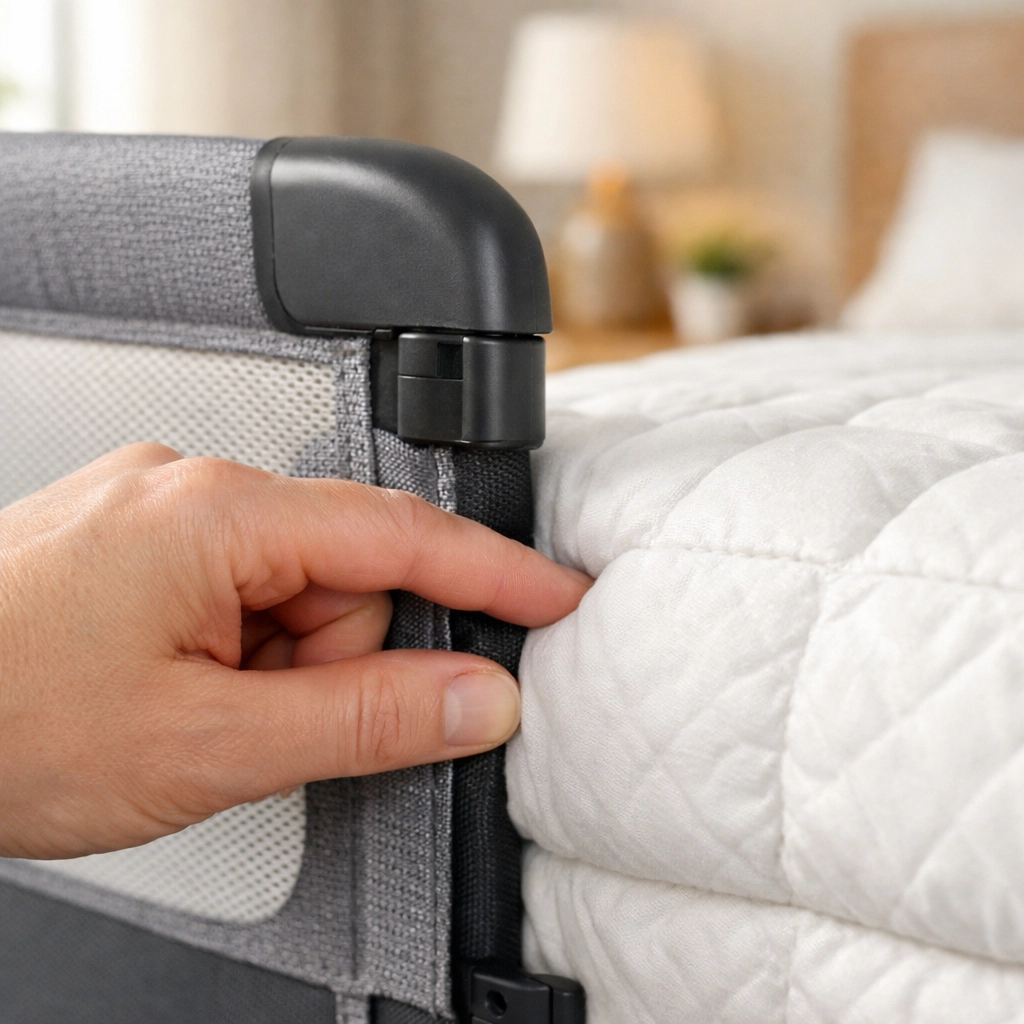
Over time, as a person gets in and out of bed, the rail can gradually slide outward. This creates a gap between the rail and the side of the mattress. This gap is the number one cause of entrapment, which is a serious safety hazard. If a senior rolls toward the edge and their limb or head gets caught in that space, it can lead to injury.
How to Fix It:
Always use the safety straps that come with the rail. Most modern rails include a long strap that wraps around the entire bed frame or the box spring on the opposite side. This anchors the rail tightly against the mattress. If your rail didn't come with a strap, it might be an older model that needs upgrading. Check the fit every single time you change the sheets. If you can fit more than two fingers between the rail and the mattress, it’s too loose.
2. Using Incompatible Equipment
Not all beds are created equal. We live in an era of adjustable power bases, extra-thick pillow-top mattresses, and lightweight foam beds. A rail designed for a traditional 10-inch inner-spring mattress on a wooden frame might not work safely on a 14-inch memory foam mattress or a hospital bed.
If the rail is too short for a thick mattress, it won't provide enough "height" above the sleeping surface to prevent a fall. Conversely, if the mattress is too light, it won't provide the counter-pressure needed to keep the rail stable.
How to Fix It:
Before you buy or install a rail, measure your mattress height. Ensure the rail is designed to extend at least 8 to 10 inches above the top of the mattress when it's in place. If you have an adjustable bed, you must use a rail specifically designed for motion; otherwise, the rail could bend or damage the motor: or worse, create a shifting gap as the head of the bed rises.
3. Treating Bed Rails as Physical Restraints
This is a tough one to talk about, but it’s vital. Sometimes, caregivers use full-length bed rails to keep a loved one from getting out of bed at night, especially if they are prone to wandering. However, using a rail to prevent someone from leaving the bed is legally and safety-wise considered a "restraint."
When a person feels trapped, their natural instinct is to try and climb over the rail. Because a bed rail is high, a fall from the top of the rail is much more dangerous than a fall from the bed itself. It often results in head injuries because the person is falling from a greater height and usually landing off-balance.
How to Fix It:
Use half-length or "M" shaped rails instead. These provide a handhold for repositioning and a "reminder" of where the bed edge is, but they leave the bottom half of the bed open. This allows the person to exit the bed safely if they need to. If wandering is the concern, consider using floor mats or motion sensors that alert a caregiver rather than trying to pin someone in with hardware.
4. Neglecting Regular Inspections
We tend to think of medical equipment as indestructible, but bolts loosen, fabric covers tear, and metal can fatigue. A bed rail takes a lot of stress every day. Think about the leverage applied when a 180-pound person pulls on that rail to sit up.
A loose bolt might seem minor, but it can cause the rail to wobble. When a senior feels a "wobble" in their support, they lose confidence, which can lead to a tensed-up posture and a higher risk of losing their balance.
How to Fix It:
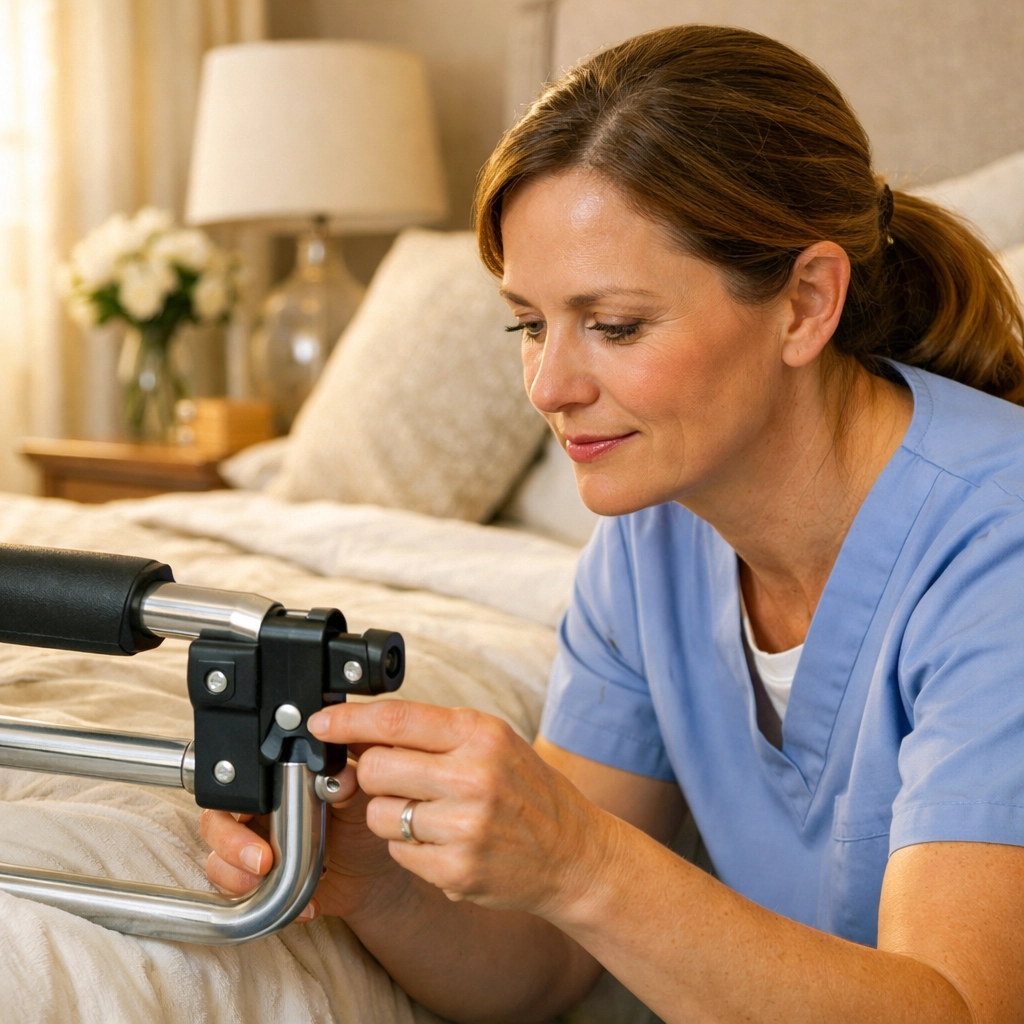
Put a "safety check" on your calendar once a month. Check the tension of the safety straps, ensure all bolts are hand-tight, and look for any tears in the foam padding or mesh covers. If the rail has a "swing-down" feature (where it folds out of the way), make sure the locking mechanism clicks firmly and doesn't have any play in it.
5. Overlooking Cognitive Challenges
If your loved one has dementia, Alzheimer's, or is dealing with the side effects of new medication, their relationship with a bed rail changes. They may not remember why the rail is there. They might try to take it apart, or they might become agitated by its presence.
In cases of cognitive impairment, a bed rail can sometimes cause more confusion than comfort. If they don't recognize the rail as a tool, they might perceive it as a barrier to overcome, leading to those dangerous "climbing over" scenarios we mentioned earlier.
How to Fix It:
Assessment is key. Consult with a physical or occupational therapist. They can help determine if a bed rail is the right tool for someone with cognitive challenges. Sometimes, a "transfer pole" (a floor-to-ceiling pole) is a better option because it provides the same standing support without creating a "cage" feeling around the bed.
6. Poor Placement Along the Bedside
Where you place the rail along the length of the mattress matters just as much as how tight it is. If the rail is too far toward the head of the bed, the person might have to reach behind themselves to grab it, which can throw off their center of gravity. If it's too far toward the foot, it won't help them sit up from a lying position.
How to Fix It:
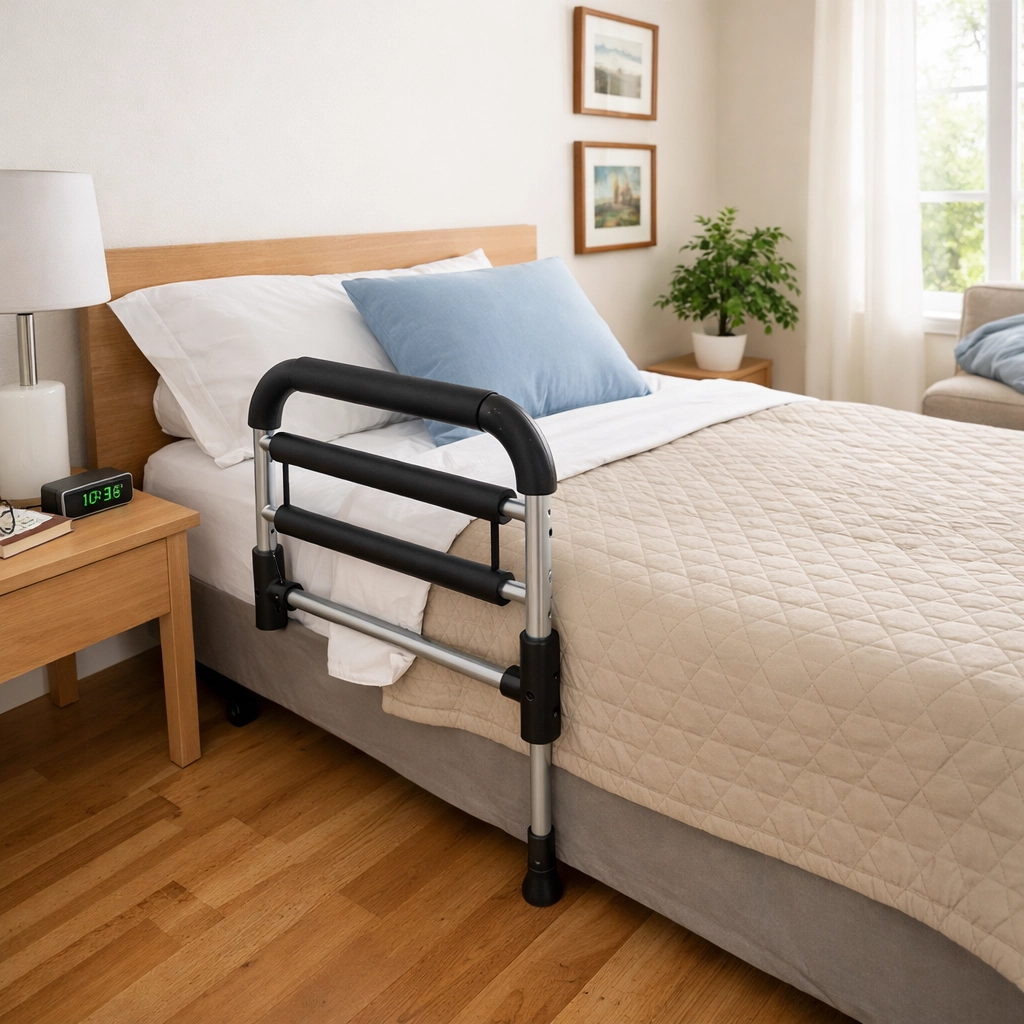
The best placement is usually near the upper third of the bed. It should be positioned so that when the person is lying down, the rail is roughly adjacent to their hip or waist. This allows them to use it for rolling over and gives them a natural place to grab when they begin to swing their legs out of bed.
7. Relying on the Rail Instead of Building Strength
This is the biggest mistake of all. A bed rail is a wonderful aid, but it shouldn’t be a replacement for physical mobility. If someone relies 100% on a rail to pull themselves up because their legs are weak, they aren't practicing the functional movements they need to stay independent.
Fall prevention is a holistic game. It’s about the environment (like the bed rail), but it’s also about the person's strength and balance.
How to Fix It:
Encourage a daily routine of simple, low-impact exercises. Even something as basic as "sit-to-stands" from a sturdy chair can build the quad and core strength needed to get out of bed more easily. The goal is to have the bed rail there as a "backup" and a light guide, rather than a crane that does all the work.
How to Create a Fall-Safe Bedroom Environment
Fixing the bed rail is a great start, but it’s just one piece of the puzzle. To truly create a reassuring and safe environment, we need to look at the whole room.
Lighting is Everything
Many falls happen because of "vision-related" balance issues. When we wake up at 2 AM, our eyes take longer to adjust.
- The Fix: Use motion-activated nightlights under the bed or along the path to the bathroom. This provides a soft glow that lights up the floor without being blindingly bright.
Remove the Obstacles
If a senior has to navigate a "slalom course" of rugs, slippers, and furniture to get to the door, the risk of a trip is high.
- The Fix: Clear the path. Remove throw rugs or use double-sided tape to secure them. Ensure there is a clear, wide walkway from the bedside to the bathroom and the door.
Proper Footwear
Socks on hardwood or tile are a recipe for a slide. Even "non-slip" socks can bunch up and cause a trip.
- The Fix: Keep a pair of sturdy, rubber-soled slippers or shoes right next to the bed. Make sure they are easy to slip on without bending over: using a long-handled shoehorn can help here.

Understanding the "Why" Behind the Help
At the end of the day, we use these tools because we want our parents, grandparents, or even ourselves to feel empowered. There is a psychological component to fall prevention that is just as important as the physical one.
When a senior feels safe in their bed, they sleep better. When they sleep better, their cognitive function is sharper, their mood is improved, and their balance is steadier the next day. A properly installed bed rail isn't just a piece of metal; it’s a tool for a better quality of life.
If you’re a caregiver, take a breath. You don't have to get everything perfect on day one. Start by checking that safety strap today. Measure that mattress tomorrow. Small, incremental changes are what lead to a truly safe home.
Summary Checklist for Bed Rail Safety
To wrap things up, here is a quick checklist you can use this weekend to make sure everything is in tip-top shape:
- Tension Check: Pull the rail away from the bed. If it moves more than an inch, tighten the safety straps.
- The Finger Test: Ensure there is no gap between the mattress and the rail where a hand or arm could get stuck.
- Height Check: Ensure the rail sits high enough above the mattress to provide a real barrier and handhold.
- Visibility: Can the senior see the rail in the dark? (Consider adding a small strip of glow-in-the-dark tape to the top handle).
- Hardware: Are there any rough edges or loose bolts?
- Suitability: Is the person still able to use the rail safely, or have their needs changed (e.g., increased confusion or weakness)?
Safe sleep is the foundation of a safe day. By avoiding these common mistakes, you’re turning the bedroom back into what it should be: a place of rest and recovery, not a place of worry. Stay safe out there!

