
Falls are one of the leading causes of injury among older adults, but many balance issues can be identified and addressed before a fall ever happens. Testing your balance at home is a simple, proactive step that takes less than five minutes and can provide valuable insight into fall risk.
This guide walks you through a straightforward five-step balance assessment you can do at home, explains what the results mean, and offers practical exercises to improve stability over time.
Why Balance Testing Matters
Balance naturally changes as we age. Muscle strength decreases, reflexes slow down, and conditions like arthritis or neuropathy can affect how steady we feel on our feet. Many people don't realize their balance has declined until they experience a close call or an actual fall.
Regular balance testing helps you:
- Identify balance issues early, before they lead to a fall
- Track improvements or declines over time
- Build confidence in your ability to move safely
- Know when it might be time to consult a healthcare provider
The good news is that balance can improve with practice. Even small improvements in stability can significantly reduce fall risk.
Setting Up Your Testing Space
Before you begin testing, create a safe environment. You'll need:
- A clear, flat space with no rugs or obstacles
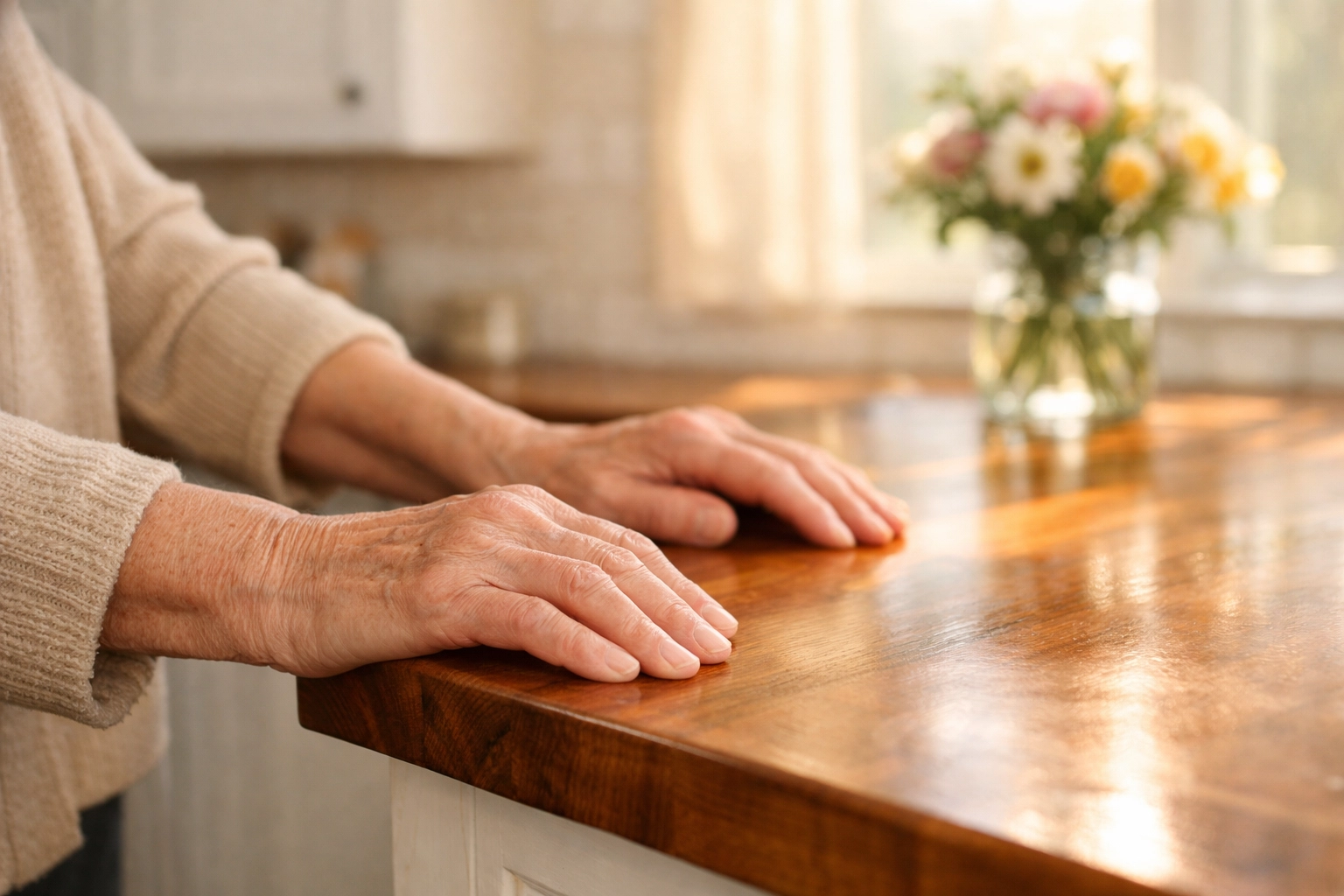
- A sturdy chair or countertop within arm's reach for support
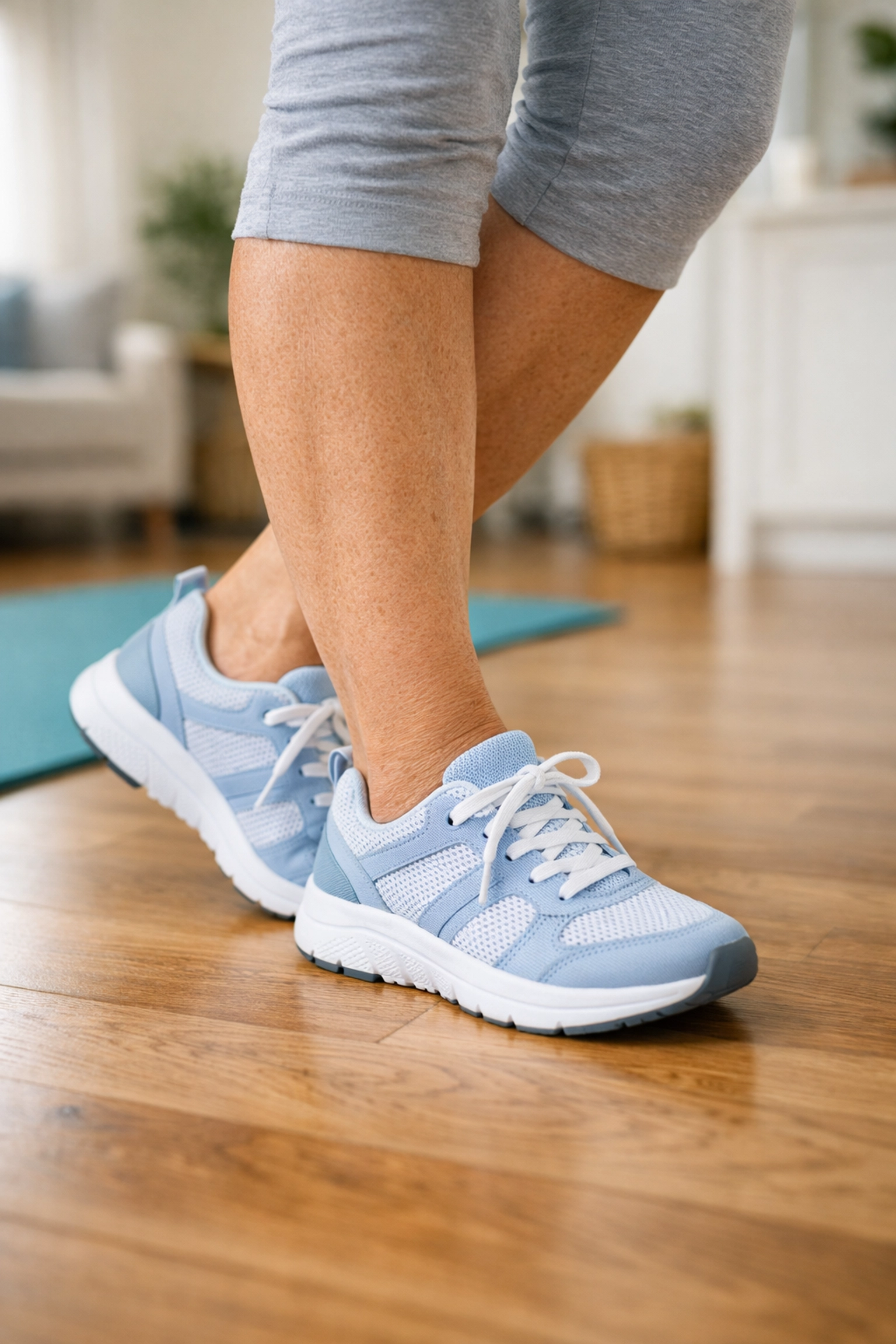
- Non-slip footwear or bare feet (avoid socks on smooth floors)
- A family member or friend nearby to assist if needed
Never attempt balance testing if you feel dizzy, lightheaded, or unwell. If you have a history of falls or significant balance problems, consult with your doctor before trying these tests at home.
The 5-Step Home Balance Test
This progressive test moves from easier to more challenging positions. The goal is to hold each position for 10 seconds without needing to grab onto something for support. If you cannot hold a position for 10 seconds, that's okay: it simply tells you where to focus your improvement efforts.
Step 1: Stand with Feet Shoulder-Width Apart
Start in the most stable position possible.
How to do it:
- Stand with your feet parallel and about shoulder-width apart
- Keep your arms relaxed at your sides
- Look straight ahead at a fixed point
- Hold this position for 10 seconds
What this tests: Basic standing balance and postural stability. Most people should be able to hold this position comfortably.
Step 2: Stand with Feet Together
This narrows your base of support, making balance slightly more challenging.
How to do it:
- Bring your feet together so they're touching side by side
- Keep your arms at your sides
- Focus on a point ahead of you
- Hold for 10 seconds
What this tests: Your ability to maintain balance with a narrower stance, which is common when standing in line or at the sink.
Step 3: Semi-Tandem Stance
Now we introduce an offset position that mimics walking movements.
How to do it:
- Place one foot slightly ahead of the other
- The heel of your front foot should be near the middle of your back foot
- Keep both feet flat on the ground
- Hold for 10 seconds, then switch feet
What this tests: Your ability to shift weight and maintain stability during transitional movements.
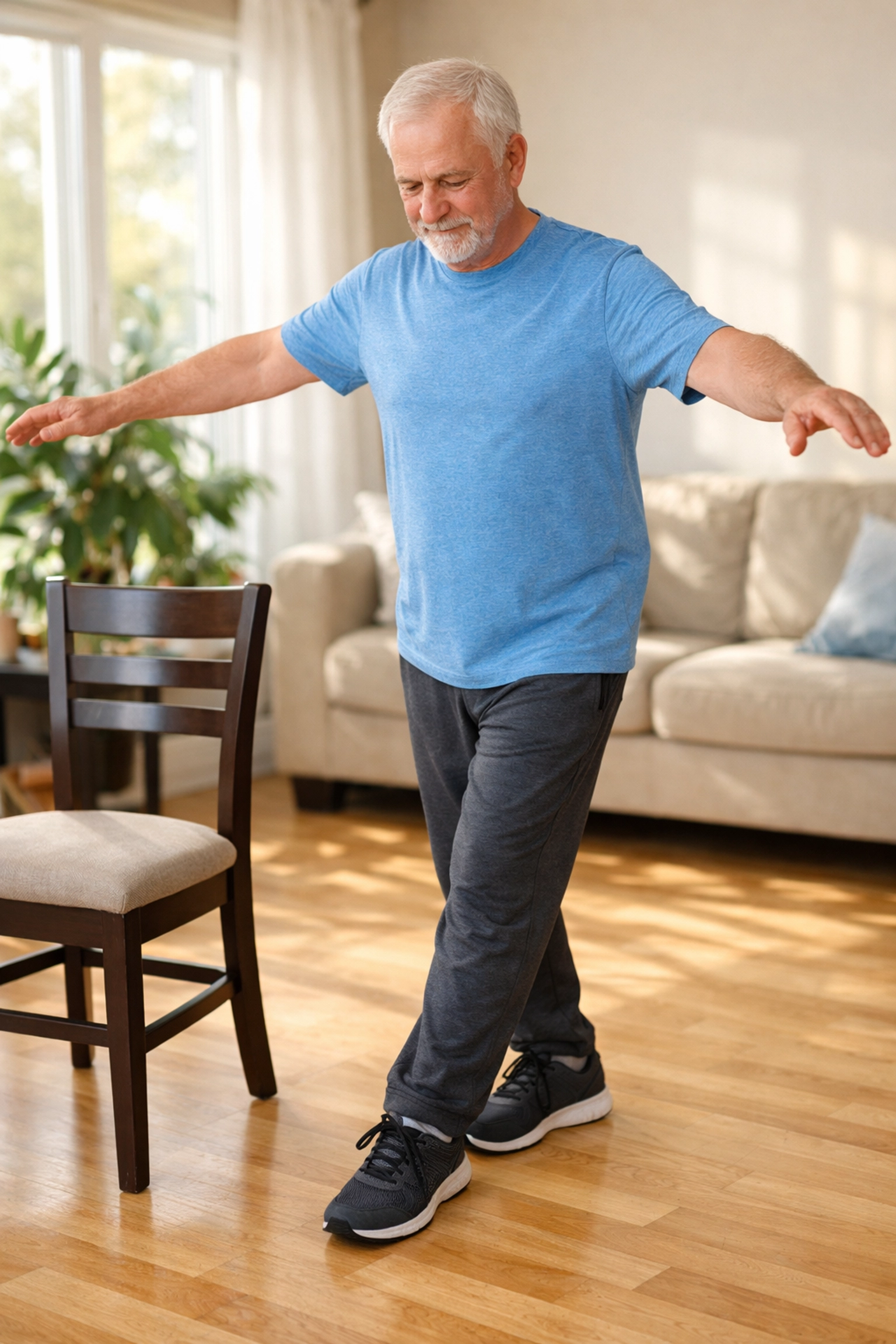
Step 4: Tandem (Heel-to-Toe) Stance
This is a more advanced balance position.
How to do it:
- Place one foot directly in front of the other
- Your front heel should touch your back toes
- Keep both feet flat and facing forward
- Hold for 10 seconds, then switch feet
What this tests: Dynamic balance similar to what you use when walking in a straight line or navigating narrow spaces.
Step 5: Single-Leg Stand
This is the most challenging static balance test.
How to do it:
- Lift one foot off the ground about six inches
- Keep your raised leg bent at the knee
- Try not to let your raised foot touch your standing leg
- Hold for 10 seconds, then switch legs
What this tests: Single-leg balance, which is critical when stepping over objects, climbing stairs, or recovering from a stumble.
Understanding Your Results
Your performance on these tests provides valuable information about your current balance status.
If you can hold all five positions for 10 seconds:
Your balance is relatively good. Continue with regular balance exercises to maintain your stability as you age.
If you can complete steps 1-3 but struggle with 4-5:
You have moderate balance that could benefit from focused improvement. The exercises in the next section will be particularly helpful.
If you have difficulty with steps 1-2:
Your balance may need more attention. Consider starting with seated exercises and working with a physical therapist to develop a safe improvement plan.
Remember that balance can vary from day to day based on factors like fatigue, medication changes, or recent illness. If you notice a sudden decline in balance, contact your healthcare provider.
The Timed Up and Go Test
In addition to the five-step test, you can try this functional assessment that mimics real-world movements.
How to do it:
- Sit in a sturdy chair with armrests
- When ready, stand up from the chair
- Walk 10 feet (about three meters) at your normal pace
- Turn around at the mark
- Walk back to the chair
- Sit down
Timing guidelines:
- Under 10 seconds: Normal mobility
- 10-20 seconds: Good mobility with low fall risk
- 20-30 seconds: Some mobility issues; may benefit from balance training
- Over 30 seconds: Significant mobility concerns; consult a healthcare provider
This test is particularly useful because it combines balance with strength, coordination, and functional movement.
Simple Exercises to Improve Balance
The best part about balance is that it can improve with consistent practice. Here are evidence-based exercises you can start today.
For Beginners: Counter Balance Holds
Stand near a kitchen counter or sturdy table. Hold onto the surface with both hands and practice the five positions from the balance test. As you improve, use just one hand, then just fingertips, then no hands.
Aim for three repetitions of each position, holding for 10-30 seconds.
Intermediate: One-Leg Stands During Daily Tasks
Incorporate balance practice into your routine by standing on one leg while:
- Brushing your teeth
- Waiting for the microwave
- Washing dishes
- Talking on the phone
Start with 10 seconds and gradually increase to 30 seconds on each leg.

Advanced: Heel-to-Toe Walking
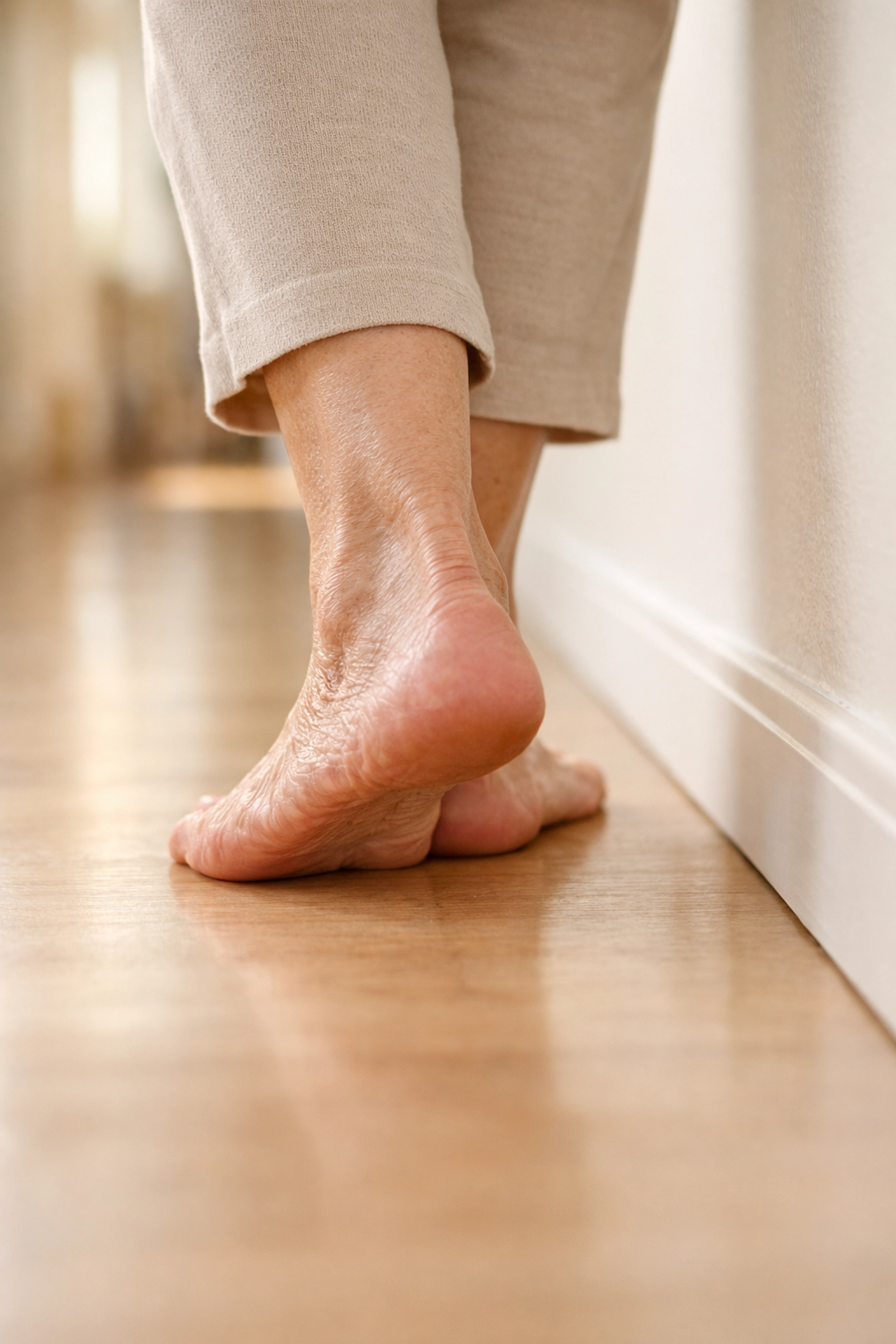
Walk in a straight line placing your heel directly in front of your toes with each step, like walking on a tightrope. Do this near a wall or counter for safety.
Start with 10 steps and increase as you improve. This exercise strengthens the same balance systems you use when walking.
Functional Strength: Sit to Stand
Strong legs are essential for good balance. Practice standing up from a chair without using your hands to push off. Lower yourself back down slowly and with control, rather than dropping into the seat.
Aim for 10 repetitions, resting as needed.
Creating a Consistent Practice Routine
Balance improves most effectively with regular practice. Here's a simple weekly plan:
Frequency: Practice balance exercises at least three times per week, ideally daily.
Duration: Even 5-10 minutes per session is beneficial. You don't need a full workout to see improvements.
Progression: As exercises become easier, make them slightly more challenging by:
- Holding positions longer
- Using less hand support
- Closing your eyes (only when very confident and safe)
- Standing on different surfaces like a folded towel
Tracking: Keep a simple log of which exercises you can complete and for how long. Seeing your progress over weeks and months can be very motivating.
When to Seek Professional Help
While home balance testing and exercises are valuable, some situations require professional evaluation:
- You've experienced one or more falls in the past year
- You feel unsteady or dizzy regularly
- You avoid activities because you're afraid of falling
- Your balance has declined suddenly
- You have numbness or weakness in your legs
- Medications make you feel dizzy or unbalanced
A physical therapist can assess your specific needs and create a personalized balance training program. Your doctor can review medications and check for underlying conditions affecting your balance.
Building Confidence Through Knowledge
Testing your balance at home puts you in control of your fall prevention strategy. By identifying your current ability level, practicing targeted exercises, and tracking your progress, you're taking meaningful steps to maintain independence and prevent injuries.
Remember that balance improvement takes time. Be patient with yourself and celebrate small victories. Whether you're adding a few seconds to your single-leg stand or completing your first heel-to-toe walk across the kitchen, each improvement contributes to greater stability and confidence.
Balance is not fixed: it's a skill you can develop and maintain throughout your life. Start with the five-step test, incorporate balance exercises into your daily routine, and watch as your stability improves over the coming weeks and months.

