
Maintaining independence is one of the most important goals as we get older. We want to be able to garden, visit friends, and navigate our own homes without that nagging fear of a trip or a stumble. If you’ve noticed you’re feeling a bit more wobbly than you used to, or if you’ve recently had a "near miss," you aren't alone.
Balance isn't a fixed trait: it’s a skill that we can maintain and even improve with the right approach. It’s about more than just standing on one leg; it’s about how your brain, your muscles, and your inner ear work together to keep you centered.
At Fall Guys Products, we believe that prevention is the best medicine. You don’t need a gym membership or fancy equipment to start feeling more stable. In this guide, we’ll walk through five manageable steps to help you reclaim your confidence and stay steady on your feet.
Understanding Why Balance Changes
Before we jump into the steps, it’s helpful to understand what’s happening behind the scenes. Our balance relies on three main systems:
- Vision: Your eyes tell your brain where you are in relation to the objects around you.
- Proprioception: These are sensors in your muscles and joints that tell your brain where your limbs are positioned.
- Vestibular System: The "balance center" in your inner ear that detects motion and gravity.
As we age, these systems can slow down. Muscles may lose some of their "snap," and our reaction time might lengthen. However, the body is incredibly adaptable. By practicing specific movements, you can "retrain" these systems to be more responsive.
Step 1: Master Static Balance (The Foundation)
The first step in any balance program is mastering "static balance." This simply means the ability to stay upright while you aren't moving. If you can’t stand still safely, it’s difficult to move safely.
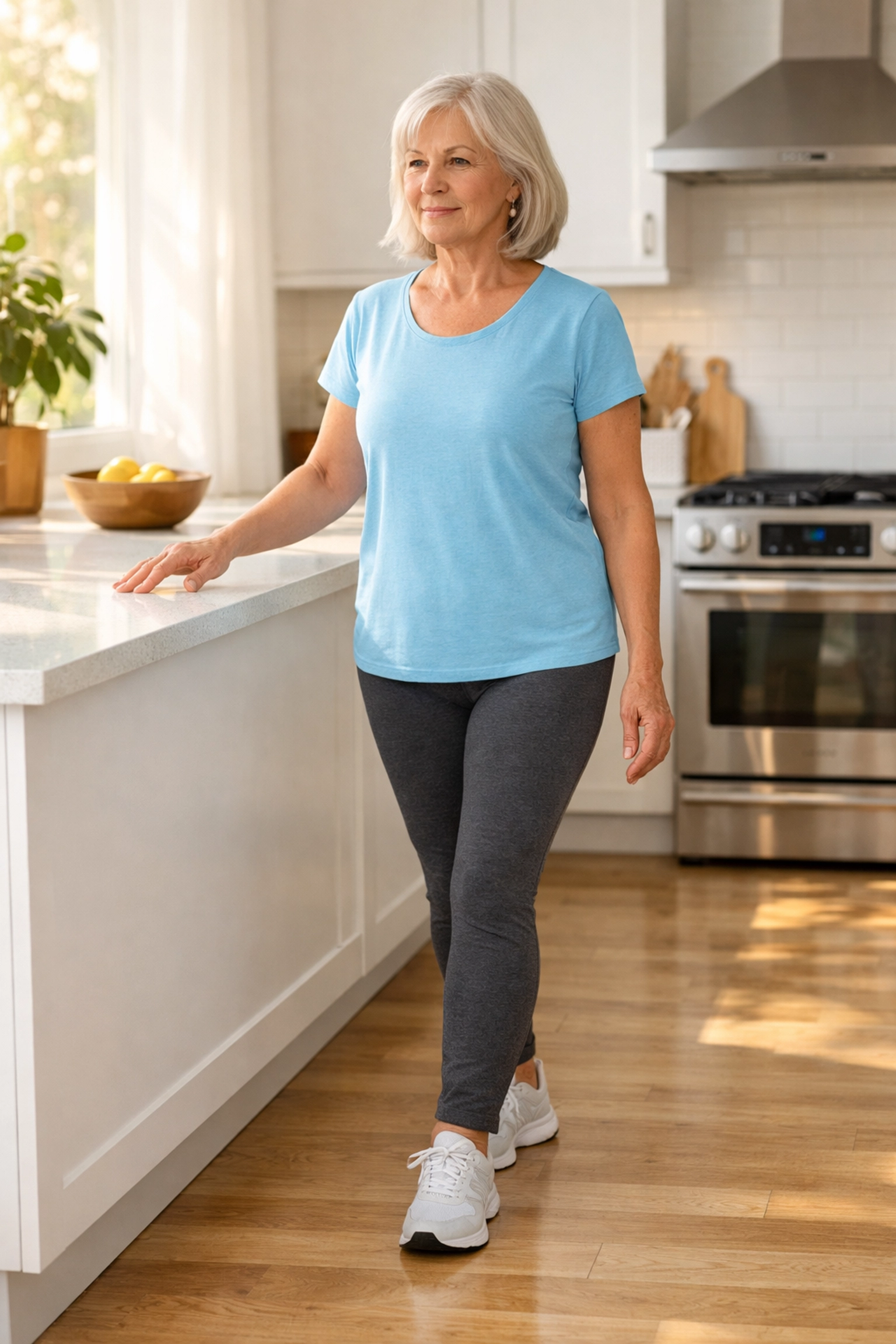
The key to practicing static balance is safety. Always perform these exercises near a sturdy kitchen counter or the back of a heavy sofa. Do not use a towel rack or something that could pull away from the wall.
The Progression
- The Basic Stand: Stand with your feet shoulder-width apart. Keep your hands hovering just above the counter. Try to hold this for 30 seconds. If you feel steady, try to touch the counter with only one finger, or not at all.
- Feet Together: Once the basic stand is easy, bring your feet together so they are touching. This narrows your "base of support," making your body work harder to stay centered.
- The Semi-Tandem Stand: Place one foot slightly ahead of the other, so the heel of your front foot is touching the side of the big toe of your back foot.
- The Tandem Stand: This is the "tightrope" position. Place one foot directly in front of the other, heel-to-toe. This is challenging because it creates a very narrow base.
Practice these for a few minutes every morning while the coffee is brewing. By consistently challenging your base of support, you’re teaching your ankles and core to make the tiny micro-adjustments necessary for stability.
Step 2: Incorporate Dynamic Movements
Once you feel confident standing still, it’s time to move. Dynamic balance is what we use when we walk, turn around to answer the door, or reach for a plate in the cupboard.
Dynamic balance exercises focus on shifting your weight from one side to the other.
Recommended Exercises
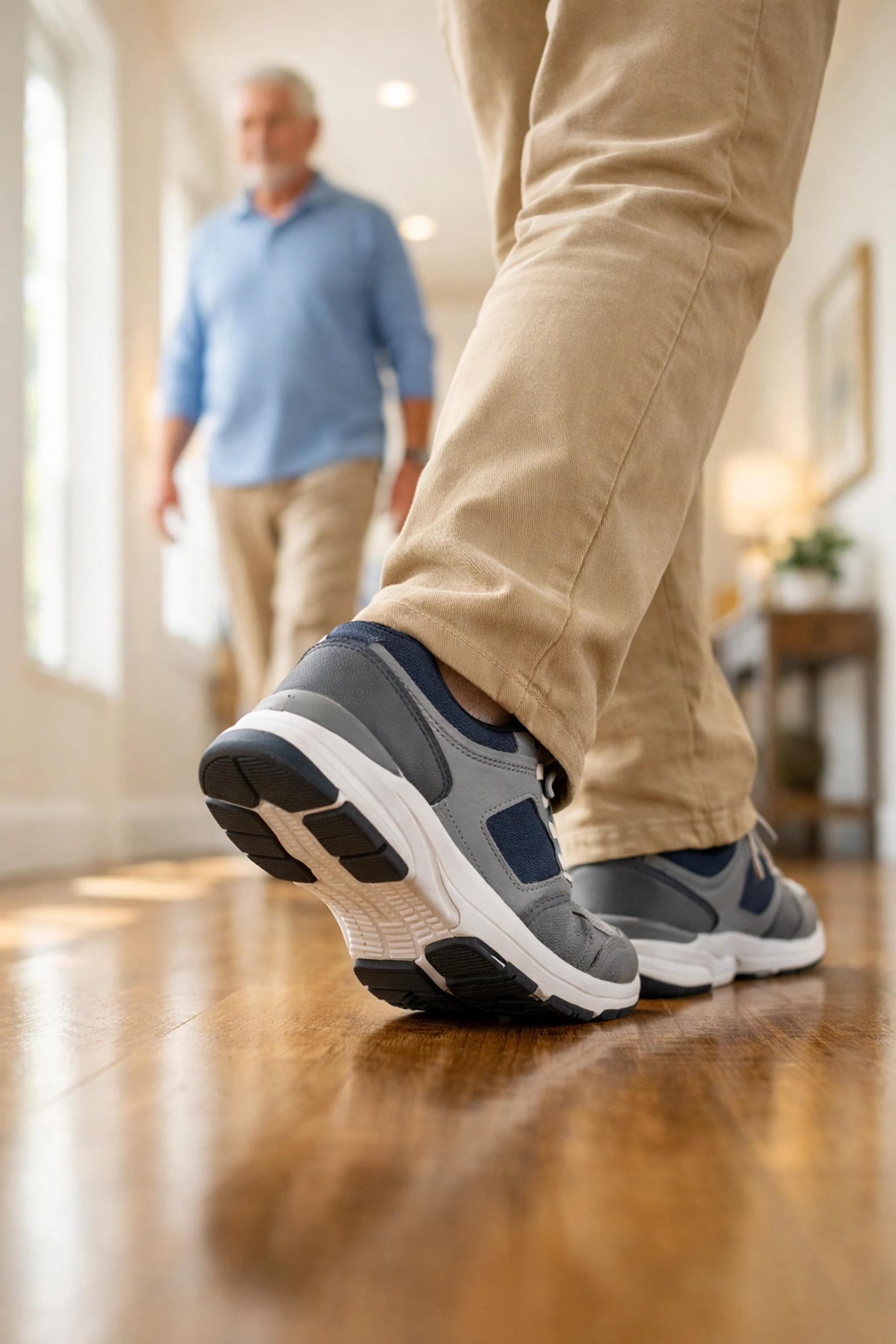
- Heel-to-Toe Walking: Just like the tandem stand, but in motion. Take 10 to 20 steps forward, placing the heel of your moving foot directly in front of the toes of your stationary foot. It’s helpful to do this along a long hallway where you can use the wall for support if needed.
- Side Leg Raises: Stand behind a sturdy chair. Slowly lift one leg to the side, keeping your back straight and your toes facing forward. Hold for a second, then lower it. This strengthens the hip abductors, which are crucial for preventing your "hips from giving out" during a sideways stumble.
- The Standing March: Stand tall and lift your knees high, one at a time, as if you are marching in place. This forces you to spend a split second on one leg at a time, which is exactly what happens when we walk.
The goal here isn't speed; it’s control. If you feel yourself swaying wildly, slow down and hold onto your support.
Step 3: Build Strength in the "Stabilizer" Muscles
You can have the best inner ear in the world, but if your legs aren't strong enough to support your weight, balance will remain a struggle. We aren't talking about bodybuilding here: we’re talking about functional strength.
Focus on the muscles that help you "catch" yourself.
The Power of the Sit-to-Stand
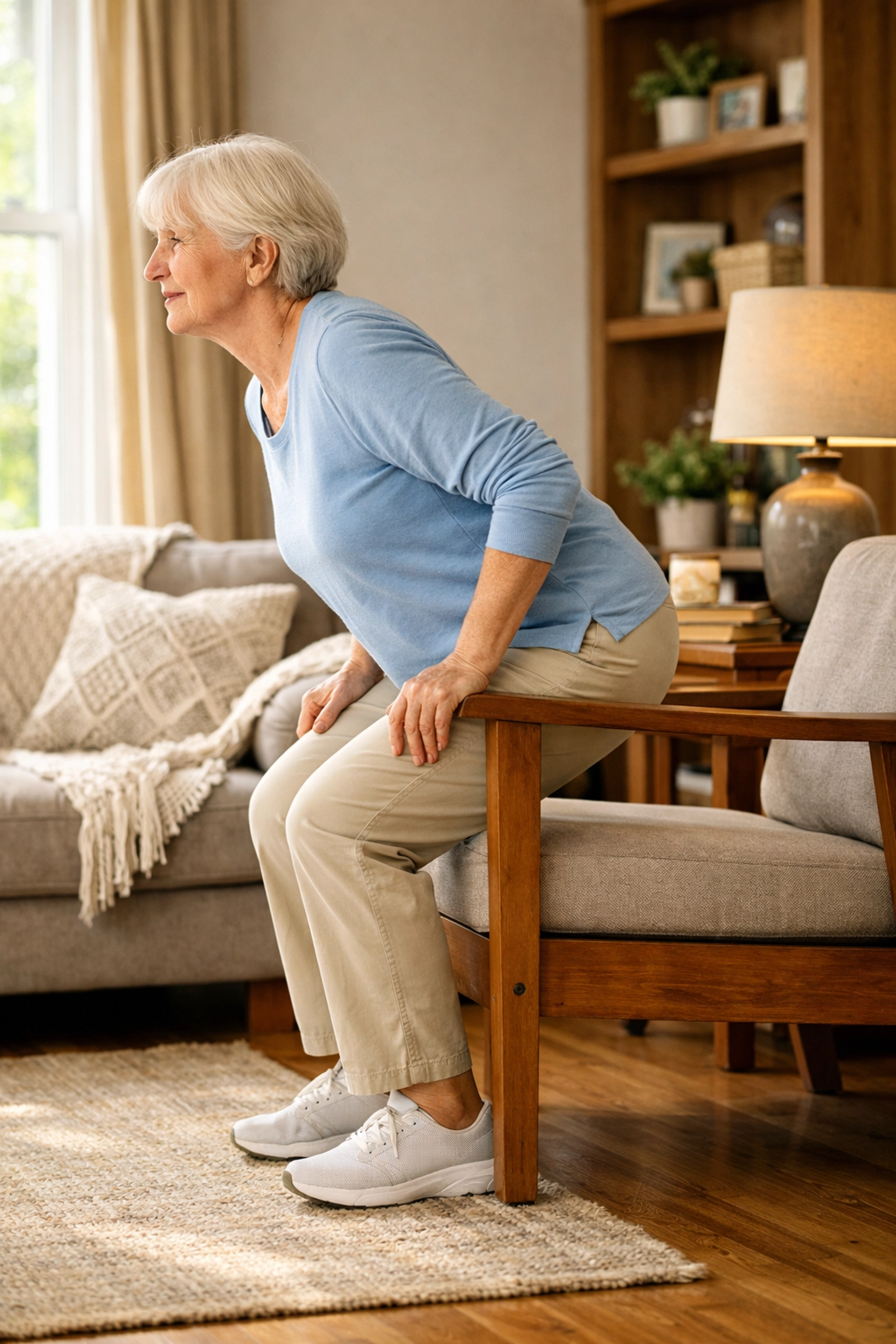
The "Sit-to-Stand" is perhaps the single most important exercise for seniors. It mimics getting out of a car, off a sofa, or off the toilet.
- Sit in a sturdy chair with your feet flat on the floor.
- Lean your chest forward over your toes.
- Use your leg muscles to push yourself up to a standing position.
- Try to do this without using your hands to push off the armrests.
- Slowly sit back down: don't just "plop." The slow descent is where the most strength is built.
Calf and Ankle Strength
Strong ankles are your first line of defense against a fall. If you trip on a rug, your ankles need to be strong enough to "flex" and help you regain your footing.
- Standing Heel Raises: Stand at your counter and slowly rise up onto the balls of your feet. Hold for two seconds, then slowly lower.
- Toe Raises: While standing, lift your toes off the floor so you are balancing on your heels. This strengthens the muscles in the front of the shin, which helps prevent "foot drop": a common cause of tripping.
Step 4: Add Functional and Mindful Challenges
As you get stronger, you can introduce more advanced movements that combine balance with focus.
Single-Leg Stands
This is the "gold standard" of balance. Try to lift one foot off the ground and hold it for 10 to 15 seconds. If you can do this, you are significantly less likely to suffer a serious fall. It forces your standing leg and your core to do all the work.
Modified Tai Chi
Tai Chi is often called "meditation in motion." It involves slow, graceful movements and constant weight shifting. Research has repeatedly shown that Tai Chi is one of the most effective ways for seniors to reduce fall risk. You don't need to join a formal class to start; simply practicing slow, controlled steps while focusing on your breathing can make a big difference.
The "Scan" Technique
When you walk, practice moving your eyes. Many people who are afraid of falling tend to stare straight down at their feet. While it’s important to see where you’re going, looking down actually throws off your center of gravity. Practice walking while occasionally looking left, right, and up. This trains your brain to maintain balance even when your vision is distracted.

Step 5: Create a Safe Environment and a Daily Habit
The final step isn't an exercise; it's a lifestyle change. Improving your balance is a marathon, not a sprint.
Make it a Routine
Consistency is more important than intensity. Doing 10 minutes of balance work every single day is much better than doing an hour-long session once a week.
- Morning: 5 minutes of static balance (Step 1).
- Afternoon: 5 minutes of strength (Step 3).
- Evening: 5 minutes of dynamic movement (Step 2).
Audit Your Home
You can have perfect balance, but a loose rug or a dark hallway will still present a risk.
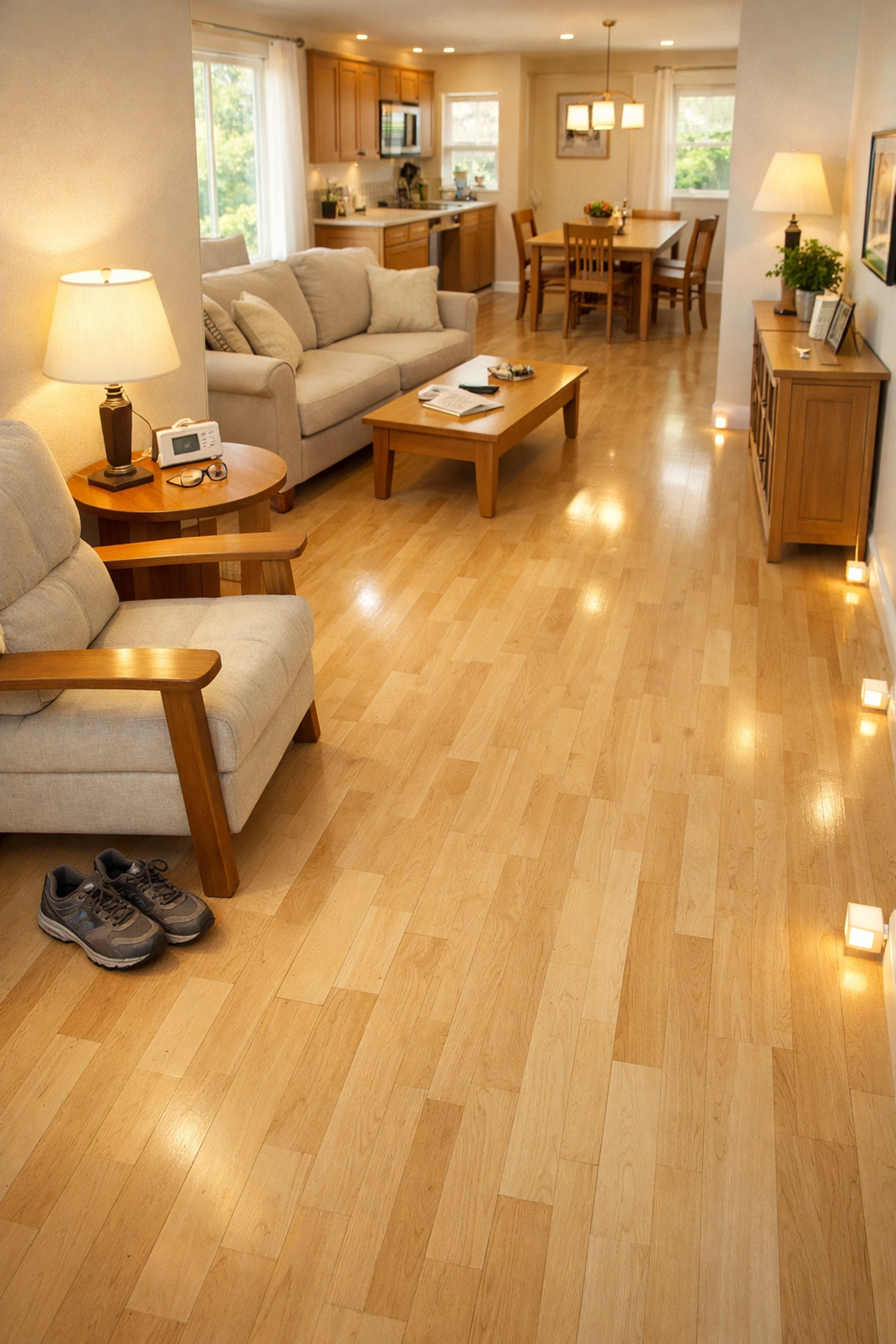
- Remove Trip Hazards: Get rid of throw rugs or use double-sided tape to secure them.
- Improve Lighting: Use nightlights in the bathroom and hallways.
- Clear the Path: Ensure there are wide, clear paths through every room.
- Use Aids When Needed: There is no shame in using a cane or a walker if you’re feeling unsteady or if you're going into an environment with uneven ground (like a park or a gravel driveway). These tools aren't a sign of weakness; they are tools for continued independence.
Wear the Right Shoes
Your connection to the ground starts with your feet. Avoid walking around the house in floppy slippers or just socks, which can be slippery on hardwood or tile. Wear a supportive shoe with a firm sole, even indoors, to give your feet the feedback they need to keep you steady.
A Note for Caregivers
If you are a caregiver helping a loved one with these steps, the most important thing you can provide is encouragement and a steady hand. Avoid the urge to do everything for them. If they are practicing a sit-to-stand, don't pull them up by the arms. Instead, stand nearby to offer a steadying hand if they wobble.
Independence is built through "managed challenge." Encourage your loved one to stay active and celebrate the small wins: like holding a tandem stand for five seconds longer than they did last week.
Trusting Your Progress
Improving balance can feel slow at first. You might feel frustrated if you have a "wobbly day." That’s completely normal. Factors like sleep, hydration, and even the weather can affect how steady we feel.
The important thing is to keep showing up. By following these five steps: mastering the still moments, moving with intent, building leg strength, challenging your focus, and securing your environment: you are taking active control of your health.
Falls don't have to be an "inevitable" part of getting older. With a little bit of daily practice and a reassuring perspective, you can keep moving forward with confidence. Stay steady out there!

