
When we think about home, we think about comfort, memories, and safety. It is the place where we should feel most at ease. However, as we or our loved ones age, the very environment that provided comfort for decades can begin to present hidden challenges. A rug that has been in the hallway for twenty years or a bathtub that used to be easy to step into can suddenly become a significant risk factor for a fall.
The reality is that one out of four older adults falls each year, and many of these incidents happen right inside the home. But here is the good news: most falls are preventable. By taking a proactive approach and looking at the home through a "safety lens," you can identify risks and make simple adjustments that preserve independence and peace of mind.
I’m Brian Kerr, and at Fall Guys Products, we believe that staying safe shouldn't feel like living in a hospital. It’s about making smart, subtle changes that let you keep living your life your way. This guide is designed to help families walk through the home systematically, identifying hazards and creating a space that supports mobility rather than hindering it.
Why a Home Assessment is Necessary
As our bodies change, our perception of our environment changes too. Vision might become less sharp, making it harder to spot a clear electrical cord on a dark floor. Balance might become a bit less steady, making a standard doorway feel like a tightrope walk. A home assessment isn't about pointing out what a person can't do; it’s about optimizing the space to support what they can do.
Conducting an assessment as a family is often the best approach. It allows for a fresh set of eyes to spot things that the resident might have grown accustomed to. It’s a way to work together to ensure that "home" remains the safest place on earth.
Step 1: Clear the Path and Remove Tripping Hazards
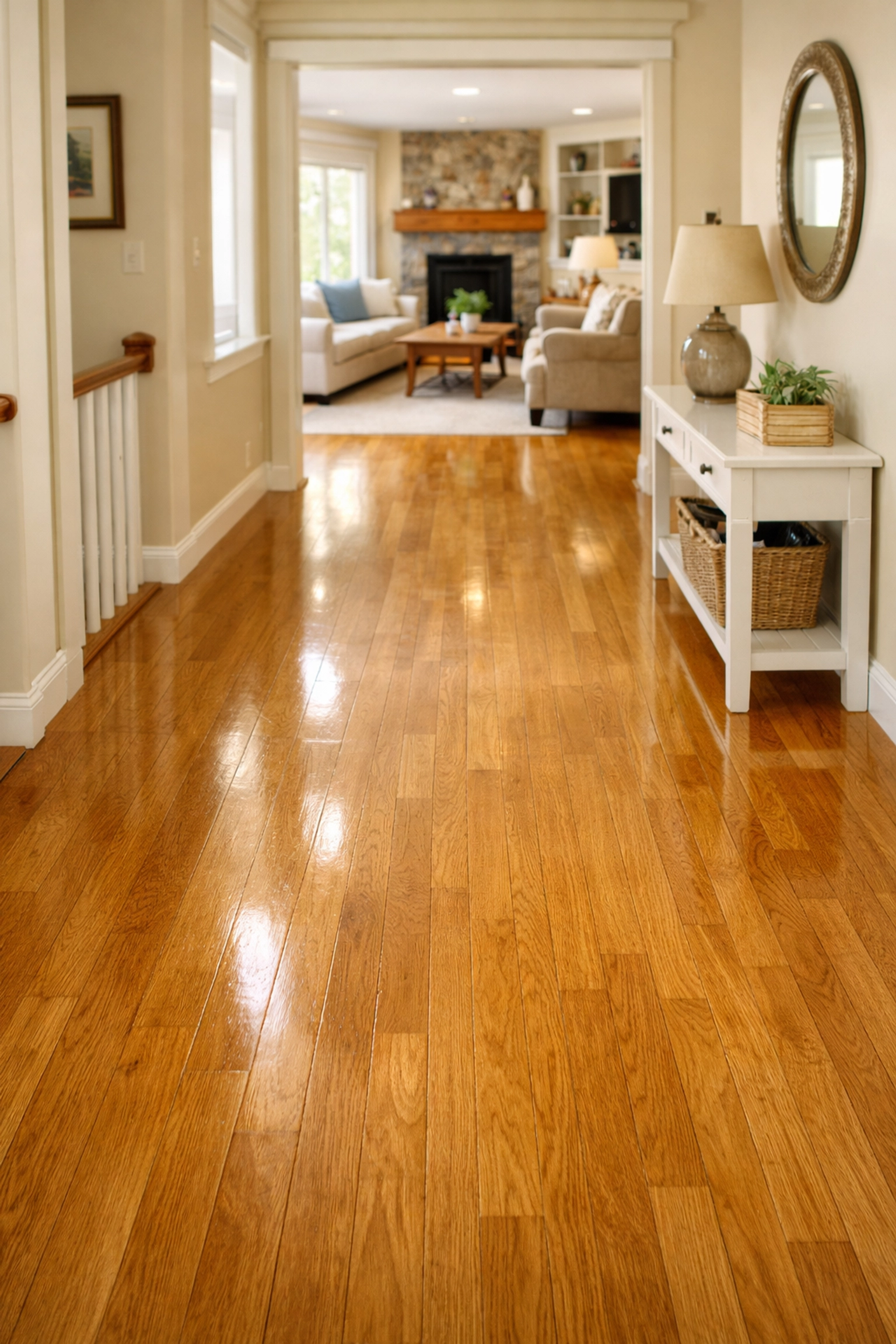
The first and most impactful step in any home safety assessment is looking at the floor. In many cases, we become "blind" to our own clutter. We know exactly where that stack of magazines is or how to step over the phone cord, but that "muscle memory" can fail us during a moment of fatigue or distraction.
Focus on the Traffic Areas
Walk through every room and follow the natural "traffic lanes." These are the paths used to get from the bed to the bathroom, the kitchen to the living room, and the front door to the seating area.
- Clutter: Remove shoes, boxes, stacks of mail, and pet toys from these pathways. If furniture is encroaching on a walkway, consider moving it or removing a piece to create a wider, clearer path.
- The "Throw Rug" Dilemma: This is often the hardest part for families. We love our rugs, but they are the leading cause of trips at home. If a rug isn't firmly tacked down or doesn't have a high-quality non-slip backing, it’s a hazard. The safest option is to remove them entirely. If you must keep them, use double-sided carpet tape or specialized non-skid pads to ensure they don't budge or curl at the edges.
- Cord Management: Check for extension cords, lamp cords, or phone lines stretching across walkways. These should be rerouted along the walls or secured with cord covers.
Step 2: Brighten the Environment and Improve Visibility
Our eyes require more light to see clearly as we age. In fact, a 60-year-old generally needs three times as much light as a 20-year-old to see the same things. Dim lighting hides transitions in flooring, small objects on the floor, and even the edges of furniture.
Lighting Solutions for Every Room
Improving lighting is often one of the most affordable ways to prevent falls.
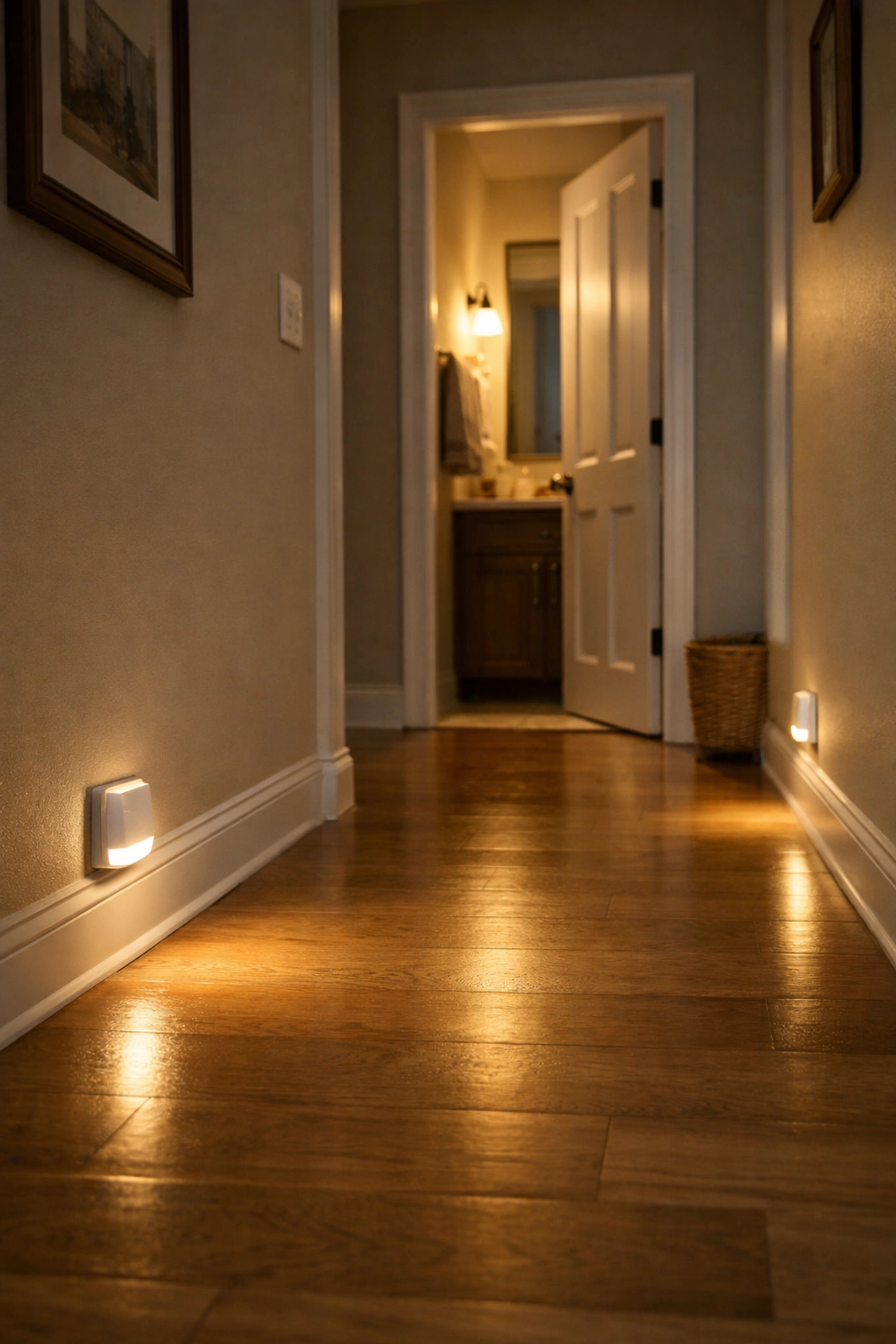
- High-Traffic Nightlights: The path from the bedroom to the bathroom is the most critical area for nighttime lighting. Use motion-sensor nightlights that plug into outlets. They stay off during the day but provide a guiding glow the moment someone steps out of bed.
- Replace Low-Wattage Bulbs: Check every fixture in the house. If you’re using 40-watt or 60-watt bulbs, consider switching to brighter LED bulbs (ensuring you don't exceed the fixture's maximum rating). LEDs provide a "whiter" light that can help with depth perception and clarity.
- Light Switches: Are the switches easy to reach? If someone has to walk into a dark room to find the switch, that’s a problem. Consider installing "rocker" style switches, which are easier to operate, or adding voice-activated smart bulbs.
- Reduce Glare: While more light is good, glare is not. Highly polished floors or mirrors can reflect light in a way that is disorienting. Use sheer curtains to diffuse bright sunlight and choose matte finishes for flooring where possible.
Step 3: Secure the Stairs and Transitions
Stairs are inherently risky, but they don't have to be off-limits. The key is ensuring that every step is predictable and that there is always something solid to hold onto.
Assessing Stairway Safety
Whether it’s a full flight of stairs or just a single step transition between rooms, the rules of safety remain the same.
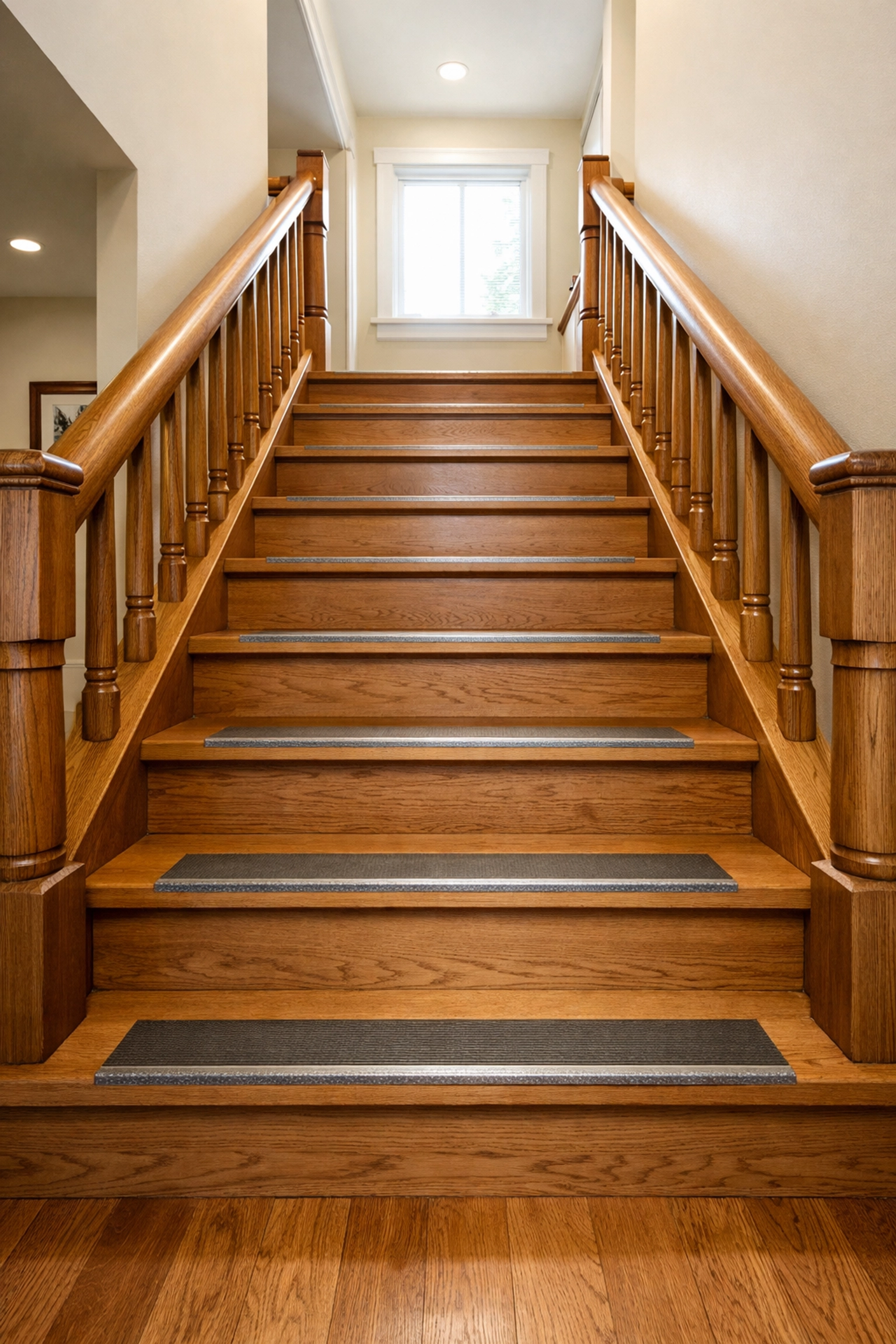
- The Power of Two Rails: Every staircase should have handrails on both sides. Most homes only have one. Having two rails allows a person to use both arms for stability or to have a secure grip regardless of which side of their body is stronger.
- Grip and Extension: Handrails should be easy to wrap your hand all the way around (cylindrical rails are best). They should also extend slightly past the top and bottom steps so the user has support before they start climbing and after they finish.
- Visibility of the Edge: Sometimes, it’s hard to tell where one step ends and the next begins, especially on carpeted stairs. Applying a strip of contrasting colored tape or a non-slip tread to the edge of each step can provide a visual cue that significantly reduces the risk of a misstep.
- Clearance: Never store items on the stairs: not even for a moment. This includes the "waiting" items we often leave on the bottom step to take up later.
Step 4: Evaluate Flooring and Furniture Stability
Not all flooring is created equal when it comes to fall prevention. Furthermore, the furniture we use to rest can sometimes become a hazard if it isn't positioned correctly.
Flooring Inspection
- Smooth Transitions: Look for areas where the flooring changes, such as from carpet to tile. If there is a "lip" or a height difference, it can catch a toe. Threshold strips should be beveled and secure.
- Non-Slip Surfaces: In areas prone to moisture, like the kitchen or entryway, ensure the flooring has a matte or textured finish. If the tile is slippery when wet, consider applying a non-slip floor treatment.
- Firm Carpeting: Thick, "shag" carpeting can be difficult for someone using a walker or cane. Low-pile, firm carpeting is much safer for mobility aids.
Furniture Check
- Height Matters: Is the sofa too low? Is the bed too high? If a person has to "rock" several times to get out of a chair, or if their feet don't touch the floor when sitting on the edge of the bed, the furniture height needs adjustment. You can use furniture risers for low chairs or consider a different mattress height.
- Stability: Avoid furniture on wheels unless they are locked. Check that end tables and coffee tables are sturdy enough to support someone's weight if they happen to lean on them for balance.
- Avoid "Furniture Walking": Many seniors navigate their homes by grabbing onto the backs of chairs or the edges of tables. This is a sign that they need more dedicated support, like a walker or a professionally installed grab bar. Furniture is not designed to be a mobility aid and can tip over easily.
Step 5: Focus on the "High-Risk" Rooms (Bathroom & Bedroom)
Statistically, the bathroom is the most dangerous room in the house due to slippery surfaces and the physical demands of bathing. The bedroom is a close second because many falls happen when waking up or moving in the dark.
The Safe Bathroom
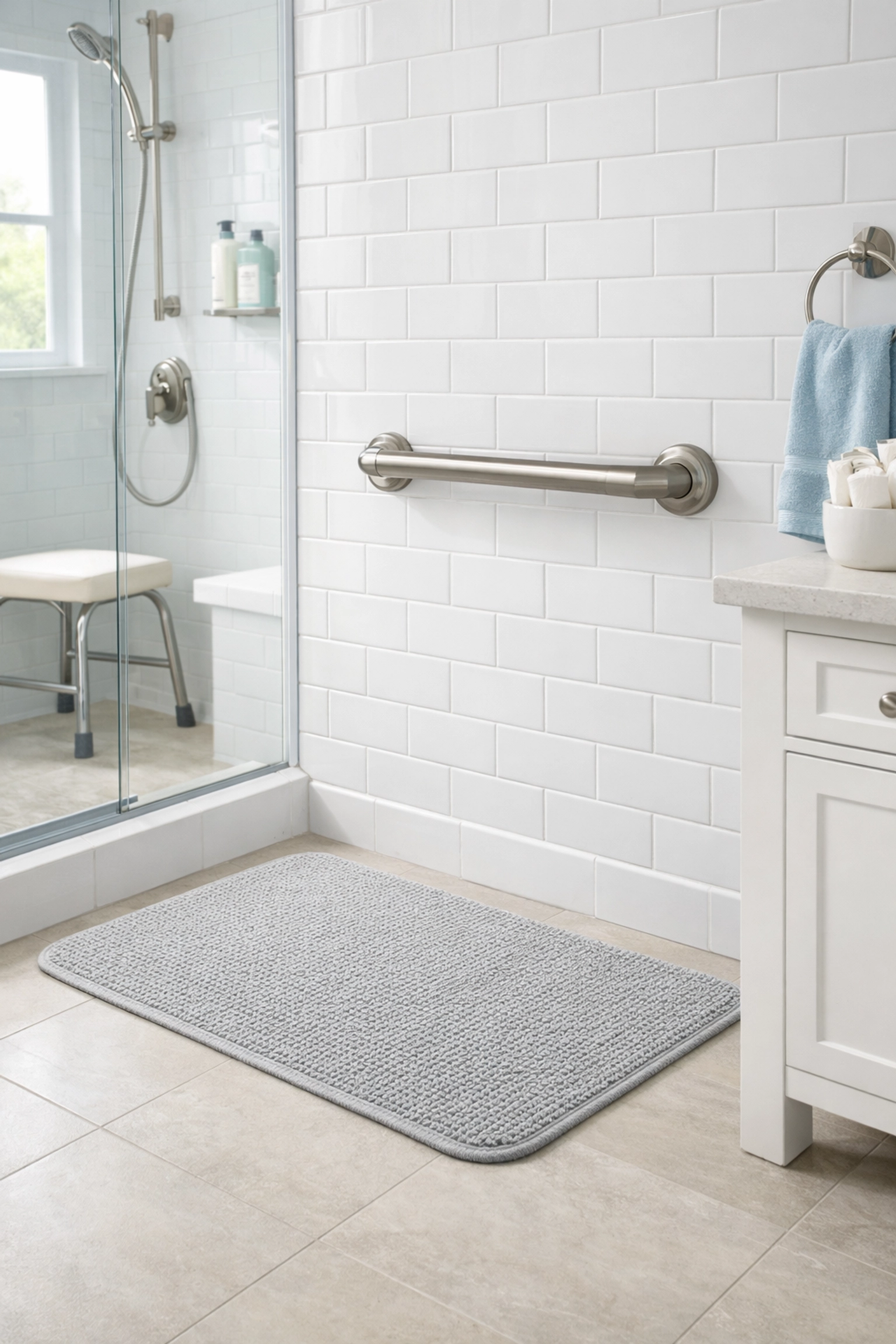
- Grab Bars are Essential: Towel racks are not grab bars. They are held into the wall with small screws and will pull out immediately if someone falls. Install professional-grade grab bars near the toilet and inside the shower or tub. These should be anchored into wall studs.
- Non-Slip Mats: Use high-quality suction mats inside the tub and non-skid rugs on the floor outside the tub.
- Raised Toilet Seats: For those with hip or knee issues, sitting down and standing up from a standard toilet can be difficult. A raised seat or a toilet safety frame can make this much easier and safer.
The Safe Bedroom
- Clear Reach: The lamp, phone, and glasses should all be within easy reach from a lying position. No one should have to lean out of bed to turn off the light.
- Morning Routine: Many falls happen because of "orthostatic hypotension": a fancy term for the dizziness that occurs when you stand up too fast. Encourage the "sit and dangle" method: sit on the edge of the bed for 30 seconds before standing up to let your blood pressure stabilize.
- Bed Rails or Poles: If getting in and out of bed is a struggle, specialized support rails or poles can provide a fixed point of stability.
Beyond the Physical Environment: Strength and Balance
While fixing the home is crucial, fall prevention is a two-way street. The physical environment is one side; the person's physical health is the other.
A home assessment is a great time to discuss overall wellness. Encourage your loved one to speak with their doctor about:
- Vision Checks: Annual eye exams are vital. Changes in depth perception or the development of cataracts can make even a safe home feel treacherous.
- Medication Review: Some medications can cause dizziness or drowsiness. A pharmacist or doctor can review a list of medications to see if any adjustments can be made to improve alertness and balance.
- Exercise: It’s never too late to improve balance. Activities like Tai Chi, simple leg lifts, or specialized physical therapy can strengthen the "stabilizer" muscles that prevent a stumble from becoming a fall.
Doing the Walk-Through Together
When you perform this assessment, do it with the person who lives there. Ask them, "Which areas feel tricky to you?" or "Where do you feel like you lose your balance?" Sometimes a person might have had a "near-miss" in a certain spot that you wouldn't notice otherwise.
Approach these changes as a way to stay in the home. Many seniors fear that admitting a home is difficult to navigate means they will have to move. In reality, the opposite is true. Making these modifications is the best way to ensure they can stay in their beloved home for as long as possible.
Fall prevention isn't about one big change; it’s about a dozen small ones. By clearing a path, turning on a light, and adding a sturdy handrail, you aren't just changing a house: you’re protecting a life and preserving independence. Take it one room at a time, and remember that every hazard removed is a step toward a safer, more confident future.

