
For many seniors, the home is a place of comfort, memories, and independence. However, as we age, certain areas of the home that we once navigated without a second thought can begin to present new challenges. The staircase is often at the top of that list.
Stair safety isn’t just about preventing a single event; it’s about maintaining the freedom to move through your entire home with confidence. Changes in vision, balance, and muscle strength can make stairs feel more daunting than they used to be. The good news is that making stairs safer doesn’t always require a massive renovation. Often, it is a combination of small, intentional adjustments and habit changes that make the biggest difference.
In this guide, we will walk through 15 practical, evidence-based tips to help you or your loved one navigate home stairs with greater security and peace of mind.
Improving Traction and Surface Safety
The physical surface of the step is your first line of defense against a fall. Most stair-related injuries occur because of a slip: where the foot loses its grip on the surface: rather than a trip.
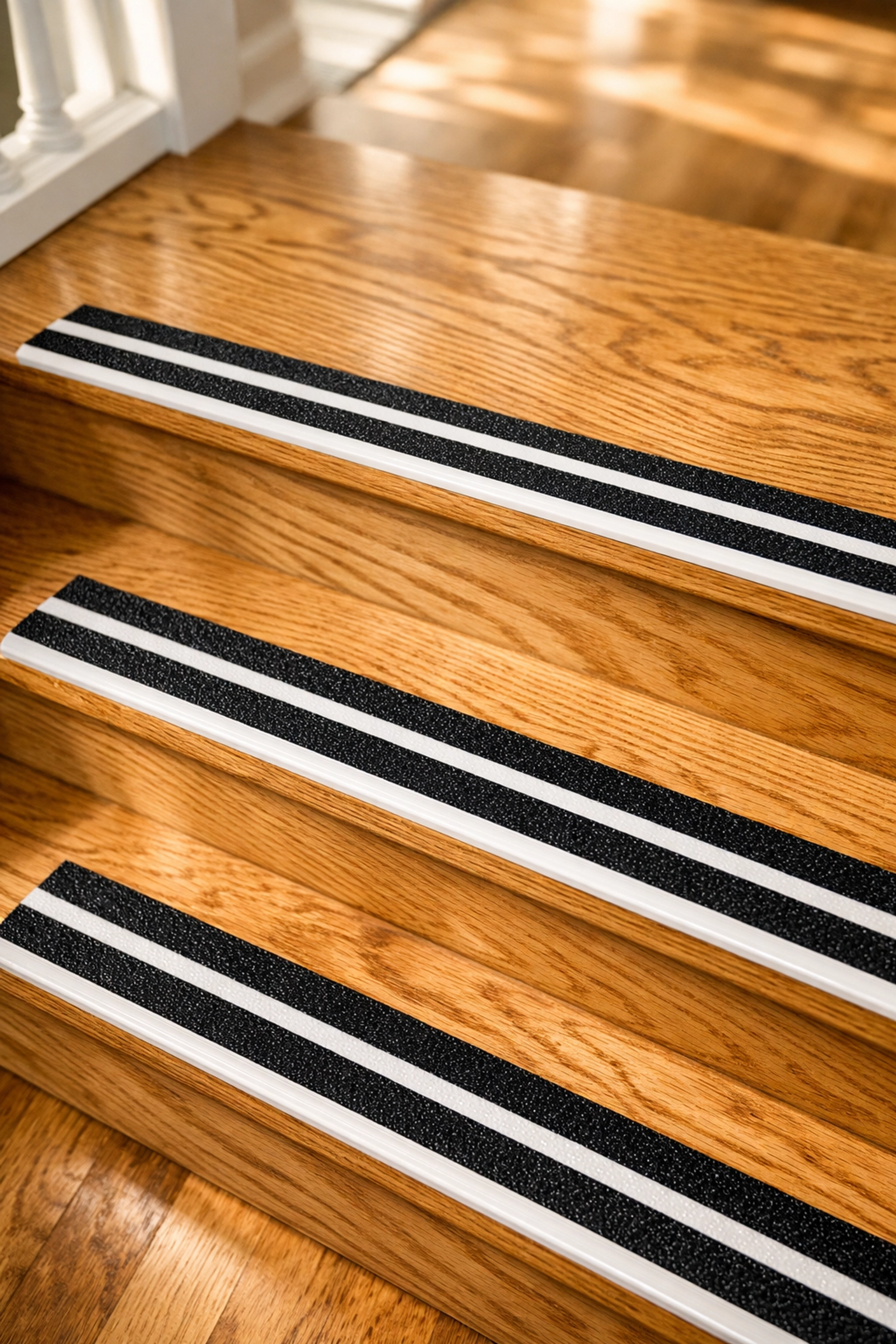
1. Add Non-Slip Treads or Anti-Slip Tape
Polished wood, laminate, and tile stairs are beautiful, but they can be incredibly slick, especially if you are wearing socks or smooth-soled slippers. Adding non-slip treads is one of the most effective ways to increase friction. These can be clear adhesive strips that maintain the look of the wood, or heavy-duty rubber mats designed for indoor use. Anti-slip tape with a gritty texture can also be applied to the edge of each step to provide a firm "bite" for the foot as it lands.
2. Install Low-Pile, Secure Carpet
If you prefer carpeted stairs, the type of carpet matters immensely. Deep, plush carpeting might feel nice underfoot, but it can actually be a hazard. Thick padding can hide the true "nose" or edge of the step, leading to a misstep. Instead, opt for a low-pile, tightly woven carpet. It is vital that the carpet is stretched tight and securely fastened to each individual step. If you notice any bulging, sagging, or loose edges, these should be repaired immediately by a professional to prevent a toe from catching on the fabric.
3. Mark Step Edges with Contrasting Colors
As vision changes with age, depth perception can become less sharp. It becomes harder to tell where one step ends and the next begins, especially in low light. Applying a strip of contrasting paint or reflective tape to the edge (the "nosing") of each step creates a visual "break" that helps the brain identify the boundaries of the staircase. For example, if you have dark wood stairs, a white or light-yellow strip on the edge can provide the necessary visual cue to place your foot safely.
4. Re-evaluate Footwear Choices
Safety starts with what is on your feet. Walking up or down stairs in bare feet, stocking feet, or loose-fitting slippers significantly increases the risk of a slide. Encourage the use of sturdy, well-fitting shoes with non-skid rubber soles even while inside the house. If shoes aren't preferred, high-quality "gripper socks" with rubberized treads on the bottom are a better alternative than standard socks, though they do not offer the same ankle support as a shoe.
Optimizing Lighting for Clarity
Proper lighting is perhaps the most underrated aspect of fall prevention. If you can’t see the hazard, you can’t avoid it.
5. Brighten the Top and Bottom Landings
Statistically, the majority of stair falls occur at the very top or the very bottom of the staircase. This is often where the transition between floor levels happens, and the body is adjusting its gait. Ensure that these "transition zones" are flooded with bright, even light. Avoid using low-wattage bulbs that create shadows, as shadows can look like steps or obstacles, leading to confusion.
6. Install Dual Light Switches
You should never have to navigate a dark staircase to reach a light switch. There must be a switch at the top of the stairs and a separate switch at the bottom. This allows the user to illuminate the entire path before they ever set foot on a step. If your home isn't wired this way, many modern battery-operated or "smart" switches can be installed without the need for an electrician.
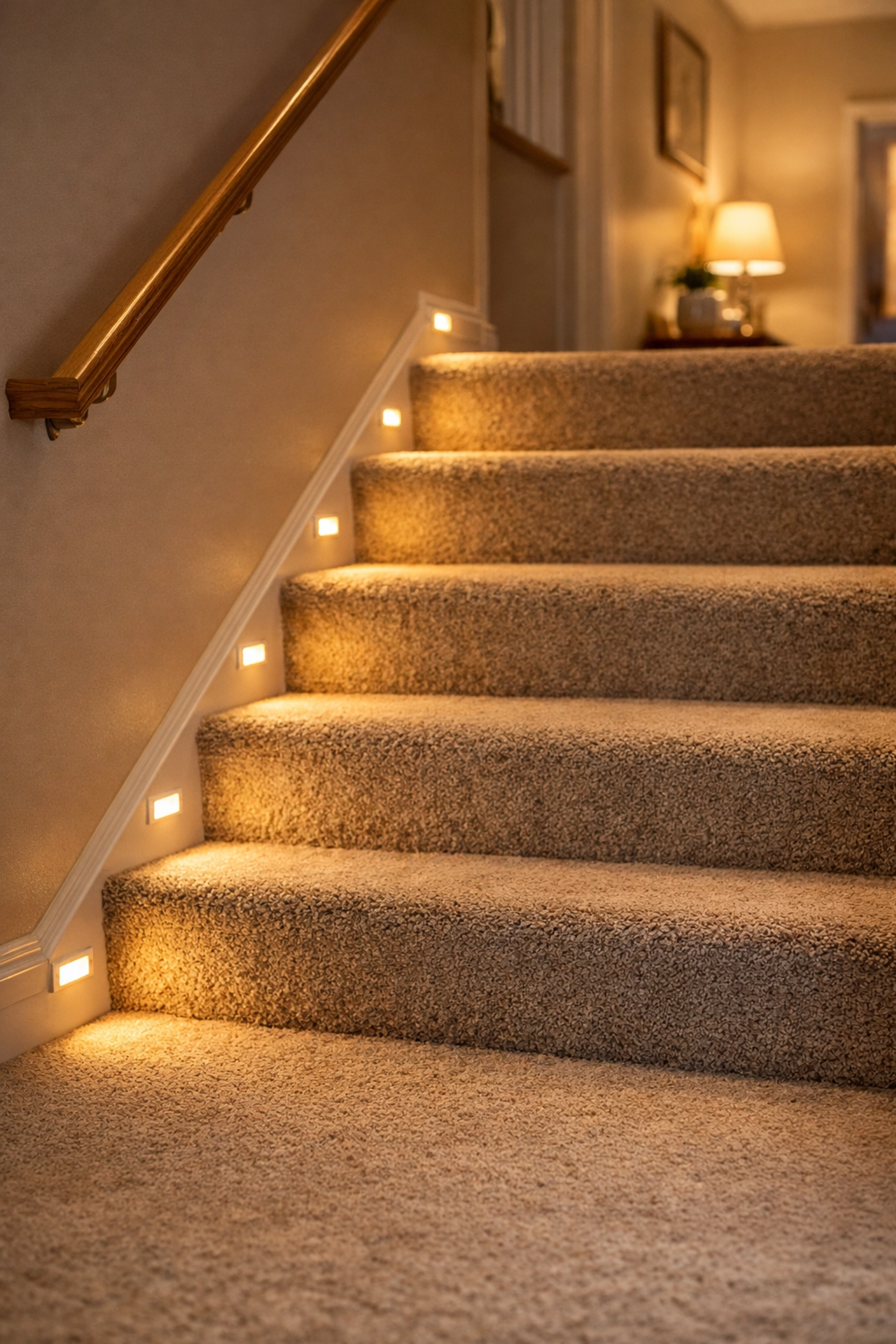
7. Utilize Motion-Sensing Night-Lights
For those middle-of-the-night trips to the kitchen or bathroom, motion-sensing lights are a game-changer. These lights should be positioned at ankle or foot level along the staircase. They provide enough illumination to see the path clearly without being so bright that they cause "glare blindness" or fully wake the person up. Because they are motion-activated, they require no effort to turn on, which is perfect when someone is feeling groggy.
Strengthening the Support System: Handrails
A handrail is not just a suggestion; it is a critical safety tool. It provides stability, helps with balance, and offers a way to "catch" oneself if a slip occurs.
8. Install Rails on Both Sides
Many older homes only have a handrail on one side of the stairs. However, having dual handrails is significantly safer. It allows the user to use both arms for stability, which is especially helpful for those with weakness on one side of the body (common after a stroke or due to arthritis). Two rails also ensure that whether you are going up or down, you always have a "strong side" rail available.
9. Position Rails at the Correct Height
A handrail that is too high or too low can actually contribute to a fall. Standard safety guidelines suggest that handrails should be positioned between 30 and 36 inches above the stair nosing. A good rule of thumb for a custom fit is to have the rail at about the height of the user's elbow when their arm is hanging relaxed at their side. This allows for a natural, comfortable grip that doesn't strain the shoulder.
10. Ensure "Graspability"
Not all handrails are created equal. Large, decorative wooden rails may look nice, but if they are too wide to wrap a hand around, they aren't safe. A proper handrail should be rounded and have a diameter that allows for a "power grip": where the fingers and thumb can almost meet. If the rail is a flat board or too bulky, the hand can easily slide off during a stumble.
11. Verify Structural Integrity
A handrail is only as good as its attachment to the wall. Over years of use, brackets can become loose. Periodically test the rails by giving them a firm shake. They should feel solid and immovable. Ensure that the rail extends several inches past the top and bottom steps; this gives the user a secure place to hold while they are making that final transition onto flat ground.
Addressing Layout and Step Design
The physical geometry of the stairs plays a massive role in how the body moves. While you might not be able to rebuild your stairs, you can mitigate design flaws.
12. Ensure Consistent Step Height and Depth
The human brain is excellent at pattern recognition. After the first two steps, your brain "maps" the height and depth of the stairs and moves into an automatic rhythm. If one step is even half an inch higher or shallower than the others (often called a "hitch" step), it can cause a trip. If you identify an inconsistent step in your home, it must be clearly marked with high-contrast tape or repaired by a contractor to restore a safe rhythm.
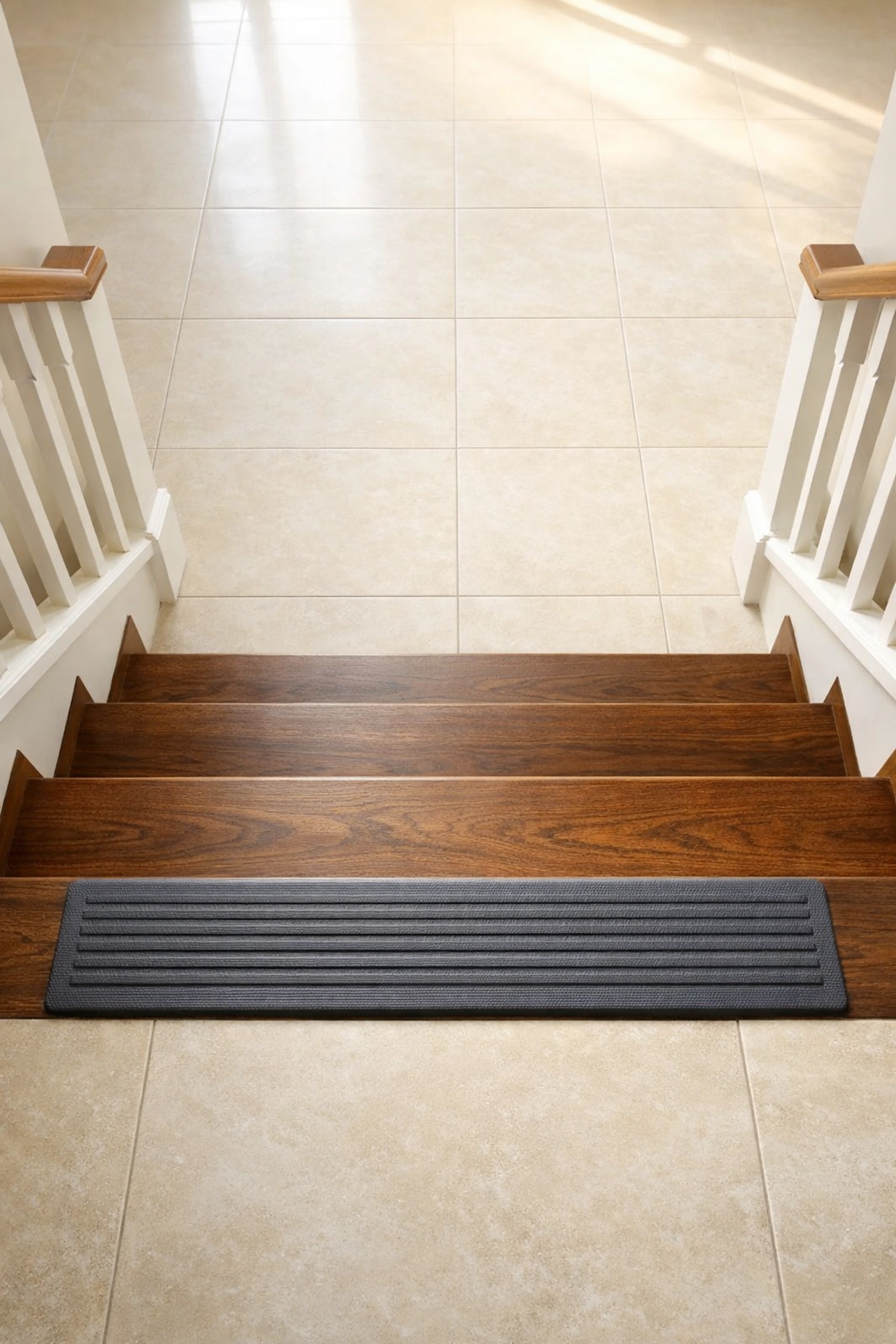
13. Combat the "Bottom-Step Illusion"
Many falls happen on the very last step because the user thinks they have reached the floor when they actually have one more step to go. This is known as the bottom-step illusion. To fix this, use a different color or a much bolder tread on the very last step to signal to the brain that the descent is almost over. Ensuring the landing area is a different color than the stairs themselves also helps clarify where the stairs end and the floor begins.
Developing Safer Habits and Environment
Safety isn't just about the equipment; it's about how the space is used daily.
14. Eliminate Stair Clutter
It is a common habit to leave items on the stairs to be carried up later: books, shoes, or laundry baskets. For a senior, this is a major hazard. Stairs should be a "zero-clutter zone." Even a small item like a stray sock can lead to a catastrophic fall. If carrying items up and down is difficult, consider installing a small basket at the top and bottom, but keep them on the floor away from the walking path, never on the steps themselves.
15. Move with Intention and Patience
Rushing is one of the leading causes of accidents. Encourage a "one step at a time" approach, where both feet land on the same step before moving to the next one. This increases the time spent in a stable, double-support stance. If balance is a concern, it may also be wise to look into a mobility assessment from a Physical Therapist (PT). A PT can help determine if the user has the leg strength and balance necessary for stairs or if it is time to consider moving primary living quarters to the ground floor.
The Role of Professional Assessment
While these 15 tips provide a strong foundation, every home and every individual is different. A home safety assessment performed by an Occupational Therapist (OT) or a Physical Therapist can provide personalized recommendations. They look at things like "gait" (how a person walks) and "functional reach" to ensure that every modification is actually helping rather than hindering.
Improving stair safety is a proactive step toward aging in place. By addressing traction, lighting, support, and habits, you create an environment where the stairs are no longer a source of fear, but simply another part of a safe and accessible home. Resilience in the home starts with recognizing where the risks are and taking steady, thoughtful steps to mitigate them.

