
A walker is more than just a frame of aluminum and a set of wheels. For many, it is the key to maintaining independence, visiting friends, and safely navigating the home. However, as the founder of Fall Guys Products, I’ve seen countless situations where a walker: instead of being a helpful tool: actually becomes a tripping hazard or a source of physical strain.
If you feel like you are "fighting" your walker, or if your back and shoulders ache after a short walk, it’s likely not the walker’s fault. It is usually a matter of setup or technique. Using a walker incorrectly can lead to a false sense of security, which is often more dangerous than using no mobility aid at all.
In this guide, we are going to dive deep into the ten most common reasons your walker might not be working for you and, more importantly, how you can fix your technique today.
1. The Height is Set Incorrectly
This is the most common issue we see. If the walker handles are too high, your elbows will be bent too much, and your shoulders will be hiked up toward your ears. This leads to neck pain and reduced leverage. If the handles are too low, you will find yourself stooping over, which puts immense pressure on your lower back and shifts your center of gravity too far forward.
The Fix:
To find the perfect height, stand as straight as possible with your arms hanging naturally at your sides. The handgrips of the walker should align with the crease on the inside of your wrist. When you place your hands on the grips, your elbows should have a slight, comfortable bend: roughly 15 to 20 degrees. This "elbow flex" allows you to push down effectively to support your weight without straining your joints.
2. Pushing the Walker Too Far Ahead
Many people treat a walker like a grocery cart, pushing it several feet in front of them and then "chasing" after it. This is often called the "walker waltz," and it is a major fall risk. When the walker is too far ahead, you lose the stability of the frame. If you trip, the walker is already too far away to catch your weight, and you’ll likely fall forward into the open space between the handles.
The Fix:
The walker should stay "around" you. As you walk, your toes should stay roughly in line with the rear legs of the walker (or the back wheels). You want to walk inside the frame, not behind it. Think of the walker as an extension of your own body rather than a separate object you are pushing.

3. Looking Down at Your Feet
It is a natural instinct to look down when you are worried about tripping. However, staring at your feet actually makes you less stable. When your head is down, your spine rounds, your balance center in the inner ear is tilted, and you lose your peripheral vision of the environment around you. You won’t see the rug corner or the pet coming around the hallway until it’s too late.
The Fix:
Keep your chin up and your eyes looking about 10 to 15 feet in front of you. This allows you to scan for hazards well before you reach them. Trust that your feet will follow your lead. If you are upright and looking forward, your posture will naturally improve, and the walker will feel much steadier.
4. Using the Walker to Pull Yourself Up
One of the most dangerous mistakes happens before you even take a step. When rising from a chair or a bed, many people grab the handles of the walker and pull. Because walkers are lightweight, they can easily tip backward toward you, causing you to fall back into the seat or onto the floor.
The Fix:
Never use a walker for leverage when standing up. Instead, place your hands on the armrests of the chair or the surface of the bed. Push down through your legs and arms to reach a standing position. Once you are steady on your feet, move your hands one at a time to the walker grips. Reverse the process when sitting down: reach back for the chair handles first, then lower yourself.
5. Improper Weight Distribution and "Hanging" Bags
It’s tempting to hang a heavy purse, a grocery bag, or a tote over the front crossbar of the walker. However, adding weight to the front or sides changes the walker's center of gravity. A front-heavy walker can tip forward when you hit a small bump, and a side-heavy walker can cause you to veer off course or tip during a turn.
The Fix:
If you need to carry items, use a dedicated walker bag or basket that attaches centrally and low on the frame. Ensure the weight is evenly distributed. Ideally, you should keep the load light: around 5 pounds or less: to ensure the frame remains responsive to your movements.
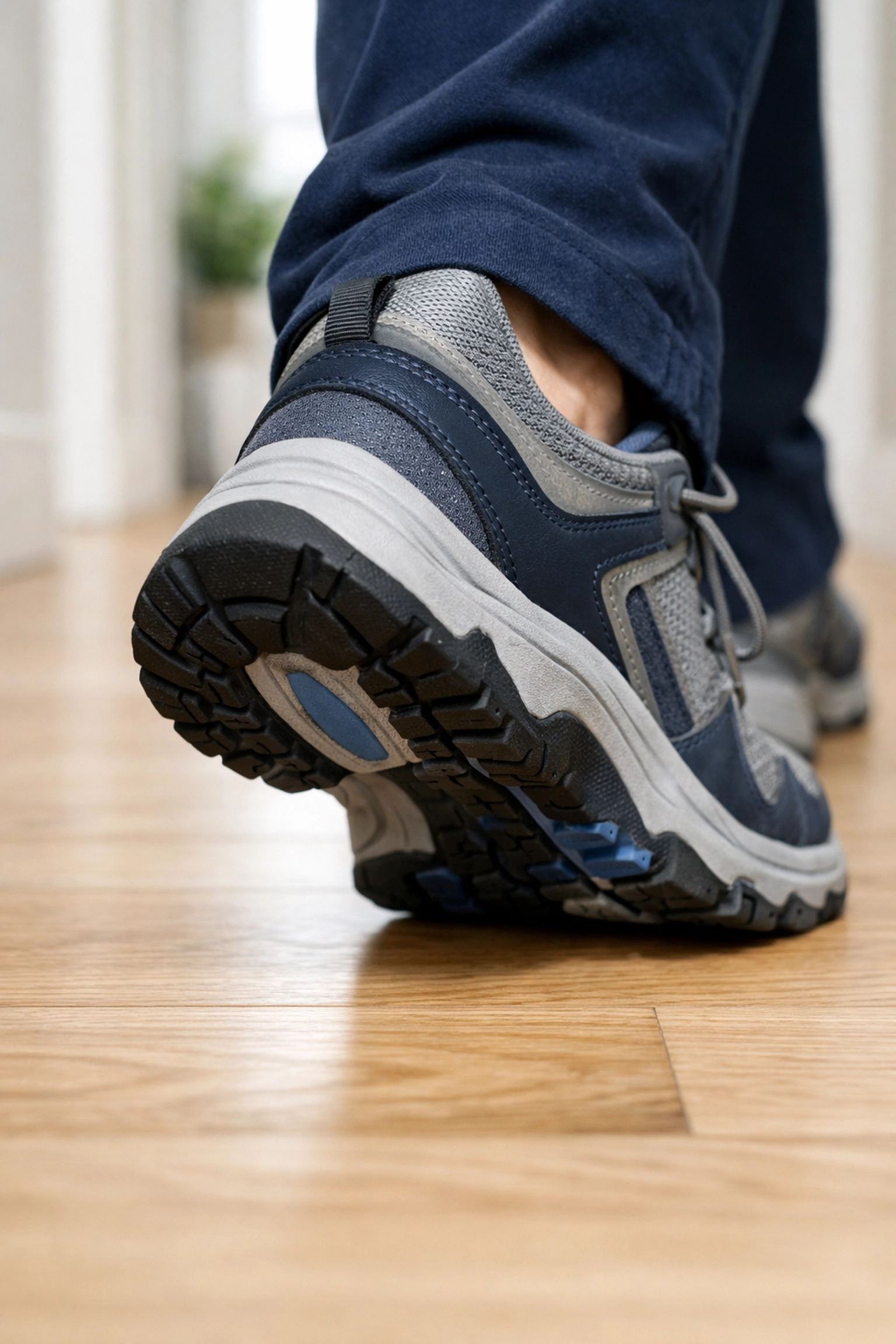
6. The Shuffling Gait (Missing the Heel Strike)
When using a walker, some people begin to shuffle their feet, keeping their toes close to the ground. Shuffling is a significant fall risk because the toes can easily catch on carpet edges, door thresholds, or uneven sidewalk cracks.
The Fix:
Focus on a deliberate "heel-to-toe" walking pattern. Even if your steps are small, make sure you are lifting your foot and landing on your heel first, then rolling forward onto the ball of your foot. This clearance ensures that you navigate small obstacles safely and maintains better circulation in your legs.
7. Turning Too Sharply
Turning a walker requires a bit of space. A common mistake is "pivoting": keeping your feet planted and twisting your upper body and the walker at the same time. This puts a lot of torque on the knees and hips and can easily cause you to lose your balance.
The Fix:
Think of yourself like a large ship or a bus; you need to make a wide, gradual turn. Move the walker slightly, then take small steps to follow it. Keep your body centered between the handles throughout the entire turn. Never cross one foot over the other while turning.
8. Ignoring the "Tips" and Maintenance
A walker is a mechanical device, and like any tool, it wears out. Many people continue to use walkers with worn-out rubber tips or "glides." When the rubber at the bottom of a standard walker wears thin, the metal tubing can eventually poke through. This metal-on-floor contact creates a "skating" effect on smooth surfaces, making the walker slide away from you.
The Fix:
Check the bottom of your walker weekly. The rubber tips should have deep grooves (like a tire tread). If they are smooth or lopsided, replace them immediately. If you use tennis balls on the back legs for easier sliding on carpet, ensure they haven't worn through or become filled with debris that could scratch your floors or catch on rugs.
9. Lack of Arm Movement and Stiff Shoulders
Balance is a full-body activity. Some users grip the walker so tightly that their entire upper body becomes rigid. They walk with "stiff" arms, which prevents the natural shock absorption that our joints provide. This rigidity actually makes it harder to react if the walker hits a bump.
The Fix:
Relax your grip. You should have a firm hold, but you shouldn't be "white-knuckling" the handles. Allow your shoulders to drop away from your ears. As you step forward, there should be a tiny bit of natural "give" in your elbows. This flexibility acts like a suspension system for your body.
10. Failing to Adjust for Different Terrains
A technique that works on a flat hardwood floor might be dangerous on a thick carpet, a sloped driveway, or a gravel path. Many falls occur when a user tries to push a walker through a high-pile rug with the same force they use on tile, causing the walker to "stick" and the person to stumble forward.
The Fix:
Practice transitions. When moving from a hard surface to a carpeted one, slow down and take smaller steps. If you are using a rolling walker (rollator) on an incline, keep your hands ready on the brakes at all times. On uneven outdoor terrain, you may need to lift a standard walker slightly higher to clear the ground or navigate the wheels of a rollator more carefully around large cracks.

Summary Checklist for Proper Technique
To wrap things up, let’s look at a quick mental checklist you can use every time you stand up to walk:
- Posture: Is my head up? Am I looking forward?
- Proximity: Am I standing inside the walker frame, or am I "chasing" it?
- Step: Am I using a heel-to-toe motion?
- Grip: Are my shoulders relaxed and my elbows slightly bent?
- Environment: Have I scanned the path ahead for rugs, pets, or spills?
When to Seek Professional Guidance
While these tips can fix many common issues, everyone’s physical needs are unique. If you still feel unstable, or if using your walker causes persistent pain, it is essential to consult with a physical therapist (PT).
A PT can provide a formal gait assessment. They can determine if you are using the right type of walker: for instance, switching from a standard walker to a rollator, or vice versa: and can give you specific exercises to strengthen the muscles used for balance.
Using a walker is a skill. Like any skill, it takes a bit of practice and the right setup to master. By focusing on these ten areas, you can turn your walker back into the supportive, empowering tool it was meant to be, ensuring you stay mobile and safe for years to come.

