
Stairs are a fundamental part of most homes, but they are also one of the most common areas where falls occur. Most of us recognize this and try to put some safety measures in place. Maybe you’ve added a piece of non-slip tape here or tightened a screw on a handrail there. However, despite these efforts, many "safety strategies" fail because they address the symptoms rather than the root causes of instability.
At Fall Guys Products, we see many well-intentioned homeowners and caregivers who believe they’ve made their stairs safe, only to find that the risk remains high. It’s usually not for lack of trying: it’s because stair safety is more complex than it looks on the surface. It involves a mix of physics, ergonomics, and human psychology.
Here are ten common reasons why your stair safety strategy might be falling short and, more importantly, how you can fix those issues to create a truly secure environment.
1. You Have "One-Way" Lighting
Many staircases have a single light fixture at the top or the bottom. While this might technically "light up" the area, it often creates harsh shadows. When a light source is only at one end of a flight of stairs, the steps themselves can cast shadows on the treads below them. This makes it incredibly difficult to see exactly where a step ends and the next one begins.
For seniors or those with declining vision, depth perception is already a challenge. Shadows act like optical illusions, making a flat surface look like a drop-off or vice versa.
The Fix:
The goal is "even illumination." Install lighting that covers the entire path. Ideally, you want light switches at both the top and the bottom of the stairs. If rewiring isn’t an option, battery-operated motion-sensor LED lights can be placed along the baseboards or tucked under the lip of each tread. This ensures that every inch of the walking surface is visible without the interference of long shadows.
2. The Handrail is a "Decorative" Element, Not a Tool
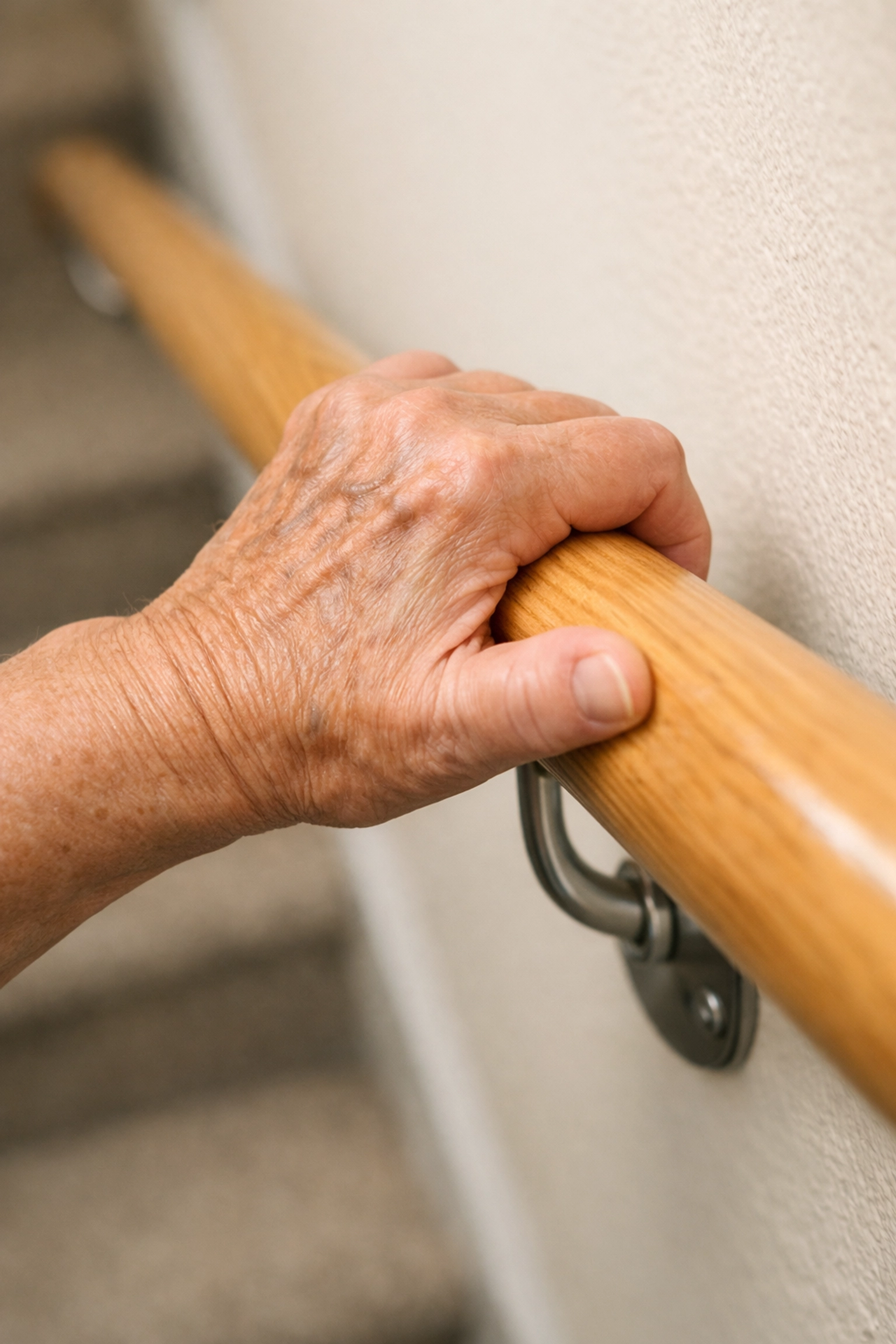
In many homes, handrails were designed to match the trim or the flooring, not to actually support a human’s weight during a stumble. We often see handrails that are too thick to wrap a hand around, or so close to the wall that you can’t get a firm grip. If you can’t wrap your fingers and thumb around the rail (a "power grip"), the rail is effectively useless in a crisis.
Furthermore, many rails stop just short of the last step. A fall often happens on the very first or very last step because that’s where the transition in gait occurs.
The Fix:
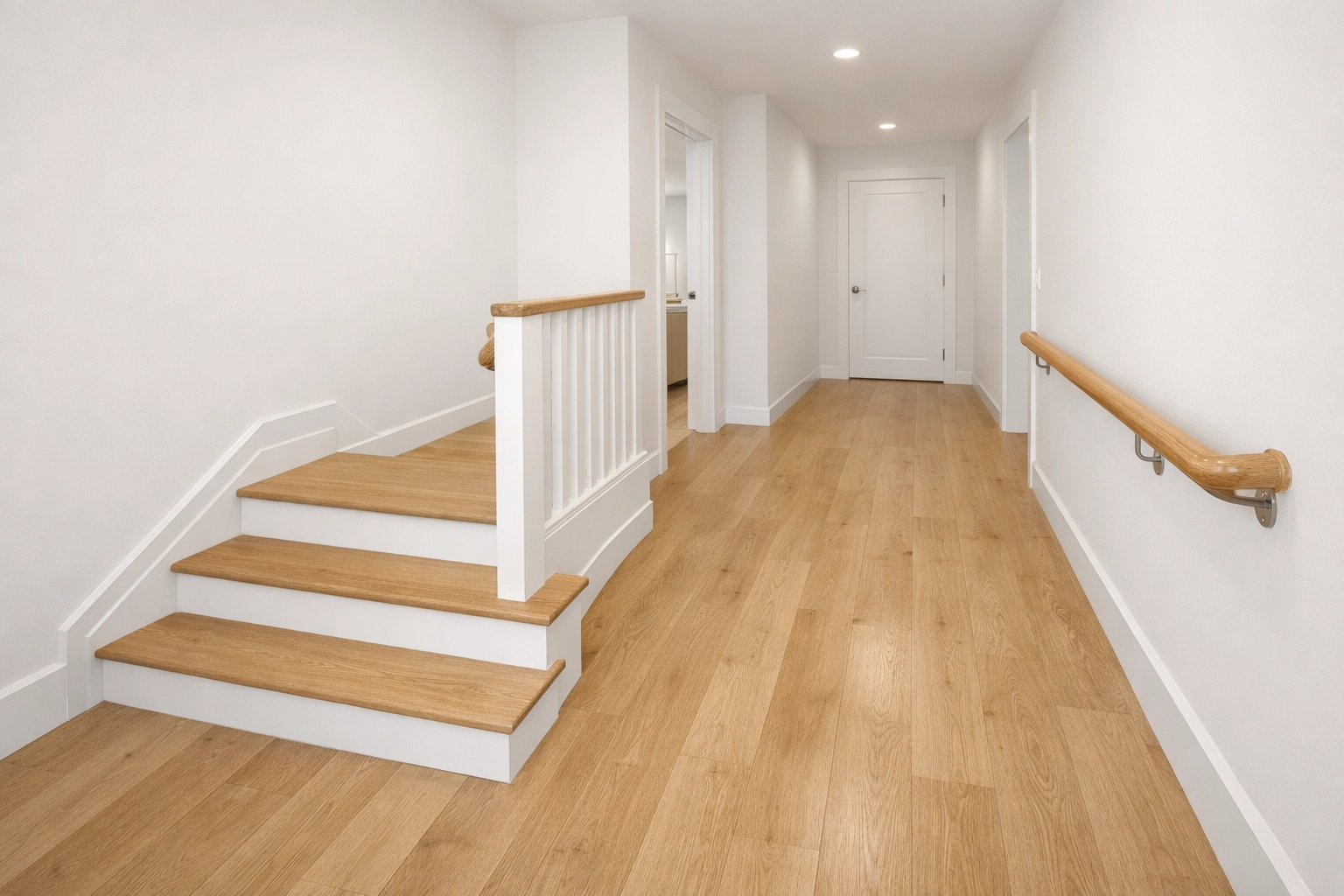
Ensure your handrail is "graspable." This usually means a diameter of about 1.25 to 2 inches. There should be at least 1.5 inches of space between the rail and the wall so your knuckles don't hit the drywall. Most importantly, the rail should extend beyond the top and bottom steps, allowing the user to maintain contact with the rail until they are firmly on flat ground.
3. Ignoring the "Step Consistency" Rule
The human brain is remarkably good at "mapping" a staircase. After the first two steps, your body goes into an automatic rhythm. You expect every subsequent step to be the exact same height (riser) and depth (tread) as the one before it.
If one step is even a quarter-inch higher or lower than the rest, it breaks that rhythm. This is often called a "trip-step." It’s common in older homes where the house has settled or during DIY renovations where the math didn't quite line up.
The Fix:
Use a tape measure to check every single riser. If you find a discrepancy, it needs to be addressed professionally. This might involve shimming a tread or rebuilding a section of the stairs. In the meantime, you can use high-contrast tape on the edge of the irregular step to alert the brain that a change is coming, though a structural fix is the only permanent solution.
4. Slippery Surfaces Masked as "Easy to Clean"
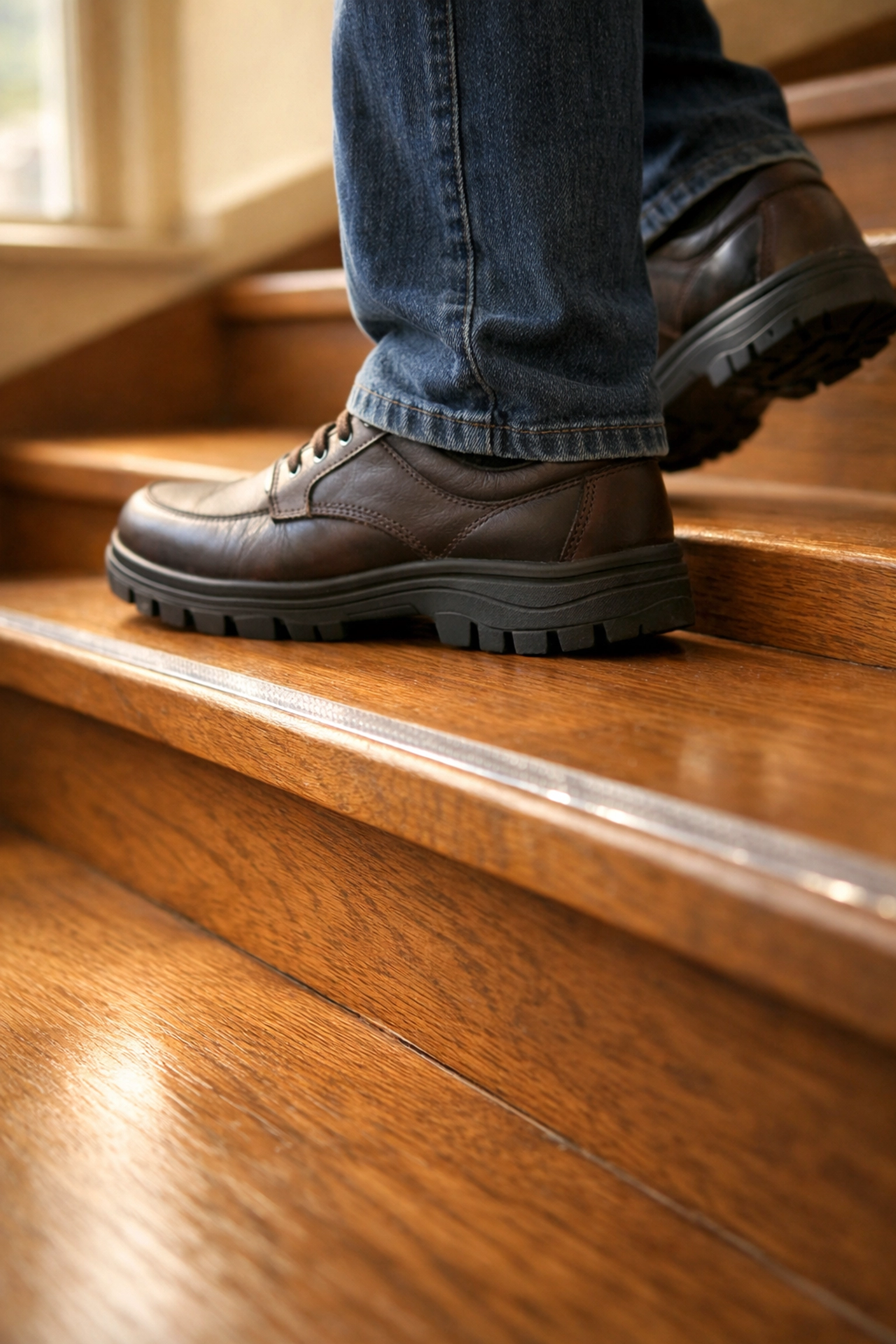
Polished wood, tile, and laminate look beautiful and are easy to sweep, but they offer almost zero traction. This is especially dangerous if someone is walking in socks or smooth-soled slippers. Even "non-slip" waxes often fail to provide enough friction when a person’s center of gravity is shifting forward or backward on an incline.
The Fix:
Texture is your friend. If you have wooden stairs, consider installing a low-pile carpet runner. If you prefer the look of wood, look into transparent anti-slip adhesive strips or specialized non-slip coatings that add "grit" to the finish without changing the color. Ensure that whatever you add is securely fastened; a loose carpet runner is more dangerous than no carpet at all.
5. The "Landing Pile" Habit
We’ve all done it: we place a book, a pair of shoes, or a basket of laundry on the bottom step to "take up later." While it seems efficient, it’s a recipe for disaster. Objects on stairs don't just create a trip hazard; they also distract the climber. Your eyes should be focused on your footing, not on navigating around a pair of sneakers.
The Fix:
Establish a strict "Zero Objects" policy for the stairs and the immediate landing areas (at least 3 feet from the top and bottom). If you need to move items between floors, use a dedicated "stairs basket" that sits on a nearby table: not on the steps themselves.
6. Inadequate Tread Depth
Many staircases, particularly those leading to basements or in older "compact" homes, have narrow treads. If your foot is larger than the tread, your heel or toe will hang off the edge. This significantly reduces your stability and puts immense pressure on the arches of your feet, making a slip much more likely.
The Fix:
While you can’t easily "stretch" a staircase, you can ensure that the "nosing" (the edge of the step) is clearly defined and not slippery. If a major renovation is in the cards, aim for a tread depth of at least 11 inches. For existing narrow stairs, the best strategy is to emphasize the use of the handrail and ensure the user is wearing supportive, high-traction footwear rather than going barefoot or wearing socks.
7. The Danger of Open Risers
Modern or "floating" stairs often have gaps between the steps. While they look airy and stylish, they are a major fall risk for two reasons. First, they can cause "visual vertigo": looking through the stairs to the floor below can be disorienting and affect balance. Second, a foot can easily slip through the gap, leading to a much more severe injury than a standard trip.
The Fix:
Close the risers. This can be done by installing backboards to the back of each step. If you want to keep the light-filtering benefits, you can use frosted plexiglass or mesh, which provides a physical barrier and a visual cue without completely blocking the view.
8. Worn-Out Carpet and Loose Treads
Carpet that has become loose or "bunched up" creates an uneven surface that is hard to predict. Over time, the padding underneath the carpet can also break down, making the edges of the steps feel rounded or "mushy." This lack of a firm edge makes it hard for the foot to find a secure anchor point.
The Fix:
Regularly inspect your stairs for "bubbles" in the carpet or any wood that creaks or moves when stepped on. If the carpet is worn smooth at the edges, it’s time to replace it. A firm, low-pile carpet is generally safer than a plush, thick one because it allows the foot to feel the structural edge of the step.
9. Poor Approach Paths
Safety doesn’t start on the first step; it starts several feet before. If a person has to make a sharp turn to get onto the stairs, or if the "approach" is cluttered with furniture, they aren't entering the climb with a stable center of gravity. Furthermore, low headroom (the distance between the step and the ceiling above) can cause a person to instinctively duck or lean, which throws off their balance.
The Fix:
Clear the area around the top and bottom of the stairs. Remove decorative rugs at the landings, as these can slip or bunch up right when a person is transitioning their weight. If headroom is low, mark the overhead obstruction with bright, reflective tape to provide a visual warning.
10. The Human Factor: Vision and Footwear
Sometimes, the stairs are as safe as they can be, but the "strategy" fails because we don't account for the person using them. For example, people wearing bifocals often struggle on stairs because the lower portion of their lens (meant for reading) blurs the steps as they look down. Additionally, many people use stairs in their "indoor" footwear, which is often a loose-fitting slipper with a smooth bottom.
The Fix:
Encourage the use of "stair-safe" habits. This includes:
- Vision checks: If you wear bifocals, try to tuck your chin further down to look through the top (distance) part of your lenses while on the stairs.
- Proper footwear: Wear shoes with a rubber sole and a closed heel. Avoid "flip-flops" or walking in just socks.
- The "Slow and Steady" rule: Never rush. If you feel tired or dizzy, wait until you feel steady before attempting the climb.
Summary: A Holistic Approach to Stair Safety
Stair safety isn't a "set it and forget it" task. It requires ongoing observation and minor adjustments. By looking at your stairs through the lens of these ten points, you can move away from a "band-aid" approach and toward a comprehensive strategy that truly protects your family.
The most effective safety strategy is one that acknowledges how we actually move. We aren't always alert; we aren't always looking exactly where we step. By fixing the lighting, ensuring the handrails are functional, and maintaining the structural integrity of every tread, we create a home environment that forgives small mistakes rather than punishing them.
Take a walk through your home today and look at your stairs from the bottom up. Do you see shadows? Is the handrail sturdy? Is there a pair of shoes waiting on the third step? These small fixes are the building blocks of a safer, more independent life at home.

