
When we talk about making a home safe for aging in place, the staircase is usually the first thing on the list. It’s the mountain in the middle of the living room. Most families I talk to have already taken some steps: maybe they added a second handrail or put a lamp at the bottom of the flight. But despite these efforts, many seniors still feel uneasy, and "near-misses" continue to happen.
The truth is, stair safety isn't a "one and done" task. It’s a strategy. If that strategy is failing, it’s usually because of small, overlooked details rather than a lack of effort. At Fall Guys Products, we see these patterns often. Let’s dive into why your current stair safety setup might be falling short and, more importantly, how you can fix it to create a truly secure environment.
1. The "Shadow Zone" Lighting Problem
Most people think that if the light is "on," the stairs are safe. However, standard overhead lighting often creates deep shadows. If the light source is behind you as you descend, your own body casts a shadow over the very step you are trying to see. This obscures the "nosing" (the front edge) of the step, making it nearly impossible to judge depth.
How to Fix It:
You need uniform light. This means lighting that illuminates the entire flight without creating glare or dark spots. Consider installing motion-activated LED strip lighting under the lip of each tread or along the baseboards. This provides "pathway lighting" that clearly defines the beginning and end of every single step.
2. The Illusion of Uniformity
Our brains are incredible at pattern recognition. When we climb or descend stairs, our bodies go into an "autopilot" mode after the first two or three steps. We expect every step to be the exact same height (the riser) and the exact same width (the tread).
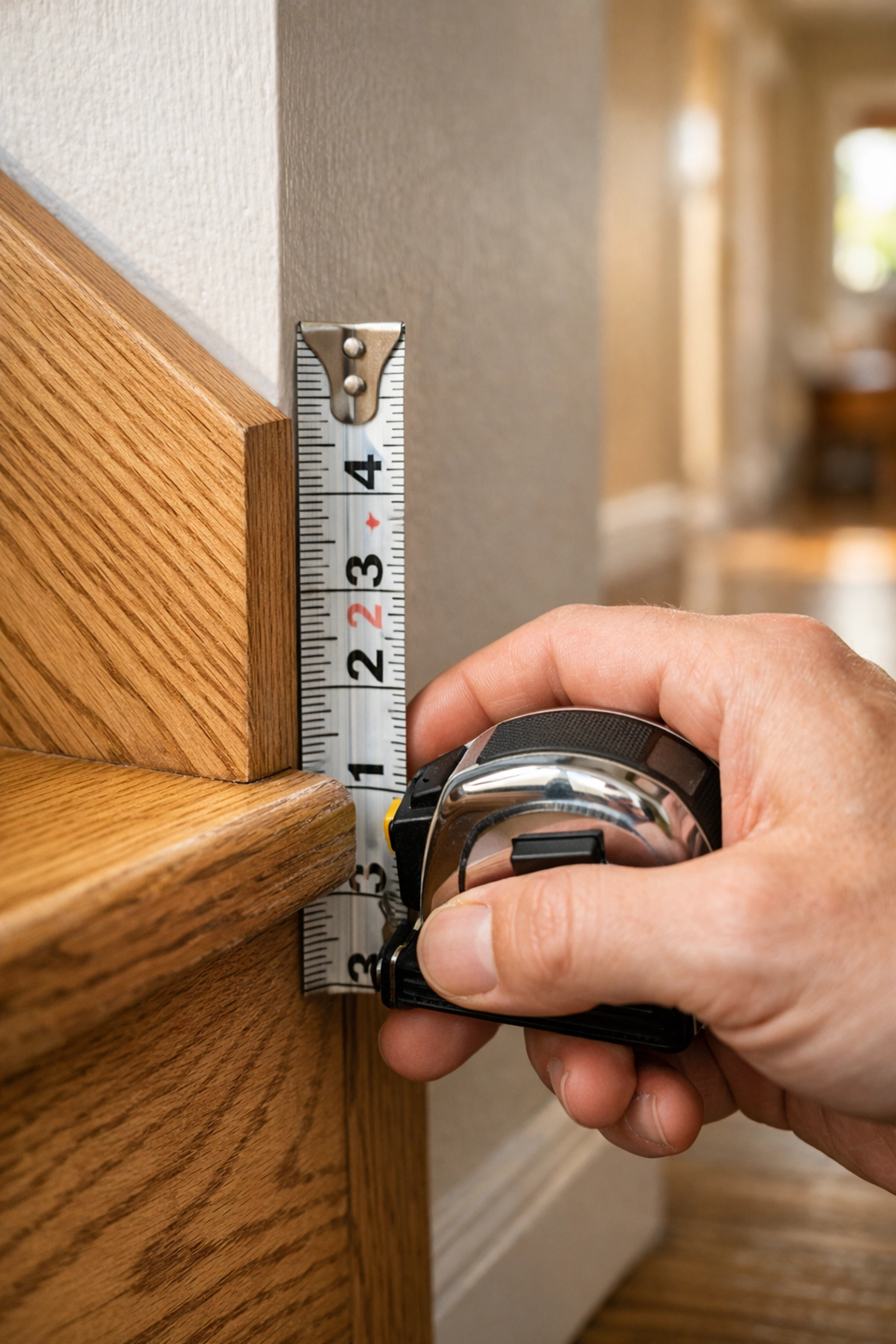
If a staircase has even a quarter-inch difference in one step’s height: perhaps due to a settling foundation or a DIY repair: it breaks that rhythm. That tiny discrepancy is one of the leading causes of trips on stairs.
How to Fix It:
Take a tape measure and check every step. If you find a significant variation, it’s worth consulting a carpenter. If a structural fix isn't possible, you must use visual cues (which we will discuss later) to "alert" the brain that the rhythm is changing.
3. The "Power Grip" vs. The "Pinch Grip"
Many decorative handrails are beautiful to look at but impossible to hold securely. If a handrail is too wide (like a large wooden beam) or too flat, you can only use a "pinch grip": using your fingers to steady yourself.
In the event of a slip, a pinch grip will not hold your body weight. You need a "power grip," where your thumb and fingers can fully wrap around the rail and meet on the other side.
How to Fix It:
Ensure your handrails are "circumferentially graspable." This is a fancy way of saying they should be round or oval and about 1.25 to 2 inches in diameter. If your current rails are too bulky, you don't necessarily have to rip them out; you can often mount a secondary, smaller rail slightly below or on the opposite wall.
4. Neglecting the "Transition Zones"
Stair safety doesn't start on the first step; it starts three feet before the stairs begin. Many falls happen because the transition from a carpeted hallway to a wooden staircase (or vice versa) creates a change in friction that the body isn't ready for. Furthermore, if the top landing is cluttered or poorly lit, the "approach" to the stairs is compromised.
How to Fix It:
Clear a "buffer zone" at the top and bottom of the stairs. Remove throw rugs, small furniture, or decorative items within five feet of the staircase. Ensure the flooring in this transition zone is non-slip and well-anchored.
5. The Dangerous Lure of Socks and Slippers
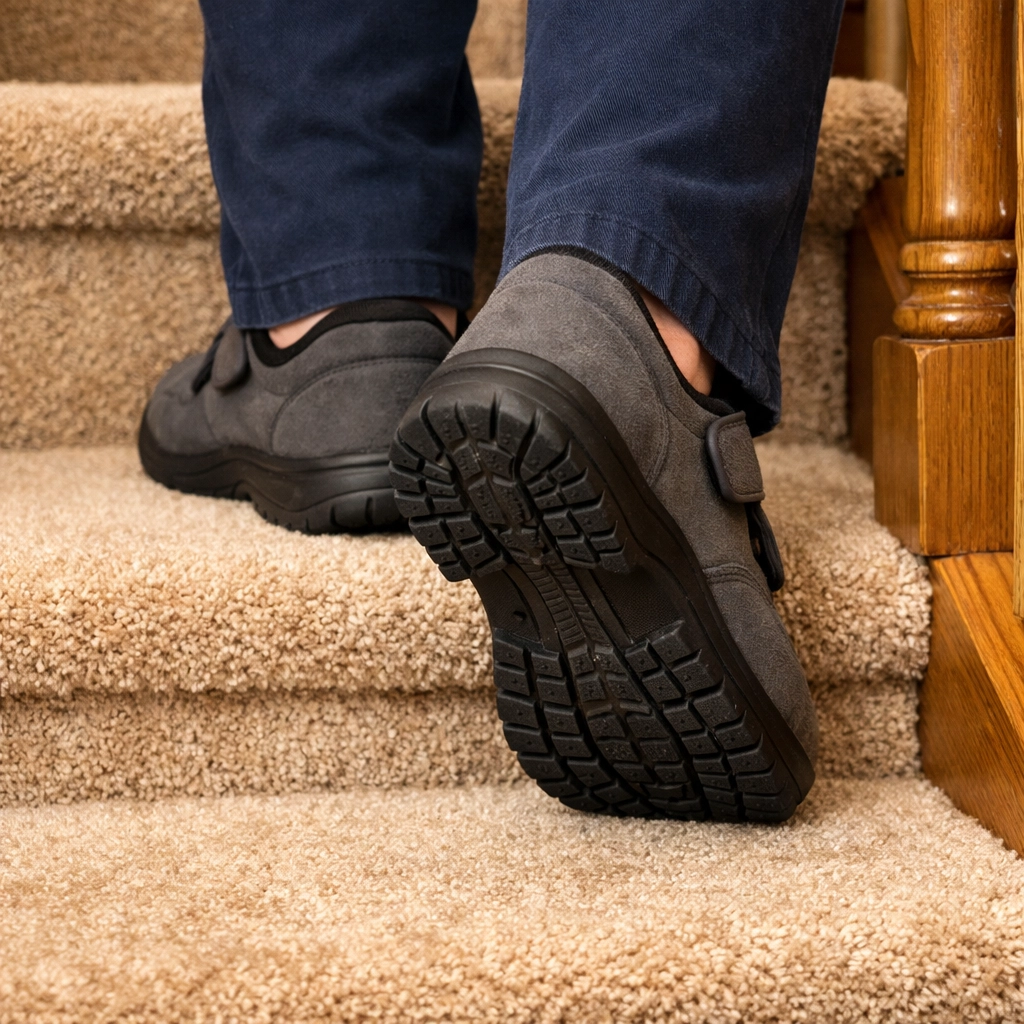
We often focus on the stairs themselves, but the "equipment" on our feet is just as important. Polished wood or tile stairs are incredibly slick. If a senior is wearing standard socks or loose-fitting slippers, they are essentially walking on ice. Even "non-slip" socks can lose their grip after a few washes.
How to Fix It:
Encourage a "shoes-on" policy inside the home, or invest in high-quality, sturdy indoor footwear with rubber soles. If socks are a must, they should have high-friction tread across the entire sole, not just a few dots.
6. The "Hidden" Edge
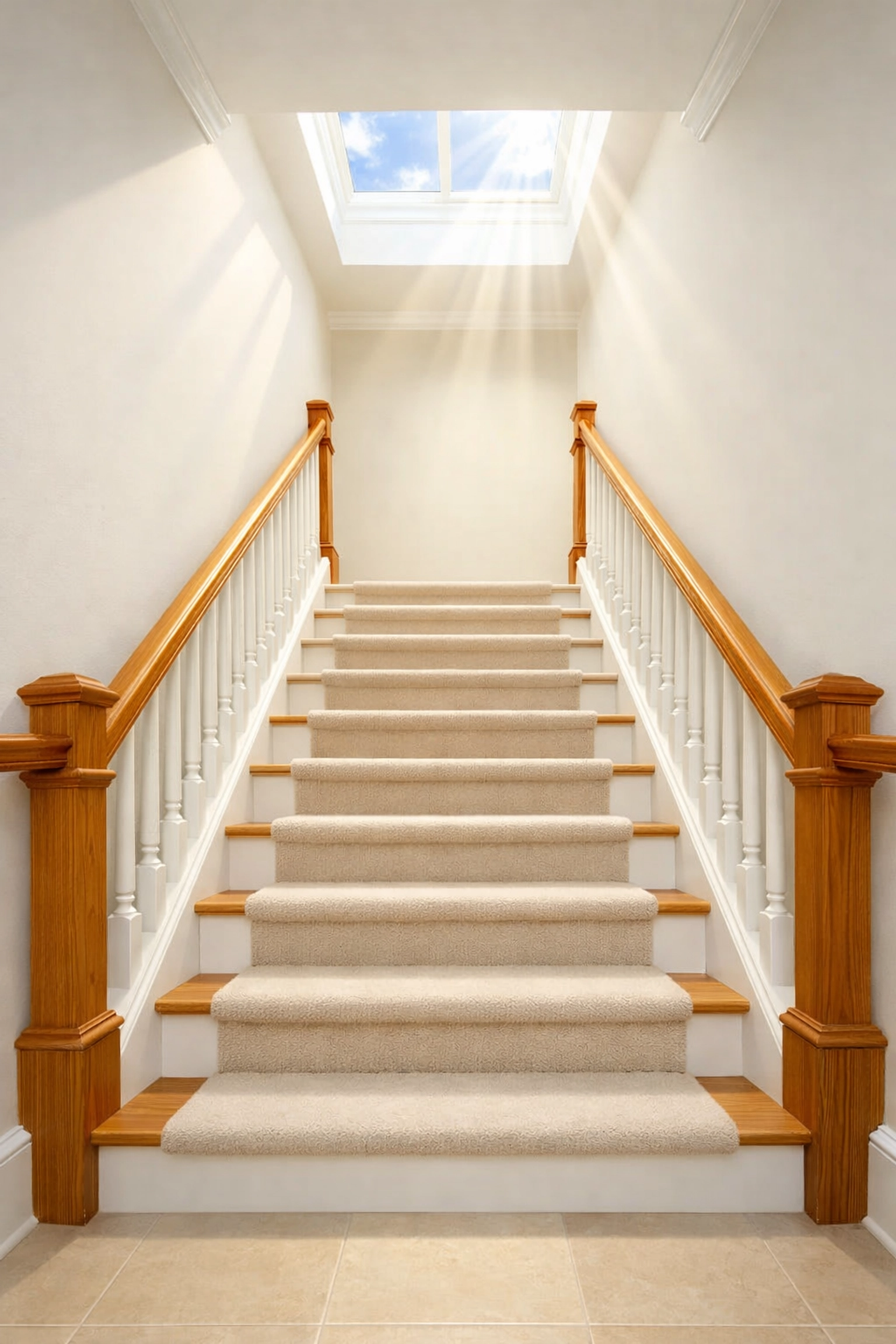
Depth perception often declines with age or due to conditions like cataracts or glaucoma. When a staircase is all one color: say, all light oak or all gray carpet: the edges of the steps "blend" together into one long, steep ramp. This makes it very difficult for the eye to tell where the landing ends and the drop begins.
How to Fix It:
Visual contrast is your best friend. You can apply a strip of high-contrast tape or a painted line (in a color that stands out, like yellow or white) to the leading edge of every tread. This creates a clear visual "border" that the brain can easily process.
7. The One-Sided Support System
If your stairs only have a handrail on one side, your safety strategy is only 50% complete. People often have a "stronger" side due to hip issues, stroke recovery, or arthritis. If the handrail is on their weak side while they are going down, they may not have the grip strength or balance to use it effectively.
How to Fix It:
Every staircase should have handrails on both sides. This allows the user to choose which hand to use or, even better, to use both hands for maximum stability. This is especially critical on wider staircases where a single rail might feel too far away.
8. Clutter as a Habit
It’s a common habit: placing items on the bottom steps to "take up later." A book, a pair of glasses, or a laundry basket becomes a temporary resident of the staircase. On a staircase, even a small object reduces the amount of space available for your feet and creates a massive tripping hazard.
How to Fix It:
The stairs must be a zero-tolerance zone for clutter. If "taking things up later" is a necessity, place a dedicated basket at the base of the stairs (away from the walking path) to hold those items. Never, ever place anything on the steps themselves.
9. Lack of "Rest Stops" on Long Flights
For many seniors, the issue isn't just balance; it's endurance. A long, continuous flight of 12 or 15 steps can be exhausting. When fatigue sets in mid-flight, legs can become heavy or "wobbly," significantly increasing the risk of a misstep.
How to Fix It:
If you have a landing mid-way up, that’s a natural rest spot. Ensure there is a sturdy chair or a "perch" nearby if space allows. If it’s a straight flight without a landing, consider installing a sturdy grab bar at the halfway point that allows the person to pause and catch their breath while maintaining three points of contact.
10. Ignoring Maintenance Wear and Tear
Stairs take a beating. Over time, carpeting can become loose or bunched, creating a "bubble" that catches toes. Wooden treads can become polished and slick through years of use. Handrails can become wobbly as the screws in the drywall loosen.
How to Fix It:
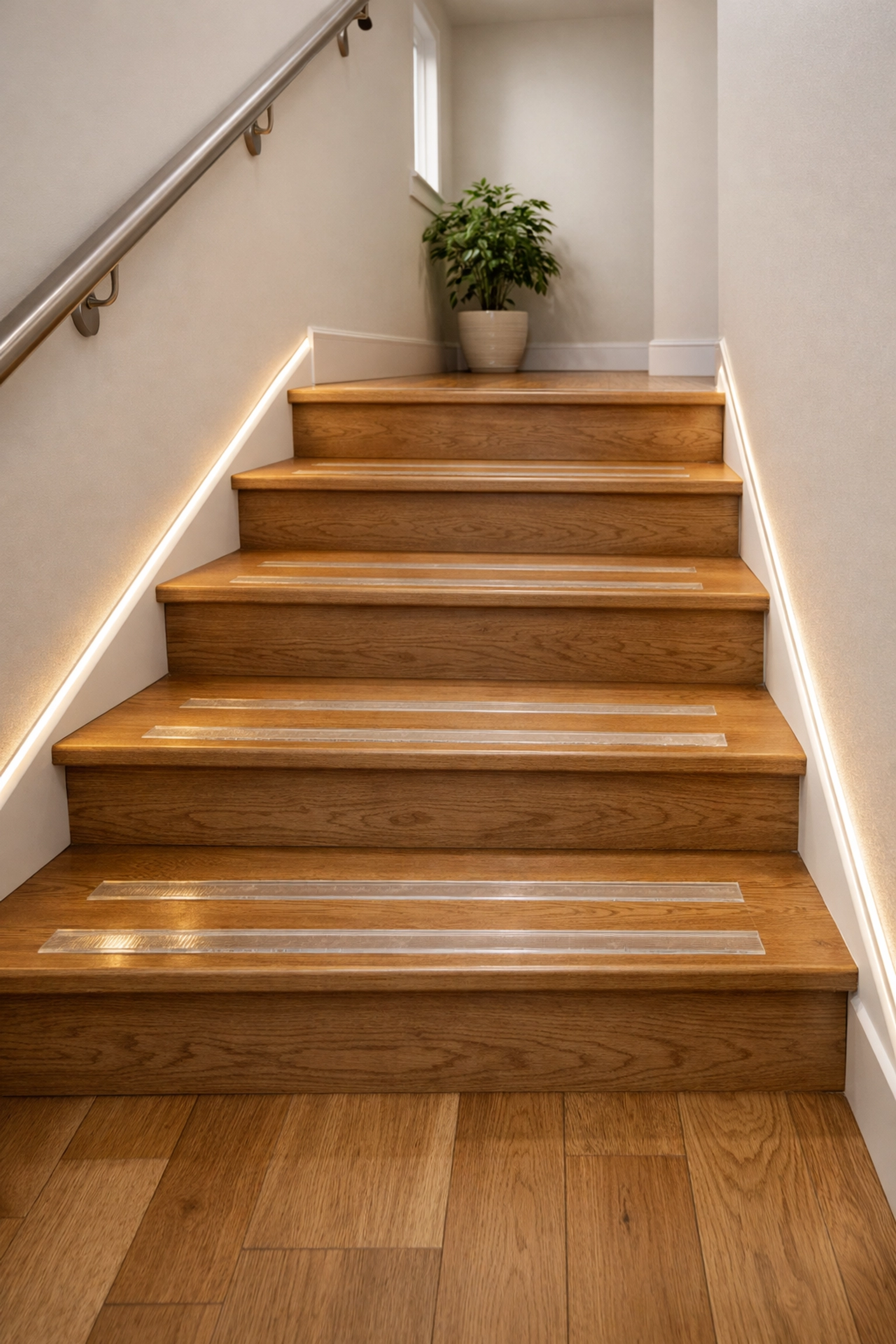
Perform a monthly "stair audit." Walk the stairs and feel for any movement in the rails. Look for frayed carpet or loose metal nosing. If the stairs are wooden, consider adding transparent non-slip adhesive strips. They provide grip without hiding the beauty of the wood.
A Note on Physical Preparation
While modifying the environment is crucial, the person using the stairs is the most important part of the equation. Stair climbing is a complex physical task that requires strength, coordination, and vision.
If you or a loved one are struggling with stairs, it may be time to consult with a physical therapist. They can suggest specific exercises to strengthen the quadriceps and improve ankle flexibility, both of which are vital for safe stair navigation. They can also teach techniques like the "side-step" method or the "one-step-at-a-time" approach (where both feet land on the same step before moving to the next), which can make the process feel much more controlled.
Summary: A Holistic Approach
Stair safety isn't about one single product; it's about layering different types of protection. When you combine great lighting, solid handrails, visual contrast, and a clutter-free environment, you create a safety net that works even when someone is tired or distracted.
Take a look at your stairs today. Don't look at them as a single unit, but as a series of individual steps, edges, and rails. Fixing even two or three of the issues mentioned above can dramatically change the safety profile of your home. Remember, the goal is independence, and staying safe on the stairs is one of the best ways to maintain that independence for years to come.

