
When we talk about making a home safer, the stairs are usually the first thing on the list. It makes sense. For many of us, the staircase is the main artery of the home, connecting our sleeping spaces with our living spaces. We put up a handrail, maybe toss down some non-slip tape, and think, "Okay, that’s handled."
But as we see quite often at Fall Guys Products, many "safety plans" are missing the small details that actually prevent trips and falls. A plan that looks good on paper: or looks sturdy to the eye: might actually have hidden flaws that contribute to instability.
If you or a loved one are starting to feel a bit hesitant on the stairs, it’s not just about "getting older." Often, it’s about the environment not supporting your body the way it should. Here are 10 reasons your current stair safety plan might be falling short and, more importantly, how you can fix it.
1. The "Rhythm" is Off: Inconsistent Riser Heights
The human brain is an incredible machine. When you start climbing a flight of stairs, your brain calculates the height of the first two steps and then "automates" the rest of the climb. You stop looking at your feet because your muscle memory has taken over.
The problem arises when one step is even slightly different from the others. This is known as a "non-uniform riser." If one step is just a quarter-inch taller or shorter than the rest, it breaks that mental rhythm. Your foot expects the floor to be in one place, but it isn’t there yet: or it’s higher than expected. This leads to a stubbed toe or a "false step" that can throw you off balance.
The Fix: Use a tape measure to check every single step. In the construction world, the gold standard is no more than a 3/8-inch difference between the tallest and shortest riser in the entire flight. If your stairs are uneven, you may need a carpenter to shim or adjust the treads to create a uniform path.
2. Your Feet Don't Have Enough Room: Inadequate Tread Depth
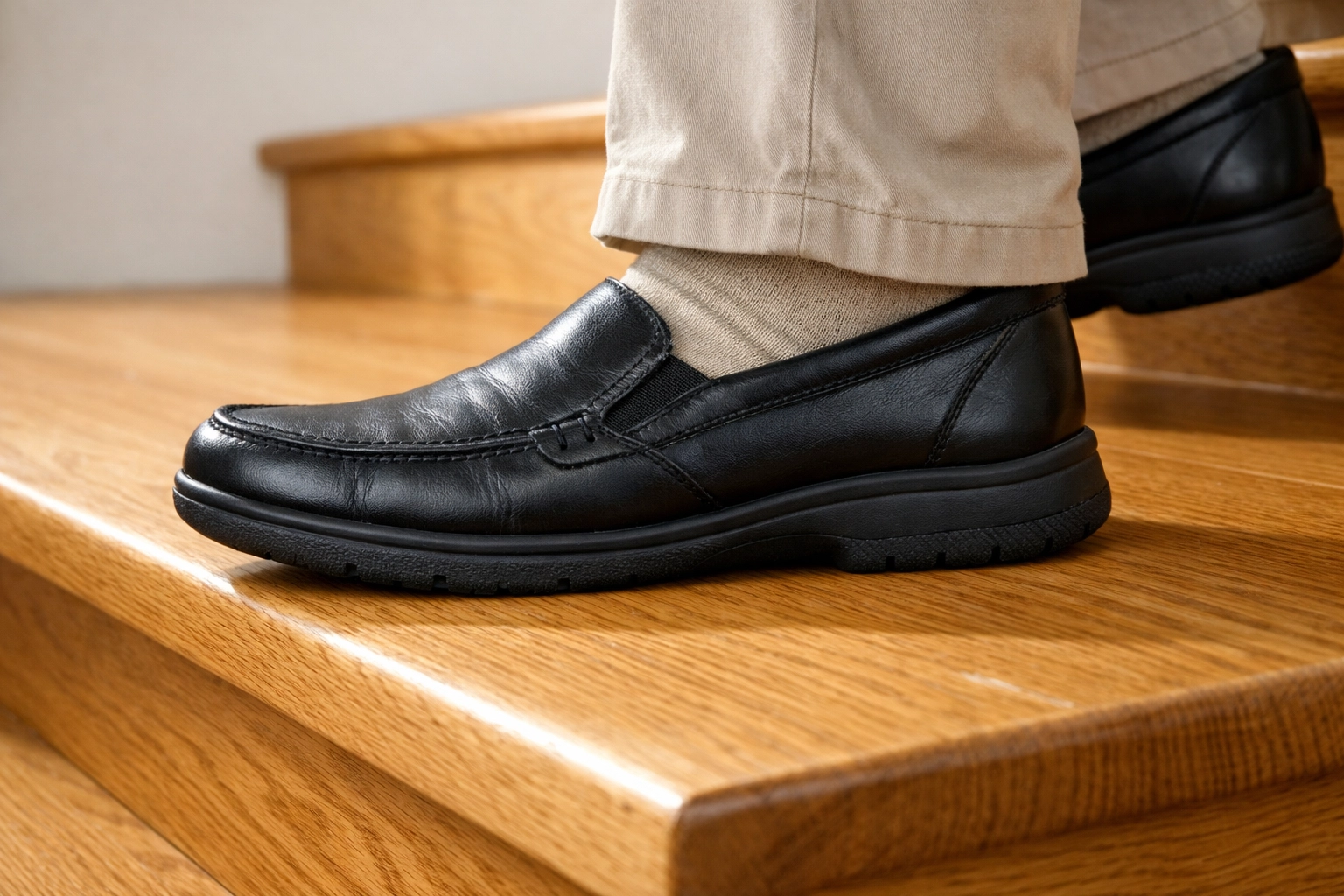
Tread depth is the horizontal surface where you actually place your foot. If your treads are too narrow: common in older homes or "spiral" style staircases: your heel or toe might hang off the edge.
When your full foot isn’t supported, your calf muscles have to work double-time to stabilize you. Over a long flight of stairs, this causes muscle fatigue. If you’re carrying a laundry basket or a bag of groceries, that fatigue can quickly turn into a stumble.
The Fix: Ideally, a tread should be between 10 and 11 inches deep. This allows for most adult feet to land fully and securely. If your stairs are too narrow, consider adding "stair nose" extensions or, if a remodel isn't in the cards, practicing a "sideways" walking technique where you angle your feet slightly to gain more surface area: though this is a temporary fix compared to structural changes.
3. The Handrail is a "Suggestion," Not a Support
A lot of handrails are installed to meet basic building codes, which doesn't always mean they are useful for someone who actually needs to lean on them. If your handrail is too low, you’ll find yourself leaning forward, which shifts your center of gravity too far over your toes. If it’s too high, you can’t get enough leverage to pull yourself up.
Furthermore, many handrails stop just a few inches short of the top or bottom step. That last step is often where the most falls occur because people let go of the rail before they are on solid, level ground.
The Fix: Ensure your handrails are mounted between 34 and 38 inches high, measured from the "nose" of the step. Most importantly, the rail should extend past the top and bottom steps. This allows you to maintain a grip until your feet are completely off the incline.
4. Lighting That Creates Shadows
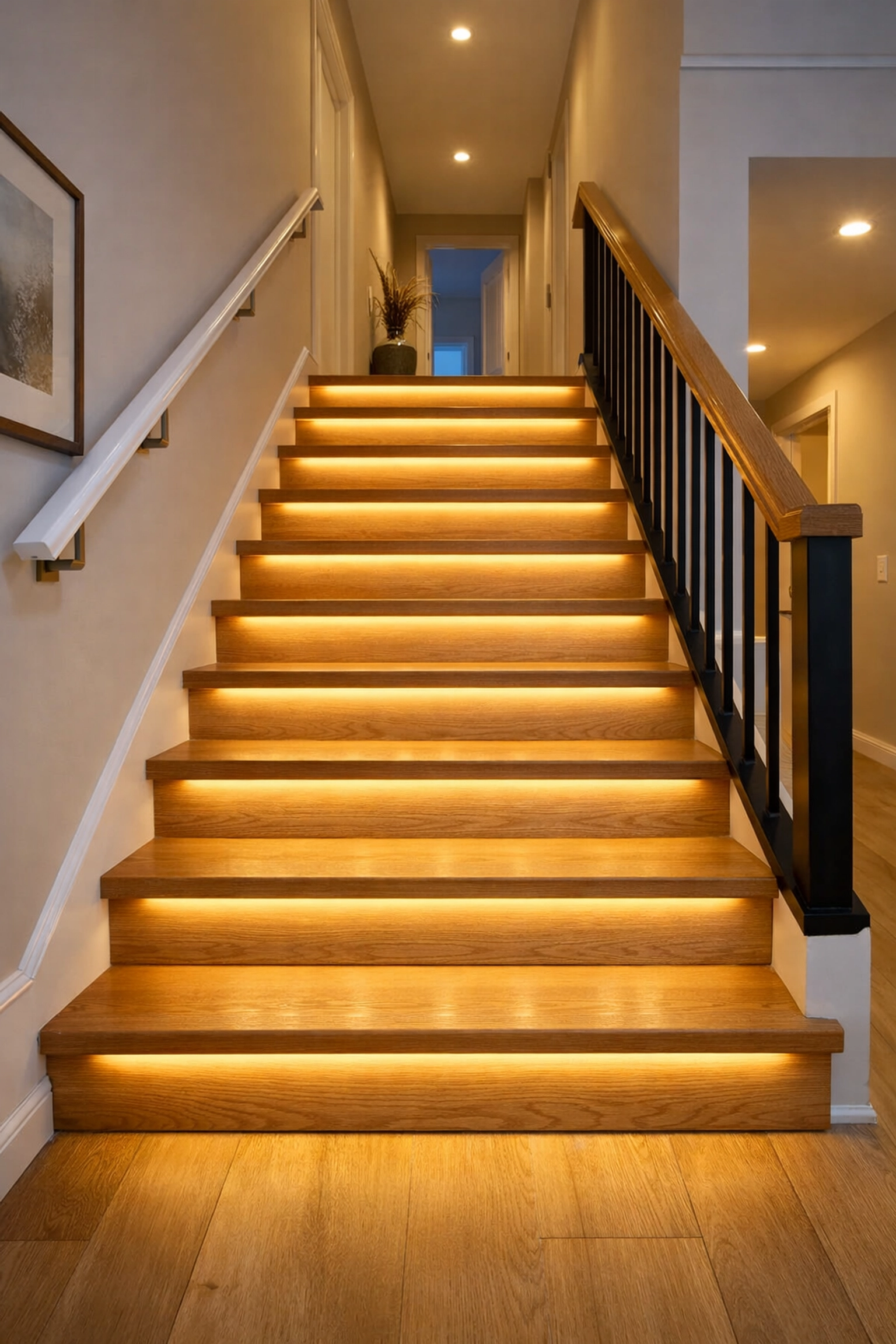
You might have a light at the top of the stairs and a light at the bottom, but what happens in the middle? If the lighting is poorly placed, your own body can cast a shadow over the very step you are trying to navigate. This "depth perception" issue is a major cause of falls, especially for those with changing vision.
The Fix: Lighting should be uniform. Instead of one bright overhead bulb that creates glare, consider "path lighting" or LED strips tucked under the lip of each tread. These illuminate the actual walking surface without blinding you. Also, make sure there are "three-way" switches at both the top and bottom so you never have to navigate in the dark to find a switch.
5. The "Slickness" Factor
Polished wood stairs look beautiful, but they can be like an ice rink if you’re wearing socks or smooth-soled slippers. Even carpet can be a hazard if it’s a high-pile variety that hides the edge of the step, or if it’s become loose and "bunched up" over time.
The Fix: If you have wood or tile stairs, you don't have to cover them in ugly industrial grip tape. There are transparent anti-slip coatings and stylish, low-profile adhesive treads that provide friction without ruining the aesthetic. If you have carpet, ensure it is a "tight-weave" or low-pile style, and check frequently to ensure it is stretched tight against the risers.
6. The Danger of "Open Risers"
Open risers are stairs where there is a gap between the steps (you can see through them to the floor below). While they look modern and airy, they can be disorienting. For some, seeing the floor move beneath them as they climb creates a sense of vertigo. Physically, it’s also possible for a foot or a cane tip to slip through that gap.
The Fix: Close them up. You can have a contractor install "riser boards" to fill the gaps. This provides a visual backstop for your feet and eliminates the "floating" feeling that can cause dizziness.
7. Psychological Obstacles: Clutter and Distraction
We’ve all done it: "I’ll just leave these shoes on the bottom step so I remember to take them up later." In a safety plan, the stairs should be treated as a "no-fly zone" for objects. Even a small item like a stray mail envelope can be enough to cause a slip.
Beyond physical clutter, there is "mental clutter." If the stairwell is decorated with busy wallpaper or a gallery of family photos, it can be distracting. Your eyes should be focused on the steps, not on a picture of the grandkids.
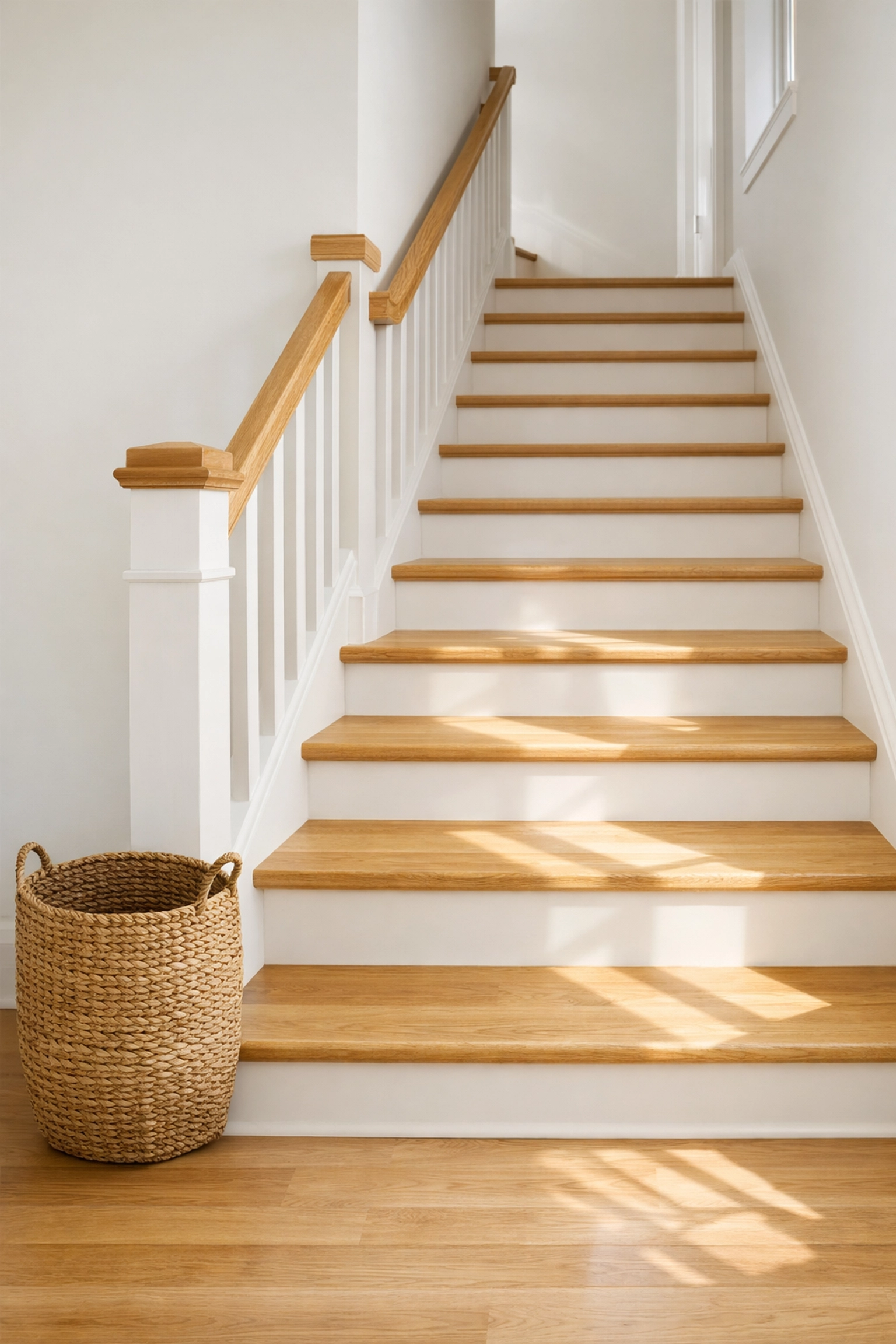
The Fix: Implement a strict "zero-item" policy for the stairs. If things need to go up or down, use a basket kept at the top or bottom: off the walking path: and carry it only when your hands are free to use the handrail. Keep the decor simple to help your brain focus on the task of climbing.
8. Ignoring the "Hand-Rail Gap"
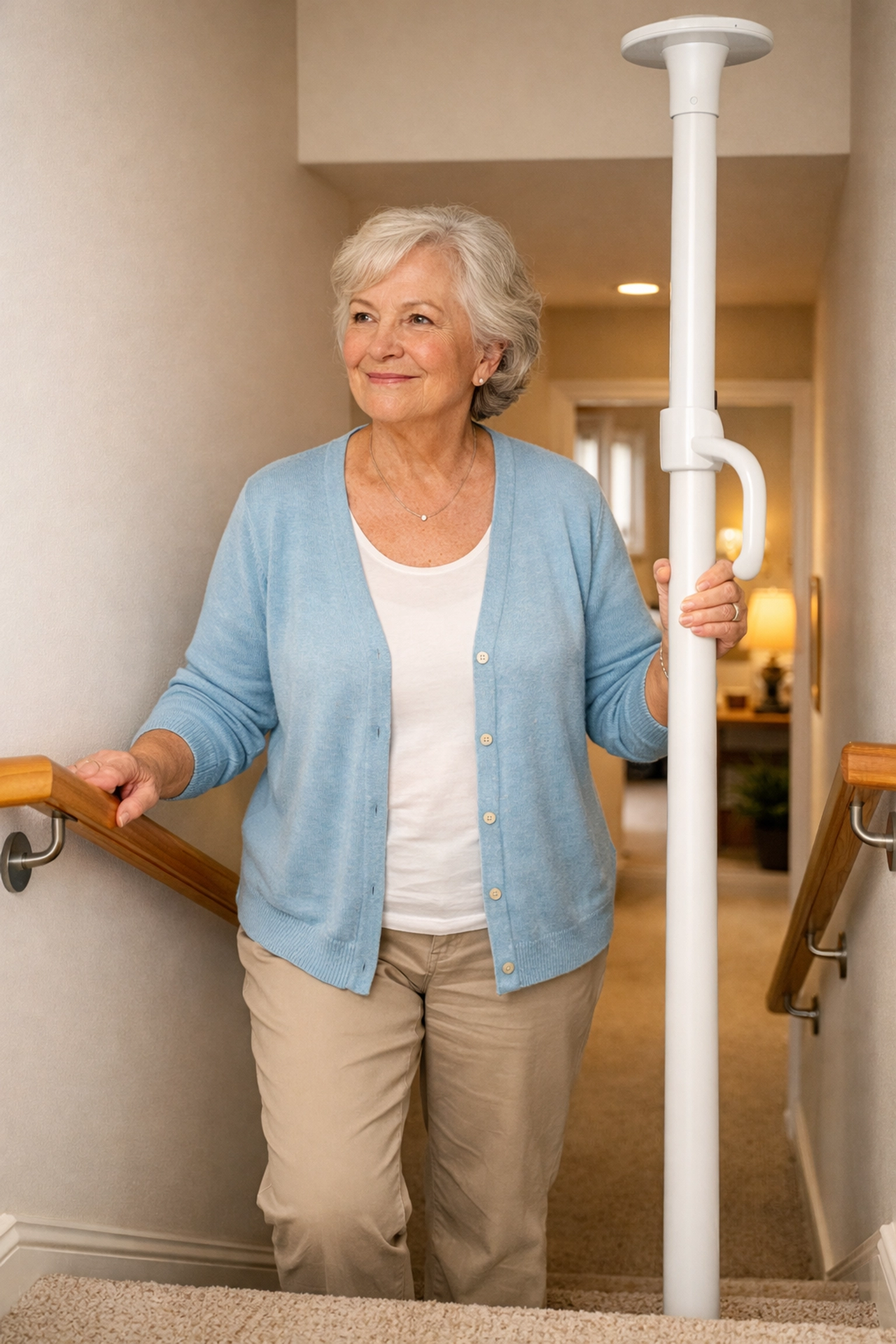
Many people have a handrail on only one side of the stairs. This assumes that your "strong" side will always be the one next to the rail. But when you turn around to go back down, your strong side is now on the "open" side of the stairs. If you have weakness on one side of your body due to a past injury or condition, you need support regardless of which direction you’re headed.
The Fix: Install a second handrail. Having "dual" rails allows you to use both arms to stabilize yourself, significantly reducing the load on your knees and hips. It provides a "closed" environment where you are supported from both sides.
9. Neglecting the Structural "Health" of the Staircase
Stairs take a lot of abuse over the decades. Over time, wood can warp, nails can pop, and the "stringers" (the structural supports on the sides) can pull away from the wall. If you hear a loud creak or feel a slight "give" when you step, that is a warning sign. A moving step is an unpredictable step.
The Fix: Do a "stress test" once a year. Walk the stairs slowly and listen for squeaks. Grasp the handrail and give it a firm shake; it should not wiggle at all. If you find movement, tighten the brackets or call a professional to reinforce the underlying structure.
10. The Plan Doesn't Account for Your "Equipment"
Sometimes the safety plan works for a person walking unassisted, but it fails the moment they start using a cane or a walker. Many standard staircases aren't wide enough to accommodate a person and the assistive device they need. If you're trying to lift a walker up one step at a time, you're actually increasing your risk because you're momentarily balancing on one leg while lifting a heavy object.
The Fix: This is where a professional mobility assessment becomes vital. A physical therapist or a specialist can look at how you move and determine if the stairs are still the best option. In some cases, the "fix" isn't a better stair plan: it's a transition to a "main-floor living" setup or the installation of a chair lift or transfer pole at the top and bottom to help with the transition.
Final Thoughts: A Living Plan
Stair safety isn't a "one and done" task. As our homes age and our bodies change, our safety plans need to evolve too. The goal isn't just to prevent a fall; it's to provide the confidence and peace of mind that allows you to move freely through your own home.
By looking at the "hidden" reasons a plan might fail: like riser consistency and lighting shadows: you can turn a potentially hazardous area into a sturdy, reliable part of your daily routine. Take a walk over to your stairs today with a tape measure and a critical eye. You might be surprised at what a few small adjustments can do for your comfort and safety.

